In Pendulum, each player is a powerful, unique noble vying to succeed the Timeless King as the true ruler of Dünya. Players command their workers, execute stratagems, and expand the provinces in their domain in real time to gain resources and move up the four victory tracks: power, prestige, popularity, and legendary achievement.
Players must use actual time as a resource in managing their strategy to best their opponents, using time on different action types and balancing it with time spent planning and analyzing. The winner will be the player who manages and invests their time most effectively and who builds the best engine, not the player who acts the quickest.
Pendulum is the highest-rated protoype in the history of the Stonemaier Games Design Day.
—description from the publisher

- high-energy gameplay with a novel real-time element
- engaging mechanism when respected as designed
- the real-time component is not to some players' tastes
- chaos can overwhelm strategic planning
- control of time and actions in a corporate machine
- Timed, strategic competition with a brain-burner feel
- tactical, tense
Mechanics (from transcript analysis)
- action drafting — Choosing from a board of actions in a tight decision window.
- real-time / timed play — Players perform actions under time pressure with a global timer.
Video topics + discussion points
Quotes (from this video)
- every game deserves a second chance
- it's a good game, it's a middleweight game
- the components are cheap
- we're not fans of real time games though but you know what we're going to try it
- we always have fun and try to play with family
References (from this video)

- Bold design that experiments with timing and risk
- Some players may find timing mechanic complex or fiddly
- Risk-reward and tempo-based decisions
- Time-management strategy in a sci-fi/fantasy frame
- Rulebook-driven, design-forward gameplay
- Dune: Imperium
- Twilight Imperium
Mechanics (from transcript analysis)
- Resource management — Management of varied resources to optimize scoring and board state
- Time-track/clock-ticking mechanic — Actions are governed by a ticking timer, creating tension and pacing
Video topics + discussion points
Quotes (from this video)
- i decided i was going to do a lot of promoting of other people's products
- the energy that i can give to a product
- we're a team we're a great team
- just do it man just do it
- the next ones we're gonna loosen it up attack too hard
- you make content here that's it and when i joined man vs meeple i was very clear
References (from this video)
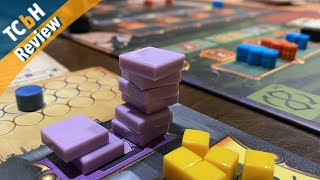
- Inventive real-time/time-management gimmick that integrates with worker placement
- Solid engine-building for color-cube production
- Strong solo play and elegant handling of occupied spaces
- The 'legendary achievement' endgame twist adds a strategic focus
- Theme feels thin and abstract, with limited narrative depth
- Replayability may be limited due to similar action choices
- Not easy to recommend to players who dislike real-time elements
- Time as a resource, political-council style scoring, abstract conquest via timer-driven decisions
- Fantasy world where time and timers constrain actions across three colored sections over four rounds.
- Abstract with thematic veneer; minimal thematic storytelling
Mechanics (from transcript analysis)
- Card play and hand management — Character-specific cards provide additional actions and can be recycled via spending blue cubes.
- Conquest/market abstraction — Conquer cards are abstract; you acquire market cards paid in red cubes and can influence outcomes.
- Resource conversion — Gained resources are converted into different types of cubes or points through board columns.
- Time-based scheduling — Actions are constrained by timers; what you can do depends on timer states rather than turns.
- Timer manipulation — Timers can be flipped or moved between rows to unlock spaces or alter available actions.
- worker placement — Players place workers on action spaces to gain resources, points, or formal 'votes'.
Video topics + discussion points
Quotes (from this video)
- pendulum is a worker placement and resource conversion game
- it's an ambitious new stonemeyer game
- a turnless worker placement game where time itself is a resource that you have to manage
- the best way to think of it is like there's a point that in three different colors which change based off of your character
- it's strategic and has decent engine building and a unique tempo
- it's an abstract color based efficiency engine
References (from this video)

- Innovative use of timer-driven mechanics to modulate decision space
- Paced gameplay that rewards planning
- Potential confusion around timer interactions for new players
- Time pressure and scheduling conflicts influencing outcomes
- Time-based engine/placement dynamic with a thematic arcade-pacing feel
- Abstracted, timer-driven tension
Mechanics (from transcript analysis)
- set collection — Players collect cards/resources to optimize final scoring.
- time pressure — Rounds progress under a shared timer influencing decisions.
Video topics + discussion points
Quotes (from this video)
- Origin Story and Vantage again this past weekend and they are so so great.
- It was the best game of Flip Seven that I've ever had.
- I played Dave the Diver for about an hour last night and had a lot of fun with it.
- I've played Point Salad, but I have not played Point City.
- I run a board gaming club at my school in which I have been playing Obsession and Brass Lancashire.
References (from this video)

- Introduces an innovative timer-based mechanic
- Clunky, fiddly execution and balancing issues
- Long playtime with limited payoff
- Suboptimal integration of timer concept into satisfying gameplay
- Time-based action economy and scheduling
- No strong setting; theme centers on timed actions
- Mechanic-first, timer-driven pacing with theme being secondary
- Kitchen Rush
Mechanics (from transcript analysis)
- Action timing/sequence control — Players must time turns around timers, creating pressure and gating options.
- Timer-based actions — Egg timers or countdown elements gate when players can perform actions; action windows open/close over time.
Video topics + discussion points
Quotes (from this video)
- Different Strokes, different folks
- Marketing front with board games, they know what they're doing on that front
- Wingspan easily my number one favorite Stone Mare game
- this game was the biggest BG bait and switch I've ever seen
- the five mechs in the base game are wildly imbalanced
- I want Africa Birds; I want to see if they can do Arctic Circle and Antarctica Birds
References (from this video)
- innovative use of sand timers to manage tension without high stress
- simultaneous action preserves strategic depth while reducing real-time panic
- clear, compact UI changes after play-testing improves readability
- strong world-building integration with approachable time-based decisions
- potentially off-putting to players seeking traditional real-time experience
- complexity around timer management may challenge new players
- solo mode requires Morton’s autonomous system, which may feel niche to some groups
- Time as a resource influencing worker-placement and action duration
- Dunya, a high fantasy kingdom with time-based stakes
- Fantasy world-building with a mythic leader-trial arc and time-driven decisions
- Seven Wonders
- Viticulture
Mechanics (from transcript analysis)
- engine_building — Player mats with tracks (military, prestige, commerce) that advance to gain end-game bonuses
- grande_worker_system — A grande worker mechanic akin to Viticulture that allows flexible placement and access to otherwise blocked actions
- simultaneous_worker_placement — Players place workers on action spots at the same time; timers determine when the actions lock in
- time_timers — Sand timers regulate how long a worker remains on a spot and when actions resolve
- two_player_and_solo_integration — Supports robust two-player play and a solo/autonomous mode via a separate card/map system
- victory_point_race — Game ends when a parchment track triggers; players race to accumulate diverse VP types across tracks
Video topics + discussion points
Quotes (from this video)
- it's about sand timers where you are putting workers on worker placement action spots at a certain time
- timers are long enough in this game that you're you don't really feel that extreme time pressure
- the time system is used in a pretty interesting unique way
References (from this video)
- Turn-based mode improves teachability and accessibility for some groups
- Strategic depth emerges from interaction of tracks and resources
- Solo play potential is possible, offering an alternate playstyle
- Real-time mode creates chaos that is not family-friendly
- Aesthetics (box and board) not universally appealing
- Confusing theme presentation and integration with mechanics
- political power, survival, timing, and strategic planning under pressure
- A royal arena of competing kingdoms governed by a pendulum-driven timetable and timed decisions
- abstract strategy with occasional thematic flavour; pendulum aesthetic referenced but not deeply integrated into board storytelling
- Scythe
- Wingspan
- Viticulture
- Terraforming Mars
Mechanics (from transcript analysis)
- Real-time / timer tracks — Sand timers and a central clock drive urgency; players must manage time while planning moves.
- Resource management — Manage multiple resource tracks (military, culture, coaching, adults) to advance and score.
- Stratagem cards — Cards used to influence future turns and expand options, with cost considerations.
- Track advancement — Four main tracks (power, prestige, popularity, legendary achievement) that require strategic positioning and timing.
- Turn-based mode — An optional mode that replaces real-time pressure with a slower, more deliberate pacing using a timer track.
- Unlocking and locking down spaces — Movement and access depend on resource thresholds and board states; spaces can lock players in place.
- worker placement — Players deploy workers to activate actions and gain resources.
Video topics + discussion points
Quotes (from this video)
- it's not a family game
- real time, real time
- turn-based which is on the timer track
- you flip the little sand dials
- solo for me
- this would be another one of those that's interesting solo
References (from this video)

- Innovative real-time mechanic
- Elegant and relatively clean pressure dynamics
- Offers meaningful strategic branching under time pressure
- Rulebook can be challenging to parse
- Niche appeal; players who dislike real-time play may be less engaged
- Time pressure; efficiency and scheduling
- Medieval-inspired empire with a real-time management ethos
- Strategic planning under time constraints
- Kanban: Automotive Revolution
- Dune: Imperium
Mechanics (from transcript analysis)
- Real-time worker placement with timers — Timers control when workers activate; moving/acting is constrained by time tokens
- Timer-driven turn progression and end-game escalation — Flipping timers accelerates end-game pressure and forces strategic choices
Video topics + discussion points
Quotes (from this video)
- the lack of pressure the only person that is going to be affected by the outcome of the game is me
- achievements now for the most part i imagine most of you know what achievements are in a video game context
- i'm really talking about having a list of parameters for yourself
- the solo mode developed by ricky royal is so so good it's such an elegant system
- chef's kiss