Petrichor is the earthy scent produced when rain falls on dry soil. The word is constructed from Greek (πέτρα) petra, meaning "stone", and (ἰχώρ) īchōr, the fluid that flows in the veins of the gods in Greek mythology.
Welcome to the lush world of Petrichor; you are a cloud. Your entire purpose in life is to expand, sire other clouds and water crops. Unfortunately, your mates (who are also clouds) have a similar plan. It’s up to you to manipulate the weather and assimilate these rogue clouds to contribute to the growth of as many crops as possible - all in order to claim the title of Most Valuable Cloud.
Petrichor is a highly interactive board game, playable by 1-4 people (up to 5 with the expansion, see below). It’s an action selection/area influence game, with 4 simple actions which interact with the various fields in ever surprising ways. The players move clouds with water droplets, and then rain those droplets onto specific fields, to make sure they have the right amount of water for the Harvest. During a Harvest, crops that have been watered enough are scored! Players are able to influence when, and how often the harvest happens. Players need to strike a fine balance between maintaining control of the different fields as well as influencing Harvest, to make sure the two come together at the optimal time.
Solo mode by Dávid Turczi

- Beautiful components and evocative theme
- Innovative weather/plant interaction in scoring
- Some players may prefer more direct, aggressive interaction
- Requires careful teaching to convey the weather-driven scoring
- Territory control with a weather-driven, organic scoring system
- A landscape shaped by rain and growth, with plant life responding to weather
- Nature-driven tableau with environmental dynamics
Mechanics (from transcript analysis)
- action selection — Choosing actions that trigger cascading benefits.
- point salad scoring — End-of-game scoring with multiple scoring opportunities.
- rain/initiative mechanic — Weather-based effects that impact scoring and placement.
- Territory control — Control and influence on various landscape tiles to score points.
Video topics + discussion points
Quotes (from this video)
- none of these games are bad games
- this is an absolutely fantastic game
- this is a polyomino game
- cockroach poker is the best party game I have played
- this entire list is a bluff
- it's the best game that awakened realms has produced with the exception of iss Vanguard
References (from this video)

- weather and atmosphere
Mechanics (from transcript analysis)
Video topics + discussion points
Quotes (from this video)
- "I played a lot of smaller games"
- "we didn't get to sample any of those eight"
- "Don't Get Got"
References (from this video)
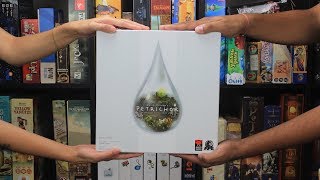
- tight, high-tension two-player play
- unique weather-voting system that drives strategic decision-making
- thematic cloud/harvest loop with clear tension between blocks and growth
- tile variability and crowding of crops keeps strategies evolving
- learning curve due to the interaction of cards, weather effects, and voting
- voting can feel punishing in two-player with limited voting tokens
- pacing can be slower in early rounds as players grok the system
- weather-driven area control with farming as the central objective
- Clouds growing crops by rainfall on fields
- whimsical, light-hearted, nature-themed
Mechanics (from transcript analysis)
- area_control — Players vie for crop growth on tiles by placing and manipulating raindrops via clouds, establishing majority on fields.
- dice_and_harvest — Three harvest dice determine harvest opportunities; when conditions align, crops on tiles harvest and score.
- hand_management — Action cards represent Weather types (Sun, Wind, Rain, Frost) used for actions and voting decisions.
- resource_management — Raindrops serve as a resource used to populate clouds and progress tiles toward harvest.
- round_based_scoring — Game progresses through rounds with end-of-round scoring and endgame scoring on a track.
- tile_and_cloud_interaction — Clouds merge, become thunderclouds on overflow, and rain content is poured onto tiles affecting growth.
- voting_phase — After actions, players vote on weather outcomes which steer the Weather phase and subsequent effects.
Video topics + discussion points
Quotes (from this video)
- very very highly strategic game this game is so intense
- the voting is soul-crushing after a while
- it's basically a programming game
- I would definitely recommend it
- the theme is about clouds raining to grow crops
- area control game
References (from this video)
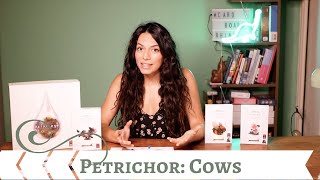
- Engaging climate/ weather theme
- Clear action economy with card-driven choices
- Beautiful art and components (noted generally)
- Expandable with other expansions for deeper play
- Increased complexity from expansions
- Requires base game and other expansions for full experience
- Potential price/purchase considerations for Kickstarter edition
- Weather-driven growth and harvest in a farming eurogame
- Earthy, rain-influenced farming world where players influence weather to grow crops.
- Abstract/eurogame
- Petrichor
- Petrichor: Honeybee expansion
- Petrichor: Flowers expansion
Mechanics (from transcript analysis)
- Action cards — Play cards to influence actions on crops and weather effects
- Clouds and climate track — Clouds with droplets affecting climate and harvest
- Harvest scoring — Score points for crops developed through droplets
- Rain/Drops/Water management — Track raindrops and water drops to grow crops and trigger harvest scoring
- Weather effects — Weather phase affects scoring and timing
Video topics + discussion points
Quotes (from this video)
- the climate phase the new phase added by the cows expansion occurs right after the action space
- you count the current total of methane in the clouds which adjust the climate marker accordingly
- the new tree tiles in the cattle expansion require specific climate requirements to grow
- and there's also a brand new solar mode
- the game i have set up here is for three players
- for every cow on a growing corn grass or wheat tile the player with the most water drops on that tile scores two bonus points
References (from this video)

- expands the posthuman universe
- collaborative design with a strong design team
- balancing across multiple linked titles is challenging
- survival and adaptation with a focus on lore
- post-apocalyptic world
- cohesive world-building linked to the video game
Mechanics (from transcript analysis)
- cross-title development — expands the same universe alongside Vengeance and the video game
- world-building synergy — integrates with other products to deepen lore
Video topics + discussion points
Quotes (from this video)
- It's sort of a puzzle. It's a big puzzle yeah.
- Bring cozy back to post-apocalyptic, Cozying up the end of the world.
- The world without us—exploring what would happen if humans disappeared in five, ten years time.
- We decided to stop being coy about the whole lore and story and actually to delve more to communicate a lot more of that lore.
- Posthuman Saga takes place a good year after the events of the first game and the video game ties into that.
- Nights of Fire is on Kickstarter right now, and meanwhile we're moving on to Posthuman Saga.
- Petrichor was developed by David Chircop and David Turczi, with the Poland team.
- There were four main challenges people had with expanding Posthuman, which narrowed the design space.
- Expansions need to be robust enough to take on new content without destabilizing the system.