GAME SYSTEM
This entry is to allow for discussion/rating of the game system as a whole. It is not for a specific product or release. Versions will appear on the individual item pages.
Pokémon is a Collectible Card Games based upon Japanese anime that have found success internationally, and is one of the longest surviving CCGs currently available. Pokémon was one of the first Collectible Card Games to offer any competition to the market dominance of Magic: The Gathering.
Many people who buy the product often do not play the game, choosing instead to collect their favorite characters from the franchise the game is based upon.
Each player plays the role of a Pokémon trainer that use their Pokémon creatures to battle the Pokémon creatures of the other Pokémon trainer.
The object of the game is to play your Pokémon cards, that represent different creatures, and be the first player to "knock out" (defeat) six opposing Pokémon. You play the game with a deck of sixty cards that include your Pokémon, as well as Trainer cards and Energy cards. Trainer cards affect the game, players, or Pokémon in different ways, most of them temporary, while Energy cards act as the resources in the game.
You start the game by drawing seven cards to your hand. Each player picks a Basic Pokémon from their hand and places it in front of them to start. This is called the Active Pokémon and is the one currently dueling. Players can also place other Basic Pokémon to fill up the five slots on their "Bench". Six cards are then set aside to act as Prize cards. Each time you defeat one of your opponent's Pokémon, you get to draw one of these Prize cards.
Players take alternating turns during which they can:
Draw a card from their deck to their hand
Play Actions:
Put Basic Pokémon in play from their hand to their Bench
Evolve their Pokémon
Attach an Energy card to one of their Pokémon (once per turn)
Play Trainer cards (Only 1 Stadium card and 1 Supporter card per turn)
Retreat their Active Pokémon (once per turn - trade places with one on the Bench (usually at the cost of Energy cards))
Use Abilities
Attack
In addition to Basic Pokémon cards, there are also Evolution cards, which depict evolved forms of Basic Pokémon (or sometimes other Evolved Pokémon). A player can evolve a Pokémon by laying a corresponding Evolution card onto another Pokémon card in play. This can only be done once per turn per Pokémon, and only if the Pokémon has been in play at least one entire turn. The Evolved Pokémon retains any damage and Energy cards, but loses any Special Conditions affecting it, and the card text completely replaces the previous card.
The last action a player takes during their turn, if they choose, is to have their Active Pokémon use one of its abilities to attack the other player's Active Pokémon. Attacks can only be used if the Pokémon has enough Energy cards of the right type attached to it to meet the requirements for the attack; each attack has different requirements and effects that are listed on the card. Most attacks will do some amount of damage to the Defending Pokémon; if defeated, the Defending Pokémon is replaced with another Pokémon from the Bench, and the attacker draws a Prize card. If either the attacker draws their last Prize card or the Defender cannot replace the Active Pokémon (due to an empty Bench), the attacker has won the game.
There are many different varieties of Pokémon available and several different forms of each one, each with different attacks, abilities and characteristics, allowing for many different possible outcomes. Gotta collect 'em all!

- Iconic IP with approachable entry point
- Educational for new players
- Rules and formats can be complex
- fantasy creature battles
Mechanics (from transcript analysis)
- card drafting (concept) — Drawing and playing creature cards to attack opposing players
Video topics + discussion points
Quotes (from this video)
- zia is chaotic it's exciting it's cruel it's beautiful and it's everything in between
- if you want to make the most out of your four and a half hour gaming window and you want a robust deep space experience
- it's labeling it a green legacy game and promising a full reset at campaign end
- this has been a mind at suggested game production and i'm alex your board game sommelier signing off
- Sonora is a combination of a dexterity and a roll and write game
References (from this video)
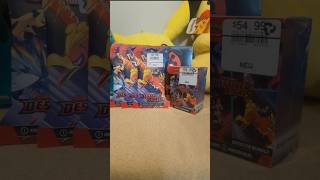
- exciting pulls and chase for rare cards
- variety of playable strategies
- strong collecting culture and community around the game
- high randomness of pulls can frustrate consistency
- ongoing booster purchases can become costly for collectors
- Collecting, strategy, deck-building
- Global Pokémon battles and card collection; booster pack economy
- N/A
Mechanics (from transcript analysis)
- deck-building — Players assemble a deck around chosen Pokémon, balancing attacks and energy to defeat opponents.
- hand_management — Players must make strategic choices with a limited hand to execute combos and respond to opponents.
- random_pack_opening — Opening booster packs yields a random assortment of cards, driving collection strategy and luck.
- resource_management — Managing energy, training, and card usage to maximize attack options each turn.
- set_collection — Players collect cards from booster packs to build better decks and complete sets.
Video topics + discussion points
Quotes (from this video)
- What will you pull next?
- We will be ripping them over the next several videos.
- some of the big hits.
References (from this video)
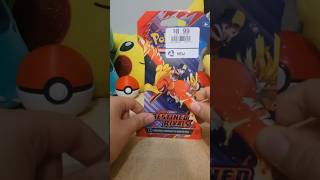
- Evokes excitement and nostalgia through familiar Pokemon legacy and Team Rocket references.
- Accessible glimpse into the unboxing culture of collectible card games.
- Low-barrier entry for viewers curious about booster packs and card collecting.
- Limited informational content for newcomers seeking detailed card stats or gameplay analysis.
- Transcript provides few explicit insights into the cards revealed; emphasis is on atmosphere rather than technical evaluation.
- Collecting, rarity hunting, and strategic building around a shared fandom; nostalgia for classic Pokemon icons and Team Rocket antagonists.
- A casual in-home or studio setting dedicated to hobbyist card collecting, where participants reveal booster packs from a collectible card game universe centered on Pokemon characters and themes.
- Casual, commentary-driven, with light humor and on-screen cues that emphasize excitement, anticipation, and the social aspect of unboxing.
Mechanics (from transcript analysis)
- Collecting and rarity emphasis — Followers chase completing sets and acquiring valuable or nostalgic cards.
- Deck-building (conceptual) — Viewers reference assembling playable decks from collected cards, highlighting strategic implications.
- Pack opening — Revealing random cards from booster packs, introducing randomness and potential for rarities.
- Thematic familiarity — Use of recognizable Pokemon and Team Rocket characters to anchor viewer interest.
- Trading and community interaction (implied) — Social dynamics around card values and trading opportunities are part of the surrounding discourse.
Video topics + discussion points
Quotes (from this video)
- cardboard kid collects. What will he pull next?
- Hi guys, we are continuing with opening Destiny.
- Here's another booster. Let's see what we get.
- Team Rocket's coffin.
- Obama Snow
- Team Rockets World Buffet
References (from this video)
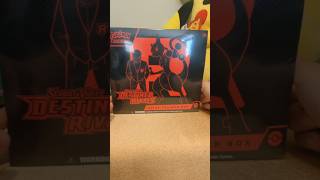
- Exciting pulls that generate nostalgia for classic Team Rocket-themed cards.
- Clear, energetic narration suited for unboxing and collecting audiences.
- Concise pacing that fits the booster-pack/unboxing format.
- Focus primarily on unboxing rather than in-depth gameplay analysis.
- Some card-specific jargon may be opaque to newcomers.
- Collecting, luck-based reveals, and potential deck-building avenues from booster pulls.
- Global Pokémon card game culture; casual home booster pack openings and collection goals.
- Lighthearted, enthusiastic unboxing commentary with moments of nostalgia and card-name references.
Mechanics (from transcript analysis)
- Attack & damage — Pokemon use moves to deal damage and progress toward opponent knockout.
- Card drawing — Players draw cards to build a hand and access additional options.
- Energy attachment — Energy cards are attached to Pokémon to enable attacks.
- Evolution — Pokémon can evolve into more powerful forms during play.
Video topics + discussion points
Quotes (from this video)
- I like the swab of the promo.
- Oh, finally a great hit of Destiny.
- Okay, lets open our first pack from the ETB.
- Row. Wow. Team Rocket Cow Doom Sir.
References (from this video)
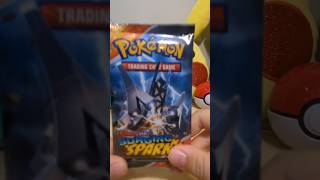
- Exciting to pull rare or illustrated cards
- Engages collectors and players with deck-building potential
- Accessible entry point for newcomers to the Pokémon TCG
- Random luck factor can yield duplicates
- Card values depend on market and condition
- Short video scope may limit strategic context
- Collecting, battling, and deck-building strategy.
- Pokémon world; players duel with decks built from booster packs and cards.
- Competitive, collecting-driven card game experience.
Mechanics (from transcript analysis)
- Attacking and HP — Each Pokémon has HP and attacks deal damage to opponents' Pokémon.
- Bench and active setup — One active Pokémon at a time, up to several benched for future use.
- Deck-building and randomness — Construct a deck from a pool of cards; booster packs introduce randomness.
- Energy attachment — Attach energy to Pokémon to enable attacks.
- Evolution — Evolve Pokémon using evolution cards to access stronger attacks.
- Trainer cards — Use Item, Supporter, and Stadium cards to gain effects and strategic advantages.
Video topics + discussion points
Quotes (from this video)
- today we have a new booster pack. It's surging sparks.
- We are chasing the Pikachu X sir or Ladia EX sir.
- Nice. Villion is illustration rare.
- Thanks for watching.
References (from this video)

- nostalgic for many players
- deep deck-building potential
- collectible nature can be expensive
- combat and creature collection
- collectible card game in the Pokemon universe
- accessible, competitive card game
Mechanics (from transcript analysis)
- card drafting / deck-building — build decks with Pokemon and energy to battle opponents
Video topics + discussion points
Quotes (from this video)
- Canvas is a really cool hand management set collection game with these really awesome transparent painting type cards that you layer on top of one another to score points
- the art is just absolutely amazing
- Wingspan continues to be one of my favorite games of all time
- this game is perfect for anyone who's interested in escape rooms or ciphers and puzzles
- it's really easy to get to the table which is one of the reasons why we played it so often
References (from this video)
- Accessible entry point for newcomers to trading card games
- Familiar IP with broad appeal across ages
- Broad variety of cards allows diverse strategy and collection goals
- Cost of maintaining a competitive collection can be high
- Luck-based pulls can lead to variable perceived value
- Collection and battle using Pokémon cards
- Global Pokémon universe, represented through collectible cards
- Card-based collection and play with emphasis on individual pulls
Mechanics (from transcript analysis)
- draw and hand management — Players draw into a hand each turn and must manage a resource pool (cards) to execute strategies.
- energy attachment and attack costs — Energy cards are attached to Pokémon to fulfill attack costs and enable actions.
- evolution and stage progression — Basic Pokémon can evolve into more powerful forms to unlock stronger attacks and effects.
- status effects and abilities — Attacks and abilities apply effects that influence the battle state across turns.
Video topics + discussion points
Quotes (from this video)
- What will he pull next?
- Let's see if we can get any better hits.
- Today we have another pack of journey together.
- Meow, Scarda,
- Thanks and subscribe.
References (from this video)
- Entertaining and accessible entry point for hobby newcomers
- Fosters community through shared excitement and discussions of pulls
- Low barrier to content creation (no need for complex game setup)
- Limited focus on gameplay mechanics beyond pack contents
- Content can feel repetitive across similar pack-opening videos
- Potential over-reliance on luck rather than strategy or analysis
- Luck-based collection and value chasing
- Casual home video unboxing of booster packs in a collector's environment
- Live commentary with on-screen reactions and anticipation
Mechanics (from transcript analysis)
- Commentary-driven pacing — The host's narration shapes the rhythm of the video and highlights notable pulls.
- Randomized booster content — Each booster pack contains a randomized card distribution, driving excitement and surprise.
- Rarity and chase cards — Common, uncommon, rare, and ultra-rare cards influence viewer engagement and perceived value.
- Set collection and completion — Viewers follow the pursuit of completing a set through pack openings.
- Viewer engagement triggers — Phrases like 'last pack magic' and calls to action (like/subscribe) to boost audience interaction.
Video topics + discussion points
Quotes (from this video)
- Let's see if this box is any more big hits.
- Let's see if we can get some last pack magic.
- Not in this pack.
- Not another wobbuff fit.