Prêt-à-Porter is an economic strategy game set in a world of fashion. Players run clothes companies and fight for dominance during fashion shows. It is – perhaps – one of the most cruel and ruthless of all our games. Money can be a dangerous weapon.
During the game players open new branches and outlets, hire new workers and try to gain new capabilities. New Design Agencies, Brand stores or Preparation rooms are opened, Accountants, Models and Designers are hired, lucrative contracts are signed to allow for short-term profits and expand company’s competencies.
Every single month player’s company gains new capabilities.
Each quarter held fashion shows – each player has to prepare a collection of clothing and has to show it on the show. The public, media, experts estimate collections in four categories and award prizes and diplomas. The more awards (represented by ‘stars’ in the game) will be collected at the show, the more money the players earn for selling their collection!
Will you get award for best Trends? Will you manage to be best in Public Relations and get the Media award? Will you earn more ‘stars’ than your opponent?
If you win ‘stars’, your opponents don’t.
If you win ‘stars’, you earn more money. Your opponents don’t.
If you win ‘stars’, you earn money, you hire new stuff, you get better. Your opponents don’t.
That is why during show you will kill for every single ‘star’. Welcome to the hell…
Prêt-à-Porter is a 2-4 player board game, unique mix of deep economy strategy and direct interaction. Low luck element, many important decisions to be made and many strategies that can be used to acclaim victory. With wide range of different employees, different buildings and contracts you can create your unique company every single time.
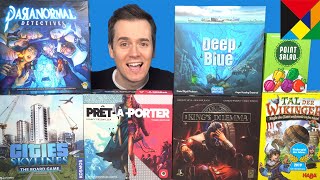
- Clever thematic touches that strengthen the feel of a fashion business
- Rich strategic decisions and long-term planning
- Fresh take on euro-game mechanics with strong flavor
- Not a light game; very punishing if you mismanage funds
- Learning curve and dense decision space may deter casual players
- Costs, budgets, and brand reputation in fashion
- Fashion industry; designing collections within a yearly cycle
- Strong thematic through business decisions and runway cycles
- King's Dilemma
Mechanics (from transcript analysis)
- capital and credit management — Bank loans, lines of credit, and decision making about where to invest money
- economic management — Balance staff costs, material sourcing, and loan risk to stay solvent
- production planning and shows — Submit collections to fashion shows with varying priorities (PR vs largest collection, etc.)
Video topics + discussion points
Quotes (from this video)
- Babylonia pulls you between the competition over cities and ziggurats
- Deep Blue is an incredible game
- Ishtar is a tile laying game in which you're growing gardens in the desert
- Pret-a-Porter is not a game for the light hearted or like-minded
- I am in love with how well Kings dilemma tells its story
- Letter Jam is a cooperative word building game from the makers of Code Names
- City Skyline is based on the popular video game and SimCity
- Valley of the Vikings is my top pick for a kids game at Essen this year
References (from this video)

- Engaging multi-attribute scoring with strategic tension across exhibitions
- Rich thematic integration of fashion industry elements with production and show mechanics
- Varied paths to victory via collections, tokens, and upgrades
- Rule interpretation complexity can be opaque and errors can alter outcomes (as noted with warehouse rules)
- High strategic depth may create a steep learning curve for new players
- Endgame scoring multipliers can create dramatic score swings
- High-fashion design and manufacturing strategy with show-based scoring.
- Fashion industry, runway-inspired production and show environment.
- Let's-play style with rule explanations and occasional corrections.
Mechanics (from transcript analysis)
- Area placement / action drafting — Players plan and place pawns across multiple action areas, with some areas allowing multiple participants to act in sequence.
- Contracts and buildings upgrade path — Players acquire contracts and buildings that modify future actions, upkeep, and scoring potential; upgrades change abilities and costs.
- Exhibition show-phase scoring — At four fashion shows, players score based on multiple attributes (trendiness, quality, PR, and collection size) and award prestige tokens.
- Resource management — Managing money, materials, tokens, and upkeep to enable design and production while pursuing prestige.
- set collection — Players collect materials and designs to complete two- to three-piece collections for exhibitions.
Video topics + discussion points
Quotes (from this video)
- I do apologize for this mistake
- it's still pretty darn close
- money is worth points at the end of the game
- liquidate all of your prestige award tokens into victory points
- this is the one we actually want
- the warehouse rule could have subtle shifts to the overall gameplay
- we could take five money back and change the outcome
- money equals points at the end of the game
- we are going to turn this into a big score
- this last-minute preparation spot could have big effects on prestige
References (from this video)
- Solid game
- Viable filler content
- Economic simulation
- Fashion industry
Mechanics (from transcript analysis)
Video topics + discussion points
Quotes (from this video)
- I used to call this a shelf of shame that was a pretty common thing to call it back in the day and I don't never really liked that term because I don't feel shame that I haven't got to these games
- this is mostly work like this is just a backload of things I probably should get to
- people will still be looking for it
- it doesn't matter if the game is like 20 years old people will still be looking for it
- I've painted this one and I spent a lot of time doing it
- there's no point putting them on the channel I think both of them have been out of print for like a decade
- one of the worst kickstarters by one of the worst studios in board gaming history
- Golden Bell Studios did everything wrong you could possibly think of
- purely toxic company run by incredibly terrible people
- it would be kind of a joke that I'd be able to do a three minute video of feudum
- this game has a tutorial video online that's like 40 minutes long
- The Rose explanation video feels like a parody but it's actually how the game is played
- nothing personally to me puts me off playing a game that then sitting down unboxing it and having a craft assignment
- stop making me spend hours assembling your damn games
- this is an uncontrollable mess right now
- I'm a full-time dad and I'm really doing this in the evenings
- I have a finite space and also it just puts pressure and stress on me having a whole bunch of crap there that I know I'm not going to get to
- I'm going to do a big cull
- I will be published by this company but that doesn't mean I'm going to be slavishly devoted to every single game they put out
- I am a sucker for cute animal games like I really am
References (from this video)
- clever scoring tension
- theme flavor
- learning curve
- design and market competition
- fashion industry
Mechanics (from transcript analysis)
- Auction — bidding or market-based resource allocation
- card_drafting — drafting cards to drive actions
- set_collection — collect sets or combinations for scoring
Video topics + discussion points
Quotes (from this video)
- there are no hard or fast rules to get better board games
- gaming should be fun
- stop blaming external factors on whether you win or lose
- learning can happen in defeat
- the end game can come on you faster than you might initially expect