In Race for the Galaxy, players build galactic civilizations by playing cards representing worlds or technical and social developments.
Each round, players secretly and simultaneously select an action card corresponding to one phase of a round. These phases let players draw cards, play cards, add goods to worlds, or consume goods for VP chips. Only the phases chosen will occur that round. Every player may act in a phase that occurs, but the players who chose that phase get a bonus.
Game end is triggered either when a player has built a civilization of 12 cards or when the pool of VP chips is exhausted. Each player then totals the victory points in their tableau plus any VP chips earned during play.
Detailed Overview
Race for the Galaxy tells a story of galactic discovery and expansion through a single deck of cards. Every card in the deck represents either a world that you might settle or a development that you might implement. Cards placed into your tableau represent your current achievements -- worlds you have colonized, technology you now wield -- while cards in your hand represent the options currently available to you.
To play a card, discard the number of cards equal to its cost, representing other opportunities you must forgo to concentrate on your current course. Once in your tableau, a card provides special powers during the game and, at the end, its listed number of victory points. Many worlds, once placed, also produce goods that can be traded for more cards or consumed for VP chips.
Race for the Galaxy is played in rounds. In each round, you and your opponents secretly select an action phase for the upcoming turn. You can choose to:
• Place a world in your tableau with settle or a development with develop.
• Produce goods on worlds with produce.
• Consume goods for VPs with consume.
• Add cards to your hand with explore or by trading a good.
Each round, only those phases that are selected will occur -- but they'll occur for everyone. Selecting a phase both ensures that it occurs that round and gains the selecting player a bonus.
Round follows round until someone builds their tableau to twelve cards, or until the last VP chip is claimed. The victor is the player with the most VPs.
2018 UPDATE
The second edition of the game is improved for CVD (color blindness) and includes 5 revised cards from the original version and 6 New Worlds promo homeworlds. The promo homeworlds and first edition compatible Revised Cards are both available for purchase through the BGG store.
UPC 655132003018

- Fast-playing with deep decisions
- Stands the test of time as a top engine-building card game
- Highly replayable with many card combinations
- Difficult to teach to new players after heavy personal experience
- Learning curve can be steep for newcomers
- Galactic empire development and production-based growth
- Spacefaring civilization vying for galactic influence
- Abstract engine-building with space opera flavor
Mechanics (from transcript analysis)
- engine-building — Cards added to a tableau generate synergistic effects and points.
- hand management — Players manage a hand of cards to build their tableau.
- Simultaneous action selection — Players secretly choose actions and reveal to resolve them.
- tableau building — Played cards form a personal tableau representing worlds, ships, and developments.
Video topics + discussion points
Quotes (from this video)
- It has stood the test of time.
- it's still one of the best of the best.
- we can play it so quickly... we play it in 15 minutes
- there's no other 15 minute game that makes us feel like we've done as much or made as many interesting decisions.
- This is the first time ever we've played a two-player game sitting side by side.
- it's hard to introduce it to new people, right, when you've played it with one person specifically uh so many times.
References (from this video)

- Textbook engine-building with high variability
- Pacing is brisk; quick plays with think-y decisions
- Numerous decks provide thematic flavor and strategic depth
- Can feel 'samey' after many plays without expansions
- Alpha gamer friction due to simultaneous actions
- science fiction frontier development
- Space exploration and empire-building
- compact engine-building in card form
- San Juan
- Core Worlds
Mechanics (from transcript analysis)
- Deck-building with hidden information — Each player starts with a unique set of cards and evolves their deck during play.
- hand management — Timing and card choice drive growth and victory points.
- Simultaneous Actions — Players select roles that influence the turn and scoring, often revealing simultaneously.
Video topics + discussion points
Quotes (from this video)
- the partner Dynamics in tiu are so fun because you can't talk to each other
- it's the best card game trick-taking game
- this is the game that we keep coming back to for group drama and big moments
- you can't beat the drama at the end when both teams are close to a thousand points
References (from this video)
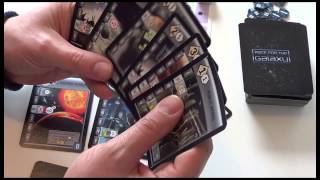
- Elegant, card-driven engine with clean action economy
- Clear progression from exploration to production to settlement
- AI robot adds competition and dynamic pacing
- Distinct world/good system yields varied strategic pathways
- Steep learning curve for newcomers due to multiple interacting concepts
- Rule familiarity required to fully leverage doom/doomed world interactions
- AI behavior can feel deterministic or opaque at times
- Strategic empire-building via card-driven actions
- Space empire-building; galactic development and exploration
- Abstract, card-driven engine-building with thematic world cards
- Terraforming Mars
- Gaia Project
Mechanics (from transcript analysis)
- action selection — Players choose actions (e.g., Explore, Develop, Settle, Produce); both players select two actions and then resolve them in a fixed order.
- card-driven engine — Actions are executed via cards in a shared engine; players leverage bonuses from chosen actions and world/development cards to sculpt their tableau.
- Goods production and economy — Produced goods come in colors representing different types; players attach goods to worlds to symbolize production output.
- Phases and timing — Actions resolve in phases (e.g., exploration, settling, production); phase-specific bonuses and world effects modify standard rules.
- Worlds and developments — World cards provide production and point opportunities; developments enhance the engine and open new options.
Video topics + discussion points
Quotes (from this video)
- there's two types of explore and each one gives you a different bonus
- we draw three cards and you keep two
- it's always us first let's go and do our settle
- we always execute our action before the robots because we got the bonus
- round of race for the galaxy
- the robot player chose to produce
- this is why I suggest using these cards because it helps remind you exactly what it is you're doing
References (from this video)
- Engine-like action sequencing possible through card play
- Not always viewed as a pure engine-builder
- Dominion
- Wingspan
Mechanics (from transcript analysis)
Video topics + discussion points
Quotes (from this video)
- furnace hits the my definition of an engine builder.
- it's a feeling not a mechanism.
- Terraforming Mars as being like a quintessential engine building game to me.
- Concordia... your hand in and of itself is an engine that you are building towards.
- Steampunk Rally matches your definition and it also matches mine in that it is you're making this frankenstein's monster of a racing machine.
- Golem is where you stack the cards and then you keep reactivating them.
- Darwin's Journey comes to mind.
- Dominion is deck builders but can build engines; it sits in a spectrum.
- Villages, vineyards, and aging workers can feel engine-like but not always.
- income is not an engine.
References (from this video)

- One of Matthew's favorite games
- Galactic civilization building
- Space
- Economic engine-building
Mechanics (from transcript analysis)
Video topics + discussion points
Quotes (from this video)
- I went outside like for a whole two hours.
- Well, you're not the only one.
- You signed my game, but I didn't like it.
- That's a funny you signed my game, but I didn't like it.
- You get the one that's signed
- It's like you got the worst the worst component from my least popular game
- I think that's a much better fantasy to have that you fight dragons rather than you're a dentist
- Dragons? Surely that's what my uncle Adam does. Dragons, doesn't he's not a dentist.
- No, you can't make a Euro game set in space.
- It's interesting how that group think sort of works
- I think maybe it's a bit of group think in the industry
- One in 10 maybe
- Stack the deck
- That advice is right
- We probably got to check check our privilege here a little bit
- Very very fortunate to be in that position, aren't we?
- It's a practical problem, really
References (from this video)

- Compact playtime with surprisingly deep strategy
- High replayability due to random hands and varied card interactions
- Rich engine-building potential and exploration of numerous card synergies
- Fast, engaging pacing driven by simultaneous phase selection
- Solid player interaction through phase-picking and timing pressure
- Expansions add meaningful variety without diluting core mechanics
- Iconography can be intimidating for newcomers, though most of it is intuitive with card text
- Luck of the draw can swing outcomes in individual games, though skilled play mitigates this
- Steep learn-curve for first-time players, particularly around optimal phase planning
- Two-player variant was often played without the advanced variant for many plays, possibly altering pacing
- High strategic ceiling may overwhelm casual players seeking lighter experiences
- Thematically, some players feel the theme is more flavor than a driving narrative
- Space exploration, technology advancement, and rapid economic development within a competitive tableau-building race
- Interstellar space exploration and empire-building across procedurally varied worlds
- Competitive engine-building with a fast-paced, race-driven arc
Mechanics (from transcript analysis)
- card_variety_and_paced_deck — Each game starts with a starting world plus a randomized six-card hand, and the draw deck continually feeds the table with new options. The variability of card combinations drives almost every decision and keeps gameplay fresh.
- economic_and_victory_point_management — Players produce Goods, invest in Worlds and Developments, and convert Goods into points or into card effects. The economy is pressured by race to finish and by opponents’ strategic choices, creating a tug-of-war between growth and timing.
- engine_building — Card abilities interact to create increasing power curves. As players acquire more cards, their options unlock in more powerful combos, producing a pronounced sense of progression and strategic depth.
- hand_management — Players hold a hand of cards representing worlds, developments, and actions; each card can be played for its face value effects or used as currency to pay for other cards. Hand size is capped, forcing tough choices about which cards to play and which to sacrifice.
- simultaneous_action_selection — Each round, all players secretly choose one of five phases to activate. Phases are then resolved in a fixed order, with players gaining the primary action of the phase they chose and also the weaker secondary actions of the other players in that phase. This creates a tense, constantly shifting tempo.
- tableau_building — Players assemble a personal tableau of worlds and developments. Each card placed in the tableau provides ongoing benefits, production, or scoring options, creating an engine that scales with the cards acquired.
Video topics + discussion points
Quotes (from this video)
- race for the Galaxy remains one of the best quick playing strategic games for those who enjoy hand management and card combos
- the hand management puzzle is satisfying in and of itself
- Race for the Galaxy is fantastic and there is a reason we've played it over 300 times
- it rewards what we've done with it which is experienced play
References (from this video)
- Deep, meaningful strategy packed into a short playing time
- High replayability evidenced by hundreds of plays across the player base
- Clear engine-building and tableau-development that scales well with play
- Iconography can be dense and potentially intimidating for new players
- Early rounds can feel slow as players set up and optimize their engines
- Interaction from other players can feel rushed or pressure-filled in simultaneous play
- engine-building, tableau development, sci-fi civilization
- Space opera-era galactic civilization construction via card-based tableau
- abstract, mechanic-driven flavor conveyed through cards
Mechanics (from transcript analysis)
- deck-building / tableau-building — Players assemble a personal tableau from cards drawn or gained, with each card providing ongoing effects and engine potential.
- engine-building — Selected cards grant ongoing effects that escalate efficiency and throughput over the course of the game.
- hand-management — Managing a hand of cards to optimize actions, combos, and future draws.
- Set-collection / multi-use cards — Cards provide various values and synergy that interact across the tableau, creating strategic depth.
- Simultaneous action selection — Rounds progress with players secretly choosing actions and revealing them, affecting resource generation and timing.
- tableau-building — The arrangement and composition of cards on the table determine engine output and victory potential.
Video topics + discussion points
Quotes (from this video)
- There is a reason we've played it over 300 times.
- A lot of meaningful strategy packed into a short playing time.
- It's a tableau-building engine that remains compelling after hundreds of plays.
References (from this video)

Mechanics (from transcript analysis)
Video topics + discussion points
Quotes (from this video)
- five action cards and you slide the rest of them down
- the puzzle of how to maximize your actions is so rewarding
- the simultaneous play fantastic
- the fast-paced, epic feel of Through the Ages
- the ultimate Lord of the Rings board game
- the money that you're paying and you build and collect in Millennium Blades
- the definitive racing game in Heat: Pedal to the Metal
- this is Arkham Horror: The Card Game—living card game experience
References (from this video)

- Fast, replayable, and high-value for time
- Multiple endgame paths create depth
- Strong group dynamics and interaction
- Steep learning curve for new players
- Some players feel the early game can be opaque
- space empire construction and engine-building
- Outer space, galactic development
- abstract, strategy-driven
- Wingspan
- Warfare-themed engine builders
Mechanics (from transcript analysis)
- card drafting / tableau building — Players draft cards to build a personal tableau that drives actions and scoring.
- Simultaneous Actions — Players choose actions in parallel, creating a tension of competing priorities.
Video topics + discussion points
Quotes (from this video)
- There's no turning back.
- Race for the Galaxy is a contender for the best.
- The dopamine rush of every chip you draw from that bag.
- Quacks of Quedlinburg is such a pure fun game.
- Feast for Odin is a big sandbox design.
- Teach You is by far my favorite card game in terms of teaching and playing with new people.
References (from this video)

- extremely fast, highly replayable in 15-minute rounds
- tight, elegant engine-building with minimal downtime
- cards are not sleeved and show wear over time
- can feel one-note without expansions
- deck-building with rapid decisions and engine shaping
- sci-fi empire building in space
- compact rounds with deep strategic payoff
- Dominion
- Race for the Galaxy: Anticipated Promos
Mechanics (from transcript analysis)
- deck_building — players build engines from a dynamic card pool
- simultaneous_action_selection — players secretly choose a phase each round and reveal together
Video topics + discussion points
Quotes (from this video)
- the box is worn, it is beaten, and yet it is still holding strong
- you've got to have four people and you have to play it with people that you're going to be able to play with again
- the tension of those things... I love the stress and the bet of 'is this the right move?'
- it's the granddaddy of the genre
- Race for the Galaxy sits the top of the list
References (from this video)
- tight, elegant design
- quick playing time relative to many Euro-style games
- iconography can be dense or confusing for new players
- space exploration, development, and empire management
- futuristic space empire-building
- card-driven, fast-paced engine-building
Mechanics (from transcript analysis)
- card_drafting — players select and draft action cards to build engines and take actions.
- iconography_and_text — cards convey information via icons and text (topic raised in discussion).
- set_collection — players collect cards/resources to fulfill objectives and advance.
Video topics + discussion points
Quotes (from this video)
- There are so many good games.
- There's a lot of iconography. I wish there were sheets that tell you what icons do.
- The new Cichlades Legendary Edition is absolutely amazing.
References (from this video)
- fast, highly replayable
- tight decision space with meaningful choices
- iconography can be opaque for newcomers
- science fiction strategy with card-driven actions
- space empire-building
- fast, card-driven engine-building
- Star Realms
- Gaia Project
Mechanics (from transcript analysis)
- Card-driven actions — cards determine actions and outcomes; interaction via points
- set-building / engine-building — select actions via cards to build a space empire
Video topics + discussion points
Quotes (from this video)
- Rule books just themselves heavily contribute to the reason why I feel I have to learn a game myself way before teaching to others.
- Is it the rules? We got to talk about it.
- The rules can be daunting cuz they're even daunting for me.
- We need cheat sheets that you know what is it? Rule books for dummies.
- Bad rule books are a sign of insufficient play testing.
- You have to make a commitment to this hobby to say, 'I'm going to take my time and learn this game.'
- universal iconography so that we okay, I use this in the other game. I know what this means.
- Content creators can do it, but publishers should do it from their own house.
References (from this video)

Mechanics (from transcript analysis)
Video topics + discussion points
Quotes (from this video)
- Twilight Struggle is one of my all-time favorite games.
- Tabletop Simulator is one of the best ways to be able to play a whole bunch of board games on your computer.
- Terraforming Mars is my evening unwind game.
- Slay the Spire is a really clever deck-building dungeon-crawler.
References (from this video)
- very popular card game
- space
- galaxy
- Roll for the Galaxy
Mechanics (from transcript analysis)
Video topics + discussion points
Quotes (from this video)
- Formula D is really the epitome of roll and move games in the modern era
- Settlers of Catan which was perhaps the most significant euro game that really sparked this whole new wave of modern board games
- Yahtzee has become a mechanic in its own right
- epitomises dice games really and how far they've come
- this is a bit of a tricky one to learn, it's well worth the effort
- ridiculously more fun than it should be
- playing with children it's fantastical
- absolutely brilliant
- this is my top 10 different ways to use dice in wooden board games
References (from this video)

- excellent bang for the buck on playtime
- high variability with card combos
- steep learning curve for new players
- can feel confrontational in some variants
- strategy with hidden information and resource management
- space empire-building through card drafting
- rapid, puzzle-like decisions with high variability
- San Juan
- Innovation
Mechanics (from transcript analysis)
- card drafting — players select cards to build their strategy
- hand management — optimal play depends on card timing and synergy
- scoring via combinations — points come from card powers and board state
Video topics + discussion points
Quotes (from this video)
- the sandbox of what's going to happen in this epic Cooperative experience
- the bane of Arkham Horror's existence was the stupid gate burst
- best bang for the buck
- 75 plays
- epic 3D maps
- nostalgic for me
References (from this video)

- Fast, elegant engine-building
- High replayability and tight decisions
- Can feel abstract; less tactile than some card games
- Conquest through card-driven actions
- Spacefaring civilizations building their galactic empire
- Strategic abstraction; thematic flavor via cards
- San Juan (card-driven hand management overlap)
Mechanics (from transcript analysis)
- Card drafting and hand management — Choose cards to build engines and actions
- Variable phase abilities — Cards provide different effects depending on play order
Video topics + discussion points
Quotes (from this video)
- you can't stop
- the more people are into it, the better it is
- it's a Dice Tower essential
- a masquerade of classic and modern designs
References (from this video)

- Deep, rewarding gameplay once the iconography is learned
- High replay value, especially with expansions
- Strong positioning of player agency through action selection
- Steep learning curve due to a dense icon system
- Initial teach/setup can be daunting for new players
- Interstellar economy and exploration
- Space opera, galactic empire development
- Abstract/strategic
Mechanics (from transcript analysis)
- action selection — All players secretly select actions; executed in a way that all players’ actions become available to others, driving indirect interaction.
- hand/resource management — Players manage cards representing worlds and technologies to build their empire and score.
- set production/scoring via planets and developments — Some actions enable exploitation or development that contribute to end-game scoring.
Video topics + discussion points
Quotes (from this video)
- Race for the Galaxy is a fantastic card game
- it's a real pain in the ass to learn/teach because it's got a rather bamboozling icon system
- it's a really rewarding game made even better with a couple of the expansions
- I love Puerto Rico I love the feel of it and it's just a classic game
- Captain Flip is such a simple promise
- Carnival zombie is a rip roaring rolicking romp
- this game is basically chaos in a box
- it's a deck building racer
- Royals is effectively a que pushing game
References (from this video)

Mechanics (from transcript analysis)
Video topics + discussion points
Quotes (from this video)
- Say Anything board game challenge with a board gamey twist
- That is the say anything board game challenge definitely try this at home and let us know
- It's not as easy as people probably think it is
- We cheated maybe we should have draped something over them
- Both said Chronicles of Crime at least four times
- We were talking about the expansions in our heads
References (from this video)

- high-level strategic reading of opponents' intentions
- multi-use cards create deep decision points
- alpha-strategy hunger due to look-ahead
- can be tough for new players to grok all interactions
- interstellar development and empire-building
- futuristic galaxy
- card-driven space opera
Mechanics (from transcript analysis)
- card drafting with multi-use cards — players build a tableau and use cards for multiple actions
- hidden action selection — each round players secretly choose an action to reveal
- phase-based execution — if a phase is not chosen, it is not performed in that round
Video topics + discussion points
Quotes (from this video)
- Balancing what actions you get on either side of the action space is kind of the whole fun of this.
- This is one of those weekend night games where this low overhead is quick to play, but it still has an interesting hook that keeps me coming back.
- There is no randomness in the game. Once the board is set up, all outcomes are on you and your decision.
References (from this video)

- Streamlined for fast play while retaining deep strategic options
- High replayability and strong tension based on opponents' choices
- Clear core loop that scales with expansions
- Learning curve can be steep for new players
- Expansion balance may shift perceived power dynamics
- Strategic space empire development and exploration
- Spacefaring civilization expansion across galaxies
- Competitive engine-building with hidden information
- Dominion
- Agricola
Mechanics (from transcript analysis)
- card_valuation_and_tower_growth — Cards in hand double as the core engine for growth and scoring paths.
- engine-building — Players develop a personal tableau to generate military power, points, and resources.
- hand-management — Players hold a hand of cards that function as both actions and resources.
- simultaneous_action_selection — Actions are selected via played cards, shaping pacing and strategic choices.
Video topics + discussion points
Quotes (from this video)
- Race for the Galaxy is so streamlined in what it's doing and it just does it perfectly.
- 313 plays and I just want to keep playing it.
- getting that hand of cards, figuring out what you're going to play, the whole your cards are also your resources.
- this 15-minute game
References (from this video)

- deep strategy in a quick play footprint
- excellent with multiple players; still fast with two
- can be complex for new players
- iconography may require learning
- galactic expansion through strategic card play
- space empire development, card-driven
- abstract/economic
- Earth
Mechanics (from transcript analysis)
- deck-building-like construction via card play — Players build a deck of cards that affect possible plays.
- hand management with variable card powers — Players play cards to perform actions; card choices shape future options.
- simultaneous action economy — Turn order and resource management drive tension and depth.
Video topics + discussion points
Quotes (from this video)
- Luigi is the word that you'll want to enter on that survey form for the giveaway.
- Earth is … simultaneous play … triggers something for everyone else.
- Ticket to Ride puts a beautiful tension of trying to lay trains and manage tickets.
- Quacks … the pulling out of the bag and kind of push your luck is so fun.
- Brass Birmingham is an economic network builder with canal era mechanics.
References (from this video)

Mechanics (from transcript analysis)
Video topics + discussion points
Quotes (from this video)
- There's no real order.
- There are ties on the dates.
- The 12 oldest and the 12 newest.
- There's just brownie points.
- I haven't played Age of Innovation.
References (from this video)

- Pioneering simultaneous-action design
- Deep engine-building with scalable strategy
- Earth
- Planet Unknown
Mechanics (from transcript analysis)
- Deck-building engine — Players assemble a personal deck providing continuous engine growth and resource generation across rounds.
- Simultaneous action selection with stacked action types — Players select from multiple actions; one player executes a primary action while others may perform secondary actions in the same phase, building a deck-based engine.
Video topics + discussion points
Quotes (from this video)
- this game is so good
- it's got a similar mechanic to Race for the Galaxy
- every single turn you are running this kind of entire, you know, production engine
- the game is just incredibly interactive
- Not interactive. That's actually the opposite of what it is because it's a game where like you're not just wait you're not waiting for your turn
- it's a very dense game
- Oh, it'd be such an easy game to cheat at
- We should do a top top easiest games to cheat at sometime
- Yeah. And the top games you have cheated at
References (from this video)
- Nice composition
- Clearly sci-fi theme with space station
- Doesn't clearly convey gameplay
- Civilization building
- Space
- Sci-fi
Mechanics (from transcript analysis)
- Card game — Space civilization building
Video topics + discussion points
Quotes (from this video)
- The box cover makes a promise to the customer
- Every box cover tells me what I'm going to be doing and how I'm going to be feeling
- This artist is one of the best board game artists working in the industry right now
- This is how you do it
- This cover is a mess
- Striking iconic design
- The box cover is not selling the game