Race to the Raft is a co-operative, path building, tile placement, social puzzle board game for 1-4 players.
In the game, you play the role of the disorientated island cats who are lost on the smoke-filled island. Nothing seems to be where it once was, and you must find a safe route to the raft by placing pathway cards.
As you build pathways, fire — which is represented by different shaped tiles — will spread across the island, limiting your options. You need to find the balance between creating long pathways and keeping the cats ahead of the flames as you move towards the raft.
The game includes 81 scenarios from which to choose, including a simple tutorial that gradually introduces you to new rules and an advanced tutorial for when you're ready for a far greater challenge.
Choose cards, build pathways, and control the spread of the fire as you work together to guide all the cats in their race to the raft!
—description from the publisher
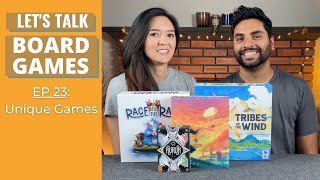
- Cooperative tension with a puzzle-like feel
- Campaign depth with many scenarios
- Engaging for groups who enjoy puzzle-solving under pressure
- Morbid thematic framing may be off-putting for some players
- Can be punishing if players mismanage communication or timing
- cat rescue in a perilous, timer-driven scenario
- a herd of cats is being rescued from a burning island; players cooperatively guide cats to a raft
- campaign-driven narrative with recurring scenarios and a sense of urgency
- Isle of Cats
Mechanics (from transcript analysis)
- cooperative card placement — Players lay down terrain and path cards to create safe routes for cats toward the raft; collaboration is essential.
- limited communication tokens — Tokens restrict talking during another player's turn, increasing tension and forcing strategic planning.
- movement and discard mechanics — Discarding cards can move a cat more quickly, but at a cost; strategy revolves around tilting the puzzle in your favor.
- polyomino fire tiles — Fire tiles are drawn and placed, blocking routes and adding spatial challenges reminiscent of a puzzle.
- scoring via tiles and campaign progression — Progression across scenarios affects scoring and unlocks broader content; choices affect future rounds.
Video topics + discussion points
Quotes (from this video)
- it's very light but still with enough strategy
- the art is very nice
- Unique because in most trick-taking games you have to follow the leader
- I think it's very puzzly and that's the sweet spot for me
- the look of the board when you're placing out fire it's scary
- it's quiet; a tense environment knowing there are dire consequences for these cats
References (from this video)
- Strong solo puzzle experience with a large selection of scenarios
- Good value for content and components
- Solid grid/pattern puzzle feel similar to Honshu/Hokkaido
- Cooperative core with a clear solo appeal
- Multiplayer can feel less engaging for traditional gamer audiences
- Meowing/cat-token mechanic felt gimmicky and misaligned for some players
- Colorblind accessibility is limited in practice
- Rescue and teamwork under pressure in a cooperative puzzle
- Cat island with burning sections, where cats must reach a raft to be rescued
- Scenario-driven rescue mission with cooperative play
- Isle of Cats
- Honshu/Hokkaido
- Walking in Province
Mechanics (from transcript analysis)
- Cooperative play with restricted communication — Players coordinate collectively, but must cease communication during another player’s turn unless using special tokens.
- Deck-drafting and card usage — Draw from multiple decks and choose how to deploy cards to move cats along color patterns.
- Grid-based card placement — Players place grid-pattern cards to alter the landscape and influence cat movement toward the raft.
- Polyomino-like tile placement for fire — Draw and place large fire tiles to create fire spread constraints, blocking or guiding cat routes.
- Scenario-based variability — A rulebook and campaign-like content provide varied boards, fires, and cat placements per scenario.
- Solo mode with a distinct but related flow — A single-player variant that offers a puzzle-focused experience with slightly different setup from multiplayer.
Video topics + discussion points
Quotes (from this video)
- this is a full Cooperative game that can also be played solo and the solo mode is slightly different to the multiplayer but for the most part exactly the same
- it's definitely going to be more sort of family friendly feel this one
- I think it's going to be more for new people to games and certainly for families with younger your kids
- I think this game deserves a 7 out of 10 because I've enjoyed my time with it as a solo gamer
- I just hate this stupid meowing cat thing