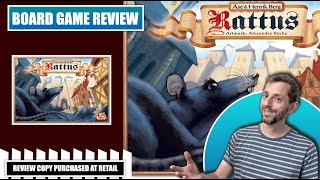
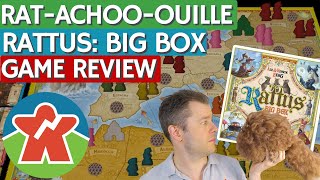
Europe, 1347. A disaster is about to strike. The Black Death reaches Europe, and during the next 4-5 years, the population of Europe will be halved.
The players settle in the various regions of Europe, while the plague spreads throughout all of the continent. The players gain help from the various classes of the middle ages: the Peasants provide population growth, the wise Monks keep the rats away, the rich Merchants flee when the plague approaches, the warfare conducted by the Knights spreads the plague to new areas, the Witches control the spread through magic and witchcraft, whereas the Kings avoid the plague by staying in their fortified palaces. But the plague does not make any distinction: when the rats arrive, no one can feel safe.
When the plague withdraws and the game ends, the player with the highest surviving population wins.
Rattus is a medium-strategy game that takes place in the Dark Ages during the black plague. The players try to hold off the disease.
To do this they get help from farmers, magicians, knights, nobles, ... But nothing helps as long as the rats keep coming.
- snappy, party-friendly pace
- high portability
- not as strategic as heavier titles
- dexterity strategy with humor
- planetary rats on a distant world
- lightweight, fast-paced
- cornhole
- XCOM-inspired dexterity concepts
Mechanics (from transcript analysis)
- dexterity — tossing and flicking pieces to score points
- grid placement — placing diamonds on a grid to score
Video topics + discussion points
Quotes (from this video)
- It's one of my favorite games of all time. It's one of the games that really got me into the hobby.
- Don't become a ghost. Every time you lose a round, you get a ghost card with a game-changing ability.
- Epic tin box dungeon crawling in a tin. Full adventure, zero bulk.
- I love spinning.
- Grassfed is a cozy deck building game for one to four players.
- Words are your weapons. Having that huge vocabulary will finally pay off and keep you alive.
References (from this video)
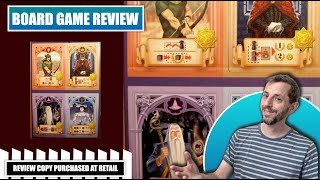
- adds thematic depth by introducing recognizable historical/fantasy figures (Joan of Arc, Merlin, Robin Hood, Dracula)
- the chivalry and other class-based cards create meaningful strategic choices while preserving a straightforward flow
- Robin Hood and Merlin offer clear, intuitive mechanics that players can grasp quickly
- the expansion cards increase replayability by widening the decision space without requiring a complete system overhaul
- thematic ties to the game's core ideas feel consistent, enhancing immersion
- Dracula can introduce additional complexity that may be less accessible for casual players
- the mechanics can be conceptually hard to explain to new players, especially when multiple card pools intersect
- thefulness of randomness may frustrate some players who prefer deterministic planning
- promo cards from Essen 2010 can be difficult to obtain, limiting accessibility and collectability
- reliance on other expansions for full flavor may not appeal to players who want standalone tightening of the base game
- class dynamics, charity vs wealth, the spread of influence through disruptive tokens
- medieval European city-states amid plague and political intrigue
- card-driven, token-based interaction with a strong thematic hook built around iconic historical/mythic figures
Mechanics (from transcript analysis)
- class-card access and activation — cards tied to social strata (royalty, bourgeoisie, peasantry, church, chivalry, magic) grant strategic options when activated by token results, intertwining thematic elements with game actions
- cubes and majority influence — in some effects (notably chivalry driven), the player with the majority of cubes in a space can displace or reduce an opponent's influence, providing a direct control mechanic tied to player ownership
- plague token movement and placement — plague cubes can be moved or replaced by players under certain card effects, creating tactical positioning and a way to influence board state against opponents
- randomization with potential for powerful synergies — randomness is a core feature: the token draw creates variability and the opportunity to chain effects from multiple card pools, followed by scenarios where opportunities may be wasted if the token value is unfavourable
- token draw with variable activation thresholds — a rat token is drawn to determine which classes or card pools may grant abilities that turn; the value on the token dictates which class cards can be activated and what effects may be accessed
Video topics + discussion points
Quotes (from this video)
- joan of arc is a really nice card
- randomness is really what rattus is all about
- merlin is also fairly straightforward
- you can take that token from the card and have a look at it
- it gives you a little control over which rat tokens are in which regions
- thematic with dracula i suppose but it's quite a convoluted card to explain
- if you can get your hands on it this is a nice little set of course it's lovely to have
- recognizable characters in the game robin hood merlin you know these are all characters everybody knows
References (from this video)
- high component quality with thick, tactile character boards
- art style/illustrations are attractive and cohesive with the theme
- small, portable footprint and quick playing time
- expansions add significant variety and alter balance in interesting ways
- thematic handling is light but effective for a game about the Black Death
- high randomness and luck factor
- endgame can swing dramatically and feel unpredictable
- many rat activations can produce anti-climactic moments when there aren’t enough cubes to trigger effects
- base game only has six characters, which can lead to repetitive experience unless expansions are used
- not a strict strategy game; much depends on the luck of rat turnout and activation
- Black Death / plague dynamics
- Europe map with rat plague spreading across medieval Europe
- light, thematic treatment of a dark historical theme
- Oregon
Mechanics (from transcript analysis)
- action_selection_and_character_selection — each turn you choose a character power from a central supply or from another player's board to gain a temporary bonus that affects placement and movement
- area_control — players add population cubes to regions to claim majority; the majority in a region influences scoring and survival of placed cubes
- character_abilities — six base characters grant unique modifiers (e.g., extra cube, moving plague token, transferring rats) that influence risk and territory control
- end_game_and_final_round — game ends when rats run out or one player fills all cubes; a final round has all rats activating and players using powers again for last scoring
- plague_and_rats — a plague piece moves around Europe; rat activations depend on volume in a region and can kill cubes when activated
- token_and_movement_mechanics — tokens (rats, plague) move and interact with spaces; some characters affect movement or protection of cubes
Video topics + discussion points
Quotes (from this video)
- this game is not without its problems
- there's a lot of randomness
- it's really very random that you know you couldn't truly call this a strategy game a very light strategy game
- the final round where all the rats activate and players get to use their player powers one final time and then we see who has the most cubes on the board and that person wins
- the theme is nicely handled
- the illustrations i really like this style of illustration
- expansions bring in so many more characters that really changes the game up
References (from this video)
- compact and accessible
- tight decisions
- on the small side for some players
- outbreak control and resource management
- medieval plague-era Europe
- tight, tense, compact play
Mechanics (from transcript analysis)
- area control & event cards — players influence outbreaks and manage rat plague with event cards
Video topics + discussion points
Quotes (from this video)
- probably the greatest party game of all time
- it's a betting racing game
- this is basically one huge massive rondell of a game
- I hate painted miniatures
References (from this video)
- Gateway-friendly and family-weight
- strong value when paired with a robust expansion lineup
- upgrades add meaningful, tactical decision-making
- Pied Piper expansion introduces fresh class-card diversity
- beige, generic aesthetics and board presentation
- base game can feel light and lacks bite without expansions
- scaling can be uneven (3 players dull, 5–6 chaotic)
- some expansions introduce rule bloat or heavy reference needs
- population growth under looming plague, class-based abilities
- Medieval Europe plague era on a population-claim map
- historical with light rat/plague theming and strategic movement
- Power Grid
- Earth
Mechanics (from transcript analysis)
- Area Control — Players place population on a map to influence territory control and end-game population totals.
- Class cards with bonuses — Players choose class cards that grant special bonuses (e.g., more population, movement, token manipulation) but increase plague risk.
- Plague resolution phase — A plague marker spreads based on tokens and regional populations, triggering effects when thresholds are met.
- Token management and upgrades — Rack tokens drive plague spread and region effects; upgrades improve class abilities and can shift strategy.
Video topics + discussion points
Quotes (from this video)
- this is a family weight game through and through
- Aesthetics Wise It's beige is all get out
- the base set of ratters on its own with nothing else
- it's not particularly exciting
- Pied Piper is a must throw in
- it's not a bad game
- the base game itself is pretty light
- upgrades can shift the game in interesting ways
- it's a hard one to kind of rate
- the expansions add a lot of variety and value
References (from this video)

- plastic nature of plague mechanic is thematic
- complex for new players
- city population management and plague
- plague era Europe 1347
- historical strategy
- Agricola
Mechanics (from transcript analysis)
- area control / population tracking — players place cubes and use class cards to affect populations and plague spread
Video topics + discussion points
Quotes (from this video)
- I love the game Patchwork, a brilliant tile-laying game
- if Cottage Garden becomes something like that, then that's fantastic news for all of us
- the main Crux of the game is serving customers
- I love the artwork, it's a totally new style again
- Rattus is coming back after a while, out of print with all the expansions and a new expansion
- this big tin here I've been looking forward to this one for a long time because Sushi Go is just a magnificent game
- Skull King, a trick-taking dice game
- adults version of Code Names Not Safe for Work
- Evolution Junior, it's called Evolution the Beginning is only going to be available at Target for its first year