“200 years of Earth rule. 200 years of being told what to do by people on some distant blue orb in the sky. A pampered planet populated by soft people. Earth politicians playing golf on a sunny day, while sipping French champagne and eating grapes, dare to tell us how to live? They don’t know us, because they are not us! We are the sons and daughters of Mars! The children of the red planet! We were born in the red dust and we say no more to Earther rule!”
- Aroha Thompson, Red Dust spokesperson and Mining Union organizer.
It is 2250 and the bicentennial celebrations of the first human colony on Mars are about to begin. 200 years of human achievement, but also 200 years of hardship. Mars is an unforgiving world, a barren wasteland on the surface, therefore the people live in vast underground cities known as labyrinths.
Over the years, the people of Mars have formed their own culture and identity and want more say in their own rule. To many, Earth is a remote world with too much control over Martian affairs. Furthermore, Earth’s corporations have too much power over life and death. Some long for a green Mars, covered in oceans and life. While others recoil at the idea that humanity will destroy the climate of another planet.
Red Dust Rebellion is volume XII of GMT's acclaimed COIN Series, and tells the story of the Martian revolts of the 2250s and the rise of Martian nationalism.
—description from the publisher
- reveals the importance of aligning mechanism with thesis
- demonstrates collaborative development model
- unclear initial expression may require readjustment
- Expressing designer thesis through game design
- Indochina/Vietnam-era revolutionary context
- Thesis-driven exploration of insurgency vs. resistance
Mechanics (from transcript analysis)
- collaborative problem solving — designer and developer iteratively adjust rules
- mechanism experimentation — testing alternative levers to realize designer intent
Video topics + discussion points
Quotes (from this video)
- we love people and that is how we solve this problem
- we like games but we love people
- we want lots of eyes on every game
- the designer wins because we brought the designer in
- curiosity is king when you're trying to get feedback
- every game that we don't publish is a trinket
References (from this video)
- strong thematic ambition in a coin-like sci-fi frame
- asymmetric tension between factions that creates meaningful choices
- high learning curve
- complex for casual players
- insurgency and counterinsurgency in a sci-fi context
- sci-fi insurgency and counterinsurgency in a distant future
- system-driven, factional tension with political overtones
- Distant Plane
- Cuba Libre
- Twilight Struggle
Mechanics (from transcript analysis)
- card-driven / event-driven — cards resolve events and actions that influence insurgent dynamics and government responses
- population/power dynamics — mechanisms that reflect insurgency growth and control through card-based actions
Video topics + discussion points
Quotes (from this video)
- Echo Echo from the Dark started before we had we had conceived of IC.
- development's very much an editor kind of role.
- fun, nobody has fun anymore.
- you don't always have to be modeling a thing necessarily.
- the nice thing about GMT is that P500 kind of covers a lot of that boat in many cases.
- I love thinking about how all of these systems interact in a fun way.
- This is a big game about sci-fi that I love.
- the comments that are easy to get are, 'Oh, you should do this. You should change this deck to do this thing or you should add this die mechanic or something like that.' And those I find are the least useful comments.
- the best kind of development work is when it's a light touch and you can iterate quickly with a collaborator.
References (from this video)
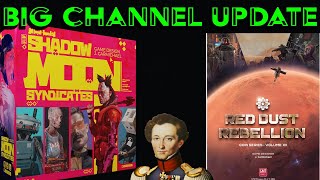
- host expresses clear pride and personal investment in the project
- anticipation generated by the printing stage and near-term availability
- association with GMT Games implies strong production and historical weight
- no explicit drawbacks or concerns mentioned in the transcript
- Unknown
- Unknown
- backstory/content-rich world-building
Mechanics (from transcript analysis)
- unknown — Not discussed in transcript
Video topics + discussion points
Quotes (from this video)
- I designed Red Dust Rebellion before before it existed so it was on GMT's radar as early as 2017
- it's going to be a lot of people's forever game because I'm really really stoked with just how replayable it is, just how deep it is and just how many strategies there are within Shadow Moon Syndicates
- the Channel's not going away at all it's just going to drop down to a lower priority because I have three really big things coming up
References (from this video)

Mechanics (from transcript analysis)
Video topics + discussion points
Quotes (from this video)
- I made it up
- this is a good launching point
- Skies Above Britain went up three places
- it's a wonderful simulation
- I would go with Pax Premier
- Undaunted Kalisto on the list
- I Napoleon shipped in what June
References (from this video)
- revolution and change
- dystopian/rebel scenario (described via enthusiasm for design)
- thematic with political overtones
Mechanics (from transcript analysis)
- unknown — Not discussed in transcript.
Video topics + discussion points
Quotes (from this video)
- there's something intrinsically incredibly rewarding about winning a game with a faction no one thinks is any good
- i love games that understand that family friendly doesn't have to be boring and awful
- the fact that there's a game for everyone out there is pretty cool
- i love designing board games
References (from this video)

- ambitious, space-themed coin-like experience
- strong asymmetry and thematic flavor
- high learning curve for newcomers
- heavy rule set
- counterinsurgency, terraforming, factional politics
- Mars; four factions with asymmetrical goals
- asymmetrical war game with factional objectives
- Kuba Libre
Mechanics (from transcript analysis)
- asymmetrical factions — Each faction has unique abilities and endgame goals.
- earth-mars cube issuing / resource flow — Earth-based resources interact with Mars operations to influence gameplay.
- variable endgame / scoring objectives — Different endgame conditions and victory points depending on faction.
Video topics + discussion points
Quotes (from this video)
- This game is phenomenal.
- It's closer to the Kuba Libre end of the learning spectrum than some of the big ones.
- I would like to play it because I do love Kuba Libre.
- I freaking loved it.
- I love multiplayer solitaire games.
- Pergola is the newest game from Rebel Studio, uh who you may know, they did Meadow, which is a game that we really enjoy.
- it's a massive like resource management. Sounds like a optimization game.
- I absolutely adore the theme.
References (from this video)
- Grounded, immersive setting with substantial background material that supports world-building
- Rich asymmetrical design offering diverse strategic avenues and faction identity
- Dynamic card-driven play with meaningful interactions and evolving state
- Distinctive mechanics such as flashpoints and the reclaimers card system that add freshness
- Significant complexity and long playtime may deter casual or time-constrained players
- Mature or rough thematic content could be challenging for some audiences
- Accessibility hinges on players' willingness to invest in extensive rule understanding
- Power and governance in a frontier world: corporate influence vs Martian autonomy; the ethics and consequences of terraforming; population displacement and resilience under environmental stress.
- Mars, 200 years after Earth colonization, where corporate powers and Martian factions wrestle for self-rule amid dust storms, resource strain, and ongoing terraforming debates. The narrative unfolds across contentious territories, shifting loyalties, and a fragile balance between Earth government, colonies, and rebellious movements.
- Card-driven, asymmetric design with flashpoints and evolving event-driven arcs; grounded in a dense background material that foregrounds geopolitics and social consequences.
- Cuba Libre
Mechanics (from transcript analysis)
- area_control — Regions are contested to accrue influence and enable or restrict actions; control yields strategic leverage and victory pressure.
- asymmetry — Each faction has unique powers, units, and victory conditions, creating divergent playstyles and strategic goals.
- card_driven_turns — A deck governs turn structure: you reveal the current card, resolve it, reveal the next, and iterate with eligibility ordering that shifts by card.
- combat_resolution — Attacks are resolved via dice with results tempered by rebels in play; populations and damage tracks reflect the impact of conflict.
- dust_storm_and_visibility — Dust storms periodically alter the board's visibility and restrict targeting, influencing timing for checks and reinforcements.
- flashpoint_rounds — Flashpoints drive time progression; immigrants, supplies, and troops flow from Earth as pulses advance toward critical thresholds.
- operations — Factions execute four core operations—recruit, move, locate the enemy, and attack—with modifiers and terrain interactions shaping outcomes.
- reclaimer_card_system — Reclaimers introduce a distinctive card mechanism that can substitute events, modify turn order, and enable ongoing capabilities.
Video topics + discussion points
Quotes (from this video)
- Red Dust Rebellion is part of the coin series like Cuba Libre here
- Red Dust Rebellion - 7 years ago it looked like this
- just some quick notes from me, red dust Rebellion is long and it's complex and it deals with some very serious themes
- and as much as I love my own game I can't recommend it to anyone who will find the complexity too much or the content too rough
- that said I tried my best to make it very grounded and the game comes with a lot of background material
- I hope you have as much fun exploring the game and setting as I did making it
References (from this video)

- engaging theme
- accessible rules
- tight design
- learning curve for new players
- potentially asymmetric balance challenges
- counterinsurgency, political intrigue
- Post-war insurgency in a desert city
- story-driven
- Salt and Sea
- Vampire Village
Mechanics (from transcript analysis)
- Area Control — Influence regions to gain strategic advantages
- negotiation/alliances — Form and break deals to advance
- set collection — Collect cards or tokens to score points
Video topics + discussion points
Quotes (from this video)
- we are planning on playing this at BGG con we're actually there right now
- Cafe Barz fell too far down on the light spectrum
- I still really enjoy a Gess of Robin Hood
- we really liked it it was super fun
- freaking love Harvest so good
References (from this video)

- Offers a glimpse into the designer’s ongoing work and future plans
- Transparency about involvement with a project and publisher relationships
- Signals potential for channel-design crossover and store-ready products
- No concrete game details available in the discussion
- Ambiguity around publication timeline and market viability
Mechanics (from transcript analysis)
Video topics + discussion points
Quotes (from this video)
- What you're getting from us is our honest opinion
- We do not work for Publishers
- We do not do puff pieces
- Doing YouTube doesn't actually make you super wealthy unless you do some underhanded things or you're massively successful
- What we want is to save you time when you're looking across thousands of games
- We could really do with more support keeping this channel going
References (from this video)

- Strong coin-war feel with nuanced faction interactions
- Appealing for fans of GMT-era wargames
- Heavy, expects some commitment to learn
- faction dominance, warfare, and intrigue
- coin-based war game with Middle East-flavored factions
- grim, strategic, war-game atmosphere
Mechanics (from transcript analysis)
- card-driven action and faction governance — cards influence actions and diplomacy across regions
- economic/resource management — manage coins/resources to influence board state
Video topics + discussion points
Quotes (from this video)
- Spicy. So you might be like, Here, Sam. And maybe I'm giving him back some of his bloodline that he gave me back.
- Root's just always going to be here. I play it every day.
- Dice Town. Since we first played Dice Town and every time afterwards, I have had so much fun.
- I love Dune Imperium. I think it's a perfect of a game as you can get.
- Obsession is such a fantastic game and I will pump this game up as much as I can.
- Mountain Goats is incredible. It's a great, quick dice game.
- Red Dust Rebellion is no joke amazing.
- Three Chapters is the newest game from Amigo. And I think it's going to blow up.
- Crafting the Cosmos is so good. The UX is amazing.
References (from this video)
- Clear signposting and a robust glossary improve accessibility
- Multiple environments on Mars create depth without a single, oversized map
- Fierce, fast-moving final rounds keep tension high
- Strong thematic tie-in to Mars colonization and humanitarian themes
- Inherent Coin-series complexity may deter newcomers
- Expansion content could raise complexity further
- Asymmetry and card interactions could overwhelm some players
- irregular warfare, insurgency, corporate influence
- Mars colonization in a near-future, fictional conflict
- fictional, but presented with documentary-like world-building
- Twilight Imperium
- Vietnam War coin games
- Afghanistan coin games
Mechanics (from transcript analysis)
- action system — four actions and three specials per turn, with faction-specific variations
- displaced population — modeling humanitarian effects when infrastructure fails
- Earth–Mars cycler — cycles move forces/resources between Mars and Earth to sustain strategic pressure
- multi-environment Mars — Mars is presented as multiple environments rather than a single board
- reclaimers overhaul — new unpredictable faction to reflect desert/martian societal dynamics
- satellites and campaign cards — political influence and campaign effects via satellites and campaign cards
- spaceport logistics — logistics moved from traditional lines to space-based assets and rockets
- Three-round structure — early rounds include signposted actions with a conclusive final round
Video topics + discussion points
Quotes (from this video)
- This is the first game in this well received and well regarded historic wargaming series that is completely made up that is complete fiction.
- we removed all of the lines of communication and moved to space ports and rockets.
- Shadow Moon Syndicates is a very different beast to Red Dust.
- Oceans 11—that's the vibe here; it’s a criminal syndicate in space and it’s very confrontational.
References (from this video)

- Strong interaction between factions with asymmetric play
- Science fiction theme on Mars adds flavor and novelty
- Longer playtime and potentially steep learning curve
- Some imbalance risk if factions are misplayed
- asymmetric factions, faction alliances and betrayals
- Mars, science fiction, futuristic colonial struggles
- epic coin-game feel with space-exploration flavor
- Twilight Struggle
- Red Dust over Africa
Mechanics (from transcript analysis)
- Asymmetric victory conditions — Different factions pursue distinct win conditions, influencing alliance choices.
- coin-driven combat — Factions contend for control via coin-based interaction and strategic planning.
- dynamic timing via card order — Card order determines actions and turn order, shaping pacing.
Video topics + discussion points
Quotes (from this video)
- People Power is a great coin game set in the 1980s in the Philippines.
- I liked the dynamic of three players in a coin game. I liked how you are playing through the cards and you are doing your actions and your special actions.
- Caesar Rome versus Gaul is a two-player game. It is a political battle as much as it is a military battle and it is a lot of fun.
- There's a lot going on in Ancient Civilizations of the Inner Sea. It's tremendous fun. Take-that wrapped in the cloak of civilization building.
- Red Dust Rebellion is a coin game on Mars. The factions play off each other and you have to make some alliances but there can only be one winner.
References (from this video)
- Strong Mars/insurrection theme integrated with sci-fi flavor
- Effective collaboration with a developer team to improve design
- Clear design pillars that anchored the project and guided iterations
- Practical advice on prototyping, testing, and cheap iterative materials
- Long development timeline (about seven years)
- Pandemic-related delays and manufacturing challenges
- Coordination complexities with multiple contributors
- independence from Earth; counter-insurgency; science fiction
- Mars insurrection era; space-faring conflict in a near-future/sci-fi setting
- strategic, insurgency-focused narrative with a grounded, historical-political flavor
- Gloomhaven
- 51st State
- Space Cats on the Moon (prototype example)
- Europa Universalis
- Wingspan
- Ticket to Ride
- Catan (Katan)
Mechanics (from transcript analysis)
- Area Control — Players vie for control of map regions to gain influence and scoring opportunities while influence can wane over time.
- Card-driven endgame — Endgame progression and/or scoring are driven by a set-aside or final-turn card mechanism, shaping the closing sprint.
- Influence/influence cubes tracking — Tracking of influence on the board and via components to drive actions and scoring.
Video topics + discussion points
Quotes (from this video)
- board games are like fine cheeses and fine wines
- Be patient with everyone
- design pillars ... identity of Shadow Moon Syndicates
References (from this video)
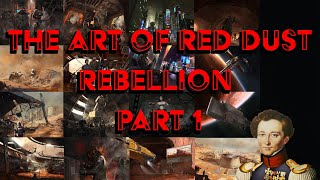
- Art-forward worldbuilding that strongly informs the setting
- Nuanced portrayal of factional dynamics and moral complexity
- Clear cohesion between art, story, and mechanics
- Innovative logistics concepts that differentiate it from typical coin games
- High complexity may intimidate new players
- Some content could be intense or provocative for certain audiences
- workers' rights, self-determination, anti-corporate influence, and contested revolutionary action
- Mars, about 200 years in the future; subterranean cities; corporate power; environmental terraforming
- history-driven worldbuilding with specific events shaping the lore
Mechanics (from transcript analysis)
- Aldrin cycler logistics — Interplanetary transport and logistics system that affects movement and supply between domes
- asymmetric factions — Distinct goals and victory conditions for Martian Provisional Government, Corporations, and Rebels
- Event-driven worldbuilding — Cards depict and fix historical events to deepen the setting and narrative
- Satellite network and space actions — Orbital assets enable strikes, surveillance, and strategic advantages impacting land-based play
Video topics + discussion points
Quotes (from this video)
- The art needs to tell a story and each piece of art needs to contribute a little bit to building the world that is Red Dust Rebellion.
- I wanted this to be a really visceral powerful image of state pressure.
- I really love Marcos's work here; it's wonderful, it's one of my favorite cards.
- Bicentennial Day is heavily inspired by the events of 2020, the 200 year anniversary of the first Mars colony.
References (from this video)

- Not specified in transcript
Mechanics (from transcript analysis)
Video topics + discussion points
Quotes (from this video)
- Games are good. Games will probably still be good 20 years from now.
- 95% of board game content is made for 5% of board gamers.
- Board games are like sheet music - interpreted differently each time they're played.
References (from this video)
- Deep, multi-faction interaction; rich systemic depth; reclaimers offer unique flexibility not typically seen in COIN games; evocative Mars setting and infrastructure focus.
- Dynamic event-card cycle drives tension and planning.
- High complexity and learning curve; potentially long play sessions; intricate rules around labs, movement, and population could overwhelm new players.
- Power, rebellion, resource management, and infrastructure in a colonial frontier
- Mars during a political struggle involving government, rebels, corporations and settlers; Mars colonization and supply chains
- expository/preview with technical breakdown and design rationale
- COIN (series)
Mechanics (from transcript analysis)
- Actions (operations), limited operations, and special actions — Players perform operations across multiple areas; can add a limited operation or a special action for extra effects.
- Campaign cards and ongoing effects — Campaign cards provide ongoing effects; only two can be active; red dust and reclaimers use camp cards to pressure government.
- Economic/Profit system and terraforming proxy — Corporation gains profit points; terraforming base flipping and terraforming scoring as an infrastructure proxy.
- Event card cycling and activation order — Turn-by-turn cycle where players choose actions and resolve the upcoming event card while considering shaded/unshaded events.
- Flashpoint and cycler — Lightning bolt symbol increases progress on the flashpoint track; the cycler system introduces new resources and constraints.
- Labyrinths and routes — Underground cities as labyrinths; regions connect via maglev lines; movement and influence rules differ in labyrinths.
- Population management and spaceports — Population tokens accumulate or shift; spaceport control affects movement and population distribution.
- Reclaimers and flexible agenda — Reclaimer faction can jump the queue by spending resources to act first on a card, adding strategic depth.
Video topics + discussion points
Quotes (from this video)
- GMT's not the hugest company in the world
- we are testing away and getting things ready so that when it's our time to go to the printers we have everything a-okay
- it's the core of redux rebellions gameplay
- the reclaimers will appear last on every single card but they can spend one of their resource cards to essentially jump the queue
References (from this video)

- GMT Games quality
- Space-themed coin system
- Asynchronous play available
- Part of acclaimed coin system series
- space strategy
- space
- science fiction
- Cuba Libre
Mechanics (from transcript analysis)
- asynchronous play — Can be played asynchronously with friends
- coin system — Space-themed coin system mechanic
Video topics + discussion points
Quotes (from this video)
- it was one of the coolest experiences I had at Pax
- anything that involves tile placement I am here for
- it is just a freaking blast
- the mechanics are just so good that none of the other stuff really kind of like matters to me
- I've fallen so much in love with undaunted
- if you put a cute cover on a game I will buy it I will play it and there's a very good chance that I will love it
- it looks incredible
- final girl is definitely one of my favorite games of all time
- the cover art drew me in it reminded me of like old war propaganda posters
- if anyone out there wild has red red ball or seen the red wall artwork this game is that