Enter the futuristic universe of Red Rising, based on the book series by Pierce Brown featuring a dystopian society divided into fourteen castes. You represent a house attempting to rise to power as you piece together an assortment of followers (represented by your hand of cards). Will you break the chains of the Society or embrace the dominance of the Golds?
Red Rising is a hand-management, combo-building game for 1-6 players (45-60 minute playing time). You start with a hand of 5 cards, and on your turn you will deploy 1 of those cards to a location on the board, activating that card’s deploy benefit. You will then gain the top card from another location (face up) or the deck (face down), gaining that location's benefit and adding the card to your hand as you enhance your end-game point total. If at any point you’re really happy with your hand, you can instead use your turn to reveal a card from the top of the deck and place it on a location to gain that location’s benefit.
—description from the publisher

- Rich endgame scoring with many synergies and named-card interactions
- Diverse house abilities and tactical depth via hand management
- Clear visual cues for endgame conditions and scoring tracks
- High complexity; risk of analysis paralysis for newcomers
- Endgame scoring is intricate and can be overwhelming on first few plays
- Political intrigue, house power, and strategic hand management with endgame scoring intricacies.
- Futuristic universe where society is divided into 14 casts; houses vie for power within the institute and fleet tracks.
- Deck-building with deploy, sovereign token mechanics, and location-based effects driving endgame scoring.
- N/A
Mechanics (from transcript analysis)
- Banished area — Cards banished from play; can interact with endgame scoring and retrieval effects.
- deploy — Deploy effects on a card when placed on a stack; some deploys banish or move cards, grant resources, or trigger location actions.
- Endgame scoring interactions — Cards have base points plus conditional points; endgame totals determine the winner.
- Fleet track — A track representing movement/advancement; advancing yields points and can influence endgame scoring.
- Helium tokens — End-game resources worth points; earned via card effects and endgame scoring conditions.
- Institute cubes — Influence tokens placed in the institute; most/second-most cubes unlock different endgame point values.
- Lead — Play a card from hand onto a stack and resolve deploy effects, potentially gaining new cards or bonuses.
- Rising die — A six-sided die with icons that trigger location-based effects when rolled.
- Scout — Draw the top card from the deck, reveal it on a stack, and gain the area benefit without changing hand size.
- Sovereign token — House-specific power tokens that grant ongoing or situational bonuses throughout the game.
Video topics + discussion points
Quotes (from this video)
- it's all about making sure you have the best hand of cards once it is over
- the game end is triggered once all three end game conditions have been met
- we could lead cephe we're going to place sefi over here onto luna and then the deploy effect says we gain another obsidian
References (from this video)

- Thematic and fast-paced
- Easy to grasp for card gamers
- Familiar mechanics may feel derivative to some
- faction-based card optimization
- Red Rising sci-fi dystopia
- story-flavored card play
- Fantasy Realms
- Pendragon-esque affairs (thematic proxy)
Mechanics (from transcript analysis)
- card-driven engine — Play faction cards to optimize hand and reach goals
Video topics + discussion points
Quotes (from this video)
- This video is all about board games for Book Lovers.
- Call to Adventure is a card-based narr narration game where you are going to be building out a story path for your character.
- It's very story-driven; it's very RPG-like in a board game way.
- If you're into high fantasy, you like the development of a story, I think these games are really great for that.
References (from this video)
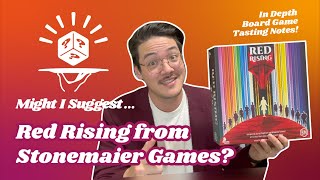
- Accessible gameplay with a short learning curve
- High replayability due to a large deck of distinct character powers
- Versatile strategy that scales well from 1 to 6 players
- Strong production values and appealing, colorful components
- Thematic integration with the book series may feel light for fans seeking narrative depth
- Some players may wish for more narrative hooks tied directly to Pierce Brown's world
- As with many card-heavy games, there can be analysis paralysis at higher player counts
- Power, social hierarchy, rebellion, and strategic maneuvering within a card-driven system.
- Dystopian solar empire inspired by Pierce Brown's Red Rising, with a color-coded caste system and factions that map to the four board locations and cards.
- Abstracted from the book universe; character cards reflect real figures but gameplay emphasizes mechanical strategy over lore.
Mechanics (from transcript analysis)
- card_power_diversity — With 112 unique character cards, each card has its own special ability, contributing to a rich variety of combos and strategies.
- deploy_and_draw — On a turn, a player may deploy a card from hand to gain its deploy bonus and then draw the top card from the deck or a location to gain its benefit.
- end_game_triggers_and_scoring — The game ends when certain victory conditions are met (e.g., three conditions or two conditions met by a player), followed by end-game scoring of objectives and accumulated points.
- hand_management — Players start with a hand of character cards and must manage their cards to optimize deploy bonuses and location benefits.
- house_tiles_and_unique_powers — Each player has a house tile granting a unique power, activated when certain actions occur, adding asymmetry and strategic depth.
- location_based_actions — Cards placed on Jupiter, Mars, Luna, or the Institute grant corresponding location bonuses and influence over the board state.
Video topics + discussion points
Quotes (from this video)
- one of the first things that drew me to red rising was this really colorful box
- it's actually pretty simple
- Red Rising is a hand management point maximizing game for one to six players
- the gameplay is super easy to pick up
- the replayability of this game even with the max player count
- the versatility of Red Rising is a big plus in my book
- if you're looking for a colorful and strategic game that you can buy at target
- i love the puzzle of trying to discover new and powerful combos and red rising definitely scratches that itch
- every game presents new challenges and new strategies to uncover
- this game has the potential to really grow on you
References (from this video)

- noted positively in context of the shelf curation
- associated with a strong thematic hook
Mechanics (from transcript analysis)
Video topics + discussion points
Quotes (from this video)
- I think this is a fantastic look.
- it's a fantastic collection almost I want it.
- I still don't have eclipse.
References (from this video)

- Accessible entry into more complex hand-management games
- Strong art and theme integration
- High replayability with asymmetrical powers
- Rope in a lot of card text; first plays can be read-heavy
- Campaign-like or multi-session play can extend beyond casual play
- Alliance-building, hand management, and resource/influence optimization
- Dystopian sci-fi future
Mechanics (from transcript analysis)
- card drafting — Strategic selection of multi-purpose cards to trigger synergies and end-game scoring.
- deck-building — Craft and manage a hand of cards to develop resources and influence to advance on four planets.
Video topics + discussion points
Quotes (from this video)
- The crew packs in so much depth in such a small package that I really can't recommend it highly enough the bang for the buck is just astronomical.
- Summer Camp has a really high replayability right out of the box and seven different skills that you can earn merit badges for.
- If you're looking for a nice entry-level deck builder with an awesome theme that'll make you want to make a bonfire and roast some s'mores ASAP.
- Red Rising is a card drafting hand management game for one to six players that plays in about 45 minutes to an hour and is based off the dystopian novel series by Pierce Brown.
- The rules of this game are super simple and you can usually get into playing in about 15 minutes or less.
- Azul is a really great game from Plan B Games, tile placement kind of abstract, with beautiful little tiles that look like starbursts.
References (from this video)
- Strong thematic tie-in with the dystopian series
- Engaging hand management and engine-building
- Multiple paths to victory and satisfying combos
- Complexity can be intimidating for newcomers
- First-time games require careful rule-reading
Mechanics (from transcript analysis)
- deck-building / hand management — Players draft and play multi-purpose cards to manipulate resources and influence on planets.
Video topics + discussion points
Quotes (from this video)
- The crew packs in so much depth in such a small package that I really can't recommend it highly enough the bang for the buck is just astronomical.
- Summer Camp has a really high replayability right out of the box and seven different skills that you can earn merit badges for.
- If you're looking for a nice entry-level deck builder with an awesome theme that'll make you want to make a bonfire and roast some s'mores ASAP.
- Red Rising is a card drafting hand management game for one to six players that plays in about 45 minutes to an hour and is based off the dystopian novel series by Pierce Brown.
- The rules of this game are super simple and you can usually get into playing in about 15 minutes or less.
- Azul is a really great game from Plan B Games, tile placement kind of abstract, with beautiful little tiles that look like starbursts.
References (from this video)

- strong IP integration for fans
- interesting diplomatic dynamics
- appears to be complex and heavy for new players
- power and faction politics
- Futuristic social-strategy within the Red Rising universe
- literate dystopian
- War of the Ring
Mechanics (from transcript analysis)
- area_control — Players control factions to influence planetary politics.
Video topics + discussion points
Quotes (from this video)
- World Wonders is a polyomino game where you're placing mostly flat tiles, but every now and then you're placing a big chunky wonder and it has just a really good set of mechanisms.
- Fairy Ring was a really really neat twist on a drafting game where you're drafting cards like in seven wonders, but you were also moving a fairy around the table onto all the stacks of cards that other players have played.
- I love the joy of browsing without buying.
- It's unlike anything else we've ever played and we love it.
References (from this video)

- stunning artwork and high production quality
- fantastic two-player experience with depth and strategic choice
- cards provide clear, readable information and strong thematic flavor
- solo play rules included, broad accessibility for different play modes
- robust reference cards that summarize setup and rules clearly
- collector's edition components can be flimsy (card stands) and not worth extra cost
- color differentiation on metal fleet trackers/cubes is insufficient, causing mis-sorting in larger player counts
- box organization causes components to shift during storage and closing
- card variety, while large, may still feel repetitive over many plays without enough divergent strategies
- Power, rebellion, and social manipulation within a caste-based society
- Dystopian, spacefaring colonization of Mars with a 14-caste hierarchy
- IP-based flavor text on cards; character-driven faction narratives
- Fantasy Realms
- Magic: the Gathering
Mechanics (from transcript analysis)
- board_tracks_and_tokens — Fleet track, Institute, and Helium tokens drive some scoring and end-game timing.
- character_cards_and_synergies — Each card has a faction, points, and deploy/end-of-game scoring text that interacts with other cards.
- endgame_trigger — The game ends when seven Helium tokens, seven Institute markers, or seven fleet track points are reached.
- hand management — Players manage a hand of unique character cards, seeking synergies and end-game point opportunities.
- set_collection_and_scoring — Points come from card-based base values, plus end-of-game scoring conditions tied to cards and board state.
- two_core_actions — Only two actions exist: lead (play a card to a planet) and scout (discard/draw to optimize hand).
Video topics + discussion points
Quotes (from this video)
- the art in this game is stunning
- the collector's edition cards have amazing foil and are gorgeous
- there are only two actions you can take in this game: lead and scout
- two-player here is excellent, but not ultra portable for travel
- it's a medium-weight strategic game, not a light filler
- the reference card is a must-have; it has everything you need to know
- the cards are fantastic quality and the foiling is beautiful
- the theme feels IP-driven but the gameplay is mechanic-heavy
- this game plays really well at two players
References (from this video)

- denser gameplay than Wingspan
- potential for deeper strategy
- more complex and heavier feel, possibly less accessible
- Wingspan
Mechanics (from transcript analysis)
- card-based action/environmental effects — cards drive actions and abilities with layered interactions
Video topics + discussion points
Quotes (from this video)
- this is a gorgeous game
- it's not heavy, it's not meant for big gamers
- the production is amazing
- you get satisfaction that something works
References (from this video)

- Strong thematic integration with the Red Rising universe that informs mechanics and strategy
- Solid two-player design with clear asymmetry and evolving decisions
- Collector's edition components (metal pieces, card stands, foil accents) enhance tactile feel
- Mechanics offer multiple potential paths to victory via fleet, institute, and helium-related strategies
- Accessible teach flow for a heavier-strategy game; teach is well-supported by the video
- High complexity and potential for analysis paralysis in a head-to-head setting
- Collector's edition components may be cost-prohibitive for some players
- End-game scoring can become punishing if mismanaging banished cards and hand size
- Reliance on several interdependent tracks (fleet, institute, helium) can slow early game pacing
- color-coded social order, political maneuvering, and resource/influence management within a sci-fi setting
- Red Rising universe; dystopian caste system based on color hierarchy (colors as social strata)
- book-inspired world-building with familiar characters; strong thematic ties to the Red Rising series
- Fantasy Realms
Mechanics (from transcript analysis)
- Banishing cards — Some actions banish cards from locations; banished cards are removed from play, impacting end-game scoring and synergies
- Card deployment to four zones — Players start with a hand and place cards to one of four board locations; each card has a deployability effect and a bottom-end scoring potential
- Card synergy and hand management — Cards have intrinsic points and bottom-text modifiers; end-game points depend on how well cards synergize with board state
- End-game triggers and scoring — End game can be triggered by seven helium, seven influence, or via a combination of conditions; end-game scoring tallies card-based points and synergies, with penalties for excess cards
- Fleet track progression — Advancement on a four-track board (fleet) via card abilities and sovereign tile effects; progression heavily influences end-game potential
- Helium resource management — Helium tokens are earned via cards and house abilities; helium contributes to end-game scoring and triggers
- Institute influence scoring — Influence cubes are placed in the Institute; end-game scoring rewards the most/second-most influence there
- Lead vs. Scout actions — Leading allows deploying a card and activating its deployability; scouting reveals a top card and gains its location bonus without deploying it
- Rising die — The Rising Die provides bonus symbols that can affect fleet, institute, banishing, or deck-building actions
- Sovereign token and asymmetric house tiles — Each faction starts with an asymmetric house tile; gaining the sovereign token triggers faction-specific bonuses
Video topics + discussion points
Quotes (from this video)
- "this is based off of the red rising book series by pierce brown"
- "the theme is set around this red rising universe"
- "mechanically the game is actually very similar to this other game called fantasy realms"
- "end game trigger is dependent on three different factors"
References (from this video)
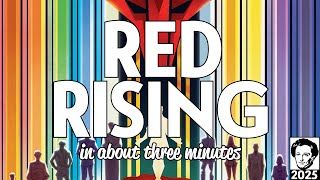
- Evocative card art
- Clearly defined castes
- Interesting core gameplay loop
- Ability to pick up and reuse opponents' cards
- Specific card combos can be frustrating
- Pacing issues with new players
- Requires careful card examination
- Social hierarchy in sci-fi world
- Solar System
- Book series adaptation
- Fantasy Realms
- Shadowmoon Syndicates
Mechanics (from transcript analysis)
- action selection — Choose between playing a card or revealing a card
- card management — Managing unique cards with deployment bonuses
- set collection — Collecting cards that score well together
Video topics + discussion points
Quotes (from this video)
- The best thing about this game is if someone plays a great card to the table you may be able to pick it up later and play it again yourself
References (from this video)

- Really unique card play
- Different every game
- Easy to set up and play
- High replay value
- Played 20-25 times
- dystopian
- space
- book series adaptation
- Fantasy Realms
Mechanics (from transcript analysis)
Video topics + discussion points
Quotes (from this video)
- it's a full day of gaming you got a plan for snack breaks you need to plan for nap breaks
- this cool game about sliding these things around the board and it's so stinking satisfying
- we really enjoy unfair but i don't enjoy all the mean stuff so every single piece so fun fair just really fixes that problem
- this one completely changed what a roll and write can do
- my brain turned to much like i literally need to power down for a little while and let my brain reset
- there's something special about it you know that really makes it stick out amongst everybody else
- this replaces terraforming mars for me
- it is just such a smart idea that is so simple
- orange nebula designs just incredibly unique incredible experiences
- the way that you use your hand management and the resource management it all just sings together really well
- they're there this isn't like a we're just going to reskin something
- it does a really great job of letting those last two players have the opportunity to really challenge the people that are in first and second
- it's quacks of quinlenberg the dice version
- i'm a sucker from dice i love the tactical sensation of just chuck and dice
- you really are paying attention to what's going to fill up each cauldron
- the best hidden movement game that i've played ever
- if you like the crew to begin with you can literally throw it in the trash and get this version
- it's brilliant from a design standpoint it's absolutely brilliant
- it's that wonderful tension right every round where am i gonna place where am i going to you know place my bid
- it's so relaxing it's so satisfying it's gorgeous
- i've needed my board gaming to be a warm thumpy blanket
References (from this video)

- Simple hand management mechanic
- Fantastic art and production
- Extensive roster of character cards
- Great replayability
- Easy to teach
- Works for different player experience levels
- Feels like a light board game
- Significant amount of text/reading required
- May not appeal if not familiar with source material
- Red Rising book series
- Character-driven
- Card collection
- Fantasy Realms
Mechanics (from transcript analysis)
Video topics + discussion points
Quotes (from this video)
- If you want some more suggestions for some of my favorite games and you want to know the juicy details about my giveaway, I gotta know that might I suggest
- Certified bangers
- It's such a simple concept yet every time that I play it I feel like I'm uncovering new strategies
- Playing offense and playing defense in this one are equally important but the game itself doesn't end up feeling too combative
- I always explain Concept as charades with icons
- It's auction city
- I am a huge fan of these tetrissy puzzles
- Half truth is a trivia game that is better than Trivial Pursuit full stop
- One of my biggest gripes about Trivial Pursuit is that not everybody gets to answer every question but in Half Truth everybody is involved the whole time
- This is a criminally underrated game
References (from this video)

- Great for book fans
- Thematic connection
- Science fiction
- Book adaptation
- Epic
Mechanics (from transcript analysis)
Video topics + discussion points
Quotes (from this video)
- moments during board games that formulate memories that you'll never forget
- there's just something for everyone
- it's all about the people
- the board gaming space has allowed me to just have so many incredible fun moments that i'll never forget
- it chose us via christy
- we're gonna have it at jeff's parents basement everybody's coming
- agricola sucks and everybody else seems to love it
- arnak is severely overrated
- i don't think gloomhaven should be number one on the list anymore
- humans are not good at rating things
- my nine is different than your nine
References (from this video)

Mechanics (from transcript analysis)
Video topics + discussion points
Quotes (from this video)
- Say Anything board game challenge with a board gamey twist
- That is the say anything board game challenge definitely try this at home and let us know
- It's not as easy as people probably think it is
- We cheated maybe we should have draped something over them
- Both said Chronicles of Crime at least four times
- We were talking about the expansions in our heads
References (from this video)
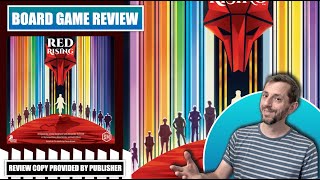
- evocative art and graphic-novel aesthetic
- strong thematic integration with character-driven cards
- variety and depth from the powers and interactions
- collector's edition components: metal components and upgraded card holders
- extra chrome may complicate rules for some players
- division among players who prefer leaner, simpler games
- collector's edition price point may be a barrier
- Power, status, and social climbing within a hierarchical society
- A dystopian, spacefaring empire where social castes vie for power, inspired by Red Rising
- graphic-novel inspired with evocative character art
- Fantasy Realms
- Golf
- Yahtzee
- Sushi Go
- Seven Wonders
- Papagino
- Rat Attack Cat
- Picoco
- Omerta
Mechanics (from transcript analysis)
- board tracks and scoring tokens — Cards interact with tokens on various tracks to influence end-game scoring and token-based bonuses.
- card deployment with deployability — Played cards are placed on a board and activate unique abilities that can affect scoring, positions on tracks, or other cards.
- draw one, discard one — On your turn you draw a card (top of the deck or face-up) and discard a card to maintain hand size; central to how you build a scoring hand.
- End-game condition — The game ends when a set trigger occurs (often related to face-up cards), after which players total points.
- face-up vs deck draw choice — Players may draw blindly from the deck or select from face-up cards on the table.
- hand management / set collection — You start with seven cards and aim to improve your hand by replacing cards to maximize scoring across 14 suits and card-specific criteria.
- special powers on cards — Many cards grant powerful and sometimes disruptive abilities that shape opponents' options.
- tableau-based scoring decisions — Final scoring depends on hand composition, color requirements, and card-specific scoring rules.
Video topics + discussion points
Quotes (from this video)
- the art i really like
- this is based on a book series that i've never heard of
- they've taken a really simple card game that works really well and they've added bells and whistles
- red rising is going to be equally divisive
- draw one discard one is present in all of these games
- i am really enjoying watching this undersung genre of card drafting games having its moment in the sun
References (from this video)

- Stunning production and art
- Thematic flavor with Red Rising license
- Engaging engine-building feel
- Complex rules for new players
- Score pacing can be punishing
- Power, stratagems, and resource manipulation
- Sci-fi dystopian mining/civilization
- Epic, book-inspired
- Fantasy Realms
Mechanics (from transcript analysis)
- Deck-building / hand optimization — Build and optimize a hand to maximize points and actions.
- set collection / area control — Focus on collecting specific card types and outmaneuvering opponents.
Video topics + discussion points
Quotes (from this video)
- my number 50 favorite game of all time is parks
- the production of this game is incredible
- it's a very fun take on you know worker placement
- I love this game it is beautiful and it is fun
- the artwork is beautiful
- Nightfall would boost that up higher
- this is kind of like an expanded version of fantasy realms with the theme of red rising
- the episode repeatedly emphasizes that these are personal favorites, not objective best games
- I would love to table this and maybe look into some of the expansions
References (from this video)

- Character art and synergy feel strongly tied to the Red Rising books when you recognize the characters.
- Rules are clear, well‑written, and the production is beautiful.
- Solid hand‑management and strategic decisions can be satisfying, especially in building a synergistic deck.
- Thematic depth feels underexplored; the game can feel sterile compared to the source material’s brutality and rebellion.
- Automa can be brutally punishing and punishes mistakes repeatedly, potentially slowing or discouraging solo play.
- Lacks a unifying spark or ‘fire’ that would elevate it beyond a solid game into something truly standout.
- Feels derivative of other games (mechanically borrowing from Fantasy Realms) without delivering a unique core experience.
- Infiltration and rebellion against rigid social stratification within a hierarchical spacefaring society.
- A dystopian sci‑fi society spanning the solar system with a color-based caste system (reds at the bottom, golds at the top).
- Thematic tie-ins through character art and book-derived vibes, but gameplay remains largely abstract and card-driven rather than narrative-first.
- Fantasy Realms
Mechanics (from transcript analysis)
- Automa (solo mode) — Automa uses its own deck to compete; starts with a baseline score and scales through matching/non‑matching cards, creating persistent pressure in solo play.
- even/odd setup and altoma — Initial setup determines scoring biases (even vs odd cards); altoma scoring uses matching vs non‑matching cards for points.
- hand management — Start with a five-card hand; use cards to gain points via hands and bonuses, and to influence board locations.
- lead action — Deploy a card to an available location, activate its deploy ability, and potentially draw a new card from a location.
- location bonuses and scoring — Each location provides distinct end‑game point bonuses; progress on fleet, institute, helium, and sovereign tracks contributes to scoring.
- scoring structure — Score from hand contents, fleet track, institute influence, helium, and Automa interactions; Automa has its own scoring rules and thresholds.
- scout action — Reveal the top card of the deck and place it at a location, earning the location’s bonus without taking the card into your hand.
- take from top of deck (lead) — If you don’t like visible cards, you can take the top card of the deck to gain a location bonus.
Video topics + discussion points
Quotes (from this video)
- this thing is a point earning machine
- the rules are clear and nicely written and nicely printed
- i was really excited to see a game come out about red rising
- it's a bit of a missed opportunity
- for me it's a 6 out of 10
- a totally solid game that i think a lot of people will enjoy