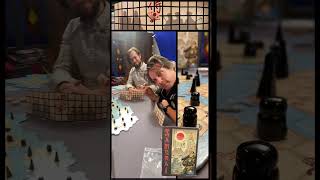
Samurai is set in medieval Japan. Players compete to gain the favor of three factions: samurai, peasants, and priests, which are represented by helmet, rice paddy, and Buddha figures scattered about the board, which features the islands of Japan. The competition is waged through the use of hexagonal tiles, each of which help curry favor of one of the three factions — or all three at once! Players can make lightning-quick strikes with horseback ronin and ships or approach their conquests more methodically. As each figure (helmets, rice paddies, and Buddhas) is surrounded, it is awarded to the player who has gained the most favor with the corresponding group.
Gameplay continues until all the symbols of one type have been removed from the board or four figures have been removed from play due to a tie for influence.
At the end of the game, players compare captured symbols of each type, competing for majorities in each of the three types. Ties are not uncommon and are broken based on the number of other, "non-majority" symbols each player has collected.
The game is part of what is sometimes called the Knizia tile-laying trilogy.
Mechanics (from transcript analysis)
- tile placement — Discussing how to place or swap tiles
Video topics + discussion points
Quotes (from this video)
- what is this game this is called samurai
References (from this video)
- tight, clever scoring and tension-building mechanisms
- strong historic flavor with accessible strategic depth
- can be punishing for newcomers to heavier euro design
- some iterations may feel black-box without clear rules
- control, negotiation, and strategic positioning
- Feudal Japan; political intrigue and battlefield tactics
- historical/strategic abstraction with thematic flavor
- Tigris & Euphrates
- Modern Art
Mechanics (from transcript analysis)
- area majority / control — Players vie for region control to maximize influence and scoring.
- Auction / Bidding — Players bid for actions or territories, creating negotiation dynamics.
- set collection / resource management — Players collect and optimize resources to fuel actions.
Video topics + discussion points
Quotes (from this video)
- there's no fun game for everybody there are different approaches and people can pick what they like
- we didn't have the trouble of getting all the approvals from the movie side
- read Mickey Mouse and Donald Duck as a kid and suddenly I'm doing games about it
- the best thing is to give your best every day you don't know how many days you have left
- you've only one life
- Steve Jobs changed our world in our times probably like nobody else
References (from this video)

- Deep decision space can offer rich strategic exploration
- Compact playtime relative to cognitive load (implied by description)
- Frustrating and mentally exhausting
- Not necessarily beginner-friendly due to vast options
- fealty, strategy, and decision space driving tension
- Feudal Japan setting referenced in discussion
- personal reaction, anecdotal and timeboxed streaming context
- QE
Mechanics (from transcript analysis)
- high decision space — The speaker describes a vast decision space that leads to mental effort and frustration, suggesting a heavy cognitive load rather than a quick, light game.
Video topics + discussion points
Quotes (from this video)
- it's an odd duck
- the reason i say that is aegis theme is thought of as like an auction with a game built around that core auction
- one auction in it at the beginning of the game and that's it
- y'all can't seem to get enough aegis theme and let's face it we love it here at hchq
References (from this video)

- High ranking on BoardGameGeek in the context of a top list
- Recognized as a notable entry in a published top-100-style video
- Placement in the ranking sparked fan debate and mixed reactions
- Transcript provides limited direct details about gameplay mechanics
- Feudal power struggles, honor-based negotiation, and clan politics
- Feudal Japan with samurai clans, political maneuvering and territorial influence
- Competitive negotiation with indirect conflict and territorial considerations
Mechanics (from transcript analysis)
- area control / influence — Players influence regions; control yields strategic advantage
- Negotiation / bidding — Players negotiate terms and bids to gain advantages or resources
- Resource management — Players manage limited resources to optimize placement and scoring
- unknown — Mechanics not specified in the transcript
Video topics + discussion points
Quotes (from this video)
- All right, number 42. Here's one that's ranked very highly by Board Game Geek.
- Samurai in my 30s range.
- Yeah, I think some people are going to be mad that we have it this low.
- It was much more popular on Board Game Geek. Shout out to Board Game Dank.
References (from this video)
- clever token movement tricks
- tight margins and strategic depth
- scoring can be mentally heavy for new players
- strategic token placement to secure districts
- abstract area control with monuments
- tight, head-to-head competition
Mechanics (from transcript analysis)
- area-control — surround monuments to gain majority and points
- token scoring — manipulating tokens to influence multiple monuments
Video topics + discussion points
Quotes (from this video)
- this is the best area control game out there
- a perfect 10
- I adore El Grande
- really nice game I taught this to a complete non-gamer
- I love Feld games this one is just an absolutely brilliant one
- it's one of the best two-player games ever made
- overproduced to say the least
- one of my favorite dice games and it's actually just broken into my top 100 for the first time
- the sudden death mechanism where if you are the first player to collect three buildings then you'll instantly win
- really cool decisions