In Savannah Park, you each run your own wildlife park, and your goal is to group animals with their own kind — but everyone takes turns deciding what to move, so you might not be able to shuffle animals into the right spaces.
Each player starts the game with the same set of 33 unique animal tiles, with those tiles laid out at random in your personal wildlife park. Three bush-fire spaces and one rock space will remain unoccupied in your park for the entire game, and six tree spaces and four grass spaces are unoccupied at the start of play.
On a turn, you name a specific face-up tile that all players must pick up, flip face down, then move to a different empty space within their own park. Tiles that have been flipped cannot move again, and once all tiles have moved, the game ends with a scoring round. First, tiles adjacent to bush fires are removed if they depict as many animals as the number of fires (1, 2, or 3) on the bush-fire space. Score for each grass and tree uncovered on your board. Finally, score for each of the six animal species; the bigger the main herd of each of species and the more water holes it contains, the more points you score, e.g. a herd of five rhinos and three watering holes is worth (5x3) 15 points. The player with the most points wins.
Savannah Park includes a solo mode, a set-up variant that allows you to place the bush fires and trees where you wish, and a scoring variant that rewards you for bumping a lion out of the animals' way.
- Accessible Kramer & Kiesling design
- Timeless, clean aesthetic
- High tension and interaction on turns
- Rules overhead can be a hurdle for first-time players
- Optimal play can be spatially fiddly
- wildlife management and spatial puzzle
- Animal placement on a large hex grid representing a savannah
- abstract, puzzle-driven
Mechanics (from transcript analysis)
- area restrictions / burning trees — certain configurations cause trees to burn and remove tiles, affecting scoring possibilities
- group scoring with chain reactions — the size of the largest animal type group increases scoring, with cross-tile contamination creating chains
- tile placement / movement — players pick an animal tile and move it to a different hex to form groups
Video topics + discussion points
Quotes (from this video)
- these are ten really really good games
- this is one of the coolest games in terms of like turn angst and frustration
- it's timeless and very clean design
- this is a co-design but it's definitely got a lot of the dna in it through that tile placement and other little mechanisms
- an absolute blast to play
- Arc Nova is going to stand the test of time
References (from this video)
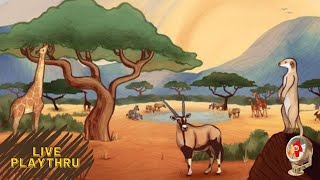
- Accessible family-weight with surprising depth rooted in placement choices
- Fast-paced, with tension from simultaneous placement that keeps turns moving quickly
- Intuitively understandable scoring through watering holes makes strategy visible and satisfying
- Solid component quality and good replayability due to tile distribution and board variability
- Early-game learning curve can be a bit sharp as players internalize scoring and disruption dynamics
- In two-player games the interaction can feel a touch aggressive or 'mean' due to forced moves
- Scoring can become somewhat fiddly when multiple scoring zones (grass, trees, bushes) interact late in the game
- Herd-building and territorial control through tile placement, emphasizing family-friendly wildlife themes.
- A stylized savannah environment where players assemble animal tiles into cohesive herds around watering holes.
- Abstract spatial puzzle with light thematic narration; players focus on placement strategy over heavy storytelling.
- Tiny Towns
- Lucerta
Mechanics (from transcript analysis)
- Herd formation / matching — The primary objective is to maximize like-animal groups on the board while maintaining valid connections to watering holes.
- Scoring via watering holes — Watering holes act as scoring multipliers for animals that touch them; more holes yield higher points for the same herd size.
- Simultaneous play / reveal — Tiles are selected and resolved in a synchronized manner, so all players’ placements influence the evolving board state at roughly the same time.
- tile placement — Each turn a player selects a tile from a common pool and places it on their personal board to build matching animal groups and form connections to watering holes.
Video topics + discussion points
Quotes (from this video)
- it's really fun it's really good we've been enjoying it
- the scoring is super cool
- it's deceptively clever but also mean
- the simultaneous play is a great mechanic
- this game is deceptively dinky
- if you get a chance to play this you have to play it
References (from this video)

- Timeless abstract appeal with clean design
- Strong tension and planning elements
- Solid 3-player experience; good with 4 players
- Not as good at two players
- Balance considerations when using all tiles for 3-player games
- Timeless abstract strategy with an animal/park motif
- Abstract/puzzle-like tile placement with animal motifs across boards
- Elegant, strategic, timeless
Mechanics (from transcript analysis)
- inter-player planning and disruption — Your placement affects others and can enable sabotage or defense
- scoring by line with thresholds — Score based on lines with a sliding threshold; avoid or achieve required minima
- tile placement — Place hex/animal tiles to form rows and columns of your color
Video topics + discussion points
Quotes (from this video)
- it's a lightweight family-style game that takes around 20 minutes to play
- the randomness and swingy nature of it has you know diminished my enjoyment slightly
- it's such a clean game as you're placing these tiles
- this is such a great game I love this one
- a new Twist on the area control genre
References (from this video)

- brain-burning puzzle
- fun with friends
- complex for first-time players
- tile placement and scoring via animal clusters
- animal conservation/park design
- brain-burning but rewarding
- Eggs & Empires (tile placement flavor)
Mechanics (from transcript analysis)
- score optimization — score via chains and proximity to watering holes
- tile placement — place tiles to form clusters of animals near water sources
Video topics + discussion points
Quotes (from this video)
- It's kind of like The Mind but better.
- it's a very, very good two-player game
- we are so competitive that we need to be able to turn it off
- I loved it so much I spilled my water all over the table
- we've met some of our best friends this year
References (from this video)

Mechanics (from transcript analysis)
Video topics + discussion points
Quotes (from this video)
- El Grande is my favorite game of all time; it is the original area control game and the cream of the crop.
- Only your best round will count in Coliseum, which is a cool twist on scoring.
- El Grande and the King, with simultaneous selection and Castillo, harmonize to create a rich gameplay experience.
References (from this video)

- beautiful production
- accessible to a wide audience
- has some randomness and interaction limits
- puzzle-like animal grouping
- animal sanctuary management
- family-friendly yet strategic
- Ticket to Ride
Mechanics (from transcript analysis)
- pattern-building — create groups that maximize scoring values
- risk/reward via bush fires — placement choices can cause penalties if placed badly
- tile placement — place tiles to form groups of animals
Video topics + discussion points
Quotes (from this video)
- this game is poo
- it does as i said just take that edge off the randomness
- one of the best card games i've ever played
- it's almost like a eurofied Ticket to Ride
- the ambition of this game is absolutely mind-blowing
- a game that rewards repeated plays
- the board is always flux and alive
References (from this video)
Mechanics (from transcript analysis)
Video topics + discussion points
Quotes (from this video)
- this game is poo
- it does as i said just take that edge off the randomness
- one of the best card games i've ever played
- it's almost like a eurofied Ticket to Ride
- the ambition of this game is absolutely mind-blowing
- a game that rewards repeated plays
- the board is always flux and alive
References (from this video)

- Accessible to new players
- Tactile components and thematic charm
- Might be less of a draw for veteran gamers
- Tile-placing, area control with animal adjacency goals
- Savannah animal-collection and interaction
- Accessible, family-friendly puzzle
- Everdell
Mechanics (from transcript analysis)
- Tile placement with adjacency scoring — Place tiles to group animals and maximize score near watering holes.
Video topics + discussion points
Quotes (from this video)
- it's our list let it be
- we're here today with a very exciting video so exciting jeff can't even open his eyes
- this is the most immersive experience
- it's a brain burning game
- I freaking love Role Player Adventures
References (from this video)
- easy to learn, thinky decisions
- beautiful components and theme
- replay variety could be limited
- gather the largest herd of animals via tile placement
- savannah wildlife reserve
- family-friendly, thinky puzzle
- Kalimala
- Ragusa
Mechanics (from transcript analysis)
- end-game scoring by herds — Score for herd size, watering holes, grass and trees
- simultaneous movement & resolution — Tiles are moved by all players, then resolved
- tile placement — Place animal tiles on a hex grid to form herds
Video topics + discussion points
Quotes (from this video)
- we are proud members of the old people's club
- taste buds, taste buds, taste buds
- this is going to be a long one
- the fog of war of the cards
- you maximize everything you can every turn
References (from this video)
- tightly designed tile puzzle; easy to learn
- pacing is solid and engaging; good for family play
- replayability may feel limited without variants
- theme may be light for some players
- pattern grouping, set-collection, and tree-based scoring
- savannah wildlife; hex-tiled board; grouping animals by species
- light family-weight puzzle
- Kingdomino-style grouping
- Queen games family titles
Mechanics (from transcript analysis)
- group scoring / bushfires — keeping clusters intact scores; bushfires remove animals and expose trees for scoring
- tile placement / tiling puzzle — players place tiles to form groups of animals with shared attributes
Video topics + discussion points
Quotes (from this video)
- this game has like hundreds of miniatures and metal components galore that were all unlocked via the Kickstarter
- the biggest thing that surprised me is every time a game comes into our library i try to learn it as soon as possible
- nemesis lockdown is wonderful for that and the contingencies really add a new layer of tension
- the mirror effect... I haven't seen before; it's distilled; it's simple
- Sleeping Gods is the best adventure game—it's 10 out of 10 for me
- Calico is the crunchy, punishing one; Cascadia is more open and forgiving in terms of pathing
References (from this video)

- accessible
- engaging auction mechanic
- family-friendly theme
- not as deep as heavier euros
- zoo-park management and animal exhibits
- Animal-themed park-building
- light, family-friendly
- For Sale
- Isle of Skye
Mechanics (from transcript analysis)
- auction_building — Auction or bid on locations to place animals.
- set_collection — Collect animal types and build scoring clusters.
- tile_placement — Place animals and elements to maximize points.
Video topics + discussion points
Quotes (from this video)
- I would say I prefer Praga Caput Regni.
- Praga Caput Regni is my number one game of 2020.
- I absolutely love everything about the hobby to be honest.
- I love the social aspect of the hobby.
- I'm a semi-omnigamer in some ways yes in some ways no.
- Quacks of Quedlinburg lived up to the hype for me.
- Concordia is one of my favorite games; timeless and elegant.
References (from this video)
- scalable and social with many participants
- engaging for a large group
- logistics can be complex
- requires many players to fully realize
- mega-scale park and shared resources
- mega-game event at Savannah Park during aircon convention
- live, social, large-group planning
Mechanics (from transcript analysis)
- mega-game scalability — extends a base game into a large, multi-table experience
Video topics + discussion points
Quotes (from this video)
- we were able to connect with a lot of people over there and thank you for sharing your beautiful country with us
- the weather was just perfect and i don't know if i could say enough good things about it
- there's a ton of tables and you just play games with your friends or with just people that you're going to meet there
- it's a play it comes to play bring the games that you want to play there are a ton of tables
References (from this video)
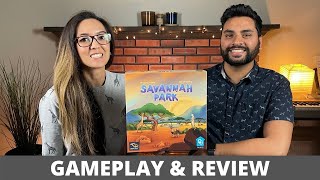
- family-friendly weight and approachable rules
- fast teach and short play sessions
- multiple variants including solo and kids modes
- beautiful component design (tuck-boxes forming a collage)
- good balance of luck and strategy, with a puzzle-like feel
- may be too simple for gamers seeking heavy complexity
- two-player pacing can feel tight if players block each other
- some may want more thematic depth
- herd-building and resource management driven by water access and spatial constraints
- African savannah with animal tiles, water sources, trees, and grass; central scoring and bushfire events alter the board
- procedural, puzzle-like with light thematic framing
- Azul
- Miyabi
- Palaces of Carrara
- Karuba
- Tiny Towns
Mechanics (from transcript analysis)
- board-tile interactions and peeking mechanics — tiles can be placed on sand, trees, or grass spaces; a meerkat token marks forbidden spots to prevent re-placement
- bushfire resolution phase — three bushfires (single, double, triple) remove tiles with exactly 1, 2, or 3 animals, respectively, influencing end-game scoring and herd integrity
- end-game scoring and water multipliers — points come from the largest contiguous herd per species multiplied by the number of watering holes in that herd
- set-collection and contiguity scoring — players aim to form contiguous herds of each species; scoring is based on the largest connected group per species along with water-hole multipliers
- solo and variant modes — variants exist for solo play and family-friendly rules that simplify or alter scoring to accommodate younger players
- tile placement and replacement — the active player selects a tile from their board and all players must move that exact tile to a new location on their personal board, ensuring it does not occupy the same spot as before
Video topics + discussion points
Quotes (from this video)
- this is part of the capstone games family line
- it's a one to four player tile swapping game
- this game does play solo
- i highly recommend it especially for family gamers out there
- it's real simple you know it's pretty simple
- Savannah Park it is real quick simple