SHOBU is a beautifully crafted abstract strategy game for 2 players. The game features 4 square wood boards (2 of each color) and 16 natural river stones for each player, in two colors, with a rope dividing the play area in half.
Your turn is in two parts. First, a player may move one of their stones up to two spaces in any direction, including diagonally, in what is called a passive (or set up) move. Second, they take a more aggressive move, which must be the same direction and number of spaces as the first move. It is this second move that allows you to push stones across the board - or off the board's edge. Remove all four of your opponent's stones from just one of the four boards to win.
SHOBU evokes the feeling of GO or CHESS but provides its own unique challenge. It feels immediately familiar and yet is wholly distinct and engaging.
-description from publisher
- natural appearance like ancient games
- interesting push mechanic
- good abstract strategy
- abstract
- ancient games
- pebbles
Mechanics (from transcript analysis)
Video topics + discussion points
Quotes (from this video)
- these games have amazing table presence by which i mean people are going to glance across the room and go what is that person playing and i want to play all these games
- stacking games have table presence like nothing else
- looks beautiful it looks like a load of sweets on the board
- one of my favorite games of all time
- i don't like that sort of game i find that one of the most frustrating game mechanisms
- the central marble dispenser is your main draw in this game
- absolutely brilliant strategic game quite complex game
- it's actually my favorite of the mask trilogy
- i'm almost scared to say this but i don't really like azul very much
- biggest most overlooked game on this list
References (from this video)
- beautiful production and table presence, especially the wooden components
- simple rules that yield deep, clever gameplay
- coffee-table friendly; easy to leave out for quick rounds
- zen-like aesthetic contributes to a calm, focused playing experience
- abstract nature may not appeal to all players
- dual-board mechanic can present a learning curve for new players
- minimalist strategy where placement, movement, and board interaction drive outcomes
- abstract two-player game with four-by-four boards and natural materials, presented with a calm, zen-like aesthetic
- abstract/minimalist
- Abalone
- Othello
Mechanics (from transcript analysis)
- dual-board simultaneous play — two parallel boards are used in play; each player makes moves on their own board with outcomes that influence strategic decisions across both boards
- progressive board tension — the sequence of early moves shapes the available options on later turns, emphasizing foresight and adaptability
- push/knock interactions — moves can push or influence opponent pieces, creating tactical pressure and potential captures or positional advantages
Video topics + discussion points
Quotes (from this video)
- it's really fun it's cute
- it's really pretty
- it's beautiful production
- it's stupid simple
- clever gameplay
- minimalist aesthetics appeal to me as well
- there's something very minimalist that appeals to me as well
References (from this video)

- Elegant core mechanic that scales depth from a deceptively simple rule set
- Strong interdependence between boards creates rich, forecast-heavy decision trees
- Paced engagement: quick turns with meaningful tension and potential for dramatic swings
- Steep learning curve for newcomers to abstract strategy games
- Aesthetics and theme may be less accessible to players seeking thematic storytelling
- High reliance on spatial visualization can be challenging for players new to multi-board combat
- Mind games, timing, and tempo management under a two-move-per-turn constraint. The core theme centers on balancing aggressive pressure with careful restraint across parallel theaters of action, culminating in a sudden, decisive moment when an opponent’s stones are pushed off a board.
- A compact two-player abstract strategy duel played across four boards connected by a symbolic rope partition. Each player has two boards on their side (light and dark) and faces two boards on the opponent's side, creating a multi-board battleground where each choice on one board can influence outcomes on another.
- Highly abstract with a focus on pure strategic interplay rather than a narrative lore. The game communicates through its geometry, tempo, and the lure of outmaneuvering a rival on mirrored boards.
- Onitama
Mechanics (from transcript analysis)
- Aggressive move — The second move must relocate another one of the player’s stones on a different color board, using the same number of spaces and the same directional vector as the first move. This move may push opponent’s stones but may not push your own stones.
- Board win condition — A player wins the game instantly if they push all of the opponent’s stones off any one of the four boards.
- Crowding constraint — If a board becomes so crowded that the required passive move cannot be executed, the second, aggressive move cannot be made. The two moves must be executable in sequence; otherwise the turn is effectively halted.
- passive move — The first move must move a single stone on either the light or dark board on the player’s own side of the rope. The stone can travel up to two spaces in any direction (orthogonally or diagonally) but may not push your own stones, and in the first move you cannot push your opponent’s stones.
- Two-move turn structure — Each turn consists of two sequential moves: a passive move on one board (first move) followed by an aggressive move on a different colored board (second move). The two moves must use the same distance, in the same directional vector, and on different boards.
Video topics + discussion points
Quotes (from this video)
- Shobu is what we in the industry call a proper board game; it requires proper thinking.
- Two moves per turn; the passive move on one board, then the aggressive move on a different color board with the same distance.
- This game is flipping flopping all over the place; it's a mental tug-of-war across four boards.
- Shobu is a proper abstract strategy game that rewards planning two moves ahead.
- This video doesn't even go out unless I say it does—that is how I'm gonna win Shobu.
- I'm going to sit around until the end of time if I have to to make sure you are the one who unravels.
- Nice, that's a beautiful little flourish; I liked that move.
References (from this video)

- thinky but approachable
- fits in quick play sessions
- requires spatial reasoning and memory
- dueling stones with push rules
- abstract strategy
- abstract
Mechanics (from transcript analysis)
- movement and push — players move stones on two boards with opposite rules to push opponent off
Video topics + discussion points
Quotes (from this video)
- i believe there's an element where having a game acknowledge that you exist can be validating in a way most people never consider
- the embrace of individuals who are LGBTQ plus happen in spaces in the games themselves
- we have to make spaces in our worlds where we are safe where we can kick back and be our authentic selves
References (from this video)
- elegant, deep abstract strategy
- simple rules, substantial depth
- compact, no-theme presentation that emphasizes mechanics
- can be challenging for players new to abstract strategy
- no flashy components or theme to attract casual players
- tug-of-war of influence across symmetric boards
- abstract strategy on four boards with rope separation
- minimalist, no-theme presentation
Mechanics (from transcript analysis)
- dual-board placement and pushes — on your turn you perform a passive move on your own board and a corresponding aggressive move on the opponent's board
- Positional strategy — depth comes from anticipating threats and setting up future pushes
- programmed moves — the second move mirrors the first on the opposite color board, enabling pushing under strict sequencing
Video topics + discussion points
Quotes (from this video)
- the four player game is extremely chaotic
- it's really a fantastic abstract
- a nice kind of versatile game ... about 30 minutes
- I really love War Chest
References (from this video)
Mechanics (from transcript analysis)
Video topics + discussion points
Quotes (from this video)
- Shelf 16 is kind of a an odd mix here
- This shelf has twice as many games as most shelves
- one of my favorite two-player games, but it's very difficult to learn and play
- Fantastic abstract strategy game
- Such a classic game and I like it a lot
- I don't know why I like it so much, but I do
- one of the most beautiful dexterity/party games there are
- There are so many games on the shelf
References (from this video)

- extremely simple components but deep strategy
- tight two-player head-to-head engagement
- white-hot planning as you foresee opponent's replies
- the abstraction may be off-putting for some players
- not a deep theme-heavy title
- pure abstract strategy
- abstract strategy with four boards and rope separators
- minimalist, no theme
- Santorini
- Chess
Mechanics (from transcript analysis)
- dual-board action mirroring — on your turn you move a stone on one board; your next move imitates that action on a different board
- ripple/portal effect — the passive and aggressive moves create a cascading impact across boards
Video topics + discussion points
Quotes (from this video)
- it's basically discussing our top 10 games that were new to us in 2022
- this is like a podcast today
- Weather Machine ... would have made this list if it came out this year
- it's a pure Euro for sure through and through
- hirelings ... game changer for the two-player Root
References (from this video)
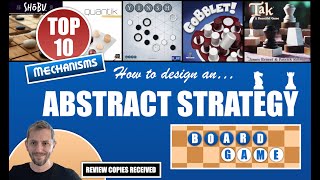
- high tactile appeal
- publisher place-ability helps with publishing decisions
- rules can be tricky to explain quickly
- Onitama
- Tess
Mechanics (from transcript analysis)
- multi-board simultaneous play — four boards split the space; moves on one board can be mirrored on another
Video topics + discussion points
Quotes (from this video)
- these games have no theme
- it's a toolbox for you as a game designer which of these mechanisms do you want to employ in your own abstract strategy game
- product design is everything
- the single most impactful feature of connect 4 was that little hatch beneath the frame
- abstract strategy games are some of the most interactive games in existence
References (from this video)
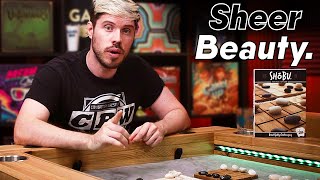
- Rules are exceptionally concise yet the tactical depth is profound; the core can be taught in minutes
- Beautiful physical components: weighty stones, wood boards, and the rope divider evoke a tactile, almost ritualistic feel
- High replayability with a clean design that scales well across players and experience levels
- Compact playtime (~20 minutes) makes it easy to fit into sessions and clubs
- Strong value proposition: accessible price point paired with durable, elegant production
- Can be information-dense for newcomers due to the dual-board programming concept and the layered decision space
- Aesthetic earnestness and stylized presentation may feel pretentious or culturally appropriative to some players
- The lack of a strong theme may deter players who crave a thematic hook beyond pure strategy
- Mind-game programming and contest between two players, using dual boards to stage push-based elimination
- Two opposite boards on a rope with four stones per board per side; an aesthetically Eastern-influenced tactile setup that evokes ancient play and naval/logistics themes without a strong narrative frame
- Thematic flavor leans toward profundity and antiquity rather than a explicit story; emphasis on atmosphere and tactility
- Chess
- Abalone
Mechanics (from transcript analysis)
- aggressive move that can push — On the second move you must move a stone in the same manner on the other board; this second move can push opponent stones off the board.
- dual-board information layering — Each board contributes both aggressive and passive considerations, creating two layers of perfect information (one for aggressive options and one for passive constraints) that must be reconciled in real time.
- passive move — On the first move you move a stone one or two spaces on a board, but this move cannot push any stones.
- push restriction — You may not push two stones at once; only a single stone can be pushed in a given aggressive action.
- push-off capture — If a move pushes an opponent’s stone off the board, that stone is eliminated from play; strategic pressure accumulates across boards.
- two-board programming — Players move on two boards (one light, one dark) per turn, planning a first passive move on one board and a second, mirrored or same-move on the opposite board which may push stones.
- win condition on a single board — Eliminate all four of the opponent’s stones on any one board to win immediately.
Video topics + discussion points
Quotes (from this video)
- it's a programming game and that's what twists this from chess where you can have an almost set response to any circumstance lodged in your brain to something more reactive, unpredictable and alive in the moment
- move stone on one board then same move opposite board to push off stones
- you can wrap this whole video up in a haiku but you literally can cover the rules of shobu it's so simple
- it's the most addictive abstract game i've ever played
- visually incredibly simple but tactically complex