"Are the stars unfamiliar here?" she asked, and the sky grew suddenly dark, the star's patterns alien and exotic. "This is the Wandering Sea. The gods have brought you here, and you must wake them if you wish to return home."
In Sleeping Gods, you and up to 3 friends become Captain Sofi Odessa and her crew, lost in a strange world in 1929 on your steamship, the Manticore. You must work together to survive, exploring exotic islands, meeting new characters, and seeking out the totems of the gods so that you can return home.
Sleeping Gods is a campaign game. Each session can last as long as you want. When you are ready to take a break, you mark your progress on a journey log sheet, making it easy to return to the same place in the game the next time you play. You can play solo or with friends throughout your campaign. It's easy to swap players in and out at will. Your goal is to find at least fourteen totems hidden throughout the world. Like reading a book, you'll complete this journey one or two hours at a time, discovering new lands, stories, and challenges along the way.
Sleeping Gods is an atlas game. Each page of the atlas represents only a small portion of the world you can explore. When you reach the edge of a page and you want to continue in the same direction, you simply turn to a new page and sail onward.
Sleeping Gods is a storybook game. Each new location holds wild adventure, hidden treasures, and vivid characters. Your choices affect the characters and the plot of the game, and may help or hinder your chances of getting home!
Welcome to a vast world. Your journey starts now.
—description from the publisher

- beautiful map and components
- deep, satisfying exploration
- story length can be long
- setup time is non-trivial
- Narrative exploration with puzzle-like quests
- Mythic voyage across a vast open world
- Ambient, story-driven exploration
- Ark Nova
- Canvas
Mechanics (from transcript analysis)
- cooperative play — players work together to complete quests
- Story-driven exploration — players follow narrative threads with choices
Video topics + discussion points
Quotes (from this video)
- these shelves are too cool to suggest anything
- i'm drooling and looking at games
- i really like the looks of it
- best looking arrangement shelf
- i want this collection as well
References (from this video)
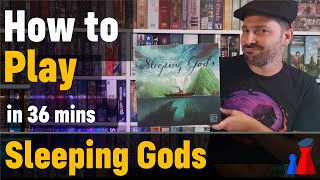
- Rich story-driven campaign with atlas-based exploration and branching passages
- Deep crew management and ship combat mechanics that scale with player count
- Engaging themes of myth, exploration, and survival with meaningful progression
- Campaign save mechanism enables long, epic play sessions across days
- Long play sessions and significant initial setup complexity
- Steep learning curve for new players due to many interlocking rules
- High potential time commitment for a single campaign (15–30 hours)
- Story-driven exploration, awakening ancient gods, survival, crew management, and mythic questing.
- A perilous sea-world and wandering atlas-driven voyage aboard the Manticore The Manor, spanning a mythic archipelago as ships sail the Seas of the Wandering Sea trapped within the Deep Sleep of ancient gods.
- Campaign-based, atlas-guided storytelling with branching passages and evolving storybooks.
Mechanics (from transcript analysis)
- Atlas/Storybook Exploration — Players open pages in an atlas to reveal regions, quests, and story prompts, guiding the campaign through procedurally revealed content.
- Challenge System — Challenges test one of five skills; crew contributions generate points, with outcomes affecting health, fatigue, and rewards.
- Crew Management and Fatigue — Crew boards track health, fatigue, status effects, and unique abilities; players manage fatigue and health across crew and captain.
- deck-based actions — A deck of ability and event cards drives actions; players draw, attach, and activate cards while keeping some information hidden.
- Event and Quest Encounters — Event cards trigger challenges and outcomes; fate cards influence the narrative and combat consequences.
- Progression and Campaign Log — Campaign progress is tracked in a journey log; outcomes influence future events and allow campaign persistence across sessions.
- Resource and token economy — Coins, goods, materials, and various tokens (fatigue, status, combat, command) regulate actions, healing, and progression.
- Ship Management and Combat — The Manticore ship board uses damage markers and ship-specific actions; combat uses combat tokens, synergy tokens, and weapon effects.
- Travel, Port, and Healer Actions — Travel moves the ship across atlas regions; ports heal, remove fatigue/damage, and allow leveling up crew; healers restore health.
Video topics + discussion points
Quotes (from this video)
- Sleeping Gods is another story-driven game designed by Ryan Laukat
- this is believed to be his Masterpiece
- the game has a saving mechanism so you can store it and continue playing it another day
- open the atlas of the game on page two
- The campaign is now ready to start
References (from this video)

- adventure
- narrative
Mechanics (from transcript analysis)
Video topics + discussion points
Quotes (from this video)
- hey everyone who just kind of made it in time i'm not going to say it was a shall we say the easiest time to get here
- come on seriously i need to get on with a stream in a minute
- what is going on at fantasy fly at the moment they're just not bringing out any major good games
- every time they try to do a spin-off game that isn't a card game they tend to fail
- root's okay but i think the fact that you've got to have a balanced group of players who know what they're doing to play it i think it's just too much
- i just i'm okay with rue but i would never seek it out
References (from this video)

- strong narrative
- somely immersive solo/campaign mode
- heavy to learn for new players
- long play sessions
- story-driven exploration and decision making
- mythic adventure world
- story-driven RPG-like
- Gloomhaven: Jaws of the Lion
- Arkham Horror: The Card Game
Mechanics (from transcript analysis)
- campaign / legacy-lite — story-led progression with ongoing campaigns and decisions
Video topics + discussion points
Quotes (from this video)
- it's a great simple trick taking game for kids where you don't see your own cards
- the top rated two-player game for us on this channel
- exit could be a good option as a co-op game
- Skull here we go a super great little party game about bluffing
- Sleeping Gods the other great great story game here is a area control game in ancient Egypt you're playing Gods Railroad
- Leave a comment down below and I think if you would share this video with somebody who also would comment underneath
References (from this video)

- Strong open-world storytelling
- Rich art and world-building
- Can be lengthy and heavy for some players
- Narrative exploration with modular storytelling
- Mythic open-world sailing adventure
- Story-driven with sprawling arcs
- Vantage
- Gloomhaven
Mechanics (from transcript analysis)
- Open-world exploration — Narrative arcs unfold through exploration and encounters
Video topics + discussion points
Quotes (from this video)
- it's essentially 1,700 cards and 8 or and 400 of those cards are double-sided
- you've turned Wingspan not into you built it into more than just a game
- no zero days
- the ending has to live up to the X number of hours that somebody just put into it
References (from this video)

- Epic storytelling in a single package
- High degree of player collaboration and world-building
- Extremely large footprint and long play times
Mechanics (from transcript analysis)
- cooperative narrative exploration — players steer a crew through a vast atlas-style seas, taking quests and advancing a shared story
Video topics + discussion points
Quotes (from this video)
- it's a treasure trove of puzzling riches and i love it
- this box is the campaign that takes the form of a delightful comic
- a gorgeous game unlike any i've played this year or most other years
- it's an app-driven competitive storytelling game which just boggles my mind a little
- it's all about family
References (from this video)

- epic scale
- family-friendly storytelling within a mature theme
- complex rules, long playtime
- adventure, exploration, discovery
- epic voyage through a mythic world with a map and story book
- cooperative storytelling with branching paths
Mechanics (from transcript analysis)
- cooperative play — players work together to progress the overarching narrative
- resource and crew management — acquire resources and meet people to advance the story
- storybook map exploration — travel to different places, read stories, make choices
Video topics + discussion points
Quotes (from this video)
- it's epic there's a lot of cards the island can get really big
- the crew is the tiny thing I talked about cuz it's not epic it's not like big but it is crew is a simple trick-taking game
- Welcome To The Moon is flip and write game basically
- this is my number one but I completely get why it's number five
- it's a cooperative game where all of you jump into a fight and try to defeat the big baddy
- the story part where you just meet different people make choices that really matter and make you go into completely different directions
- Sleeping Gods is definitely the definition of an epic campaign game
References (from this video)
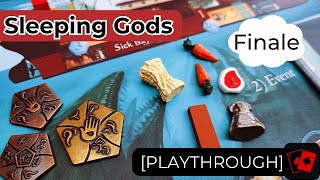
- Rich narrative and campaign feel with high thematic coherence
- Engaging exploration and quest design
- Strong art and world-building
- Multiple endings via totems and quest choices
- Complex rule set and lengthy play sessions
- Endgame can be punishing without careful planning
- Expansions can be essential to experience full content
- Exploration, questing, survival, and storytelling through a modular, campaign-like structure.
- A mythic, nautical world where crews voyage to locate the sleeping gods and survive a vast open world.
- Story-driven, open-ended with branching quests, totems, and end-state variations.
- Sleeping Gods: Distant Skies
Mechanics (from transcript analysis)
- Adventure/Event deck — Randomized events drive encounters and decisions that push the narrative forward.
- Card-driven actions with upgrades — Skill and upgrade cards influence combat, exploration, and interactions, enabling party customization.
- Cooperative combat with resources — Turns involve allocating limited actions and resources to defeat foes with potentially devastating attacks.
- Crew/character management — Players manage health, fatigue, morale, and equipment for a crew across multiple locations.
- Narrative-driven exploration — Players explore a vast world through quest cards, event cards, and totems that shape endings.
Video topics + discussion points
Quotes (from this video)
- this is such a good game
- man this is such a good game I already said it my last video
- Sleeping Gods distant Skies I really hope that this one is really good
- this game is really good, I couldn't wait to see how it ends
References (from this video)
- Beautiful storytelling and evocative art
- Engaging campaign structure
- Rule complexity and setup can be lengthy
- Some players may want more direct combat than story moments
- Storytelling, narrative exploration with resource management
- Story-driven, open-world voyage across a fantasy sea
- Storybook-driven campaign style
Mechanics (from transcript analysis)
- exploration / engine-building — Exploration with a developing engine to support missions.
- quest/storybook mechanics — Narrative scenarios that guide player choices.
- story-driven campaigns — A narrative campaign where decisions shape the voyage and outcomes.
Video topics + discussion points
Quotes (from this video)
- none of these games are bad games
- this is an absolutely fantastic game
- this is a polyomino game
- cockroach poker is the best party game I have played
- this entire list is a bluff
- it's the best game that awakened realms has produced with the exception of iss Vanguard
References (from this video)
- substantial content
- high replayability
- worth the investment
- recently reviewed
- adventure
- exploration
- campaign
Mechanics (from transcript analysis)
Video topics + discussion points
Quotes (from this video)
- it's simple but brings so much emotions
- really really underrated game really love it
- i went all in on that kickstarter this is going to be the ultimate batman game in which it wasn't
- picking up phone checking stuff on phones your turn
- you didn't listen and another you explain all the rules
- if you don't like the game push through the end and never play it again but don't start saying that you hate the game
- just because we can reach bigger audience
- and we're friends so you can definitely be just don't talk about it
- i throw out the rules i don't like and put in rules i like and then i hope the game sells
- all euro games are the same
- they just feel so very similar
- they kind of kind of mush into one this big euro game mask
- sandwiches don't come free you know we need money to make sandwiches
References (from this video)
- immersive storytelling
- world-building feel
- campaign, exploration, storytelling
- open-world fantasy adventure
- narrative-driven
- Gloomhaven
- Jaws of the Lion
Mechanics (from transcript analysis)
- Campaign — episodic adventures with evolving story choices
Video topics + discussion points
Quotes (from this video)
- tile placement is definitely one of my favorite game mechanics
- i love push your luck games
- racing games are the closest board game you can get to a party game that's not a party game
- take that
- mean games are fun and in all transparency there are times where we are very angry at each other but usually afterwards we'll have a laugh about it
References (from this video)
- Immersive world and storytelling
- Strong art and table presence
- Can be lengthy and rules-intensive
- Exploration, freedom, and narrative discovery
- Mythic voyage in a magical open-world world
- Campaign-driven with large open-world storytelling
- Near and Far
Mechanics (from transcript analysis)
- cooperative exploration — Players explore and solve mysteries together
- storybook campaign — Narrative-driven adventure with branching outcomes
Video topics + discussion points
Quotes (from this video)
- "Emerald Edition this is a must have for Ryan Laukat fans"
- "promo cards for some of Ryan's most popular games"
- "check out my channel to see me play some of Ryan's games"
References (from this video)

- Rich, immersive narrative with a strong sense of world-building and lore
- Cooperative play that rewards planning, teamwork, and on-the-fly improvisation
- Engaging combat system that emphasizes synergy and tactical decisions
- Stylized artwork and theming, with memorable locations and creatures (e.g., the Beast)
- Rule complexity can be daunting, especially for new players or during live streams
- Long play sessions; the campaign arc and quest management can be effort-intensive
- Resource bookkeeping and tracking require organization to avoid detours or confusion
- Exploration, alliance-building, survival, and lore-driven questing in a connected world
- A sprawling, open-world fantasy-at-sea adventure where a crew seeks to thwart a tyrant king across mythic islands
- Story-driven campaign with branching quest cards, lore entries, and character arcs
- Nova Atrium
- Dante Infernal
Mechanics (from transcript analysis)
- Cooperative combat — Team-based combat using combat cards, dice, power tokens, and synergy mechanics to defeat enemies
- exploration — Open-world map exploration via quest and location cards; dynamic encounter generation drives discovery
- Resource management — Management of fatigue, moxy, berries, meat, eggs, leaves, etc., coupled with trade and conversion options
- Story-driven campaign — Adventure/Quest cards propel the campaign forward with persistent upgrades and totem-based enhancements
- Totems and Upgrades — Totem cards and upgrade paths modify combat and exploration, adding strategic choice and variability
- Vehicle movement — Plane/fuel mechanics allow strategic travel between regions; refueling and repairs are part of logistics
Video topics + discussion points
Quotes (from this video)
- greetings and welcome to meet me at the table
- the Beast has been here since before K Trusum was born
- Victory or Valhalla
- I love how the totems are in this one I like it a lot better this way
- you win the game
- the creature has a neck and a face of a snake
- Victory or Valhalla that's right Chris here we go
- the totems are in this one, I like it a lot better this way
References (from this video)
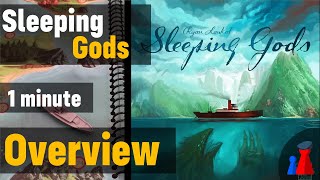
- Rich storytelling with campaign variety delivered through the atlas-book system
- Engaging cooperative play that blends crew and ship management
- Immersive theme and strong artistic presentation
- Clear sense of progression as you gain experience and new abilities
- Heavy rules and a steep learning curve
- Long play sessions and high time commitment per campaign
- Memory-intensive components can require careful organization
- Adventure, exploration, myth, destiny vs. agency, and storytelling as a core mechanism.
- A vast, fantastical nautical world explored aboard the ship Manticore across seas and floating islands, seeking magical totems to awaken ancient gods.
- Open-ended, atlas-book driven storytelling with branching narratives and campaign-driven progression.
Mechanics (from transcript analysis)
- atlas-book based exploration — Campaigns unfold via pages in an atlas book, revealing new stories in each campaign.
- campaign progression and exploration — Each campaign presents new locations, challenges, and narrative threads to pursue.
- Character progression and equipment — Gaining experience and equipping crew with weapons and abilities to tackle threats.
- combat with monsters and enemies — Engagements against various foes, integrating story and tactical decisions.
- cooperative crew management — Players manage crew health, morale, and ship status across campaigns.
- decision-driven narrative — Player choices influence outcomes and the path of the campaign.
- resource and ship management — Managing supplies, ship integrity, and crew wellbeing as part of play.
Video topics + discussion points
Quotes (from this video)
- Captain Sophie Odessa and her crew
- the Seas of the wandering sea
- pages of an atlas book unveiling a new story in every single campaign
- gaining experience equip their crew with new weapons and abilities
- participate in combat against various monsters and enemies
- these and a lot more in this great storytelling game sleeping gods
References (from this video)
- immersive story and art
- solo play is deeply engaging
- scales well as a long campaign
- steep learning curve
- long play sessions can be demanding
- adventure and exploration
- mythic nautical fantasy world
- campaign/story-driven
- Gloomhaven
- The King is Dead (thematic comparison)
Mechanics (from transcript analysis)
- choose-your-path/story — Encounters and decisions shape the journey through a logbook-like system
- cooperative exploration — Explore a map, gather resources, and encounter monsters
- deck-building — Build and refine a personal deck to attempt objectives
- Resource management — Balance resources to progress and survive
Video topics + discussion points
Quotes (from this video)
- Sleeping Gods is a story game where there are tons of choices you just get stranded with your ship and a logbook.
- Arc Nova is on the heavy side, super heavy side where you build a zoo.
- You always can draw as many cards you want from your deck until you either burn or you stop.
- it's the party hit for this year for sure.
- Wavelength is the party hit for this year as well.
- The Crew Deep Sea Edition is the most played game this year because it's much easier to play.
References (from this video)
- Ultimate sandbox adventure game with total freedom
- Massive content - Gloomhaven-level of content
- Flexible DM-like gameplay
- Excellent writing and story
- Great character abilities and item system
- Gorgeous artwork
- Works well solo
- Player-driven experience
- Great replayability
- Takes 15-20 hours to complete
- Hard to get to the table due to length
- Campaign games require sustained commitment
- Adventure sandbox exploration in a mystical place
- Mystical world with multiple locations and environments
- Flexible adventure with DM-like guidance
- Near and Far
- Gloomhaven
Mechanics (from transcript analysis)
- Branching story — Different paths lead to completely different locations and plot threads
- Character control — Controlling nine different characters with various abilities and tokens
- Combat — Fill out specific parts on enemy cards to stop their counter attacks
- sandbox exploration — Complete freedom to choose direction and path through the map
Video topics + discussion points
Quotes (from this video)
- definitely kicks like Calico to the curb
- this is definitely the gateway seven wonders game, seven wonders is not a gateway game
- it's an opportunity game that's what I like
- it's interactive one of the more interactive euros out there
- no one is talking about this
- wow does it burn your brain
- the uniqueness factor at this game really works
- it's like the most flexible DM in the world
- every decision I make feels meaningful
- Ark Nova easily easily my number one of the year
- I fell in love with it like halfway through the game
- it's so good
- cannot wait to have this in my collection
- hallmark of a great game where you play it and you'll want to play it again as soon as possible
References (from this video)

- immersive narrative
- high production values
- very heavy and long
- adventure and exploration
- narrative-driven, open-world exploration with campaign feel
Mechanics (from transcript analysis)
- campaign narrative — long-form choose-your-path storytelling with game progression
Video topics + discussion points
Quotes (from this video)
- If this was just a job if i was just doing this for money well first of all the channel would be a lot different
- it's been a real problem you know i mentioned that these playing with friends videos have been taking a lot longer to make
- these update vlogs are about me being transparent about stuff
- two cameras that work
- i'm tinkering around hitting a bunch of things with a hammer to see if things get better
References (from this video)
- Perfect fit for Moana's voyaging and discovery spirit
- Rich thematic immersion
- Can be lengthy and complex for new players
- voyaging, discovery, mythic gods
- Oceanic voyage across a mythic world
- narrative-driven, open-world exploration
Mechanics (from transcript analysis)
- cooperative storytelling / exploration — Players jointly explore a vast world, uncovering lore and steering a ship
Video topics + discussion points
Quotes (from this video)
- Belle loves books. It's what made her so weird according to the people in her community.
- It's basically her dream.
- I'm in Disney World right now, so I'm having a great time.
References (from this video)
- Rich world building and cooperative feel
- Memorable story moments
- Long, immersive campaign experience
- Lengthy sessions and setup
- Requires group commitment
- cooperative exploration and story-driven adventure
- mythic voyage across seas in a rich, expansive world
- campaign-style arcs with evolving choices
- Above and Below
Mechanics (from transcript analysis)
- cooperative play — Players work together to explore, encounter events, and progress story
- Exploration and progression — Map exploration and narrative progression drive the game forward
- Puzzle/decision-based outcomes — Narrative choices function like puzzles with consequences
- Story-driven arcs — Decisions shape future encounters and outcomes
Video topics + discussion points
Quotes (from this video)
- the above and below series you know that's really story driven because you depend on the story to tell you what your next actions are going to be
- I like the way it's tied to a story and the characters
- Ticket to Ride it's a old game
- Lords of Water Deep yeah that is true we love Lords of Water Deep
- Five Tribes yes those are two
- Settlers of Katon so those are my three
References (from this video)

- immersive world with rich art
- strong narrative potential and replayability
- rule complexity can be daunting
- long playtime for a full session
- exploration, voyage, and narrative discovery
- Mythic sea-faring adventure across a vast open map
- branching, story-driven
Mechanics (from transcript analysis)
- cooperative narrative arc — Players advance a shared story through quest cards and decisions.
- exploration / map discovery — Open-world exploration on a modular or shared map.
- resource / character management — Manage crew, ships, and gear to progress quests.
Video topics + discussion points
Quotes (from this video)
- the seminal 2008 cooperative game by matt licock
- Flatline a real-time cooperative game by kane klenko features players racing to treat crew members on a spaceship
- in the classic dexterity game operation
- you roll dice to attack, heal, gain energy and score points with the special power card
- this is a very beautiful game
- it's absolutely not this game you're just like making little buildings and it's so cute
- you lent my game out to my friend Hannah
References (from this video)

- Campaign format hard to complete
- Requires ongoing group commitment
- Story-driven exploration
- Adventure campaign
Mechanics (from transcript analysis)
- campaign system — Extended campaign gameplay
Video topics + discussion points
Quotes (from this video)
- it's just like falling off it's just literally there are 100 better games in it
- Small Islands uh this is the one that i've been saying is a replacement for carcassonne
- way too complicated for its own good
- it is one of the most beautiful games in existence
- i still think five tribes is better than yamatai
- nations is still my preference to fruity ages in terms of playing a physical game
- really good negotiation game
- great teamwork cooperative very cool
- this is a really good solo
- the deductions are really hard it's a really tough one to do
- it's oh it's a mind bender gorgeous looking
- reef is still a really cool game
- azul is only that good at two player
- near and far still really good
- there's no reason to play that one if you have near and far
References (from this video)
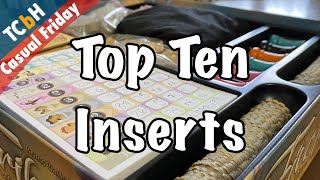
- the insert helps manage the complexity of a story-heavy game setup
- the discussion notes it has setup-related friction compared to legacy games
- story-led, exploration-focused
- narrative-driven exploration and island adventures
- story-driven with modular narrative
- Pandemic Legacy
- Gloomhaven
Mechanics (from transcript analysis)
- story-driven exploration and puzzle-like setup — preparation and organization challenges impact pacing and immersion
Video topics + discussion points
Quotes (from this video)
- everything to me has sort of built around and built off of wasteland express
- this tub which is color coded to the player pieces
- the insert has transformed what is the absolute worst aspect of this game and made it this beautiful premium
- sleeving is a hobbyist mentality
- open like a feast as soon as you open the box
- the central basin allows you to get everything successfully into the box and the lid closes
- box mapping removes all inserts
References (from this video)

- vast scope and sense of discovery
- autonomy in adventure
- crushing complexity for new players
- lengthy sessions
- sandbox exploration with totems and wakes
- open-world, mythic exploration in a mysterious world
- sprawling, emergent storytelling
- Mansions of Madness
- Ghost Stories
Mechanics (from transcript analysis)
- sandbox exploration — players choose their own paths and goals
- story-told through totems and clues — discoveries drive the narrative forward
Video topics + discussion points
Quotes (from this video)
- easy one for me
- locking it in
- we're not big fans of the crew
- it's not close
- open-world sandboxy exploration
References (from this video)
- Rich worldbuilding
- Strong cooperative play
- Large setup and rules overhead
- cooperative storytelling, global exploration
- archipelago voyage with open-ended exploration
- campaign-driven, branching adventures
- Mansions of Madness
- The Loop
Mechanics (from transcript analysis)
- campaign/storybook progression — players advance through large-scale adventures using pages and maps
- dice-augmented combat and resource management — combat and encounters resolved via dice with evolving needs
Video topics + discussion points
Quotes (from this video)
- i want a muppets exit game
- i would love to see that
- stranger things is super hot right now
- i think you could do this as a sleeping gods type environment
- it's been done by an author who already has multiple board games for his books
- please somebody do it
References (from this video)
- rich open-world exploration with a strong, story-driven structure
- inventive combat puzzles and token management feel flavorful and tactile
- solo play design is robust, using all crew members without needing others
- high production value and detailed components that enhance immersion
- steep learning curve and significant setup time
- inventory and card management can be overwhelming at the start
- endgame requires many totems for escape, which can be unforgiving
- awakening sleeping gods through totems, quests, and exploration
- Wandering Sea archipelago; open-world exploration and voyage aboard the Manacore
- story-driven campaign with modular chapters and in-game storytelling
- Sleeping Gods: Distant Skies (expansion)
- Sleeping Gods: Tides of Ruin (expansion)
Mechanics (from transcript analysis)
- crew and ship management — A shared ship board with crew members, fatigue, morale, health, and abilities that drive decisions.
- Event and quest decks — Event cards drive challenges; Quest cards provide objectives, rewards, and lore hooks.
- Open-world exploration — A large map of islands and seas where players pursue quests, find totems, and uncover story beats.
- Resource economy and trading — Resources like grain, meat, wood, gold, and coins are earned, traded, spent to heal, repair, or upgrade.
- Skill checks and synthesis — Character abilities and skills (perception, cunning, strength, Savvy) drive checks and influence outcomes.
- Totems and artifacts as progression — Totems unlock narrative pathways and endgame options; artifacts grant powerful ongoing bonuses.
- Turn-based combat with tokens — Combat uses Combat Action tokens, weapon stats, splash damage, and synergy tokens to resolve battles.
Video topics + discussion points
Quotes (from this video)
- the open-world exploration system is amazing
- this combat system is really great because you have this little puzzle aspect
- i just love this system
- the game looks stunning and the components are gorgeous
- open-world exploration and campaign weave together so well
References (from this video)
- Better version of Seventh Continent
- Open world feeling
- Easy to get into
- Not too much management
- Mechanisms complement the game
- High replayability
- Different starting conditions each campaign
- Favorite story exploration game
- Adventure and exploration
- Sea exploration
- Story-driven exploration
- Seventh Continent
Mechanics (from transcript analysis)
- Cooperative — Play as ship's crew
- exploration — Explore islands looking for sleeping gods
- replayability — Different starting conditions on replays
- Story-Driven — Huge exploration game with narrative
Video topics + discussion points
Quotes (from this video)
- if ever somebody says that he has the top 10 games of all time never trust them it's in their opinion
- if i could give a game 11 out of 10 clank legacy would be it
- this is the reason why i fell in love with board games in general
- it's my favorite solo game for sure the more i play it the more i want to play it
- to be honest right now probably next year it will be different maybe tomorrow it will be different
- the unknowing like what's gonna happen what's his agenda it's just an amazing experience
- if you like deck building then i think you definitely like clank legacy like a lot
References (from this video)
- rich storytelling potential
- immersive world-building
- rules-light may frustrate gamers seeking deterministic outcomes
- narrative-driven exploration with prompts
- Mythic exploration and storytelling
- storytelling RPG-like with engine-building
- Gloomhaven
- D&D-style RPGs
Mechanics (from transcript analysis)
- Storytelling — Textual prompts and illustrations guide narrative outcomes.
Video topics + discussion points
Quotes (from this video)
- "top 23 board game terms that we mentioned quite a bit"
- "we want to ramp up quicker"
- "we're going to pick out the top 20 is where we started but then we said well it's 2023 so we're going to give you the top 23 board game terms"
References (from this video)
- strong ambient storytelling and atmosphere
- multitude of ways to approach each arc
- beautiful art and production
- some players find the reading load heavy
- campaign can be lengthy and demanding to finish
- adventure, exploration, destiny, and totems
- an open-world, map-based voyage on the Manticore ship and beyond
- open-ended with a central quest (totems) and evolving world
- Oath: Chronicles of Empire and Exile
- Near and Far
- Sleeping Gods (standalone as a comparison baseline)
Mechanics (from transcript analysis)
- campaign-length and choice-driven endings — three-act structure with multiple endings and epilogues.
- deck-growth and character progression — your deck expands with new abilities, crew, and gear.
- Open-world exploration — players explore a large map and uncover side-quests and story beats.
Video topics + discussion points
Quotes (from this video)
- easy to set up and it's short
- the new modules that you get in this really cool they change up the game for the better
- this is the open-ended thing open-ended so the story you tell in between you kind of make up as you go along
- the campaign system is tiny all you're going to be doing is adding a card
- it's a one-and-done game so you open this one up you throw it away
- the dream world or real world
- the story deck add new cards to the deck and narrative arcs on the board
References (from this video)
- Massive world to explore
- Excellent world building
- Red Raven Games quality
- Lots of hidden content
- Memorable moments
- Heavy resource management
- Requires house rules for second playthrough
- Adventure and discovery
- Vast exploration world
- Red Raven Games world
- Near and Far
Mechanics (from transcript analysis)
- exploration — Discover new locations on the world map
- Keyword linking — Link keywords to unlock content
- Resource management — Manage supplies and resources
- scenario-based — Each location has content to discover
Video topics + discussion points
Quotes (from this video)
- we are doing our top 10 co-op games
- I love this game I've always loved this game and I feel like I always will love this game
- it's as close to a video game I've ever felt in playing in a board game
- sleeping Gods is absolutely one of the most awesome worlds I've ever experienced in a board game
- I feel like they've encaptured the video game in a board game very very well
References (from this video)
- Stunning production quality and art
- Strong narrative design with a huge loot of replayability
- Deep combat puzzle and clever use of synergy tokens
- High versatility for solo play and varied group sizes
- Accessible quick-start guide that gets you into the campaign
- Rulebook ambiguities and learning curve; not all rules are explicit
- Brutal difficulty curve in normal mode; risk of player frustration
- Progression can feel slow and resource-heavy in early campaigns
- Kickstarter/production approach can feel opaque or delayed to some players
- Adventure, exploration, narrative-driven campaign with emergent storytelling
- Archipelago exploration across a sailing world as you awaken sleeping gods
- Story-driven, episodic quests tied together by a book of scripts and an atlas/map exploration
- Above and Below
- Near and Far
- Kingsburg
- Eclipse
- Twilight Imperium
- Stellaris: Infinite Legacy
Mechanics (from transcript analysis)
- Campaign book of scripts — Players follow modular narrative scripts that drive story events and objectives across islands.
- Combat grid with body parts and synergy — Combat uses a grid divided into body parts; weapons and synergy tokens drive coordinated attacks.
- Cooperative/solo play with open-ended goals — Designed for 1–9 players with cooperative play; emphasizes puzzle-like decision-making and planning.
- Fate/deck-driven randomness — Draw fate cards to simulate luck/skill during actions and encounters; deck reshuffles alter available options.
- Map atlas exploration — A spiral-bound atlas and map sheets guide exploration, locations, and keyword-based quests.
- Nine-character crew with abilities — Each crew member has abilities; players activate them with tokens and may equip cards to boost actions.
- Resource management and fatigue — Players manage fatigue, money, food/recipes, and items to keep characters functioning between events.
Video topics + discussion points
Quotes (from this video)
- Sleeping Gods is essentially a story narrative campaign.
- it’s open-ended like you wouldn’t believe.
- the rule book was not perfect.
- replay value off the charts.
- it’s brutally hard on normal mode.
- start the game with 20 xp 20 starting coins.
- easy mode is there and I’m going to play every single campaign on easy mode from now on.
References (from this video)
- epic, story-driven exploration
- high replay potential with many paths
- rulebook can be dense; setup is lengthy
- Storybook/adventure narrative
- Mythic open-world island exploration
- Choose-your-own-adventure style in a campaign
Mechanics (from transcript analysis)
- Atlas-style exploration — Story-driven exploration with a map-book/map-like progression
- campaign persistence — Progression carries between sessions with evolving threats
- Crew management and companions — Manage a crew with different abilities and encounters
Video topics + discussion points
Quotes (from this video)
- Sleeping Gods is so good it's so good
- it's like playing a Choose Your Own Adventure storybook
- The Minis on this are huge
- this box is so much heavier than I thought it was
- it's the slowest game ever
- it's a worldwide contest
- have fun keep gaming be social
References (from this video)
- Rich, narrative-driven open world
- Cooperative play with emergent storytelling
- Beautiful art and components
- Heavy upkeep and potential for long play sessions
- Can be difficult to integrate into shorter streams
- Exploration, cooperative storytelling, stealthy shipboard exploration
- A vast fantasy voyage across a mysterious archipelago
- Open-world, episodic chapters with narrative-driven choices
- Arkham Horror
- Kingdom Death: Monster
Mechanics (from transcript analysis)
- Crew/ship management — Assign actions to crew and ship systems to progress and survive encounters.
- Resource-driven actions — Spend resources to perform actions, uncover clues, and advance the story.
- Story-driven exploration — Narrative-driven exploration with decisions impacting the map and outcome.
Video topics + discussion points
Quotes (from this video)
- we are playing Arkham Horror we're on the six Mission
- oh my gosh these tokens are the best
- The hammer is OP
- Sleeping Gods live campaign we're going to do Sleeping Gods live because we really want to do it
References (from this video)
- Rich, emergent storytelling with a strong sense of discovery
- Engaging cooperative puzzle-like play that scales with players
- Flexible map and quest structure that supports exploration
- Strong stream-friendly moments and audience participation potential
- Complex rule set and setup can be intimidating for new players
- Session length can be lengthy, requiring patience from stream audience
- Can be heavy on bookkeeping and planning between turns
- Exploration, cooperation, mythic questing, and emergent narrative driven by story and encounter cards.
- Mythic, open-ocean fantasy world where crew explore islands and tomes while seeking a way home from a sleeping goddess.
- Story-led campaign with modular map exploration and event-driven progression.
- Underwater Cities
- Primal
- Seven Citadel
Mechanics (from transcript analysis)
- cooperative exploration — Players explore a modular map with encounter cards and story cards to uncover locations, quests, and dangers.
- Crew abilities and synergy — Characters have unique abilities; players combine actions and spend synergy tokens to maximize outcomes.
- Quest and totem progression — Complete quest cards to unlock powerful totems and long-term advancement, shaping future play.
- Resource management — Manage scarce resources (meat, fuel, gear) to sustain crew and enable travels and actions.
- Turn-based combat resolution — Boss and monster encounters resolved via cards and character skills, often requiring planning and cooperation.
Video topics + discussion points
Quotes (from this video)
- we just destroyed it and earned a synergy token
- memory Stone can you go ahead and grab Quest Adventure card 114
- we found a book that describes the entrance to the cinder realm
- Pocket Dogs and dingleberry is the worst cooking show ever
- this is epic we’re up here discussing the tundra and a quest
References (from this video)

- vast narrative canvas
- table-ready with a lot of content
- large time commitment
- storage/light setup considerations
- story-driven exploration and character development
- mythic exploration across a vast open world
- narrative adventure with modular quests
- Gloomhaven
- Dune: Imperium
Mechanics (from transcript analysis)
- campaign-style exploration — players explore a globe-spanning map with branching goals.
- story-driven quest system — game evolves with narrative choices and encounters.
Video topics + discussion points
Quotes (from this video)
- i love this game i love this game it's number 20
- we just bought our own copy of this i'm so excited to play this at two with jamie
- sleeping gods has invoked so much of the things i love about not only board games but video games
- it's endlessly fun to pull things out of the bag
- i'm very excited to try out each one
References (from this video)
- Rich, narrative-driven cooperative experience with extensive lore
- Deep and varied resource management and crafting options
- Dynamic combat that rewards coordination and planning
- Immersive art direction and thematic components
- Steep learning curve and long onboarding for new players
- Rulebook complexity can slow early sessions
- Campaign length can be lengthy for casual play
- Cooperative exploration, survival, artifact collection, and epic storytelling within a sprawling map-driven campaign.
- A mythic, open-world archipelago where a crew sails and explores to recover the Star Spear and other artifacts, navigating perilous locations like the Gods’ Eye, crypts, and frozen seas.
- Journal/letter-like storytelling; quest logs and in-game discoveries shape the ongoing narrative.
- Dungeons & Dragons (D&D 5e)
- The 7th Continent
Mechanics (from transcript analysis)
- Adventuring deck and branching quests — An adventure/quest deck drives the story with events, encounters, and boss fights that require strategic coordination among players.
- Boss fights and multi-phase encounters — Majestic, multi-part adversaries require careful sequencing, board positioning, and shared tactics to defeat.
- Card-driven combat with dice-like outcomes — Combat relies on a combat deck, ability cards, and dice-like rolls resolved with modifiers and synergy tokens to determine damage and defense.
- Cooperative exploration and map movement — Players push a shared map through exploration cards, route planning, and resource management, choosing how to proceed across islands and regions.
- Crafting and totem/egg artifact system — Items and totems are assembled from resources (e.g., leaves, blood flowers, teeth) to unlock powerful effects and progress toward a final objective.
- Resource and fatigue management — Players manage fatigue tokens, food/meat resources, torches, and other consumables to navigate dangers and recover between encounters.
- Skill checks and tests — Savvy, perception, and other checks (e.g., Savvy test of 13) determine success in entering locations, deciphering clues, or advancing quests.
Video topics + discussion points
Quotes (from this video)
- the star spear head is stuck in the mouth of a Titanic Beast that sometimes roams these lands
- Savvy test of 13
- this shirt is amazing look at that cppy bear Critter
- this is absolutely fantastic
- an amazing win
References (from this video)
- Massive open world with incredible replay value
- Dozens of hidden totems to discover
- Solo and two-player friendly
- Complete freedom in exploration direction
- Massive amount of content even before expansions
- Very clunky save system between games
- Requires dedicated table space for long campaign
- Heavy time commitment for campaign completion
- Fantasy
- Open World
- Exploration
- Sandbox
Mechanics (from transcript analysis)
Video topics + discussion points
Quotes (from this video)
- these are my top 100 games not necessarily the top 100 games
- the lower end of my top 100 is still games I rank 8-9 out of ten if there are no sevens on this list
- everything on here is the creme de la creme as far as I'm concerned
- it hurt a lot
- this can really destroy friendships if you're not careful
- I have played through the whole game and I feel like I've barely scratched the surface
- there is such a thing as too much for a game
- I really want to play this but maybe not quite every single week
- I am serious and don't call me Shirley
- there's a lot of new content to throw in there
- I do love a good sandbox game
References (from this video)
- Amazing exploration feel
- Huge content for solo and cooperative play
- Journal/box size can be daunting
- exploration and story-driven adventures
- High-fantasy open-world voyage
- Sandbox with journal-driven progression
- Robinson Crusoe
- The Witcher?
Mechanics (from transcript analysis)
- Open-world exploration — Explore a vast map with storyline-driven events.
Video topics + discussion points
Quotes (from this video)
- Spirit Island is number one on the list.
- Mage Knight is the hardest but most rewarding on the table.
- Not a fan at all of Marvel IP so I wouldn't put Marvel Champions on the top 10.
- Dune Imperium is a lateral move; some people love it, others not so much.
- Final Girl is thematic and nostalgic—taps into VHS-era horror.
- Sleeping Gods feels like Breath of the Wild for board games.
- Warps Edge has the same appeal as deep space D6 — but lighter.
- The solo scene in board gaming is the best corner of hobby.
References (from this video)
- Immersive world and narrative flow
- Cooperative teamwork and shared discovery
- Beautiful art and components
- Significant setup/teardown, especially between sessions
- App reliance penalty felt by some players
- Adventure, exploration, fate-driven storytelling
- A vast, sailors’ fantasy world with roaming islands and sea-based exploration.
- Campaign-driven, sandbox-like with multiple story threads
- Role Playing Games (RPGs)
- Other big campaign-board-games
Mechanics (from transcript analysis)
- Campaign progression — Long-form, evolving game state with ongoing consequences across sessions.
- cooperative exploration — Players explore a modular map, uncovering locations, encounters, and story beats together.
- Narrative choice with consequences — Player decisions steer outcomes and unlock paths in the campaign.
Video topics + discussion points
Quotes (from this video)
- it's our list let it be
- we're here today with a very exciting video so exciting jeff can't even open his eyes
- this is the most immersive experience
- it's a brain burning game
- I freaking love Role Player Adventures
References (from this video)
- stunning artwork
- rich world and stories
- decisions matter with meaningful outcomes
- complex and time-consuming
- lengthy campaigns may deter some players
- campaign-based, richly atmospheric
- vast narrative-driven world with exploration
- immense, story-forward
- This War of Mine
- Siberian
Mechanics (from transcript analysis)
- campaign/story-driven — narrative arcs influence player decisions and outcomes
- exploration and deck-building — deck-building supports exploration and encounters
Video topics + discussion points
Quotes (from this video)
- it's one of my favorite puzzle games in a small format
- it's a purely solo game with just 18 cards
- no two sessions are alike
- the solo mode is simple yet challenging
- this is my updated top 50 solo board games 2024 Edition
- it's a must try in my opinion
References (from this video)

- beautiful art
- open-world exploration
- long play sessions
- setup heavy
- mythic adventure with open-world exploration
- mythic oceanic voyage in a vast open world
- open-world exploration with story prompts
- Terraforming Mars
- Arkham Horror LCG
Mechanics (from transcript analysis)
- campaign/storybook — story-driven progression
- Narrative choice — player decisions influence outcomes
Video topics + discussion points
Quotes (from this video)
- thank you everyone for watching those who are new those who've been around
- I like to say quality over quantity
- I don't like locking in days and promising to play stuff
- play what you want when you want
- shelf of opportunity is real
References (from this video)
- immersive story and art
- cooperative play suitable for families
- high replayability with branching paths
- longer playtime
- some complexity for younger players
- branching, story-driven cooperative adventure
- mythic sea voyage and island exploration
- open-world, choice-driven storytelling
Mechanics (from transcript analysis)
- cooperative storytelling — group decisions shaping a shared narrative
- quest-based progression — individual quests interwoven with an overarching story
- Skill checks — early game checks influence outcomes and paths
Video topics + discussion points
Quotes (from this video)
- it's the perfect family game where you're trying to kill each other
- you roll dice so it's like a yahtzee type of game
- it's a perfect family game that plays in under 30 minutes
- you draft dinosaurs and put them into your Park
- it's very interactive and for a family game it's fantastic
- this is a perfect family game for anybody it's super easy to teach
References (from this video)
- ambitious, open-world design with rich narrative
- great for players who want a long-form story and discovery
- reset mechanics can be frustrating in some sessions
- heavy design demands a committed playgroup
- story-driven questing with puzzles and combat
- open-world exploration fantasy world
- epic, branching, narrative-driven
Mechanics (from transcript analysis)
- Open-world exploration — Exploration and quests across a large map with story-driven encounters.
- puzzle/quest-solving with combat — A mix of exploration, combat, and narrative-driven challenges.
Video topics + discussion points
Quotes (from this video)
- one of the biggest things you know as being a good game designer you want to give players interesting choices
- Gamers or people in general they want to feel rich they want to feel powerful they want to feel smart
- there's value in playing terrible games
- you can create a system that can be re-themed to different things to make more money
- it's like watching film... you break it down to see how they do it
- this is a monumental feat of game design
References (from this video)
- Incredibly vast open world
- Every location feels different
- Great stories and characters
- Recurring characters provide continuity
- High replayability with different routes
- Massive time commitment
- Must leave on table for entire campaign
- Difficult save system
- Solo requires managing multiple characters
- Exploration adventure like Zelda Breath of the Wild
- Vast open world
- Open-world exploration with emergent stories
- Seventh Continent
- Role Player Adventures
Mechanics (from transcript analysis)
- campaign system — Long-form adventure requiring 15+ hours of play
- Open-world exploration — Navigate vast, varied world with 54 totems to discover
- solo adventure — Play with nine characters controlled solo
Video topics + discussion points
Quotes (from this video)
- Thank you for listening and enjoy the rest of the video
- I think that we do get some really good quality games but I think we are kind of rinse and repeating the same formula a bit lately and we're not putting out enough belters
- These are quite useful lists actually because you can sometimes get caught in the spur of the moment
- It's not a Flawless game by any means
- I love me tomorrow
- Different Strokes for different folks
- I love it yeah it's one of my favorite Euro games that there is
- You're now in the spot you deserve to be
References (from this video)
- massive story scale
- distinct combat system and meaningful decisions
- long setup and playtime
- sequel may dampen motivation to replay
- story-driven exploration and meaningful choices
- open-world fantasy on a vast sea map
- narrative/storybook
Mechanics (from transcript analysis)
- Open-world exploration — move across a large map and encounter scenes
- story-driven choices with consequences — read stories, make choices, gain or lose resources
Video topics + discussion points
Quotes (from this video)
- it's absolutely must
- it's top three game of all time
- it's a betting game where you bet on horses
- it's like a borderline party game
- Sleeping Gods is a massive Story game
- you read the stories, make your choices, upgrade
- it's the biggest thing why you don't like it is sometimes you'll play a card to create a ship and then I'll play a card to cancel your ship creation
- you both have a Summoner and an army you have wars
- it's still a must have for both turns
References (from this video)
- Rich world-building
- Expansive, modular storytelling
- Can be long and sprawling
- Sandbox exploration with story-driven exploration
- Open-world nautical fantasy sailing quest
- Non-linear, narrative-first
Mechanics (from transcript analysis)
- Open-world exploration — Navigate the sea, uncover stories and quests
Video topics + discussion points
Quotes (from this video)
- you can't stop
- the more people are into it, the better it is
- it's a Dice Tower essential
- a masquerade of classic and modern designs
References (from this video)
- Huge epic scope
- Strong story integration
- Time-consuming
- Complex setup
- Expansive narrative campaign
- Epic open-world fantasy adventure
- Campaign-driven narrative with exploration
- Forgotten Waters
Mechanics (from transcript analysis)
- Interconnected scenarios — Campaign spanning many sessions
- Narrative-driven combat and loot — Combat and looting integrated with story
Video topics + discussion points
Quotes (from this video)
- it's the story that matters in these games; mechanisms complement stories
- this is the best scavenging system
- we're going to present one game that the other person hasn't played
- Pirates of the Caribbean the board game
References (from this video)
- epic, immersive campaign with a deep lore feel
- excellent production values and art; rich storytelling
- standalone sequel potential with meaningful tweaks
- heavy commitment; long play sessions
- rule learning can be dense for new players
- adventure, exploration, emergent powers
- open-world island exploration and airborne exploration in distant skies
- campaign-driven with evolving abilities and loot
- Sleeping Gods (base game)
Mechanics (from transcript analysis)
- character upgrades / abilities — new powers and items unlock over the campaign
- cooperative exploration — players team up to uncover story-driven quests and locations
- resource and action pacing — balanced progression to maintain momentum and discovery
Video topics + discussion points
Quotes (from this video)
- this game has like hundreds of miniatures and metal components galore that were all unlocked via the Kickstarter
- the biggest thing that surprised me is every time a game comes into our library i try to learn it as soon as possible
- nemesis lockdown is wonderful for that and the contingencies really add a new layer of tension
- the mirror effect... I haven't seen before; it's distilled; it's simple
- Sleeping Gods is the best adventure game—it's 10 out of 10 for me
- Calico is the crunchy, punishing one; Cascadia is more open and forgiving in terms of pathing
References (from this video)
- Story-driven cooperative exploration
- Open-world fantasy adventure across a sleeping god-driven world
- Campaign-like, narrative-rich
Mechanics (from transcript analysis)
Video topics + discussion points
Quotes (from this video)
- we want to play them and share these hot games with you
- we love this community that we're building
- we're going to try to play them too
References (from this video)
- Huge world with many endings and high replayability
- Player choices drive story and memory individuality
- Immersive, well-written narrative and believable mysteries
- Unique, tactile combat that feels alive
- Dynamic world that reacts to prior choices via keywords
- Expansions add new regions and content
- Very large footprint; long setup and playtime
- Save/load system is fiddly and not fluent
- Not cheap; heavy to buy and store
- Some component cohesion between storybook and ship components could be improved
- Collaborative, narrative-driven exploration with consequences that shape the story
- Open-world maritime fantasy archipelago; stranded crew aboard a ship named Manticore exploring mysterious lands
- Paragraph-based storybook chapters and branching choices that lead to multiple endings
- Seventh Continent
- Descent: Legends of the Dark
- King's Dilemma
Mechanics (from transcript analysis)
- Character abilities and role distribution — Nine characters with unique powers distributed among players
- Combat with adaptive mechanics — Monsters have location-based and status effects; attacks affect weaknesses
- cooperative play — Players work together as a ship's crew
- Endings and replayability — 13 endings and expansion content increase replay value
- event phase — Turn-based event cards drive challenges
- Map-based movement and exploration — Move around a world map, explore locations for actions
- Quest and keyword system — Quests reveal keywords (e.g., raid) that affect future locations
- Storybook exploration — Exploring a large storybook with chapters and choices
Video topics + discussion points
Quotes (from this video)
- It's huge and immersive; we finished a lengthy campaign and barely scratched the surface.
- The story is great and you wanna find out more.
- The game keeps you accountable and it feels alive.
- There are 13 endings, which is crazy and awesome for replayability.
- Combat is very, very unique here and feels alive with its own logic.
- It's not cheap, but the amount of content and potential for expansion justifies it for story-game fans.
- The world is huge; you can lose hours just wandering and reading through the lore.
- Your choices matter; you'll have completely different memories than someone else at the table.
References (from this video)
- Epic campaign, rich narrative
- Very long plays, heavy pacing
Mechanics (from transcript analysis)
Video topics + discussion points
Quotes (from this video)
- Harrow County is a very unique game.
- This is Seven Wonders. ... an excellent card drafting game.
- Ticket to Ride is a classic and a staple at many events.
- Root has fans and they are super fans.