The peaks of Snowdonia rise before you, encased in mist, their summits barely visible. The highest is Snowdon (Wyddfa) herself at 1,085 metres. The year is 1894, and the Snowdon Mountain Tramroad and Hotels Company Limited has been formed to build a branch line from Llanberis to the summit. You can scarcely believe it's possible!
In Snowdonia players represent work gangs providing labour for the construction of the Snowdon Mountain Railway. Unlike other train games you will have to excavate your way up a mountain side, as well as make and lay the track, construct viaducts and stations. All this in competition with the weather of the Welsh mountains (and the game itself)!
You may be assisted by a train (though that's not always best) and you'll be able to collect essential materials from the Stock Yard. You will obtain special work contracts that give you bonuses.
Can you contribute more than the other players to the magnificence of the Snowdon Mountain Railway?
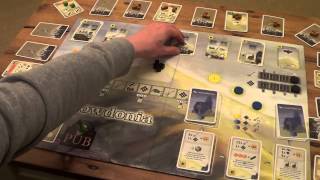
- Engaging track-building and resource management
- High-scoring contract options
- Dynamic weather and event system adds planning tension
- Restock/draw mechanics and token management provide strategic depth
- Can be punishing for new players due to complexity
- Reliance on luck with bag draws may disrupt planning
- Potential downtime during turns in a heavy ruleset
- railway expansion and resource management
- Snowdonia, Wales; railway construction era
- procedural/instructional
Mechanics (from transcript analysis)
- action_selection — Players recruit workers and choose actions each round (track laying, excavation, resource gathering).
- bag_drafting_draw — Cubes representing resources are drawn from a bag to restock the stockyard.
- contract_cards — Contract cards provide objectives and rewards; players activate or utilize them to gain points.
- resource_management — Managing stone, coal, iron ore, and other resources to fulfill contracts and build tracks.
- scoring_and_progression — Points are earned through track completion, ownership tokens, and contract fulfilment.
- tile_and_token_ownership — Ownership tokens are placed and affect scoring and track advancement.
- weather_event_mechanic — Weather tiles (sunshine, rain, fog) influence actions and turn flow.
Video topics + discussion points
Quotes (from this video)
- these track cards have all been excavated they've all been cleared so I can build on this station now
- this one's worth seven victory points that's pretty good
- it's a bit of a gamble but I'm going to try and save those and do some more building
- the odds of pulling out some more events now are pretty high
References (from this video)
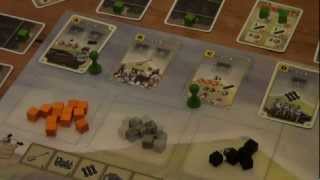
- Engaging decision space with weather, track laying, and contracts
- Varied strategies via contracts and track layouts
- Weather events add tension and planning depth
- Reasonable point potential from stations and completed routes
- Weather can disrupt planning and slow progress
- High resource and cube management complexity can be fiddly
- Bag management introduces randomness that can frustrate
- railway construction and resource management during industrial expansion
- Snowdonia, Wales; railway-building and mining within a mountainous landscape
- procedural strategy with chance elements via weather and contracts
Mechanics (from transcript analysis)
- Contracts / objective cards — Draw and complete contracts to gain points and special abilities.
- Points-based area control / building ownership — Build stations in locations to gain ownership markers and points.
- Resource management — Manage resources (stone, iron ore, coal) to pay for builds and conversions.
- Track laying / tile placement — Lay railroad tracks to connect stations and earn points.
- Weather/disc mechanics — Weather discs influence actions and scoring opportunities across rounds.
- worker placement — Assign workers to perform actions such as gathering resources, constructing stations, and advancing tracks.
Video topics + discussion points
Quotes (from this video)
- that's a heck of a lot of Cubes to lose in one go
- the fog really isn't helping
- I'm running out of time very very quickly
- it's going to potentially give me some victory points
- weather's not looking pretty
References (from this video)
- Excellent worker placement mechanics
- Great solo experience
- Strategic decisions without excessive complexity
- Thematic weather mechanics
- Deluxe edition with modules
- Replayable with scenarios
- Wholesome theme
- Good for group play
- Hard to find for a while
- Welsh mountain name difficult to pronounce
- Welsh mountain railway
- Train building
- Welsh geography
- Weather mechanics
Mechanics (from transcript analysis)
Video topics + discussion points
Quotes (from this video)
- most of what i look for in a train game is about emergent alliances
- the more people you get in there the more entangled it gets and that's what's really exciting for me about train games
- definitions are useful when they highlight affinities and they cease to be useful when they're used to exclude
- i will call it a train game because it will piss off how to train gamers
- this is the game that invented everything i rip off in my games
- it feels very much like a train game that would have been designed like in 2010
- the rules are really very simple they're just they just take a long time to play
- soft spot for games that are designed just for me as a solo player
- i really enjoy automated opponents and seeing what they're capable of
References (from this video)
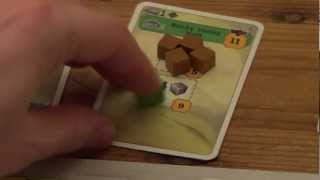
- Tense, strategic decision-making under weather and event pressure
- Strong integration of track building with contract fulfillment
- Rich thematic flavor of industrial growth and rugged terrain
- Weather and contract randomness can slow early progress
- Resource bags can become sparse (white cubes) limiting options
- High complexity may deter new players without guidance
- Rail construction, mining logistics, and worker management
- Industrial Wales, quarrying and railway construction in Snowdonia region
- Procedural, resource-driven with event-driven tension
Mechanics (from transcript analysis)
- Deck-building / contract deck manipulation — Reshuffle discard pile to create a new contract deck and influence draws
- Resource management — Balance coal, iron ore, stone, rubble, and other resources to power actions
- set collection / contracts — Draw and fulfill contracts that convert excavated sites into points or bonuses
- Track laying / station building — Lay tracks and construct stations with prerequisites and excavation implications
- Weather effects — Fog and rain alter action availability and strategy
- worker placement — Assign workers to actions such as stockyard, track building, and restocking
Video topics + discussion points
Quotes (from this video)
- it's meant to get a little bit tougher as we go along
- fog to contend with for now
- train maintenance is proven valuable
- there's very sparse bag with lots of white cubes in it
References (from this video)

- Engaging railway theme with tactile puzzle elements
- Clear path to victory through efficient route design
- Less accessible to new players due to setup and rules
- Some components may feel dated compared to modern designs
- Railway engineering and mountain terrain challenges
- The Welsh mountains and railway construction in Snowdonia
- Puzzle-like strategic planning with theme-driven decisions
Mechanics (from transcript analysis)
- Resource/Worker/Action selection — Manage actions and resources to maximize efficiency.
- Route Building — Connect towns/locations via built routes.
- tile placement — Place track/tiles to extend networks across the board.
Video topics + discussion points
Quotes (from this video)
- Better behaviors for happier board gamers.
- This whole naughty list, nice list lock is finally paying dividends.
- Tier 2 naughty list criteria.
- H, you know, we didn't budget for this many nice players.
References (from this video)

- strong solo mode
- compact but deep
- availability issues historically
- construction and resource management
- Industrial mountain railway building in Snowdonia, Wales
- engineer-driven, puzzle-like
Mechanics (from transcript analysis)
- Cooperative/competitive mix — players compete for resources to build tracks
- hand management — manage cards to optimize routes and turns
Video topics + discussion points
Quotes (from this video)
- Folklore is such a great classic Gothic horror kind of Dungeon Crawl.
- Snowdonia is still on here baby going strong.
- Pavlov's house should be in the top 100 because Pavlov's house is a solo game and it's not really multiplayer.
- it's the joy of It's a Wonderful World... the journey.
- pandemic Legacy season one is above it, I don't know maybe people play it solo
References (from this video)
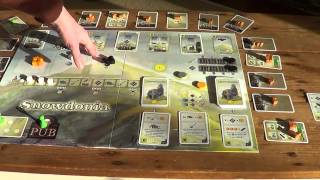
- Clear demonstration of core game actions (excavation, contracts, and scoring)
- Practical walk-through with concrete examples and on-screen decisions
- Highlights weather effects (sunny/fog) and their impact on play
- Explains end-game scoring via ownership markers, reducing need for continuous scoring
- Solo playthrough may miss multiplayer dynamics like competitive first-player positioning
- Some rule clarifications are interspersed with gameplay, which could be confusing for new players
- Railway expansion and mountain mining/small industry
- Mount Snowdon, Wales; railway construction during a historical period
- historical/realistic
Mechanics (from transcript analysis)
- contracts and scoring — Acquire contract cards that grant points or abilities; end-game scoring uses ownership markers.
- Deck/restock and draw — Restock contracts and draw event cards; some events affect play without being buyable in solo.
- End-of-turn cleanup — Return used components, refresh stock, and prepare for next round.
- First-player token mechanic — Certain placements grant the first-player token for the next turn.
- Market/stockyard and ownership markers — Use stockyard mechanics and ownership tokens to track potential end-game points.
- resource bag management — Take resources from bags and return them, with some limitations on what can be retrieved.
- resource management and conversion — Manage cubes like rubble, stone, iron ore, coal, and convert resources (e.g., iron ore to steel) to fulfill costs.
- Track/rail building — Lay tracks and build stations to progress up the mountain and gain victory points.
- Weather and events — Weather conditions (sun, fog) modify available actions and introduce event-driven effects.
- worker placement — Place workers to perform actions such as excavating rubble, collecting contracts, or building trains.
Video topics + discussion points
Quotes (from this video)
- the black wooden train icon here shows you if you put an action pawn here or worker here you will actually get to be first player on the next turn
- notice if you did put one here and you're playing multiplayer if you put an action pawn here or worker here you will actually get to be first player on the next turn
- it's three victory points for us
- the weather now so these slide up and we're gonna place a new one here which is yellow
- fog please slide up grab a fog
- you don't need to keep a running count of your score you use your ownership markers
References (from this video)
- Cooperative objective within a competitive framework
- Large, visually appealing board with thematic weather and station tracks
- Weather track adds strategic depth and variability
- Solitaire mode provides a complete solo experience
- Sets up with modular rubble tracks and contracts for variability
- Setup is lengthy and components dense
- Solo rules require careful reference to the setup instructions
- Three-to-five player cards are excluded in solo mode, which can complicate adaptation
- railway construction with resource management and weather effects
- North Wales mountains; building a railway to Snowdon
- instructional/setup-focused narration; solitaire/solo variant explained
Mechanics (from transcript analysis)
- contract_cards_and_actions — deployment of action tokens and contract cards that grant bonuses and modify actions; setup adapts based on players
- resource_management — stockyard with iron ore, coal, and stone; resources used for actions and scoring; setup uses a bag and random draw
- solo_mode_and_scoring — solo variant uses a fixed score progression; goal is to beat your previous train score; tracks and trains are handled differently in solo
- tile_track_placement — laying track cards between stations to build the railway toward the summit; rubble must be cleared to lay tracks
- weather_mechanic — weather track and tokens influence what you can do (working in sun, rain, fog); affects excavation and track laying
- worker_placement — players place workers on action spaces to perform tasks; in solo, actions align with a fixed schedule and track cards replacement resembles a solo flow
Video topics + discussion points
Quotes (from this video)
- the aim of the game a is to build a railway line all the way up to the peak of snowdonia
- it's a cooperative game but you're cooperatively building this Railway line
- the winner in a multiplayer game is the player who has contributed most to building that Railway line
- that's really neat that's not something I've seen in any of the games I played before where you you're all trying to achieve a common goal so you're kind of working together but against each other at the same time it's awesome
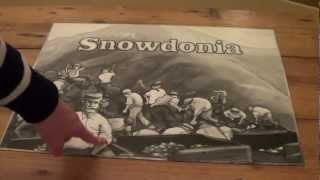
- what a beautiful board this is the back of the board this is the side we're going to play on