Sorcerer: A Strategy Card Game is set in what the company describes as a grim, gaslamp lit world full of fantastic, mythical creatures and sorcery. Designed for two to four players, the game pits two ancient beings of great power against one another to determine which of their lineage are strongest. The players use sorcery to conjure minions, cast spells, and wield enchanted items to reach the game's goal of conquering three battlefields.
The game uses a simple resource system of "energy" that is determined randomly by a dice-roll at the beginning of each round, to make sure no round is the same. However, the outcome being the same for both players, the game balance stays even. This energy is then used in the Action Phase for conjuring minions from your hand on any of three battlefields, casting possessions that can improve your minion's traits and abilities; or sorcery cards with various direct effects. Also as an action you can add more energy to your Energy Pool, draw more cards, move minions to another battlefield etc. The choice is yours, it is just about your pure skill to handle the battle preparation!
In the Battle Phase players roll amount of custom dice equal to each minion's attack trait with possible outcome of miss, hit, double hit or critical hit for each die, and place damage counters on the respective minions or directly to the Battlefield. A unique system of Omen tokens then allows to adjust this outcome by re-rolling the dice, before distributing the damage among opponent's minions and battlefield.
The combination of usual mechanics like story driven deck building, push your luck or dice-rolling; and a unique system of influencing the outcome of the battle, provides a perfect balance between strategy and random elements (even you still have the possibility to influence the outcome). Dividing the round to the Action Phase and Battle Phase then creates a very pleasant and natural flow of the hardcore game play.
Sorcerer was first developed in 2012, and in 2014, Peter Scholtz consulted with Czech and Slovak board gaming communities intensively to fine tune the mechanics of the game. In August 2014, the first “Print and Play” demo version of Sorcerer was published, responding to all the remarks and feedback Peter Scholtz received, allowing him to create both his upgraded, native language demo and finally the, English language version of Sorcerer. The Sorcerer prototype was available for the wide audience as a free to play testing material over the year 2014. After another year of intense work and listening to the game community, Peter Scholtz went to Essen Spiel to meet some of the greatest board game publishers and show them the game. After a meeting with Rob Dougherty, CEO of the White Wizard Games, game designer (Star Realms, Hero Realms, and Epic card game), and last but not least, MTG Hall of Fame player, the dice was finally rolled. In 2016, Peter Scholtz become a White Wizard Games team member and together they prepared the game for its KS campaign launch in November 2017.
- Strong TCG-like feel without full deck-construction burden
- Thematic and crunchy card play for deep strategizing
- Dice mechanics can be a turn-off for some players
- Not as memory-light or table-friendly as some lighter solo games
- Deck-building and dice combat with ranged magical themes
- Gothic/occult fantasy with dark thematic flavor
- Deep card play focused on timing and sequencing
- Magic: The Gathering
Mechanics (from transcript analysis)
- Dice-based combat — Combat resolution relies on dice rolls with various modifiers.
- Mana/resource system — Energy/mana mechanics govern card costs and play.
- three- battlefield layout — Creatures/units are assigned to battlefields for conflict resolution.
Video topics + discussion points
Quotes (from this video)
- delicious combotastic card play that feels that it could have been a TCG
- this is the game that offers me the richest deck construction experience from a solo standpoint
- the deck construction in this game is just astounding
- not only do I think it's the number one game that can substitute your Magic the Gathering addiction, but it's within the top five solo board games
References (from this video)

- strong artwork by Peter Schultz
- solid two-player duel experience
- balance and interaction can vary by playgroup
- magical duel and three contested locations
- Fantasy world with wizards
- two-player area-control card combat
- Marvel Snap
Mechanics (from transcript analysis)
- area_control — two players vie for control of three locations on the board
- card combat — cards drive the actions and duels between players
Video topics + discussion points
Quotes (from this video)
- Star Realms is fantastic
- we should probably give Star Realms the boring coffee seal of approval
- Sorcerer is a fun game
- the artwork for Sorcerer is fantastic
- Space Explorers is a simple fun game
- it's cooperative and accessible
- this game makes you think like a winner
- the 3D buildings are amazing
- it's the giveaway sirens
- Munchkin Dungeon is a wild ride
References (from this video)
- thematic depth with a strong mashup concept
- clear card text; few keywords required
- high re-playability via 264 core options and numerous boosters
- steep initial learning curve for newcomers
- prototype state discussed; may imply balance/tuning work
- power, lineage, domain, and avatar-driven identity
- fantasy realms with three core card pools
- story-driven deck mashup blending character, lineage, and domain
- Warhammer
- Waiting Rooms
- Zombicide
Mechanics (from transcript analysis)
- card-based area interaction — Locations anchor abilities; players deploy minions and spells to influence the battlefield.
- custom dice — Dice provide combat outcomes with regular hits and critical hits influencing damage and effects.
- deck-building — Three sets (character, lineage, domain) are combined to form a personal deck.
- resource/omen management — Omen-like tokens regulate risk and opportunity during play.
Video topics + discussion points
Quotes (from this video)
- it's a mashup between Warhammer which I'm also a huge fan and I still and in the end the CCGs
- the three sets mix to create your own unique identity in Sorcerer
- it's a brilliant, ambitious mashup and a potential system seller
- Azul Summer Pavilion is good; demos were solid
- Batman Talisman Super Villain Edition looks like a beautiful thing
References (from this video)

- very thematic occult/witchcraft flavor
- gorgeous artwork and solid card play
- learning curve for new players
- asymmetry may not suit all groups
- magic, control, and occult power
- occult magic and sorcery in a fantasy/horror milieu
- head-to-head deck crafting with character customization
Mechanics (from transcript analysis)
- Asymmetric powers — Player roles grant unique abilities and strategies.
- deck-building — Players customize their deck around thematic categories.
- Head-to-head combat — Direct competition over control or victory conditions.
Video topics + discussion points
Quotes (from this video)
- Arkham Horror is an insanely beloved game with a ton of available content
- not all of this is Halloween but some of it certainly feels similar to unsettled
- Final Girl is there for you which is probably more of my audience than I'd like to admit
- this is very Halloween the comma my book is all about the occult
References (from this video)
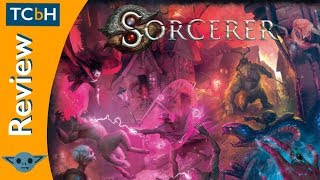
- Art direction and thematic treatment are superb, giving Sorcerer a distinctive feel beyond generic wizard duels.
- Core mechanics blend familiar concepts into a cohesive package with strong card interaction.
- Base game offers meaningful variety via four character mini-decks and 32 starting combinations, with expansions expected to broaden options without exploding complexity.
- Setup is efficient due to randomized deck mixing rather than heavy pre-building, making it easier to start playing quickly.
- Combat is highly interactive and underpinned by a clear dice-mitigation system using omen tokens, creating tense comeback opportunities.
- The game can feel weighty and lengthy in practice, particularly in longer combat rounds, which may deter casual players.
- Not a genre-wide innovation; Sorcerer borrows established mechanics that fans of other duel games will recognize.
- Because of the head-to-head focus and deep strategy, the audience is relatively narrow and not everyone will enjoy it.
- Some players may need a few plays to get comfortable with timing and resource management, which affects early play sessions.
- Dark magic and political power struggles between rival sorcerers
- Victorian-era London
- Competitive duel with emphasis on player interaction and tactical card play
Mechanics (from transcript analysis)
- Character-based mini-deck construction — Players start by choosing a character lineage/background, which decks form part of the 40-card combat deck; four base mini-decks combine to yield 32 unique starting permutations.
- energy resource management — Spending energy powers spells and boosts effects; energy accrues each turn and can be used strategically to accelerate your plan.
- Location-based area control — Three distinct London locations are in play; you must gain control by dealing damage and removing opposing threats, with victory awarded to the first player to capture two locations.
- Multifunctional card types — Cards come in minions, attachments, curses, and sorceries, each type delivering different effects and influencing different zones (locations) in play.
- Omen tokens and dice mitigation — Tokens collected throughout the game allow forced rerolls of dice, providing a measurable way to counter bad luck and balance risk.
- Sequential action resolution — Actions are resolved in sequence with limited opportunities for mid-turn reactions, keeping the pace deliberate and focused.
- Six-action turn structure — Each player has six actions per round in which they play spells, move units, draw cards, or perform other actions until both sides complete their sequence.
- Tactical combat mini-game — Combat is a separate sub-game within a round; attackers choose minions, roll dice equal to their strength, and players alternate resolving hits until all threats at a location are exhausted.
Video topics + discussion points
Quotes (from this video)
- this is a head-to-head in dueling card game
- art is phenomenally good and it evokes a great theme
- Dice ruin games, this is a terrible roll
- this base game comes with four mini decks for character lineage and background for a total of 32 possible combinations
- this one's going on my shelf
- I strongly recommend you give it a try
References (from this video)

- great for couples; frequent play in their household
- strong artwork by Peter Schultz
- fits Halloween vibes with monsters and dark aesthetics
- not a deck-builder; may disappoint players seeking that format
- learning curve for those unfamiliar with the system
- monster-filled, spooky fantasy conflict with location-based objectives
- Three locations; dark fantasy with monsters, demons, goblins, and vampires
- card-driven strategy with thematic flavor
Mechanics (from transcript analysis)
- card strategy — hand management and strategic play drive outcomes
- competitive area control — players compete to dominate locations and outmaneuver opponents
- Location Control — three locations to conquer; control yields victory
- non-deck-builder card play — not a traditional deck-builder; emphasizes card-based tactics
Video topics + discussion points
Quotes (from this video)
- I really like the theme in this game because the campaign follows the movie.
- it's basically Zombie Side with the Knight of the Living Dead license mixed in there.
- hidden movement game
- we've also teamed up with people and you know this plays five players—one player playing Dracula and the other four playing the hunters
- it's got this really creepy feel to it because you are digging up bodies from a grave you are stealing bodies from a morgue
- it's a great legacy game and it's got a lineage type of thing