Designer Paul Salomon (Honey Buzz, Genotype) brings stamp collecting to life on tabletops in Stamp Swap! Draft from a public pool of face-down and face-up tiles (along with some bonus cards), then simultaneously divide them into 2 groups. You will select one group from another player and keep the group of yours that isn't selected. Organize your growing collection each round and score 1 of 4 goals--choose wisely, as you can't score that goal again.
The art of stamp collecting is not just in accumulating many stamps, but in collecting high-quality stamps (including rare gold-foil stamps). This 3-round game for 1-5 players is your chance to meet other attendees, put together a beautiful and well-focused stamp collection, and show it off in a series of contests. Do well and you may walk away with the top prize at this year’s Stamp Swap!
—description from the publisher

- Accessible and catchy theme
- Potential for mechanic twists and twists on familiarity
- Theme may feel niche to non-stamp-collectors
- Stamp collecting with a playful twist
- Philatelic-themed swapping and collection
- Light and accessible
- cards-and-grid button shy staples
Mechanics (from transcript analysis)
- Grid/stacked card placement — A 2x3 grid grid mechanic with card overlays
Video topics + discussion points
Quotes (from this video)
- it's essentially 1,700 cards and 8 or and 400 of those cards are double-sided
- you've turned Wingspan not into you built it into more than just a game
- no zero days
- the ending has to live up to the X number of hours that somebody just put into it
References (from this video)

- innovative drafting mechanic that adds choice and tension
- great visual appeal
- rule book can be confusing; video guide recommended
- collection, exchange, and display
- stamp exhibition; decorative themes
- playful, light drafting with visual scoring
- Seven Wonders
- Fit for Print (reference point)
Mechanics (from transcript analysis)
- drafting with piles — Draft several items at once, then split into piles.
- set scoring by shapes and themes — Scoring depends on shape variety and thematic matches.
- two-phase draft — After initial draft, players select piles in turn order.
Video topics + discussion points
Quotes (from this video)
- This is a fighting game. If you ever played Street Fighter, this is basically that in card form.
- I would not break this out as a casual game.
References (from this video)
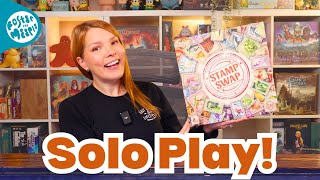
- engaging solo puzzle with an AI opponent (Pinsetta)
- varied scoring pathways through color, theme, and shape tickets
- tight round structure with a clear day cycle (collect, swap, show)
- potential for strong cornering and four-corners scoring strategies
- accessible reference tools and in-game decisions that reward planning
- rule complexity can be challenging without a guide or playthrough
- solo run may show limited presence of specialists/exhibitors in this sample
- spatial puzzle can be tricky and punishing if placement is off
- some players may find the appraisal/swap rules fiddly or dense
- stamp collecting with colorful tiles, rarity, and scoring tokens
- abstract board game world centered on stamp collection and display
- solitary AI opponent (Pinsetta) guiding through daily collection, appraisal, and show phases
Mechanics (from transcript analysis)
- appraisal tokens — tokens earned via card properties and stamps that influence which pile Pinsetta takes and future scoring.
- collection and daily deck mechanics — drafting or revealing cards/stamps each day to form a daily collection that drives scoring decisions.
- difficulty levels — three difficulty levels (easy, medium, hard) affecting how penalties, show scoring, and AI behavior unfold.
- forever stamps and final scoring — permanent scoring tokens that contribute to end-of-game tallies and final show scoring.
- pile splitting and swapping — split collected items into two piles, compare appraisal tokens, and potentially swap to balance scoring opportunities.
- show phase scoring — place collected tiles on a mat to form available spaces, then score via tickets and categories (color, theme, shape, etc.)
- specialist and exhibitor cards — cards that modify scoring or grant special abilities, adding strategic depth (not heavily present in the solo run described).
- tile placement — placing stamps/tiles on a mat with constraints: spaces cannot overlap and must respect edge boundaries.
Video topics + discussion points
Quotes (from this video)
- I love collecting things.
- Stamp Swap solo is a really interesting like puzzle.
References (from this video)
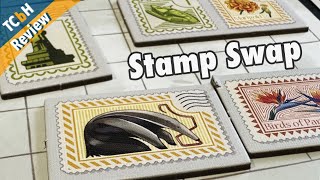
- Engaging drafting and swap tension
- Strong solo mode adaptation
- Visually appealing stamps and old-timey theme
- Accessible for casual players while offering depth for heavier players
- Can become tedious or frustrating in certain rounds
- Color-blind accessibility not fully implemented; category distinctions are barely present
- Collection, categorization, and scoring via stamp-themed drafting and swaps
- Historical stamp collection and exchange within a tabletop game space
- Metatextual, playful meta-commentary on collecting
- Rolling Realms
- Expeditions
Mechanics (from transcript analysis)
- drafting — Players draft stamp cards or piles in rounds, dictating what they might secure and what round effects apply.
- Set collection and category scoring — Scoring hinges on collecting stamps by default categories, with special scoring cards and reserve interactions shaping choices.
- Tableau building and swapping — Stamps are assembled into a personal tableau; players swap piles to influence what they can keep and what others can grab.
Video topics + discussion points
Quotes (from this video)
- Stamp swap is a game that invites you to get genuinely super invested in collecting stamps
- this game hit surprisingly well with my group
- curiosity not really expecting much
- Stamp swap isn't the game that I expected
- it's not quite the same as the act of playing the base game but there's more strategic imp and goting than I expected
References (from this video)
- offers strategic decision making with high/low comparisons
- potential for multiple stamp types to create scoring patterns
- dependent on luck of the roll
- limited interaction besides scoring choices
- philatelic stamp collection competition
- A realm where players collect and swap stamps to fill patterns
- abstract puzzle
- Covenant
- Marvel United
Mechanics (from transcript analysis)
- area fill with stamps — Gaining stamps (big/small) to fill a grid; goal is to complete rows/columns.
- number selection — Players pick a rolled number and compare it to another to determine benefits; high/low comparison determines rewards.
Video topics + discussion points
Quotes (from this video)
- The orientation for the stamps matters.
- Millennium Blades gives you dice as you fill in sections here.
- I finish Stamp swap and Millennium Blades; this is a plentiful combination of realms.
- I love the theme and the variety of villains in Marvel United; want to share why it's immersive.
References (from this video)

- thematic charm and tile-laying puzzle
- solo mode works well
- I-cut-you-choose felt unsatisfying
- theme didn’t fully land for the reviewer
- collecting stamps with tile-laying
- stamp expo / philatelic theme
- light puzzle
- Hanamakoji
- The Great Split
Mechanics (from transcript analysis)
- I-cut-you-choose — players divide stamps; one group is chosen by the other player
- tile laying — place stamps to meet scoring objectives
Video topics + discussion points
Quotes (from this video)
- The Crew does it better
- This is an abstract game in its heart
- I rage quit
- Goblins Hate Christmas sponsorship
References (from this video)

- Embraces simultaneous play mechanics
- Excellent implementation of shared action phases
Mechanics (from transcript analysis)
Video topics + discussion points
Quotes (from this video)
- The one thing I've realized from playing on board game arena is that I'm out of practice on scoring games. So I would say to game developers, make sure scoring is streamlined and not too convoluted.
- Musical immersion and satisfying feedback for interacting with the game. Fun game vs fun video game actions may not even have any actual utility, but they still feel good.
- Don't forget to design catchup mechanisms. The way Mario Kart World weighs its items based on racer position is such an enjoyable simple catch-up mechanism.
- Video games reward you for completing tough challenges with meaningful unlocks. Trek 12 is my favorite example of this.
- Video games stay fresh through patches, updates, and community content.
- Video games let you tailor the challenge to your comfort zone from casual mode to insane mode.
- Video games excel at simultaneous engagement. Everyone's playing all the time. Imagine Mario Kart where each player races one at a time instead of all at the same time.
- There are few things that are more intimidating than a 20 plus page rule book. Video games drop you into the action quickly and teach you as you play.
- Board games often withhold feedback until the final score tally. Video games give you constant feedback loops. Mid-game checkpoints and milestones could help players better understand how they're doing.
- I am much more of a tabletop game player than a digital game player. But I over the last few years, especially in researching Vantage, I researched a lot of video games.
References (from this video)
- trading
- collecting
Mechanics (from transcript analysis)
Video topics + discussion points
Quotes (from this video)
- one of the best if not the best boss battler out there
- this is the must get expansion if you're only going to get one
- you've never seen dragons quite like these they are stunning
- Simone Luciani strikes again
- freaking brilliant
- one of my top three favorite Thematic settings in board games
- live the best life you can
- be the best human being you can
- probably my game of the year
- there is no way it doesn't make it into my top 10 of the year
References (from this video)

- surprisingly engaging for a theme many dismiss as mundane
- fast-playing with tight decision space
- high interaction through stealing and pile evaluation
- can be punishing in multiplayer due to pile temptation
- a few players may find the theme thin
- stamps and collectibles as scoring assets
- competitive stamp collecting and philatelic puzzle solving
- tight two-player drafting puzzle with simultaneous rounds
Mechanics (from transcript analysis)
- drafting — players draft stamp piles and reserve one rare stamp
- puzzle_placement — players arrange stamps on sheets to optimize scoring areas
- round_robin_scoring — one scoring goal per round with exhibit/goal cards influencing end-game scoring
- secret_piles — face-up and face-down stamps add uncertainty and strategic misdirection
- set_collection — points come from collecting diverse stamp sets and goals
Video topics + discussion points
Quotes (from this video)
- the first Monster to reach 20 points is crowned the ultimate mylord
- you are crafting your ideal baseball team
- it's a puzzle, it plays pretty quickly
- I freaking loved it I really liked it
- the speed of it was so quick
- Nature is a modular style game
References (from this video)
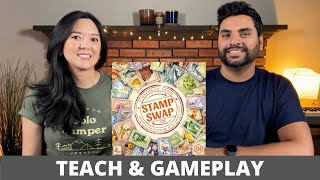
- Engaging, compact three-day convention theme that ties together the mechanics.
- Rich decision space with multiple scoring axes and strategic tension.
- Swap-with-split mechanic creates meaningful risk/reward and negotiation moments.
- Asymmetric exhibitor and specialist cards add replay variety and teachable depth.
- Turns feel intuitive once the core loop is understood, with teachable rules through play.
- The scoring system is multi-faceted and can be intimidating for new players.
- Rare stamps create potential heartbreak and complex decision tradeoffs around reserve and swapping.
- Endgame and final scoring require careful arithmetic and can slow down late-game clarity in groups.
- Stamp collection, swap and exhibition
- Three-day stamp convention
- tile drafting with exhibit and contest scoring
Mechanics (from transcript analysis)
- Exhibitor and specialist cards — Exhibitors grant ongoing or round-based scoring; specialists provide ongoing abilities that may be affected by swaps.
- Face-up / face-down information — Some stamps are revealed face-up during setup or collect phases; others remain face-down and may be revealed later.
- Reserve and rarity — Rare stamps are worth more and cannot be reserved; players must decide when to pursue or pass on rare items.
- Set collection and scoring categories — End-of-round scoring across multiple categories (colors, themes, shapes, etc.) with a final endgame show.
- Show phase — Placed stamps are scored toward a single category per round; planning around exhibitor and specialist cards matters.
- Swap phase — After collecting six items, players split items into two groups; the other player chooses one group to keep.
- tile drafting — Players draft stamps or supply cards from a common pool each turn.
Video topics + discussion points
Quotes (from this video)
- This is a tile drafting and an eyesplit you choose style game
- Welcome to the 3-day stamp convention where over the course of three days, we are going to be collecting stamps, swapping them, and then showing them for points.
- The element of surprise
- It's like a Tetris. It feels like a Tetris.
- You never know.
References (from this video)

Mechanics (from transcript analysis)
Video topics + discussion points
Quotes (from this video)
References (from this video)

Mechanics (from transcript analysis)
Video topics + discussion points
Quotes (from this video)
- it's been a Bonkers year in general
- we are going to do kind of like a bit of a bigger wrap up
- Jamie is an incredibly talented human being in multiple facets
- we've found a studio space
- I'm tired we're just so tired I'm tired all the time
- please say hi
- we might miss a video or two because of travel
- this is the best outcome I think long term
- we're transitioning a little bit into this becoming you know a bigger part of Jam's professional career
- Jamie will stress her mental and physical health out to put a video out