A cooperative board game of farming and friendship based on the Stardew Valley video game by Eric Barone. Work together with your fellow farmers to save the Valley from the nefarious JojaMart Corporation! To do this, you'll need to farm, fish, friend and find all kinds of different resources to fulfill your Grandpa's Goals and restore the Community Center. Collect all kinds of items, raise animals, and explore the Mine. Gain powerful upgrades and skills and as the seasons pass see if you're able to protect the magic of Stardew Valley!
The goal of the game is to complete Grandpa's Goals and restore the Community Center, which requires you to gather different types of resources represented by tiles. You have a fixed amount of turns to accomplish this. This is driven by the Season Deck of 20 cards, one of which is drawn each turn to trigger certain events. Cooperatively the players decide each turn where they will focus their individual actions and place their pawn in that part of the Valley. Using their actions, they visit specific locations, trying to gather resources to complete their collective goals. Actions include things like: watering crops, trying to catch fish, rolling dice to explore the mines, and many more. When the Season Deck is exhausted, the game ends.

- accessible for fans of the video game
- solid thematic cohesion
- some balance quirks with scaling
- agriculture, community, farm-building
- stardew valley farmland life
Mechanics (from transcript analysis)
- Resource management — Manage crops, animals, and dice-driven actions to optimize income and points.
- worker placement — Place workers to harvest crops, raise animals, or complete town tasks.
Video topics + discussion points
Quotes (from this video)
- we are giving away over 50 games across those 24 episodes
- the description is where we will post the winners, never in the comments
- Concordia is a must-have, it's easy to learn but has amazing depth
- this is a gorgeous prototype, they did a great job
- it's easy to get into and has depth—Deserved of our boarding coffee seal of approval
References (from this video)
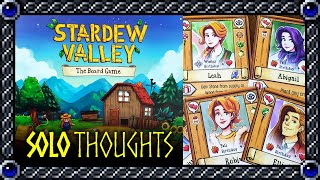
- Gorgeous art and presentation; very clear graphic design and font choices
- High replayability due to heavy variability in setup and season/events
- Feels like a unique procedural farming adventure rather than a traditional Euro
- Playable solo and with one character; supports multi-character play though with caveats
- Multiple systems (farming, mining, fishing, villagers) mesh into a cohesive experience
- Setup is fiddly and time-consuming even with a good insert
- Solo mode can feel underpowered or less engaging; dual-character play is mentally taxing
- Heavy luck and variability can reduce strategic depth and plans can feel futile
- Some goals can be effectively impossible depending on draw and luck
- Mine exploration and tile removal can slow setup and physical handling is finicky
- Farming, community-building, and building relationships while pursuing village objectives.
- A village with seasonal farming, fishing, mining, and community life.
- Procedurally variable setup with season-based objectives and modular goals.
- Animal Crossing
- Stardew Valley (video game)
- Generic farming-adventure games
Mechanics (from transcript analysis)
- Donations to museum to gain Hearts — Donating resources or artifacts to the museum yields Hearts and enables villager interactions.
- Event and obstacle cards — Season and event cards can provide benefits or block actions and spaces on the board.
- Fishing and mine exploration systems — Dice are used for fishing; the mine yields geodes and upgrades for tools, with dedicated bags for resources.
- Friend cards with triggered abilities — Friends provide ongoing abilities that trigger when certain season cards are revealed.
- Grand Pass and Community Center Renovations — Players aim to complete four Grand Pass goals and six Community Center Renovations drawn at setup.
- Inventory management — Limited slots for resources and items; multi-character play increases complexity and planning load.
- No scoring, win/lose condition — The game has a binary win/lose endpoint based on completing required objectives rather than points.
- Resource collection from seasonal and forage tiles — Move around the map to gather resources from tiles that refresh each season.
- Season deck timer — The season deck acts as a timer; there are four seasons, and the game ends at the end of winter.
- Worker placement / action economy — On a turn you place a pawn to perform an action; you can perform two actions in the same space or one action and then move.
Video topics + discussion points
Quotes (from this video)
- there's no scoring it's a hard win or lose condition
- it's almost like a farming Adventure ... that happens to also be pretty tough
- I think it's that pseudo farming Adventure generator if you will
- this relaxing game it ain't
References (from this video)
- Deep action selection and high ceiling for optimization
- Engaging multi-genre mechanics (cooperative goals, dice minis, and resource management)
- Clear guidance via on-board tips and structured progression
- Strong thematic flavor that blends cozy visuals with challenging play
- Brutal difficulty for players expecting a calm, cozy experience
- Luck in mining and fishing mini-games can dramatically impact outcomes
- Long play sessions and dense decision trees may cause downtime
- Not a relaxing experience despite the visual aesthetic
- Cozy farming life infused with resource optimization, time pressure, and multi-goal cooperative play.
- Idyllic rural town with seasonal cycles; inherit a cottage farm and engage with villagers, mining, fishing, and animal husbandry.
- Hybrid blend of charming, pastoral veneer and punishing, high-complexity mechanics that demand rapid decision-making.
- Mithland
- Ano 1800
Mechanics (from transcript analysis)
- Action selection and placement — Players choose actions to perform, place their pawn, then move and scavenge; limited actions per turn drive optimization.
- Dice-driven mini-games — Mining and fishing mini-games use dice to determine outcomes, providing risk-reward cycles and Luck-based variance.
- Gifts, hearts, and friendship — To befriend townsfolk, players gift items and meet desires; hearts unlock room goals and yield rewards.
- Goal-based progression — Grandpa's randomized goals and room goals drive objective-driven play, with rewards upon completion.
- Mining progression — Mining involves progressing to higher depths, rolling for rocks, geodes, and artifacts with escalating risk.
- Museum rewards and artifact handling — Gems and artifacts can be sent to the museum for points or benefits, integrating loot with scoring.
- Resource management and building — Construct buildings requiring money and resources; built structures provide ongoing effects and strategic leverage.
- Seasonal progression and round structure — Four seasons with four rounds each; seasonal changes alter available actions and token placements, creating ongoing schedule pressure.
- Time pressure and limiting factors — Limited actions and resource scarcity create a tactical squeeze, emphasizing efficient sequencing.
- Variable player powers — Each player has a profession and upgrade path that influences strategy and synergy with the group.
Video topics + discussion points
Quotes (from this video)
- The board game is a little bit different because despite its appearance, this game is far from cozy.
- it's a brutal cooperative game where you rarely have enough time and resources to complete the staggering number of varied goals your group has.
- There is a ton to do with the fishing and mining mini-games in particular being very involved and time-consuming.
- The mining goal of reaching level 12 in the mines can easily take up a whole player's game.
- The game has a ton of decision points and it really is about squeezing as much as you can from your very limited actions each turn.
- I'd really recommend it to people who want to play an action optimization game because it is good at that.
- The best thing about this game is putting game tips on the board. It's something many games shy away from, but it is very handy.
- However, this is far from a cozy game, and if you go into it expecting a story or relaxing experience, this game is absolutely going to crush you.
- It's so incredibly unfair in places, and the mines and fishing in particular can have you losing the game purely as a result of bad luck.
- I think it's quite a good game. It's just far more brutal than I expected.
- For a cozy game where you have countless time, and your actions don't really matter, try Mithland.
- And for a competitive game with similar gameplay, try Ano 1800.
References (from this video)
- Integrates Stardew Valley IP with thematic flavor and recognizable goals
- Shipping bin and community center provide meaningful strategic options
- Cozy vibe and thematic consistency with the video game
- Varied player goals and path choices offer replayability
- Mods and variants are embraced by the community, enabling creativity
- High difficulty and luck dependency for some paths
- As the player count increases, the game scales in complexity and duration
- Some players may miss the cozy feel of the video game due to timers and pressure
- Component quality and storage can be finicky in big setups
- Cozy farming life, community building, relationship arcs, exploration
- Stardew Valley farming town with seasons, villagers, and local lore
- Cozy, seasonal progression with individual character stories and farm goals
- Stardew Valley (video game)
- Streets of Villagers
- Villagers
- Moon
- One Page War
Mechanics (from transcript analysis)
- Collection and upgrading components — Upgrading tools and acquiring new abilities shift options and paths through the mine and farm.
- Dice-driven actions and luck elements — Dice rolls influence available actions and outcomes, injecting tension and unpredictability.
- Economy and utility structures — Shipping bin allows selling from anywhere; buildings like coop/barn require cash and resources.
- Goal-based endgame with multiple win conditions — Complete the community center bundles and Grandpa's four goals to win; progress scales with players.
- Modularity and house rules / mods — Community acceptance of mods and optional variants that alter setup and bundle availability.
- Resource management and negotiation — Gather crops, fish, foraged items, and ores; trade or gift to villagers to unlock points or favors.
- Seasonal planning and phase flow — Each season brings planning, actions, and events that drive farm development and community center progress.
Video topics + discussion points
Quotes (from this video)
- Stardew is such a good game. Video game.
- Stardew Valley board game is quite good though.
- The shipping bin saved our bacon for sure.
- This is the most stressful game I've ever played in my life.
- We did it. We won it.
- It kind of lacks the cozy vibe of the video game.
- I think it's really cool that a lot of people mod it.
References (from this video)
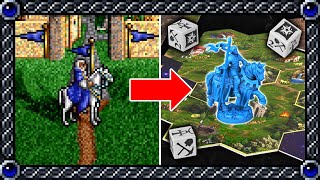
- Uniquely blends farming sim with adventure elements
- Highly varied setups keep gameplay fresh
- Not a traditional heavy game; pacing can drift
- Less depth than some heavier Euro titles
- Procedural adventuring and farming goals
- Farming life sim turned into a board game
- Hybrid of farming and light adventure goals with variable setup
- Agricola
- Mage Knight-inspired hybrids
Mechanics (from transcript analysis)
- Hybrid adventure/farming loop — Balancing resource management with quest-based goals
- Variable goals and event-driven progression — Multiple win conditions and encounters vary by setup
Video topics + discussion points
Quotes (from this video)
- it's such a bizarre game
- this is one of the best translations from video game IPs into board game form
- it's basically like Star Wars themed XCOM
- the closest thing you'll get to a first person shooter in board game form
References (from this video)

- Faithful transcription of the video game vibe
- Strong two-player/co-op experience
Mechanics (from transcript analysis)
- cooperative play — players work together to develop a farm and progress toward shared goals.
- Resource management — collect and allocate resources to advance farm tasks.
Video topics + discussion points
Quotes (from this video)
- We're going to be playing Root live via TTS tabletop simulator with two other people who are previous tournament winners of Root.
- This is not sponsored at all this is just kind of a big shout out.
- Let's break down those barriers, let's get those games played.
- Tricarion is one of my favorite games of all time.
- Patchwork is the classic two-player puzzle game.
- We were sent the newest box which we're going to be reviewing as well as a second box.
- Put the word unlock in there, that way we know you want to be part of this.
References (from this video)
- Faithful, flavorful adaptation for fans of the video game
- Cooperative play with meaningful interplay and tension
- Variety across seasons and professions keeps replayability high
- Strategic yet approachable for a broad audience
- Not ideal for solo play and can feel demanding in timing and planning
- Setup and teardown are relatively involved for a board game of this scope
- farming, collaboration, and community center revitalization
- the farming town of Stardew Valley with villagers, seasons, and community goals
- cooperative, story-rich with evolving objectives and character arcs
Mechanics (from transcript analysis)
- cooperative_objective_completion — players work together to achieve Grandpa's goals and fully reinvigorate the community center.
- dice_and_card_driven_actions — elements of luck via dice rolls intermingle with card flips that shape the choices and outcomes.
- profession_based_actions — each player selects a profession (fishing, mining, farming, etc.) that influences available actions and resource generation.
- seasonal_progression — the season deck drives pacing; three rounds per season emulate time passing through spring, summer, fall, and winter.
- shared_board_and_resource_management — a common board with shared resources requires coordination to optimize actions and prevent bottlenecks.
Video topics + discussion points
Quotes (from this video)
- it's super super cute
- it's fun to build up your little mushroom too and then you get to knock them down
- the art in this game is maybe some of the best I've ever seen
- if you are a fan of Stardew Valley this is a no-brainer
- we've played it and lost at the very end
- this board game is based on the Stardew Valley video game
- it's very tactile
- I freaking love it
- this is a family style game
- it's a big box game
- easy to learn may be hard to master
- there's depth of strategy for sure
- there's so many different factions and characters
- the biggest downfall is the setup and tear down
- the otter expansion is coming
References (from this video)

- captures a cozy farming vibe
- flows with familiar Stardew Valley rhythms
Mechanics (from transcript analysis)
- resource_management — managing crops, animals, and other resources for points.
- worker_placement — placing villagers to perform farm activities and progress goals.
Video topics + discussion points
Quotes (from this video)
- I have played original Queen's Garden a heck of a lot.
- Chinatown is a really really good cut and thrust strategic bartering territory grabbing game that doesn't really need to be leaning into some stereotypes about certain groups of migrants.
- Planet Unknown you had me at it's a jigsaw puzzle terraforming game with a lazy SU in the middle of the table.
- Hues and Q's isn't just about identifying different shades of color it's also about describing them.
- I love a pretty puzzly game and this one seems to tick all the right boxes.
- Stardew Valley the board game is one of those games where I have to get into the flow of my tasks.
- Jurassic Park is always somewhere in my top two movies of all time.
References (from this video)

- lovely integration of video game vibes into board game form
- encourages teamwork and role distribution
- can be long and require space to set up
- scaling may vary with player count
- community farming, exploration, and progression
- stardew valley farm-life co-op adaptation
- quest-driven with open-ended goals
Mechanics (from transcript analysis)
- campaign-like progression — Unlock tiles and activities as you progress through seasons
- co-op farming and cycle-based actions — Players work together to fulfill community goals across cycles
Video topics + discussion points
Quotes (from this video)
- it's frantic
- it's incredibly stressful
- the production quality of this game is insane
- the app narration and story of these games is incredible
- Stardew Valley is a no-brainer for fans of the video game
References (from this video)
- thematic fidelity
- cooperative play possible
- can be long
- farming, community, economy
- farming town
Mechanics (from transcript analysis)
- engine-building — progression of activities and goals
- worker placement — farm tasks and resource gathering
Video topics + discussion points
Quotes (from this video)
- the apps really made it immersive in Mansions of Madness
- open drafting, set collection, take-that in Buried Treasure
- please play as many games as possible and listen to other podcasters
- truth is the state of being the case