Collection Status
Your Rating
Description
It’s all connected! In this sneakily strategic card game, players flip, twist, and turn their cards to align and cover their opponents’ shapes with matching squares, triangles, and rectangles. With an ever-growing board, up to 8 colors light up game night with TACTA™. Analyze, strategize, and optimize because in TACTA™, every card counts.
Year Published
2023
Transcript Analysis
Browse transcript mentions, sentiments, pros/cons, mechanics, topics, quotes, and references.
Total mentions: 7
This page: 7
Sentiment:
pos 7 ·
mix 0 ·
neu 0 ·
neg 0
Showing 1–7 of 7
Video EszBCH8y3ZU
Our Family Plays Games holiday_gift_guide at 46:58 sentiment: positive
video_pk 13781 · mention_pk 40271

Click to watch at 46:58
Overall sentiment (raw)
positive
Pros
- easy to learn
- great gift
- accessible to non-gamers
Cons
- may be light for hardcore gamers
Thematic elements
- Accessible brain-teaser
- Dots and shapes memory puzzle
- Casual, social game
Comparison games
none
Mechanics (from transcript analysis)
- Pattern matching / memory — Players cover dots to maximize visible dots.
Video topics + discussion points
No key topics recorded for this video.
Quotes (from this video)
- We are talking about our holiday gift guide and we’ve got the Battle List.
- Two Amanda — Town 77.
- Is it Cake? we watched the Halloween one and the Christmas special.
- Is this the Christmas talk? Yes, we are talking about Christmas.
- We’re going to have a con in Omaha next year.
References (from this video)
No references stored for this video.
Video codtk6X5G2k
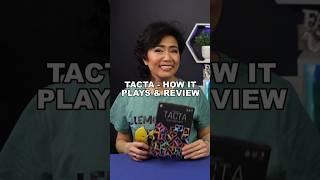
Unknown Channel game_review at 1:04 sentiment: positive
video_pk 12637 · mention_pk 36896
Click to watch at 1:04
Overall sentiment (raw)
positive
Pros
- Real-time mode yields short, punchy games (2-3 minutes) suitable for parties.
- Rules are simple and easy to teach, allowing quick entry for new players.
- Tactile, spatial puzzle feel with engaging decision points.
- High replayability from rapid turns and the chaos of timing when to pounce.
Cons
- Real-time mode can be chaotic or overwhelming for some players.
- Limited thematic depth; abstraction may not appeal to players seeking narrative.
- Overlapping rules can cause confusion if players are not paying attention.
Thematic elements
- Spatial coverage and scoring by exposed own-color dots.
- Abstract tile-laying puzzle on a shared table with real-time or turn-based play.
- Abstract
Comparison games
none
Mechanics (from transcript analysis)
- Deck management / hand management — Each player has their own color deck; players can draw or play cards from either end, deciding which tiles to reveal and place.
- overlap restriction — Overlaps are allowed only when the shapes align exactly; improper overlaps are not allowed according to the rules described by players.
- Real-time vs turn-based modes — The game supports simultaneous real-time play or a turn-based mode where players finish their decks and end the round.
- scoring by exposed dots — At the end of the game, players score based on the number of their own-colored dots that remain visible on the board.
- tile laying / placement — Play a card to exactly cover a matching space on the board; cannot place if not matching; overlap is allowed only with one other card and only with the exact shape.
Video topics + discussion points
No key topics recorded for this video.
Quotes (from this video)
- real time or turnbased where flipping cards and flipping tables are just one bad move apart. It's a chaotic tile lane game.
- The rules are simple enough that you can easily play it and not have to backtrack.
- Tacta definitely hits that in real time.
- Panic. Your face never look panic. I think you have a really good poker face, Tarant.
- You need to protect your highscoring points. And I love just sitting there and scanning the board and trying to figure out when is the right time to pounce.
- In real-time, you can get a lot of games out. It's a great party game with a bit of thinking because you keep winning the real time game.
- 10 base is probably slightly better for me because I'm special rotational challenge. So I have more time to think about where I'm going to place my card.
- You can get a lot of games out.
References (from this video)
No references stored for this video.
Video NAFdaU69o9M
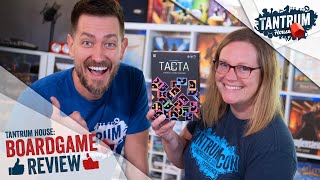
T Studio 3 rules teach at 0:05 sentiment: positive
video_pk 11678 · mention_pk 34261
Click to watch at 0:05
Overall sentiment (raw)
positive
Pros
- Highly flexible player count, supporting 2 to 12 players with variations
- Clever core mechanic that remains approachable and quick to learn
- Multiple play modes significantly boost replayability without adding heavy complexity
- Colorblind-friendly symbols improve accessibility
- Family-friendly and suitable for casual game nights
Cons
- Depth relies on recognizing patterns rather than long-term strategic planning, which may feel light to some players
- Sabotage and team modes increase cognitive load and may complicate teaching to new players
- At very large player counts, table management and communication can become chaotic
Thematic elements
- pattern recognition, blocking opponents by covering dots, strategic placement to protect and deny scoring opportunities
- abstract pattern-building tabletop game; cards create a growing layout on the table, with color-coded dots visible on each card
- instructional demonstration with a focus on practical setup, multiple play modes, and on-table strategy
Comparison games
none
Mechanics (from transcript analysis)
- card placement and rotation — players draw the next card from their deck and place it on the table, with the option to rotate or flip the card, as long as the card outline remains consistent with the existing configuration and no more than one card is overlapped at a time
- colorblind accessibility — cards include colorblind symbols to identify color/color family, aiding accessibility for players with color vision deficiency
- limited overlap — you may not overlap more than one card on any given move, preserving clear pattern lines and minimizing chaotic stacking
- outline-consistent placement — each new card must align with the outline of the card beneath it; if it cannot, that placement is invalid and the player must choose a different spot
- pattern-based scoring — points are awarded based on visible dots on the player's colored cards at the end of the round, incentivizing clever coverage and protection of dots
- variations and modes — the game ships with multiple variants, including simultaneous play, teams, and sabotage, each altering pacing and strategic emphasis
Video topics + discussion points
No key topics recorded for this video.
Quotes (from this video)
- This is such a brain burner.
- The cool probably the coolest part about this game is that they sent the game with like five other additional variations of gameplay.
- It's a simple concept and it's We also played it with our kids. We did. Yeah, they played and they were able to pick it up pretty quickly.
- We could play 12 players easily in this game.
References (from this video)
No references stored for this video.
Video Vcpy64zjA_s
Rolling Dice and Taking Names general_discussion at 57:38 sentiment: positive
video_pk 9361 · mention_pk 27572
Click to watch at 57:38
Overall sentiment (raw)
positive
Pros
- fast-paced, accessible for families and casual players
- compact footprint with engaging spatial planning
Cons
- can require careful spatial reasoning; some may find it fiddly
- scoring can be a little opaque without a quick demo
Thematic elements
- pattern-building through shapes
- abstract shapes game with a tactile, spatial feel
- light strategy with real-time positional decisions
Comparison games
- Skull King (card-play tension, but with shapes instead of tricks)
Mechanics (from transcript analysis)
- deck hold and reveal — players hold a deck and can play the top or bottom card; no drawing from a common deck
- hidden/informative play — players can be secretive about what they plan to place next to block opponents
- Shape matching — players place cards with rectangles and triangles to match shapes on the table
- tableau construction — build a spreading layout where edges and overlaps matter for scoring
Video topics + discussion points
No key topics recorded for this video.
Quotes (from this video)
- This is not a big brain burner
- I love the asymmetric gameplay
- This is a light family game
- The ending is brutal on scoring
- I love the asymmetric gameplay. I love that when I play heroes, it feels totally different from playing the rogues
- This is Skull King with dice
References (from this video)
No references stored for this video.
Video hXz3cNdiXT4
Unknown Channel general_discussion at 49:22 sentiment: positive
video_pk 6574 · mention_pk 19478
Click to watch at 49:22
Overall sentiment (raw)
positive
Pros
- Accessible intro to abstract strategy
- Easy to teach
Cons
- May be too abstract for some players
Thematic elements
- pattern-building and scoring
- dots on cards; abstract
Comparison games
- Flux
Mechanics (from transcript analysis)
- Pattern building / dot placement — Place or stack dots on cards to maximize scoring opportunities.
Video topics + discussion points
No key topics recorded for this video.
Quotes (from this video)
- "We always got your back"
- "We home. We going to play some games"
- "Gen Z is powering the game night comeback"
- "This hobby should be inclusive"
References (from this video)
No references stored for this video.
Video QiTN-mSwOHA
Chairman of the Board general_discussion at 10:12 sentiment: positive
video_pk 4774 · mention_pk 13980

Click to watch at 10:12
Overall sentiment (raw)
positive
Pros
none
Cons
none
Thematic elements
- deck-covering push-your-luck
- light/accessible
Comparison games
none
Mechanics (from transcript analysis)
- covering/overlay mechanic — laying cards on top of existing cards to cover dots
Video topics + discussion points
No key topics recorded for this video.
Quotes (from this video)
- I really like Feld's AA line of games much more than the Queen collection
- this is a new Feld design, not a reworking or anything like that
- two-player only kind of cat and mouse bluffing game
- I'm quietly optimistic about Mindbug
- roll and write, OG roll and write
- I don't like tricktaking
References (from this video)
No references stored for this video.
Video kTU-_4ieokQ
Steve's Board Games Channel top_23_list at 0:58 sentiment: positive
video_pk 2710 · mention_pk 7953

Click to watch at 0:58
Overall sentiment (raw)
positive
Pros
- simple to teach, hard to master
- high tension due to blocking and space denial
Cons
- area control on a small table can reduce options for larger groups
Thematic elements
- tactical blocking and area control
- table-top area control with card placement
- minimalist, abstract conflict with player interaction emphasis
Comparison games
none
Mechanics (from transcript analysis)
- Area Control — players place cards to block opponents and manage scoring zones on a small table-top area; table size dictates control possibilities.
Video topics + discussion points
No key topics recorded for this video.
Quotes (from this video)
- Starting off with the two-player game, Agent Avenue.
- It's a boatload of fun and it's another game which I've just brought out and it just never misses.
- This is another two-player abstract game that I can't stop playing and that's Zenith.
- Rival Cities takes Tug of War to another level.
- The production on Shackleton Base is through the roof.
- Ponzi scheme is one of the most stressful games you'll ever play and it's brilliant.
References (from this video)
No references stored for this video.
Transcript Navigation
Showing 1–7 of 7