In 1958, Demitri Belyaev and Lyudmila Trut started an experiment on domestication. From a large group of foxes, they selected the ones that reacted to humans with more curiosity and less aggression. In each generation, they selected only the friendliest pups to become parents — hoping to recreate the process that originally led to domestication thousands of years ago. The experiment made stunning progress. Even though the foxes were chosen only for their friendliness, they soon started to get many of the physical traits that we associate with domesticated animals — like spots, floppy ears, and curly tails. As communication opened up, the foxes made major contributions to our understanding of how these traits are expressed. The experiment continues to this day.
In The Fox Experiment, you’ll breed your own domesticated foxes. In each round you'll select a pair of fox parents who have certain traits. You'll gain those specific trait dice, roll them, then try to move them around to make complete trait symbols which you'll then mark off on your pup card. You'll then gain trait tokens depending on how many traits you marked off which you'll use to upgrade tracks on your personal player board.
At the end of the round, the previous generation of foxes will be cleared and all of the new pups will be moved to the kennel — thus becoming candidates to be chosen as parents in the next round. The game ends after 5 rounds and you'll gain points for pleasing patrons (end of game scoring bonuses), studies completed (personal player objectives), if you ever won the friendliest fox award, upgrades on your personal player board, and extra tokens. The player with the most points wins!
—description from the publisher
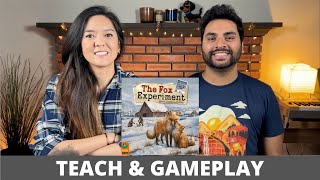
- Strong thematic integration with breeding and domestication concepts
- Engaging two-player mode with AI for asymmetrical play
- Clear upgrade ladder and multi-card scoring system
- Dynamic drafting and simultaneous scoring phases
- Color naming and token nomenclature (beige vs brown) can be confusing
- Rule complexity may be intimidating for new players
- Endgame bookkeeping can be meticulous
- Domestication and selective breeding of foxes to create friendly pups; performance over generations.
- Snowy northern environment; five generations of fox breeding starting around 1958 in a simulated lab/field study.
- Educational, experimental narrative that tracks progress through rounds, pup cards, and upgrades.
- Wingspan (board game by Elizabeth Hargrave)
Mechanics (from transcript analysis)
- breeding/pups — In each round's breeding phase players create pups by combining trait dice from their parent fox cards.
- drafting — Draft one male fox, one female fox, and a start position on the supply/turn-order track; AI participates as a drafting opponent.
- end-of-round / administration phase — Rounds end with cleanup, new pups added to display, and turn order tokens reset.
- patron cards and endgame scoring — Patrons provide endgame scoring criteria; players place fox meeples to claim scoring tracks.
- pup/trait tokens and upgrades — Trait tokens represent permanent upgrades; tokens are used to unlock improvements on the player boards and to influence endgame scoring.
- study cards and thresholds — Study cards provide thresholds that, when met by pups and traits, grant points at scoring.
Video topics + discussion points
Quotes (from this video)
- we are scientists trying to experiment and cross breed different foxes to see if we can domesticate them
- the game is played over the course of five rounds
- breeding phase we're going to breed our two parent foxes
- ties are friendly
- the AI isn't competing against us, they're just basically going to simulate another player
References (from this video)
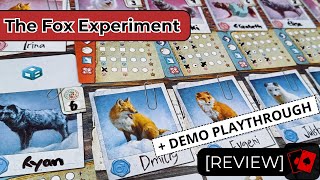
- Strong thematic cohesion and distinctive subject matter (fox breeding with historical/political nuance)
- Beautiful component design and fox artwork; attention to detail in fox variety
- Hybrid mechanics that blend roll-and-write-like pacing with procedural breeding and study progression
- Solo and two-player modes rely on AI handling, which adds significant administrative overhead and complexity
- Overall elegance and teachability are hampered by the amount of administration required
- For players seeking a gateway game, the setup and ongoing management may be off-putting despite thematic novelty
- Breeding, genetics-inspired traits, and artificial selection within a research/patron-driven economy
- A fictional fox breeding and study environment with patrons, study cards, and fox breeding mechanics
- instructional with thematic narration; blends educational theme with light storytelling about foxs and research
- Wingspan
Mechanics (from transcript analysis)
- AI/opponent mechanics (solo and two-player considerations) — An automated opponent simulates a second player; its actions influence breeding, study progress, and scoring.
- Breeding phase — AI and player each select parent foxes; puppies inherit trait markers and are assigned to study cards or upgrades.
- Dice-based breeding and trait allocation — Players roll dice to determine trait dice and then allocate those dice across tails, ears, spots, bark, etc., to breed foxes with desired traits.
- Friendliness/faction scoring — Traits contribute to a friendliness metric toward humans; the highest friendliness can grant end-game bonuses.
- Generational lifecycle — Fox pups mature into new parents across generations; pups become parents, and the kennel is replenished each round.
- Patrons and upgrades — Patron tokens and upgrades modify capabilities and scoring; tokens can be exchanged for upgrades to dice or study cards.
- Study cards and markers — Study cards track progress toward tiered goals (tails, ears, spots, etc.); markers accumulate to complete study levels and grant benefits.
- Turn order track and gear token — Players place a gear token to determine turn order and obtain rewards; the track influences next-round action order.
Video topics + discussion points
Quotes (from this video)
- Elizabeth Hargrave knows how to make a game thematic and it works very well here.
- the Fox Experiment is polarized in theme; not for everyone because it has a history-rooted concept.
- the gameplay doesn't work in the long run for me; the lack of elegance is noticeable.
- there are a lot of better options for solo or two-player play.
- the theme and concept are unique and interesting; there are a lot of better options for solo or two-player play.
References (from this video)
- taps fertile ground between science history and mechanics
- engaging family-weight design with accessible theme
- some players may push for deeper realism which can clash with playability
- genetics, domestication, early 20th-century biology
- historic genetics experiments; fox domestication themes
- historical fiction meets interactive play
- Wingspan
- Undergrove
Mechanics (from transcript analysis)
- generational tracking — mechanics simulate genetic transmission across generations
- multi-layer scoring — scoring depends on generational outcomes and balance of traits
Video topics + discussion points
Quotes (from this video)
- I choose the idea first and then have to figure out that balance of how to make it work as a game and not and like feel true but not be overly stuck.
- trial and error of like okay how much detail can you work in so it feels true
- it's not that we have some magical knowledge that no one else can have
- one thing that I try to do that and this is not a route that everyone is going to have available to them… if it's a woman they'll be like yeah I've kind of thought about it
- advance I think that's probably your best way of either getting the publisher to feel like they have enough skin in the game
- the default is the status quo
References (from this video)

- engaging theme tied to a real-world topic
- educational and entertaining
- heavy rule set for new players
- hidden details may slow teaching
- fox breeding and trait selection
- Genetic experiment in Siberia context
- scientific, experimental
Mechanics (from transcript analysis)
- trait selection/dice-driven growth — choose traits and outcomes for fox pups; progression via traits.
Video topics + discussion points
Quotes (from this video)
- blob party is one of those really interesting games where a single component really elevates the entire experience
- there's only nine rounds in this game you better figure out what you want to do
- Sea Salt and Paper... I love the form factor of the box it's so tiny
- Daybreak is a Cooperative uh game where players are leveraging current and future Technologies and policies to try to solve the problem of an ongoing and changing climate
- Thunder Road Vendetta ... racing game where you it's like you're just purposefully getting in each other's way basically
- it's a flip and right uh where the game has like these kind of it's like a network of transit systems
- my island is uh also sort of like a tile placing game where you're building out an island a deserted island
- Dune Imperium the deck-building plus worker placement game
- Nucleum is a real heavy game about an alternate reality where we discovered nuclear power way earlier
References (from this video)
- cute theme
- methodical gameplay
- excellent pup naming mechanic
- thematic breeding simulation
- breeding foxes based on historical experiment
- fox domestication
- methodical family building
Mechanics (from transcript analysis)
- breeding mechanics — selecting male/female fox and rolling dice for traits
- five round structure — phased rounds for clear progression
- trait collection — creating friendlier pups through trait management
Video topics + discussion points
Quotes (from this video)
- it's not just like how good is this game it's like how is our experience playing it
- a lot of these ranking lists people rank for different criteria mhm our criteria is primarily around fun fun and experience
- it might be my favorite polyomino game
- I love the theme I love that it's like this magical Library
- the mechanisms match the theme so well
- it gave me slay the Spire feel feelings
- my favorite solo button shy game ever
- chaos incarnate
- one of the best gaming experiences I've had this year
- if you love puzzles if you love those deduction style games like I think you'll love this
- I am a big fan of area control um and games that can do two-player area control well are very rare
References (from this video)

- Theme and mechanics align so well that you notice the theme rather than the mechanics.
- Smooth, fast gameplay with meaningful decisions at multiple stages.
- Excellent production quality and strong component upgrades (neoprene mats, etc.).
- Two-player games may rely on AI; some players dislike solo/AI variants.
- Fox breeding with trait emphasis; a light historical backdrop.
- 1950s fox breeding/domestication research.
- theme-forward with trait-driven progression.
- KBON
Mechanics (from transcript analysis)
- Dice drafting / rolling — Players select male and female foxes and roll dice to generate pup traits.
- Trait-based scoring — Pups acquire traits; scoring is tied to the traits and goals.
- Upgrade / progression — A personal board provides upgrade options that boost scoring and breeding.
Video topics + discussion points
Quotes (from this video)
- I freaking love this game
- highly recommend if you're looking for a holiday themed game
- it's oozing and dripping with theme
- I freaking loved it
- it's very simple
- I love set collection games
- this is a great little game