Players in The Game try to discard all 98 cards in the deck onto four discard piles in order to win, but they need to do so in the right ways.
Each player starts with 6-8 cards in their hand depending on the number of players, and four discard pile prompt cards are on the table: two showing "1" and an up arrow and two showing "100" and a down arrow. On a turn, a player must discard at least two cards from their hand onto one or more discard piles, with cards on the 1 piles being placed in ascending order and cards on the 100 piles being placed in descending order. One tricky aspect of the game is that you can play a card exactly 10 higher/lower than the top card of a discard pile even when you would normally have to play in a descending/ascending order, e.g., if a 100 discard pile is topped with an 87, you can play any card lower than 87 or you can play the 97.
After a player finishes their turn, they refill their hand from the deck. During play, players cannot reveal exact numbers in their hands, but they can warn others not to play on certain discard piles or otherwise make play suggestions.
Once the deck is emptied, players are required only to play at least one card on a turn. If you play all 98 cards, you win! If you get good, the rules suggest that you play at least three cards a turn to increase the challenge.
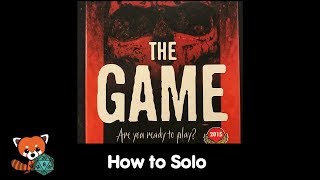
- Accessible and quick to learn, making it great for casual play
- Offers solid solo play option
- Skull-themed artwork and tone are distinctive and memorable
- The backwards rule adds meaningful strategic depth
- There is an official app version with a dramatic voiceover
- Luck-based elements can significantly impact results
- Wins depend on draw luck and may feel unrewarding to some players
- Theme may be off-putting for players sensitive to morbid imagery
- Life-and-death stakes conveyed through a simple discard puzzle with skull imagery.
- A bleak, skull-themed numerical card game that places moral weight on the outcomes of play.
- Minimal, dry humor with dark thematic veneer; marketing and rumor-driven discussion about the game's motif.
Mechanics (from transcript analysis)
- backwards rule — If a card is exactly 10 higher or 10 lower than a pile's top card, it can move backward by 10.
- draw/discard cadence — Start with eight cards, draw in blocks, and perform strategic plays to minimize unplayable cards.
- hand management — Players hold and play numbered cards to compatible piles with strict up/down rules.
- multi-pile management — Two piles must ascend and two piles must descend; players try to offload cards while maintaining legality.
Video topics + discussion points
Quotes (from this video)
- I find this game weirdly addictive
- audacity of the title and of the artwork
- it's basically just cards with numbers on them with these like intimidating looking skulls
- there is an app with an overly dramatic voiceover that is hilarious
References (from this video)

- tight, approachable cooperative puzzle
- high replayability at two players and beyond
- box packaging described as weak; durability is an issue
- some players find the cognitive load high for new players
- working through a deck via ascending and descending piles
- cooperative card puzzle
- spare, puzzle-driven
- The Mind
Mechanics (from transcript analysis)
- card_management — two piles are increasing, two piles are decreasing; decisions hinge on card values and order
- cooperative_play — all players work together to play cards in ascending/descending piles until the deck is exhausted
- limited_communication — players cannot reveal exact cards; hints are allowed but not explicit hand content
- pacing_control — the pace must be carefully managed to avoid over-pushing one pile to failure
Video topics + discussion points
Quotes (from this video)
- it's basically it's an auction tiling game
- it's a classic Euro but with fresh mechanics that you don't really see in newer games
- the best scoring that you can get is one building amongst all these things is is four points
- I really liked it I think the very first uh work that I scored I took it all as money and I thought like this is great I'm gonna have so much money for the rest of the game but I think that hurt me in the end
- it's mean that it was comical
- it's a very silly game
- it's a strong mix of chaos and strategy
- it's better with higher player counts
- it's one of those games where there's very limited communication; it's fully cooperative
References (from this video)

- Surprisingly good card quality for a cheap knockoff
- Accessible price point
- Ethical concerns and illegality of knockoffs
- Uncertainty around legitimacy
- N/A
- N/A
- N/A
- The Game (original)
Mechanics (from transcript analysis)
- hand management — Players manage a limited hand of cards and cooperatively discard them toward a common goal.
Video topics + discussion points
Quotes (from this video)
- The quality of the game is actually quite good.
- But it really did blow me away with the quality of this Chinese ripoff.
- The rules are a little bit [ __ ] I'm not entirely sure how the rules come in the original.
- the quality of the cards are okay.
- they're absolutely serviceable and if you put this in front of somebody, I doubt very much they will be able to tell that this was not a legitimate copy of Flip 7.
- the box is printed quite well.
- the beer mat thing did come with like a water stain on it which is a little bit weird
- if you spent seven quid on a copy of this one.
- the box is really [__]. It came sort of a little bit bashed in.
- the dice that you got, I like these. Not very nice. Pretty crappy red and blue dice
- the box came like split and smashed up.
- the print of it is kind of washed out.
- for 12 quid, hell. I mean, what's it go for? Like 55 quid. 12 quid versus 55 quid. It's tempting.
References (from this video)

- Very accessible co-op that works well for couples
- Fast, tense, and replayable
- Encourages teamwork and subtle communication
- Can lead to arguments if players misinterpret hints (Hanabi-like dynamics)
- Limited direct interaction once piles are set
- Cooperation, deduction; concealment of own hand
- Abstract cooperative challenge with four piles of cards
- puzzle-like, telepathic cooperation
- Hanabi
Mechanics (from transcript analysis)
- card play and deck manipulation — players manage a hand and can reset/deploy cards to influence the deck
- cooperative play — players must place cards into four piles without revealing their own hand
Video topics + discussion points
Quotes (from this video)
- it's a great short one to play with your partner
- the aim is to get rid of all of your cards
- This isn't a board game there isn't a board there are no cards there are no plastic or wooden pieces
- the feeling you get from solving a case it's even better than beating pandemic
- it's such a satisfying two-player game
References (from this video)

- Accessible entry point to cooperative/deduction games
- Short playtime with meaningful decisions
- Some may find the mechanics abstract
- Limited variety after many plays
- Cooperation, deduction
- An abstract, cooperative card game where players discard cards to finish the deck.
- minimalist, puzzle-like
- Arboretum
- Alchemists
Mechanics (from transcript analysis)
- card drafting/hand management — Players manage a hand of cards and play them to meet discard requirements.
- cooperative play — All players work together to discard their decks and finish the game.
Video topics + discussion points
Quotes (from this video)
- There's Nostalgia to it
- Kanban EV is prettier definitely
- the end game sneaks up on you a little bit faster than you're ready for
- we've traveled with this game for about five six years