From the end of the American Revolution, commercial vessels of the young United States republic were easy prey for the pirates of the Barbary coast. In 1801, newly inaugurated President Thomas Jefferson was eager to put an end to this threat and sent a "squadron of observation" to the Mediterranean. As the squadron arrived in Gibraltar, they learned that the bashaw of Tripoli had already declared WAR!
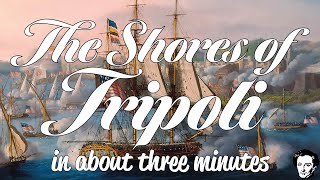
The Shores of Tripoli plays out this exciting episode of Early American military history. As the United States, one player will pressure Tripolitania to allow the free movement of American merchant vessels - or face the consequences. As the bashaw of Tripoli, the other player will continue the lucrative piracy of the fearsome corsairs while countering the American threat on land and sea.
Beautiful and informative cards represent historical events and leaders from the First Barbary War. Players can move ships, start battles, go on pirate raids, engage in diplomacy and receive reinforcements. Includes over 80 wooden playing pieces, 24 dice and a premium mounted map.
—description from the publisher
AWARDS
Best 2-Player Game of 2020 (New York magazine)
Top 15 Games of 2020 (#7, Paste magazine)
Game of the Year 2020 Nominee (Meeple Mountain)
Best 2-Player Game of 2020 (Meeple Mountain)
Top 10 Games of 2020 (#4, Cody Carlson)
Best 2-Player Game of 2020 (Rolling Dice & Taking Names)
Wargame of the Year (RMN Gamer)
Top 6 Solitaire Wargames of 2020 (Wayne Hansen)
Top 10 Entry-Level Wargames (#3, Midnight Boardgaming)
Top 3 Solo Wargames to Start (#2, Beyond Solitaire)
The Spiel Foundation "Spiel of Approval"
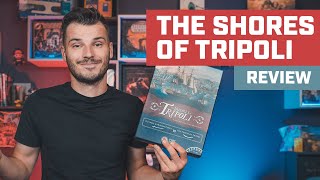
- strong thematic flavor with a rich historical backdrop
- beautiful component design and ship art
- fast setup and relatively quick play for a two-player war game
- high replayability due to card variety and timing-based decisions
- rules are simple at a glance, with depth emerging from card text
- high dice luck can swing outcomes dramatically
- rulebook is text-dense and somewhat sparse on practical on-the-board examples
- memory element can appear during repeated plays as you track opponents' cards
- some players may find the experience scripted or less open-ended than typical eurogames
- not ideal for players who dislike historical reading or the narrative flavor taking center stage
- Historic naval and coastal warfare with piracy, diplomacy, and coastal sieges.
- Late 18th–early 19th century Barbary Coast conflicts between the United States and Barbary pirates, centered on the siege/raid operations around Tripoli and key harbors.
- Card-driven, event-rich historical scenario with a strong sense of period flavor and strategic tension.
- Memoir '44
- Catan
Mechanics (from transcript analysis)
- area control and objective-based win conditions — Win by achieving specific objectives (e.g., clearing pirate ports or seizing Tripoli HQ), or by treaty/peace conditions via card play.
- Card-driven actions — Players choose one card from hand per turn to execute a specific event or action (move ships, raid, build, resolve a card's event).
- Combat resolution with dice — Dice determine hits in battles; different ships and positions influence odds and outcomes.
- interception and counterplay — Opponents can attempt to intercept raiders if ships are nearby; counterplay adds tension and decision points.
- raid and loot resolution — Discards and dice determine whether raiders succeed in stealing gold from enemy holdings.
- ship movement — Move vessels around a map to engage, raid, or position for future turns.
- yearly rounds with four turns — The game is organized into years (rounds) that contain four turns per player, driving a clear structure for planning.
Video topics + discussion points
Quotes (from this video)
- this game is quick to the table quick to play
- the drawings are amazing
- ups and downs
- there's a lot of flavor
- a lot of history flavor
- must-have game for me
- you can roll tons of dice
- replayability even though the cards are the same
- the rule book is short but lacks examples
- it's a perfect intro war game
References (from this video)
- tight, readable historical scope
- efficient playtime (roughly 45 minutes to 1.5 hours per session)
- clear asymmetry that reinforces history
- light on some historical details, depending on expectations
- asymmetry may not appeal to all players
- naval warfare, piracy, diplomacy, and the economic/strategic pressure of a young United States
- First Barbary War era (early 1800s) with naval and coastal operations around Tripoli
- historical simulation with educational emphasis
- The Halls of Montezuma
Mechanics (from transcript analysis)
- asymmetry — Solitaire US side vs Tripoli side in two-player mode, with distinct goals and mechanics.
- Card-driven actions — You play a card for an event or discard a card to take an action.
- downtime management — Downtime and pacing are designed to mirror historical decision points and events.
- time compression — Four seasons per year reflecting a compacted historical timeline (roughly four to six years total).
Video topics + discussion points
Quotes (from this video)
- i am actually pretty happy with how the shores of tripoli turned out
- it's a one or two player game where you are representing... if you're playing by yourself you're always the united states but if you're playing two players somebody's united states and then somebody is representing tripoli
- i like games that you can play in 45 minutes an hour, hour and a half
- the US player has a deck of legislative actions that were representative of the legislation that occurred at the time
- votes for women is designed by Tory Brown
- you know the biggest difference is that in Shores of Tripoli you either play a card for an event or you discard a card to take an action
- i really love the political phase i love how it plays
- i'm not really averse to games outside of the US
References (from this video)
- Teaches historical events
- Makes player knowledgeable about subject matter
- Military/Historical
- Historical - Barbary Wars
- Educational
Mechanics (from transcript analysis)
- card-driven gameplay — Card-driven two-player game system
- Educational mechanics — Learning about historical events through gameplay
Video topics + discussion points
Quotes (from this video)
- This is a definitive list based on inarguable data - Board Game Geek lists 5000 games as having been released in 2020
- I haven't actually played forgotten waters but I did look at a lot of Instagram photos of it - 10 out of 10
- I just moved one piece on the board and I just knew it - about learning Barbary Wars history through The Shores of Tripoli
- Meeples but they're bees, so they call them peeples
- I really like this game called Tell Stones, you've probably never heard of it
- Board games are made out of cardboard, it's actually hard for your digestive system to handle cardboard
References (from this video)
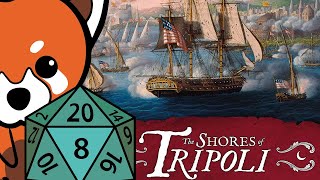
- quick, snappy gameplay once familiar with the cards
- solo AI (TBOT) is straightforward and drives engaging play
- asymmetrical decks create interesting tension and replayability
- learning curve is manageable; rules are clear with practice
- clear escalation and year-based progression keep the experience focused
- requires careful attention to triggering conditions and card text; missed triggers can disrupt play
- deck/discard management can feel fiddly at times for new players
- the era-specific rules and event interactions may overwhelm beginners if not watched closely
- the game’s outcome can hinge on a few tense naval or ground battles, which may be stressful for some players
- naval and land warfare between the United States and Tripolitan pirates, diplomacy, and empire power dynamics
- First Barbary War, early 1800s in the Mediterranean (Tripoli, Derna, Tunis, Algiers, Gibraltar, Malta, Alexandria)
- historical simulation with asymmetrical sides and card-driven events
Mechanics (from transcript analysis)
- asymmetrical victory objectives — Tripoli pursues money, raids, or defense-driven goals; the US pursues decisive military or diplomatic wins
- card-driven, asymmetric decks — each side has its own deck; play event cards to resolve actions, trigger events, or discard; one-shot cards are removed from the game
- dice-based combat (naval and ground) — naval battles use different dice for ships vs corsairs; ground battles involve land units and cubes with dice resolution
- event-driven solo AI (the TBOT) — the solo opponent is driven by a deck of events and predefined checks that simulate opposition actions
- hand management and discard economy — hand size is limited (eight); strategic discards build or maintain card economy and enable special actions
- patrol zones, harbors, and naval interdiction — positions in harbors and patrol zones influence interception rolls and raid outcomes
- timeline and annual seasons (1801–1806) — the game progresses year by year with winter/spring phases and escalating conditions
- victory conditions and dual win paths — the American player wins by forcing a peace treaty under specific conditions or by capturing Tripoli and eliminating its forces
Video topics + discussion points
Quotes (from this video)
- this is a game designed by kevin bertram
- it's actually very quick
- the game is snappy
- you have to be very alert to what is on the cards
- you get to play your own side the normal way just like you would in a two-person game
References (from this video)
- Light war game with surprisingly deep strategic potential
- Strong asymmetry provides varied play styles for each side
- Accessible rules that still support meaningful decisions
- Historical context included enhances learning alongside gameplay
- Dice-driven reversals can frustrate players who dislike randomness
- Niche historical theme may not appeal to non-war-game players
- Asymmetry can be confusing for new players until rules are learned
- Two-player historical naval conflict with raiding, privateering and allied support, balancing diplomatic/land actions against naval battles
- Early 1800s Mediterranean theater, focusing on the naval dimension of the First Barbary War and U.S. actions around Tripoli
- Historical microcosm with asymmetrical sides and campaign year progression; tutorial-friendly yet strategic depth
- Colonial Twilight
- Pavlov's House
Mechanics (from transcript analysis)
- Ally deployment and corsairs — Tripoli can bring allies via event cards; corsairs create raid opportunities with interception mechanics.
- Asymmetric play — The US and Tripoli have distinct strengths/weaknesses, creating divergent strategic paths.
- Bombardment and raids — Ground and naval actions can co-occur with bombardments and raid sequences, resolved via events and dice.
- Card deck management — Each player starts with a deck and draws new cards each year, using cards to perform actions or trigger events.
- Dice-based combat — Conflict resolution uses dice to determine hits and outcomes, with results affecting fleets and troops.
- Movement and zone control — Ships move between ports, patrol zones, and open sea; control of zones influences battles and bombardments.
- Season and year track — Turns progress across seasons and years, with ships being repaired or built at year transitions.
Video topics + discussion points
Quotes (from this video)
- war game and low complexity are two things you rarely hear mentioned together, but here we have the shores of tripoli a game that is both those things
- there is a real depth here for a comparatively simple rule set
- the two sides play out very differently and the american player is demonstrably stronger but they can't be everywhere at once
- the best thing about this game is just being a light war game that's good that alone is an exceptional thing
- however, a war game is still a war game and if that isn't a theme you dig then this game will not be for you
- and hitting on sixes can lead to some dramatic reversals if you can't adapt to one bad roll sinking your ships you won't like this game
References (from this video)

- Historically accurate
- Unique and engaging
- Good for asymmetrical gameplay fans
- War game enthusiasts will appreciate it
- Jamie wants to play it more before finalizing ranking
Mechanics (from transcript analysis)
Video topics + discussion points
Quotes (from this video)
- These games are games that we enjoy playing at two
- Easy to learn hard to master
- Every game is different
- This game is awesome the artwork is incredible
- If you're a couple and you're looking to get a significant other into board games, that is one to check out
- It's a game that's either your thing or it's not
- The more and more I play unmatched more and more I appreciate how good that game is designed
- I love this game I do not like to play it at more than two players
- It might be a masterpiece of two-player game
- Very mean and I just think at two player it just becomes so much more tight
- This is one of the most chaotic games I've ever played
- I love dueling games like I love any game where you are just like Head to Head playing out cards
- Every time where I have the opportunity to play it I want to play it
- I think it's my favorite two-player game
References (from this video)

- very good two-player mechanism
- tight and fast for a history-themed game
- requires two players for best feel
- two-player historic strategy
- historical naval/land campaign
- tight, fast-paced dual-track tug-of-war
Mechanics (from transcript analysis)
- Area Control — control zones to gain points
- tug-of-war pacing — withdraw or push to influence opponent advantage
Video topics + discussion points
Quotes (from this video)
- this is the best month of them all
- 26 games in 48 hours
- it's a banger month for games
- it's almost next level rhythm and flow
- the people around the table are what makes it