Through the Ages: A New Story of Civilization is the new edition of Through the Ages: A Story of Civilization, with many changes small and large to the game's cards over its three ages and extensive changes to how military works.
Through the Ages (TTA) is a civilization building game. Each player attempts to build the best civilization through careful resource management, and by: discovering new technologies, electing competent leaders, building wonders and maintaining a strong military. Weakness in any area can be exploited by your opponents. The game takes place throughout the ages, beginning in the age of antiquity and ending in the modern age.
One of the primary mechanisms in TTA is card drafting. Technologies, wonders, and leaders come into play and become easier to draft the longer they are in play. In order to use a technology you will need enough science to discover it, enough food to create a population to man it and enough resources (ore) to build the building to use it. While balancing the resources needed to advance your technology you also need to build a military. Military is 'built' in the same manner as civilian buildings. Players that have a weak military will be preyed upon by other players. There is no map in the game so you cannot lose territory, but players with a stronger military will steal resources, science, kill leaders, take population or culture. It is very difficult to win with a strong military, but it is very easy to lose because of a weak one.
Victory is achieved by the player whose nation has the most culture at the end of the modern age.

- Highly regarded classic of the genre with deep strategic depth
- Rich variety in cards and tech options across eras
- Long playtime and heavy rules can deter casual players
- Numerous decisions can be overwhelming
- classic civilization building with culture, science, military, and expansion
- Historical progression from antiquity to modern eras; world leaders and civilizations evolve.
- deep engine-building with era advancement
Mechanics (from transcript analysis)
- deck-building — Acquire and utilize cards to drive actions and tech progression.
- engine-building — Plan and optimize a multi-resource engine to generate outputs across eras.
- Resource management — Balance science, culture, resources, and population to advance civilizations.
Video topics + discussion points
Quotes (from this video)
- We absolutely adore this game. It's super super fun.
- the big Mayan calendar in the middle
- you can place a worker on the symbol that matches the god card.
- This is a big deck building game where you are going to have a different nation.
- Every game I feel like is a little bit different because the board map will change.
- Civolution is very good.
References (from this video)

- Beautifully dense board game that captures civilization feel
- Every game feels incredibly different and unique
- Card drafting mechanic with visible upcoming cards
- Excellent war/military system that creates constant tension
- Planning and decision-making for technology upgrades
- Micrometer cubes for satisfying gameplay
- Granddaddy of civilization games that perfects the feeling
- Worthy time investment with 2-3 hour playtime
- Long playtime (2-3 hours for 2 players)
- Requires experienced players
- civilization building
- history
- empire management
- resource management
- military conflict
Mechanics (from transcript analysis)
Video topics + discussion points
Quotes (from this video)
- Kim is a little new to gaming... I've been in the business for maybe a couple decades... he's ancient he was around before the first board game was ever created
- The reason for that is if you check forums a lot of people will talk about how they don't like the semi-cooperative nature of the game
- I wish he was wrong but okay in my justification if you're playing a board game it's a physical tactile thing
- I have a lot of friends where English is not their first language... with this kind of game being abstract there are no there's no cards to read there's no complicated rule
- Argent is one of the most beautiful mess of the games imaginable
- If you've never seen this game before it is the cutest thing ever ever
- It's been my favorite game forever... I wouldn't bust this down if my family came over
- Every time I feel like playing a board game it feels like there's a part of me that's just like okay I should play Arc Nova again
- I really like when theme matches the mechanics
References (from this video)

- Feel like building stuff
- Massive with great choices
- Mobile app available
- Up to 6-8 hours long
- Building civilization from pyramids to space flight
- Human civilization through history
- Epic civilization building
- Great Western Trail
Mechanics (from transcript analysis)
- Card Play — Play cards for buildings and characters
- engine building — Build up civilization to score victory points
- Technology Track — Develop technologies over time
Video topics + discussion points
Quotes (from this video)
- Board Game Geeks top 100 sometimes feels like random people voting random stuff
- This is the way by two random people from Latvia
- Your mind feels like a fog after playing Spirit Island
- Frodo really doesn't want to destroy ring at the end he's like nah I'll go home
- It's a fine game it's super boring it just the same thing over and over
- Wrongfully not in the top 20 yet
References (from this video)

- Iconic civilization engine with deep strategic depth
- Tremendous replayability and historical flavor
- Excellent two-player and multiplayer balance with long playtime
- Long playtime can be daunting for casual nights
- Rulebook complexity can be challenging for newcomers
- historical progression from ancient to modern times
- Civilization development through ages
- grand strategy with historical flavor
- Sid Meier's Civilization: The Board Game
- Twilight Imperium (epic scale)
Mechanics (from transcript analysis)
- card drafting and action selection — Drafting pivotal cards to shape your civilization's trajectory.
- Resource/engine progression — Developing a multi-resource economy to enable actions and advances.
- Tech and government progression — Acquiring governments and technologies to unlock powerful future options.
Video topics + discussion points
Quotes (from this video)
- the partner Dynamics in tiu are so fun because you can't talk to each other
- it's the best card game trick-taking game
- this is the game that we keep coming back to for group drama and big moments
- you can't beat the drama at the end when both teams are close to a thousand points
References (from this video)

- deep, highly replayable with many cards and paths
- great to revisit with familiar players
- long and rules-heavy; not ideal for casual sessions
- card-driven civilization progression and strategy
- civilization-building with development from primitive to advanced
- highly strategic, repeat-play worthy
Mechanics (from transcript analysis)
- card-driven civilization development — cards drive civilizational advances, military, science, and culture progress
Video topics + discussion points
Quotes (from this video)
- I think Concordia is one of the best games ever made, full stop
- two players it works extremely well because the downtime is gone
- it's a brain burner game
- the tension in the two-player game is great
- loads of content to explore, tons of replayability
References (from this video)

- deep strategic depth with long-term planning
- varied paths to victory through diverse cards and builds
- app speeds up busy work and can streamline play
- satisfying progression of civilization with growth over time
- very long playtime and heavy downtime
- cube management can be fiddly and slow
- doom spirals can punish lagging players
- presents a Western civ perspective via its theme
- Civilization building and cultural development across ages
- Civilization development from ancient to modern era, with emphasis on culture, infrastructure, and governance
- historical progression with long-term planning and resource management
- Nation
- Civilization: A New Dawn
- Through the Ages (original)
Mechanics (from transcript analysis)
- age progression and leaders — One leader per age; choosing leaders significantly impacts strategy
- card drafting — Draft Civic cards from a display to shape your strategy each turn
- engine-building — Build a synergy of buildings, technologies, and wonders to improve actions
- Resource management — Manage blue resources, yellow workforce, and white civic actions
- scoring and victory — Final scoring based on culture points, with various routes to victory
- war and aggression cards — Seed events that affect all players with military strength and can trigger wars
- Worker placement / action economy — Spend actions to perform actions; manage limited actions per turn
Video topics + discussion points
Quotes (from this video)
- Through the Ages is a low luck High skill civilization game where long-term planning and skillful use of your limited actions and resources is the key
- one dramatic one is that you can only have one leader per age so making the right choice is huge
- the best thing about this game is its app it handles all the busy work that dramatically slows down the game in person
- it's a story of Western civilization and has presented strongly through that lens
References (from this video)

Mechanics (from transcript analysis)
Video topics + discussion points
Quotes (from this video)
- five action cards and you slide the rest of them down
- the puzzle of how to maximize your actions is so rewarding
- the simultaneous play fantastic
- the fast-paced, epic feel of Through the Ages
- the ultimate Lord of the Rings board game
- the money that you're paying and you build and collect in Millennium Blades
- the definitive racing game in Heat: Pedal to the Metal
- this is Arkham Horror: The Card Game—living card game experience
References (from this video)
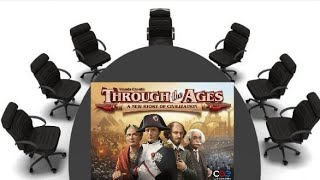
- Deep replayability with many paths to victory
- Strong thematic integration with mechanics
- Balanced early-game options with catch-up provisions
- Great player aids and turn sequence clarity
- Good value for the price and long-term playtime
- Long playtime, especially at higher player counts
- Steep learning curve with lots of information
- Not ideal for casual gamers due to complexity
- Downtime can be significant at four players
- Civilization development, resource management, and cultural progression
- Civilizations spanning from antiquity into modern times
- Eurogame with historical progression and engine-building
Mechanics (from transcript analysis)
- action_points_allowance — Players gain action points dictated by government and spend them on actions.
- card_drafting — Cards are drafted from a row/deck to develop technologies, leaders, or benefits.
- hand_management — Manage hand size and resources to optimize card play.
- military_conflict — Military actions determine aggression, warfare, and defense.
- resource_management — Manage food, resources, science, culture, etc.
- tableau_engine_building — Build a tableau of cards to develop civilization engine.
- take_that — Aggression cards can affect other players' boards and progress.
Video topics + discussion points
Quotes (from this video)
- Through the Ages is dripping with theme.
- The game gets better the more you play.
- I officially classified Through the Ages as outstanding.
References (from this video)
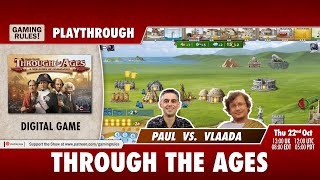
- High strategic depth and replayability due to card variety and a shifting event deck
- Strong thematic integration between leaders, wonders, and card text
- Excellent digital implementation enabling asynchronous play and streaming
- Rich variety of leaders, wonders, and paths to victory across ages
- Tension and drama in military actions and end-game scoring balance
- Very heavy rules and potentially long play sessions
- End-game scoring can be opaque to new players without learning the rhythm
- Balancing can be delicate with expansions and random mixes
- Decision density can lead to analysis paralysis in some setups
- Civilization development, resource management, technological advancement, cultural progress, and strategic warfare across ages.
- Historical civilizations advancing from antiquity through modern eras, with leaders, wonders, events, and military conflicts shaping civilization trajectories.
- Thematic storytelling through leader cards, wonder effects, and event cards; ironies of progress and balance are highlighted via debates over card value and strategy.
- Mage Knight
- Puerto Rico
- Dominion
- Through the Ages (board game)
Mechanics (from transcript analysis)
- age progression and technology — The board evolves through ages; technological and urban developments unlock new abilities and scoring opportunities.
- Card drafting and play — Players curate a hand of leaders, wonders, events, and modern actions; card choices steer long-term strategy and near-term engine building.
- end-game scoring and age-end dynamics — End-game is driven by a mix of scoring cards and strategic timing; players balance short-term gains against long-term victory points.
- events deck and era-specific events — A deck of events introduces world-shaping twists; players must adapt to shifting conditions and timing windows.
- military conflict and aggression cards — Aggression cards enable attacks that steal resources or damage opponents; defense cards mitigate, adding risk management to combat.
- Resource management and action economy — A fixed-action economy requires careful allocation of workers, food, and other resources to advance and build.
- territory bidding / exploration (expansionic variant) — Expansion content introduces bidding for territories or territories-like options, affecting map control and resource access.
- wonder construction and effects — Building wonders yields powerful, era-spanning bonuses and can influence asymmetrical development.
Video topics + discussion points
Quotes (from this video)
- engineering genius is fantastic
- what cards are in the game so that you can form a strategy
- the tutorial in the game is fantastic; it teaches you how to play
- this is one of the most replayable games because of micro decisions and variability
- the digital rules improve play when played asynchronously but there are differences in tabletop play
- I've been playing this game now for 14 years; I'm still learning and enjoying it
- the end-game scoring and the way age transitions unfold can drastically shift who wins
- the variability of card order means no two games are the same
References (from this video)
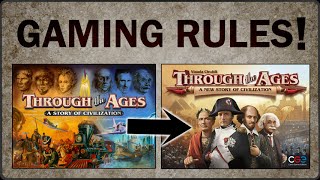
- Complete graphical overhaul for readability and accessibility.
- No hard limits on military, science, and culture production.
- End-of-age board provides clear end-game steps and sequencing.
- Tactics system adds strategic depth and shared ownership, reducing card lock-in.
- Card rebalancing based on large data sets to improve balance and diversity of choices.
- Crown markers in the top-left of political action cards clarify when to play them.
- End-turn sequencing and defense rules make the game easier to plan and execute.
- civilization development, governance, military, science, culture
- Civilization-building across ancient to modern eras; world history
- historical/educational analysis of rules changes
Mechanics (from transcript analysis)
- Aggression/defense changes — No sacrifices in aggressions or wars; defense can discard other military cards for defensive points.
- Blue cube economy — Blue cube bank is reduced (16 instead of 18 in the original); affects corruption risk and resource planning.
- Card balancing — Cards rebalanced using data from online games; some cards nerfed or boosted.
- Civil actions — Spend civil actions to build non-military buildings; cost icons shown as white circles.
- Corruption — Corruption is checked before production and is easier to determine; uses blue resources to gauge risk.
- End-of-age board — New end-of-age board reveals the steps to take at the end of an age.
- End-turn card handling — Discarding excess military cards occurs at the end of the turn; drawing of military cards happens after production.
- Global tracks — Military, science, and culture production have redesigned tracks and shifted limits.
- Leader replacement — Replacing a leader returns the civil action used to perform the replacement (still requires a civil action).
- Military actions — Building military units costs a military action; cost icons shown as red circles.
- Production and uprisings — Production phase can be skipped during uprisings; affects turn flow and planning.
- Resigning and war — Resigning during war yields cultural gain for the attacker; resignation mechanics remain part of the game dynamics.
- Shared tactics and adoption — Tactics cards can be adopted by other players; ownership tracked by markers; only one tactic can be yours at a time.
- Tactics deployment — Tactics move to a shared area and can be adopted by others; the card becomes shared rather than owned.
Video topics + discussion points
Quotes (from this video)
- everything in the game has had a complete overhaul
- no limits on military strength science and culture production
- the end of age board reveals all of the steps that you need to follow
- the cards which you play as your political action all have a crown in the top left
- the military aspect of the game is probably the biggest way it's been changed
- you are no longer allowed to sacrifice units in aggressions or Wars
- tactics cards can be adopted that tactic as well
- corruption is simpler to work out
References (from this video)

- deep, satisfying long-form strategy
- tactile components and meaningful progression
- holds up well with modern game design while preserving weight
- very long playtime
- steep learning curve for new players
- Historical civilization progression with long-form strategic decision-making
- Civilizations rise and fall across ages driven by card drafting and resource management
- Epic, strategic campaign scale with multiple paths to victory
- Civilization (tabletop variants)
Mechanics (from transcript analysis)
- action_point_management — a limited action economy drives strategic planning across ages
- card_drafting — players draft cards to advance their civilization and build capabilities
- civilization_progression — civilization advances through ages with escalating decisions and costs
Video topics + discussion points
Quotes (from this video)
- the theme is just so strong with this game, the story elements pair with the campaign progression to create an intense mood
- it's a campaign game, and failing forward actually feels satisfying as it changes the path and keeps the story interesting
- this game is on my mind, it's on my heart and my pocket or my wallet is open and ready to spend
- Gideon has to be the best character in Imperial Assault, upgraded he is insane
- the flow of that card row through the game and all these cards, the different orders, creates a satisfying puzzle
- it's a toss-up who knows who's going to win it down the stretch; the campaign stays tight and engaging
- Through the Ages, oh I was so lost, but the depth is incredibly rewarding
- it's a long, long game but the progression feels earned and satisfying as you grow your civilization
References (from this video)

- Very deep, highly strategic
- Rich historical flavor
- Grand scale
- Long playtime
- Steep learning curve
- Technology, population management, and expansion
- Civilization development across epochs
- Grand, historical
Mechanics (from transcript analysis)
- card drafting — Choose cards to develop your civilization, balancing resources and science.
- Resource management — Manage a variety of resources to advance eras and score points.
Video topics + discussion points
Quotes (from this video)
- my number 50 favorite game of all time is parks
- the production of this game is incredible
- it's a very fun take on you know worker placement
- I love this game it is beautiful and it is fun
- the artwork is beautiful
- Nightfall would boost that up higher
- this is kind of like an expanded version of fantasy realms with the theme of red rising
- the episode repeatedly emphasizes that these are personal favorites, not objective best games
- I would love to table this and maybe look into some of the expansions
References (from this video)
- deep strategic space
- large player interaction through shared world
- very long play time
- steep learning curve
- civilization accumulation and advancement
- ancient to modern civilization development
- grand strategy with historical scope
- Terraforming Mars
- Power Grid
- Gloomhaven
Mechanics (from transcript analysis)
- deck-building / card-driven action — Cards drive technological progress and action economy.
- Resource management — Carefully balance food, science, culture, and production to advance.
Video topics + discussion points
Quotes (from this video)
- gloomhaven well everybody knows that right
- pandemic season one is a cooperative game
- it's the crew
- code names
- magic maze
- the correct answer is sheriff of Nottingham
- subscribe like and comment on this video
- time stories isn't it but time stories isn't as well so one point for you
- you don't know board games
- Terraforming Mars
References (from this video)
- Modern presentation with more contemporary art direction
- First impression still suggests an educational tone
Mechanics (from transcript analysis)
Video topics + discussion points
Quotes (from this video)
- It's iconic. It is at least eye-catching; it's a classic.
- The box should tell us what we're doing in the game and how we're going to feel.
- This is top-notch stuff.
- I actually just ordered my copy, so this is obviously working for me.
- The cover sells the game, it screams what you're going to do.