You are the mayor of a tiny town in the forest in which the smaller creatures of the woods have created a civilization hidden away from predators. This new land is small and the resources are scarce, so you take what you can get and never say no to building materials. Cleverly plan and construct a thriving town, and don't let it fill up with wasted resources! Whoever builds the most prosperous tiny town wins!
In Tiny Towns, your town is represented by a 4x4 grid on which you will place resource cubes in specific layouts to construct buildings. Each building scores victory points (VPs) in a unique way. When no player can place any more resources or construct any buildings, the game ends, and any squares without a building are worth -1 VP. The player with the most VP wins!
—description from publisher
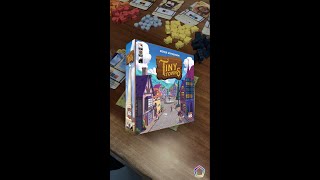
- beautiful components
- tight resource drafting with forward planning
- depth in strategy despite a relatively simple premise
- theme feels weakly integrated with the mechanics
- board space constraints can hamper flow and thematic immersion
- may not satisfy players seeking a strong narrative or thematic cohesion
- Urban development and resource management with spatial pattern-building.
- A city-building puzzle where players draft resources and place them on a 4x4 grid to build a city.
- abstract/mechanics-driven with minimal narrative.
Mechanics (from transcript analysis)
- area/board scoring via completed buildings — Points are awarded based on the value of completed buildings and city layout.
- grid placement — Resources are placed on a 4x4 grid with footprint constraints.
- pattern-based building — Placed resources must match patterns on building cards to score.
- resource drafting — Players take turns selecting a resource type that must be taken by all players on their turn.
- set optimization under space constraints — Balancing available resources to maximize building points while managing limited board space.
Video topics + discussion points
Quotes (from this video)
- the winner is the person whose completed city is worth the most victory points
- despite its beautiful components there's very little here to hold its theme together
- mechanics is a nine luck is a zero
- strategy and eight and complexity of four
References (from this video)

- fast play and high replayability with modules
- tight end-game scoring with meaningful decisions
- downtime can increase with more players
- color-sorting tension can be intense for some
- building towns via color-morted patterns
- city-building with color cubes
- abstract-engineering feel with modular modules
Mechanics (from transcript analysis)
- patterned cube placement — players place colored cubes to construct buildings on a 4x4 grid
- set-collection and module variation — purchase and place cards to alter end-game scoring and build choices
- town hall variant (modular play) — an optional, scalable play-along mode that scales with players
Video topics + discussion points
Quotes (from this video)
- The act of actually throwing these runes is pretty fun and tactile, like coins flipping in the air.
- I think the action selection mechanism is fascinating; it just works so well.
- it's a neat little wallet game and it's not very long, which is perfect for quick sessions.
- The downtime can be a little long as others plan their moves.
References (from this video)
- Deep puzzle feel that scales with strategy
- Solo mode reuses core mechanics for a cohesive experience
- High replay value with evolving resource combos
- Triple-card mechanic can feel luck-influenced to some players
- Can be less exciting for players who dislike heavy mitigation of randomness
- Resource placement and city design
- Town-building within a compact grid framework
- abstract puzzle with modular development
Mechanics (from transcript analysis)
- Card drafting / selection — Three face-up cards are revealed; one is chosen to contribute a resource to your town.
- Grid placement / placement optimization — Selected resources are placed into a town grid to maximize scoring opportunities.
- Single-player variant using auxiliary cards — In solo mode, Lee's cards replace some interactive components, altering the flow while preserving the core system.
Video topics + discussion points
Quotes (from this video)
- meditative this is like the modern hobby equivalent to I don't know I guess crossword puzzles or Sudoku it's really good
- oh yeah one more thing it has the autumn of on society card which if that isn't the best portmanteau that you've heard recently then I don't even know what we're doing here
- three great games all from 2019 that you can play solo and are worth checking out even if that's the only thing you ever intend to do with them
References (from this video)
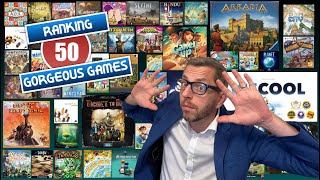
- creates nice cityscape
- really good gameplay
- pattern-based building
- visually smaller than something like Medina
- not as impressive visually
- town building
- cityscape
Mechanics (from transcript analysis)
Video topics + discussion points
Quotes (from this video)
- these games have amazing table presence by which i mean people are going to glance across the room and go what is that person playing and i want to play all these games
- stacking games have table presence like nothing else
- looks beautiful it looks like a load of sweets on the board
- one of my favorite games of all time
- i don't like that sort of game i find that one of the most frustrating game mechanisms
- the central marble dispenser is your main draw in this game
- absolutely brilliant strategic game quite complex game
- it's actually my favorite of the mask trilogy
- i'm almost scared to say this but i don't really like azul very much
- biggest most overlooked game on this list
References (from this video)
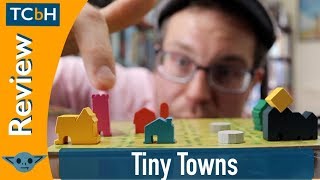
- elegant abstract puzzle with meaningful decisions
- monuments create asymmetry and long-term strategy
- high variety and replayability from building shapes
- tight spatial reasoning and tactile components
- non-confrontational but highly interactive
- solid solo and multiplayer options
- variant mode reduces player interaction and can feel flat
- spatial layout can be mind-bending for some players
- potential homogenization if players use the same materials in the same order
- building a town with colored blocks and modular buildings
- abstract city-building puzzle
- abstract/puzzle-focused
Mechanics (from transcript analysis)
- building placement on a personal tableau — players choose and place buildings to trigger effects and score points; space constraints drive decisions
- end-game scoring with negative points — unused materials can incur negative points; scoring happens when boards fill
- master color drafting — the master builder declares a color and players place cubes of that color on their board
- monument cards — two facedown monuments chosen at the start grant unique abilities and scoring bonuses
- solo and variant modes using a card deck — solo mode compares city against scoring brackets; variant mode affects how turns are resolved
- tile/building shapes — each building has four component cards enabling varied rotations and configurations
Video topics + discussion points
Quotes (from this video)
- Tiny Towns is a game of small decisions making a big impact.
- I really enjoy this game; it's fun, it's smart.
- There is so much to like in this Tiny Towns; it's very easy to pick up and play.
- I also love any game that really feels like you're constructing a city and filling up your grid with cubes.
- This is a great little abstract city builder that's a challenge not to enjoy.
- It's non-confrontational but highly interactive; your opponent's decisions can have huge ramifications for you.
References (from this video)
- Crunchy, surprisingly strategic
- High variability in building options
- Can cause agonizing decisions due to blocking by others
- Spatial puzzle with color cubes
- Pixel town-building with tiles
- Accessible, crunchy puzzle
Mechanics (from transcript analysis)
- Color cube drafting — Draft a color cube and place on your board to build buildings
Video topics + discussion points
Quotes (from this video)
- this game is the definition of elegance in the game and there's zero bloat
- the engine building part I thought was pretty damn fantastic
- a filler that works; it's smooth and it's fun
- one of the best two-player games out there
- embrace the carnage
- the final product is better than the sum of its parts
References (from this video)

- accessible and quick
- engaging pacing with multiple paths to scoring
- variance with player count can affect control and luck
- building small towns by placing resources to form shapes
- grid-based town-building with resource placement
- abstract
Mechanics (from transcript analysis)
- grid placement — players place resources on a personal grid to form patterns for scoring buildings.
- pattern completion — consolidating resources to complete specific shapes that score points.
Video topics + discussion points
Quotes (from this video)
- D's not a rules follower
- on each person's turn you know one person draws calls out a resource and then everyone has to place that resource
- it's a gateway game and it looks beautiful on the table
- the alien player is giving the human team a word and saying this is the score for this word
- Lost Cities is tense and cutthroat in a very clean, simple way
- this is basically Dominion but with words in Paperback
References (from this video)
- very approachable gateway game with quick teach and play
- high-quality components and artwork
- master builder variant adds meaningful depth and interaction
- substantial variety and replay potential with multiple buildings and monuments
- the deck-based (card) variant can feel random or meh without master builder
- with six players chaos can increase and board space feel cramped
- box is large relative to perceived footprint; storage considerations
- expansions offer more buildings but change or don't drastically alter core feel
- pattern-driven city construction with a focus on efficient resource placement and planning.
- A micro-scale town-building grid where players draft resources to fill pattern-based buildings.
- abstract/elegant with colorful components and modular scoring.
- Acropolis
- Taki Noko
Mechanics (from transcript analysis)
- limited spatial placement — One building per space; you must manage limited space to maximize scoring.
- master builder variant — A variant where a master builder token governs resource selection and adds strategic depth; decreases randomness.
- pattern completion and placement — Players complete predefined building patterns on their board, which scores points when fulfilled.
- resource drafting / card-driven resource flow — A deck of resource cards is flipped each turn, and players place corresponding resource cubes on their 4x4 town grid.
- set-building and adjacency scoring — Buildings provide points based on patterns, adjacency, and unique-building constraints (various buildings have different scoring rules).
Video topics + discussion points
Quotes (from this video)
- burn this little deck of cards because i will never use this deck of cards ever again
- the proper way to play this game this is the variant this is the actual way you're supposed to play it
- it's gateway level rule set
- it's not a filler by any means
- eight out of ten
- what the hell was that
- now this is better the cards pale in comparison
- i recommend you take this deck of cards and burn it
- the master builder rule and that though it's easy to look at two to three other like like tiles to see oh yeah you probably don't like these resources
References (from this video)

- charming aesthetic
- engaging discussion possible
- good for date-night
- swingy due to randomness
- cute, cozy city-building
- Two-player or co-op-like game about building a tiny town
- charming, lighthearted
Mechanics (from transcript analysis)
- Pattern Building — Players fit cubes on their boards to satisfy patterns.
- Resource management — Manage limited resources to optimize patterns.
- tile/placement — Placement of building tiles to score.
Video topics + discussion points
Quotes (from this video)
- it's a very clever mechanic
- I like this game a lot
- the sun rotates around the board
- it's the kind of game that also allows for strategy if you want to think that way
- quilting is the sexiest of textiles
References (from this video)
- adorable visuals
- accessible and family-friendly
- some players crave deeper strategic depth
- mechanics can feel repetitive over time
- peaceful, everyday-town life with charming visuals
- cute microtowns with little creatures and familiar town vibes
- light and cozy; whimsical
- Raccoon Tycoon
- Welcome To...
Mechanics (from transcript analysis)
- set_collection — players collect resources to complete specific town-building objectives
- tile_placement — placing buildings on a grid to optimize resource generation
Video topics + discussion points
Quotes (from this video)
- arc nova is a game i absolutely will be playing like if i play no other game that entire weekend
- free shipping is one of the biggest lies of this world like it's not free
- i am vehemently opposed to the customer is always right
- you owe it to yourself to play Arc Nova
- mind management has done pretty well for you
References (from this video)

- Satisfying spatial puzzle
- Monuments provide player power and replayability
- Layout planning can be fiddly for beginners
- Grid-based resource placement with monuments
- A tiny town in a forested setting
- cozy, puzzle-centric
- Tiny Towns (base game)
Mechanics (from transcript analysis)
- deck of cards / variability — cards alter how buildings score each round
- grid-based placement / polyomino-like layout — place resource cubes to form buildings with unique scoring
Video topics + discussion points
Quotes (from this video)
- card dancing. It's a thing that I didn't understand and then I saw it happen and now it makes sense to me.
- An odd little game where a bird lays gems and gold.
- pirates and their inability to share properly.
- All hail the mind bug.
- I am such a fan of Tableau engine building games.
- How can you make a great gateway game and make it better? Add golems.
- Ah gosh, I want this. This is I I want this game because you start off with a yellow die and it's just who scores you score the face.
References (from this video)
- Supports 2-6 players, including a solo mode
- Engaging pattern-matching and resource-placement core
- Clear setup and rule explanations in the video
- Pattern rotation/mirroring adds flexibility
- Relatively quick playtime (~1 hour)
- Multiple pathways to score via buildings and monuments
- pattern-based, resource-management building game with whimsical city-building flavor
- A village-building puzzle where players create towns by matching resource patterns on their boards.
- abstract/strategy-oriented, with light thematic framing around building a town
Mechanics (from transcript analysis)
- Adjacency restriction — Resource placement rules specify orthogonal adjacency, not diagonal.
- End-game scoring — Score comes from buildings, monuments, feeding, and penalties for empty squares.
- Feeding mechanic — Some buildings (like greenhouses) require feeding with food to gain points.
- Master Builder token — A master builder token is passed around to determine whose turn it is to call the next resource type.
- Monuments and scoring — Monument cards grant unique scoring effects; one copy per monument; affect end-game scoring.
- Multi-building turns — Players may construct multiple buildings in a turn if patterns match, but each cube may be used once.
- pattern matching — Players must match resource patterns on building/monument cards to construct buildings.
- Pattern rotation/mirroring — Patterns may be rotated or mirrored to match on a player's town.
- Resource cube placement — In each round, the Master Builder calls a resource type and players place a cube on their board.
- Solo mode deck — In solo mode, a deck of resource cards drives a pseudo-AI Master Builder with card-exclusion rules.
Video topics + discussion points
Quotes (from this video)
- you gain 3 victory points
- this building must be fed during the game
- patterns may be rotated, mirrored or rotated and mirrored
- that's how you can play tiny towns a quite awesome game by aeg
References (from this video)

- Cute and colorful design
- Quick to play
- Easy to learn
- Expansion available (Tiny Towns: Fortune)
- Urban planning, cute buildings
- Town building
- Santorini
Mechanics (from transcript analysis)
- Pattern Building — Create patterns to cover grid
- Puzzle — Spatial puzzle elements
Video topics + discussion points
Quotes (from this video)
- These go to 11 - just like in Spinal Tap
- I literally started this video by saying everything will be cute and animal related, and the first one is murder war counts
- You're basically Bilbo Baggins trying to steal Smaug's treasures
- The only reason this game is on your list is because you always win
- It's like clue but cooler and more dynamic
- I love space... love space theme games... any space related games I'm in love with
- I have Disney tattoos all over my arms
- 1v1 all day, give me that
- It is uncanny how lucky Jamie is
- Mansions of Madness is so good like I love it
- Jaws of the Lion was a great compromise where Gloomhaven is super heavy
References (from this video)
Mechanics (from transcript analysis)
Video topics + discussion points
Quotes (from this video)
- We have 63 games to talk to you about today.
- Grab a coffee, we're gonna go quick.
- We love board games and board gaming things.
- I just bought too many bones and dungeons dice in danger.
- If you're interested in buying board games, I feel like we missed a bunch.
References (from this video)

- Delightfully tense and puzzle-driven flow
- Excellent inter-player interaction as everyone shapes each other's options
- Scaled well across player counts with solid expansions
- Can feel punishing if you’re blocked or denied key resources
- Some players may find the simultaneous drafting hectic
- Resource management and spatial planning on a 4x4 grid
- Building a compact town with modular structures
- Clinical, puzzle-driven, highly interactive with other players
Mechanics (from transcript analysis)
- Polyomino-like building shapes — When you complete a shape, it converts into a building tile that fits into your grid
- Shared resource draft and placement — All players add cubes to a central grid, affecting everyone and increasing tension to fit the right shapes
- Tight pacing and simultaneous play — Turns zip by with a focus on finishing builds rather than prolonged turns
Video topics + discussion points
Quotes (from this video)
- It's the castles of Burgundy. Oh my gosh, this is Euro perfection.
- Everything about Tiny Towns is fantastic. It's phenomenal.
- The Loop is a very pandemic inspired style game.
- This is the greatest cooperative fantasy deck building game of all time.
- The most powerful things we can do in this game is call a meeting between department heads.
- Earth is a masterpiece of positive player interaction. Really fun, tight, constrained tableau building and one of the best engine builders ever.
References (from this video)

- Engaging spatial puzzle that rewards planning and adaptability
- Paced well for a lighter, family-friendly session
- Satisfying sense of accomplishment when you optimize resource calls to complete buildings
- Can be frustrating when a desired resource is called by others in unfavorable ways
- Color differentiation and lighting can affect readability for some players
- Resource management and spatial puzzle with simultaneous action selection.
- A compact grid-based landscape where players build a town by placing resources and constructing buildings.
- Abstract, modular town-building theme; emphasizes spatial thinking and planning.
Mechanics (from transcript analysis)
- Dynamic options management — Players must stay flexible, balancing current needs with potential future builds while watching opponents' calls.
- Grid placement / tile-building — Resources placed on a personal grid are used to build buildings, triggering scoring and resource interactions.
- Resource collapsing to buildings — When a building is completed, it often collapses multiple resource tokens into a single building, changing future options and scoring opportunities.
- Simultaneous resource call — Each player takes a turn calling out a resource; all players must place that resource on their own grid according to available options.
Video topics + discussion points
Quotes (from this video)
- it's a game essentially of trying to keep your options open
- you rotate around calling out a resource then everyone has to place that resource somewhere onto their little grid
- the finish to the game is just this like you feel the accomplishment
- there's nothing like it because you're always getting new information trying to decide what's the best way to use it
- three hours... but it is a delight when the right people are at the table
- you end up with a lot of deck boxes and NPCs—there are a lot of different strategies you can pursue
- it's a very dense game in that you're always doing things
- the expansion ads could be huge in helping replayability
References (from this video)
- Fast-moving, interactive spatial puzzle
- Simultaneous play keeps pace with larger groups
- Variety of cards and buildings prevents easy solving
- Accessible core rules
- High risk of early mistakes eliminating a player from contention
- Not forgiving; potential for a 'screwed' feel
- Can be frustrating if you feel behind and unable to recover
- Some players may desire more tactile depth
- Resource management and spatial puzzle-building
- A builder's town-building challenge set in a woodland environment with limited resources
- procedural/educational with quick decision-making and interactive tension
- Catacombs Cubes
- Everdell
Mechanics (from transcript analysis)
- Cube/resource placement — On each turn, players place a resource cube on their personal board to meet building costs
- End-condition pressure — Game ends when players run out of legal placements, creating pressure and potential cliff-falls
- Feeding and adjacency scoring — Some buildings require feeding to score and some scoring is based on adjacency to other buildings
- Pattern-building/placement — Construct buildings by placing resources into the grid, using placement rules (bottom-left corner, adjacency, etc.)
- Simultaneous action (master builder) — All players place resources at once based on the current master builder's announced type
- Unique/lineage building markers — Each player has unique and cottage buildings; only one unique building marker can be claimed per game
Video topics + discussion points
Quotes (from this video)
- tiny towns may look like a sweet and pleasant game but it really isn't it's a fast-moving interactive spatial puzzle where time and space runs out far faster than you want it to
- the best thing in this game is when you call out a cube as the master builder and someone at the table curses you for it
- like the idea but want something more tactile try catacombs cubes
References (from this video)
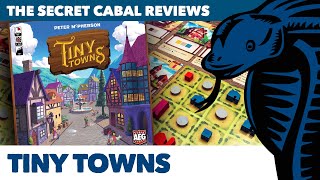
- Easy to teach and quick to pick up
- High replayability due to multiple building types and monuments
- Strong indirect interaction that rewards strategic observation
- Varied scoring through multiple patterns and monument abilities
- Player count can influence randomness and pacing
- Some cards can be clearly stronger than others at times
- Optional deck/draw variant can reduce player agency for some groups
- city-building and resource management with spatial patterning and scoring variations.
- A modular-grid town-building setting where players construct a town by placing resources to build various buildings.
- operational planning with emergent scoring based on patterns and monuments
- Kingdom Builder
Mechanics (from transcript analysis)
- indirect player interaction — Players observe each other’s boards and resource calls to influence planning and anticipation.
- monuments / personal abilities — Each player has a monument card providing a unique ability that can affect strategy.
- Pattern scoring — Building cards require resource patterns; completing a pattern allows placement of a building with its scoring benefits.
- resource placement — Players take a chosen resource and place it on any plot in their land to fuel building patterns.
- set collection / resource drafting — On a turn, a player selects one of several resources to add to their land, influencing future builds.
- spatial reasoning — Placement choices depend on the layout of the grid and the available building patterns.
Video topics + discussion points
Quotes (from this video)
- I happen to love games about construction about building things about putting together a city or a town or a castle or whatever I love that kind of thing
- there's a lot of math and spatial relations that you have to deal with
- there's a serious level of indirect player interaction going on here
- this is one of those games where you could play it just kind of frivolous and willy-nilly
- replayability because of the cool comboing because the fact that it's so easy I could teach anybody
References (from this video)
Mechanics (from transcript analysis)
Video topics + discussion points
Quotes (from this video)
- I like the simple progression that you see in the game of Agricola in solitaire mode.
- there's a lot of room there for creativity and innovation.
- one thing that I found is really fun in a solitaire game is if there is a little bit of an element of story.