The Lazax Empire has burned to ash, rejected by its subjects. The aftermath was tragedy and petty conflict in equal measure, a time of loss and exhaustion. In the ensuing Dark Years, the factions of the galaxy retreated and recovered their strength. Now, they look upon the stars and see an opportunity—a chance to reclaim what was lost. A chance to redefine galactic civilization. A chance to leave their mark upon the stars.
Twilight Inscription, an epic roll-and-write game for one to eight players, offers an experience unlike anything Fantasy Flight Games has done before. With a limited pool of resources at your disposal, you’ll need to carefully manage Navigation, Expansion, Industry, and Warfare as you amass victory points and earn your right to the throne on Mecatol Rex. Will your faction become the new rulers of the galaxy? Or will your fledgling empire fade into obscurity? Anything can happen in this strategic, infinitely-replayable game!
—description from the publisher

- solo play is strong and the game offers deep decisions on a single sheet per run
- noted as one of the longer rolling-right experiences
- Seventh Continent
Mechanics (from transcript analysis)
- roll-and-write — Players roll dice to generate results and write them onto multiple sheets; decisions include selecting a sheet and spending results.
Video topics + discussion points
Quotes (from this video)
- Twilight Inscription feels like forever ago we reviewed it.
- Planet Unknown is a polyomino game with a lazy Susan.
- Mind Bug is a simple card game that replicates the collectible card game play
- Star Wars deck building wow that's high
- Nemesis retaliation wow this game is not out yet
- it's a heavy game there’s a lot of rules
References (from this video)

- intrigue around length and scope
- potential for memorable play sessions
- length can be prohibitive for some players
- long-form building with narrative depth
- fantasy-tinged epic
- story-driven exploration
- Hadrian's Wall
- Orleans
Mechanics (from transcript analysis)
- long-form rolling/ drafting — highly extended rolling and planning with a narrative arc.
Video topics + discussion points
Quotes (from this video)
- "Point City... looks like this really cool game about pretty tactical about building up a really streamlined engine and just trying to get a bunch of points"
- "I’ve been fatigued by rolling rights"
- "the more you pull back or pull me back from being like in instruction mode the faster you’re going to find I end up"
- "Nostalgia definitely does apply"
References (from this video)
- infinite expandability; great for big games with friends
- complex to teach; many sheets to manage
- engine-building on multiple sheets with ongoing expansion
- fantasy world; epic epic-scale tree sheet
- highly expandable, modular experiences
- TI4
- Dune: Imperium
Mechanics (from transcript analysis)
- dice/slots on sheets — you build out engines on multiple sheets; complexity scales with expansions
Video topics + discussion points
Quotes (from this video)
- Number 50 for me is a Vital Lerta game. A big cool thematic experience about what happens after a heist. This is Escape Plan.
- Invincible is my number 50.
- San Juan's one of my favorites; I love how those buildings synergize with crops and selling them.
- Spectral is one of those deduction games where you're just trying to avoid the curse and getting gems out there.
- This is one of those classic polyomino games. My favorite in the genre. This is Baron Park.
- Twilight Inscription is infinitely expandable.
- Adrenaline is a bit of everything: euro, shooter vibe, and tense last-hits moments.
- Robinson Crusoe—cooperative survival with fantastic stories.
References (from this video)
- Epic theme with great faction variety
- Deep, multi-map system provides rich strategic space
- High complexity and long setup
- Chalk markers in place of dry-erase markers can be awkward and require replacements
- galactic empire, epic space opera
- Twilight Imperium universe; four mats reflecting navigation, warfare, industry, and expansion
- epic
- Welcome 2
- Railroad Ink
Mechanics (from transcript analysis)
- multi-map orchestration — Four mats interconnect through assets, refining strategy toward Mechatal Rex and other objectives.
- roll-and-write with strategic event cards — Draw event cards to determine resources; each player selects a format on their mats to place resources and score.
- symbol matching across maps — Symbols on assets unlock technologies and abilities on other mats through cross-map interactions.
Video topics + discussion points
Quotes (from this video)
- I really enjoyed this game I can see why so many people recommended it
- the solo mode plays almost exactly the same way with the exception of the market
- it's not the most ideal way to play Twilight Inscription with AI
- the rule book is a little bit complicated
- I would probably have to play it with higher player counts to feel the burn
- this is not a solo only game this is I believe up to four players
References (from this video)
- unique and interesting
- works well despite complexity
- good solo experience
- ridiculously complicated
- best for solo or two players
Mechanics (from transcript analysis)
Video topics + discussion points
Quotes (from this video)
- Remember it's only a game
- I am very much one of these people that if you go after my family or friends there will be hell to pay
- Five out of ten is average, it's a game that I would still play if you put it on the table
- I do really like closed drafting in games
- I love the way that you plan for this sort of stuff
- Power Grid is the worst contender for this, auctions in this just refuse to freaking end
- I want to see it more - the typewriter mechanic
- Area control is just kind of meh
- It's just so many of these games are just like oh we need to make a quick buck
References (from this video)
- deep euro-game feel with meaningful decision points
- layered action economy that rewards planning
- strong learn-to-play guidance in the included materials
- steep learning curve for new players
- app-assisted play dynamics may complicate setup
- arc-based exploration with artwork-driven storytelling
- Dark fantasy/4X-inspired exploration
- episode-driven progression with evolving eras
- Mystic Veil
- Canvas
Mechanics (from transcript analysis)
- era/era advancement with scoring eras — players advance eras by meeting achievement criteria and flip era cards to unlock powers
- tile-like actions with resource feedback — rejuvenation and resource production through layered actions and tiles
Video topics + discussion points
Quotes (from this video)
- it's a very simple game in that on your turn you're going to take one of several actions but there's a lot going on
- Dice in a bowl is the current reigning champion
- this is one of those games if you're interested in playing don't feel like that after one game you feel like you got a handle on it
- the learn to play guide in here walks you through the game
- it's a heavy Euro that uses the app for four players only
- we're here to have fun don't worry about it, we're gamers
References (from this video)

- high production polish
- dense engine with meaningful progression
- limited player interaction
- information density can feel cryptic
- end-game length can extend
- dice-driven progression with cryptic information
- rolling roll-and-write with narrative scaffolding
- story progression via sheets with boxed progress
- Hadrian's Wall
- Twilight Inscription
Mechanics (from transcript analysis)
- dice drafting / selection — players draft or select dice to allocate to actions
- roll-and-write — dice are rolled and marked on multiple sheets to trigger progress
Video topics + discussion points
Quotes (from this video)
- the extremely tight economy in the game where every decision that you make is a resource in and of itself
- I'm a big Bruno Katala fan and this is exactly what I look for out of a Bruno Katala game
- it's adorable, it's cuteness incarnate
- this is now my favorite Dinosaur Island game
- it feels so much more substantial than a lot of rolling right games
References (from this video)
- strong engine with meaningful progression
- high production polish
- limited player interaction
- information density can be cryptic
- endgame length may feel long
- narrative progression via dice and boxes
- rolling-right with sprawling track sheets
- dense, spreadsheet-like information presentation
- Hadrian's Wall
- Twilight Inscription
Mechanics (from transcript analysis)
- dice drafting / selection — pick dice to allocate to actions and progress
- roll-and-write — dice rolled and marked on multiple sheets to progress
Video topics + discussion points
Quotes (from this video)
- the extremely tight economy in the game where every decision that you make is a resource in and of itself
- I'm a big Bruno Katala fan and this is exactly what I look for out of a Bruno Katala game
- it's adorable, it's cuteness incarnate
- this is now my favorite Dinosaur Island game
- it feels so much more substantial than a lot of rolling right games
References (from this video)
- Massive choice space and epic scope
- Clear, tutorial-guided teaching
- High replayability with double-sided sheets and many factions
- Strong solo mode with approachable AI
- High production quality and varied components
- Very long playtime and potential for bloat
- Memory-intensive due to tracking dice usage and resources
- Some event cards feel underwhelming compared to expectations
- Not a straight TI experience; theme is lighter and mechanics differ
- galactic conquest, exploration, resource management
- Futuristic spacefaring empire with multiple factions
- epic, grand strategy with evolving objectives
- Twilight Imperium
- Hadrian's Wall
- Epic Eternity
Mechanics (from transcript analysis)
- Event deck round structure — Each round begins by revealing the top event card that drives round-specific effects.
- Production tracks and scoring — Advancing production tracks yields goods and points; end-game scoring is sheet-driven.
- Resource dice economy — Dice outcomes provide resources to fuel actions and score points.
- roll-and-write on multiple sheets — Players use dice to fill actions on separate sheets representing exploration, expansion, production, warfare, and more.
- Tech research and faction abilities — Players can research technologies and choose faction-specific powers to influence play.
- Voting and council events — Players gain voting power to influence event outcomes through sheet-based progression.
Video topics + discussion points
Quotes (from this video)
- this is the review for the board game Twilight inscription the good and bad
- epic dice epic boards epic cards
- every turn I will go oh which sheet to activate
- the best thing about this game is going to be the teach this game is huge it's long it's ton of choices
- replay value is epic
- solo it's fantastic
- it's long it's not a quick rolling right
- not TI missing things because you will forget what the resources you have already used
References (from this video)
- Very quick setup relative to the crunchy, deep gameplay
- High crunch-to-setup ratio; engaging and satisfying turn-by-turn
- Excellent replayability due to multiple boards, races, and relics
- Excellent production values: iconography, readability, and art
- Relics provide meaningful and varied strategic options
- Council voting mechanic can feel lackluster in solo play; may benefit from expansion improvements
- dice-driven resource and action management across multiple interconnected boards, including warfare, navigation, industry, and expansion; plus relics and council/voting dynamics
- Galactic empire setting inspired by Twilight Imperium universe, with Mechatol Rex as a focal hub
- strategic planning and optimization with variable setup driving replayability
- Cartographers
- Hadrian's Wall
Mechanics (from transcript analysis)
- board variability — Eight boards per type plus a standard board, with side B options, yielding high replayability and strategy shifts.
- Council events and voting — Solitaire council voting introduces a political layer; outcomes can influence game state though the reviewer finds it weaker in solo.
- Dice-driven resource allocation — Dice faces influence actions across boards; players must optimize limited resources generated by dice results.
- Event stages with variable order — There are five stages whose event order changes each game, affecting resource use and planning.
- Multi-board management — Players juggle four main boards (Warfare, Navigation, Industry, Expansion) plus a Mechatol Rex board, coordinating actions across all boards via dice outcomes.
- Races as game modifiers — A large pool of races (over 20) are randomly selected, each altering strategies and available paths in the game.
- relics — Powerful relic cards with strong effects; draw up to two per game, adding dramatic shifts in strategy.
Video topics + discussion points
Quotes (from this video)
- If that was improved upon hopefully with an expansion this would be a 10 out of 10
- I love the relics in this game
- Very little setup you get an amazingly crunchy hour and a half session
- replayability due to the eight different boards for the four kinds
- iconography... readability the art is amazing
References (from this video)
- space
- Twilight Imperium
Mechanics (from transcript analysis)
Video topics + discussion points
Quotes (from this video)
- Welcome back to the Dice Tours. We take a look at another shelf in the Dice Tower Library.
- if you like games about delivering the mail, this is it
- Just a solid game of quick, snappy turns
- AIA, what a great game about shipping. This is a fantastic, terrific game.
- You like Dominion, but you want it for dice. This is your game.
- Very very popular games all them. That's why there's two of each.
- Although, frankly, you should always play with the expansion.
- I just really am loving SETI. Fantastic game.
- I do like this game. I have a soft spot for it.
- Vast, not as popular as its successor, root
- My favorite game here is The Great Museum Caper. Nope. I forgot Magical Athletes there. Magical Athlete is amazing.
- I just love Tumbling Dice.
References (from this video)
- Solo mode is solid and well-integrated with approachable AI
- AI is easy to pilot, reducing the cognitive load in solo play
- Compact table presence and modular sheet/card setup
- Engaging puzzle-solving depth with clear role/draft elements
- Strong replayability across factions and setups
- Balanced pacing that fits a 60–90 minute session
- Solo goals can feel underdeveloped or less varied beyond scoring thresholds
- Industry grid can be non-intuitive at first glance
- Council phase rules are quirky and require a read-through to fully grasp
- Hard difficulty can feel punishing or imbalanced to some players
- Multiplayer scaling can dilute the experience beyond three players
- civilization growth, political maneuvering, exploration, and contest over limited resources and victory points
- A futuristic, civ-building framework where players manage political and military arcs across tracks and cards, with a central focus on strategic objective pursuit and governance decisions.
- puzzle-driven Eurogame with scenario-like progression, heavy emphasis on planning, dice-driven action resolution, and adversarial (AI) competition in solo and two-player modes
- Hadrian's Wall
- Pursuit of Happiness
Mechanics (from transcript analysis)
- AI opponent (solo and two-player variants) — An AI that is piloted by rules, providing pressure on two fronts and enabling solo play with relatively simple management.
- council phase with agenda cards — A unique drafting/matching mechanic where council cards are selected and overlapped with a speaker card to determine pass/fail effects.
- dice drafting / dice-driven action selection — During strategy phases, players roll focus dice and cross off options on personal sheets as they plan their actions.
- event-driven phases and stage progression — The game advances through stage-based events that influence scoring and resource availability.
- grid-based planning for industry and navigation — Industry and Navigation objectives are resolved on grid-like layouts with lines and shapes to interpret placements and effects.
- multi-track scoring and placement — The game uses a Voting track, a Warfare track, and other tracks that steer objective pursuit and conflict resolution.
- short-to-midtime pacing and simplified setup — Rules are compact (roughly a page for core rules) and the game runs in a typical 60–90 minute window.
Video topics + discussion points
Quotes (from this video)
- AI is pretty easy to pilot
- the rules for it are just literally about a page if that
- 60 to 90 minutes is kind of what I expect
- solo mode increases a little bit in my rating because I do think it's pretty solid
- this is Twilight inscription
References (from this video)
- big, detailed roll-and-write with a Twilight Imperium lineage
- high visual complexity
- perceived as daunting and long (90-120 minutes listed)
- roll-and-write in the Twilight universe
- medium-to-heavy weight roll-and-write
- Twilight Imperium
Mechanics (from transcript analysis)
- roll-and-write — roll dice and write results; a heavier, more strategic take on the genre
Video topics + discussion points
Quotes (from this video)
- I really like Feld's AA line of games much more than the Queen collection
- this is a new Feld design, not a reworking or anything like that
- two-player only kind of cat and mouse bluffing game
- I'm quietly optimistic about Mindbug
- roll and write, OG roll and write
- I don't like tricktaking
References (from this video)
- insane depth and heavy rolling-right feel
- science-forward exploration; extinction-level scope
Mechanics (from transcript analysis)
- rolling_right — heavy rolling-right style with sheets, dice and long-form decision tracking
Video topics + discussion points
Quotes (from this video)
- we have 50 000 people there all these brand new games and you know what it really does come down to is relationships and friendships
- Twilight Inscription is a thing
- don't even try to win
- meeting new people and getting outside your little bubble of friends
- these memories you make with people stick with you forever
- the fact that we can connect through games and through technology and then when you do see each other in real life it's a trip
References (from this video)

- Compact approach to a sprawling IP
- Has a tutorial to ramp up quickly
- Rolling-right format may not suit everyone
- Twilight Imperium-inspired grand strategy in a lighter format
- Rolling-right style tableau building within a Twilight-themed frame
- Accessible, shorter play with multi-board components
Mechanics (from transcript analysis)
- Roll-and-write / tableau building — Choose boards and build combinations to optimize scoring.
- solo play option — Includes a solo mode or guided play for self-contained sessions.
Video topics + discussion points
Quotes (from this video)
- let's buckle up, get you some coffee, stay tuned
- we're going to share 20 games from 2022 we missed
- Black History Month—five authors you should know
- we love you family
References (from this video)

- deep engine-building with high replayability
- great variety between plays
- strong solo option
- long playtime
- complex setup and rule depth
- grand strategy with four sheets of play area
- galactic/fantasy empire-building via dice-driven actions
- engine-building with voting phases and combat
- Ultor
- Earth
Mechanics (from transcript analysis)
- Dice drafting / rolling — dice are used to perform actions across multiple sheets
- multi-sheet tableau management — players fill four sheets, driving engine growth and scoring
- voting and combat phases — phases involve political decisions and direct confrontations
Video topics + discussion points
Quotes (from this video)
- the best social deduction game we have ever played
- the wind is strong and the ships racing forward
- it's the best story game we have ever played
- dice rolling a lot
- this game is a must
- it's one of the best games if you have a video gamer in your life
References (from this video)

- massive scale and depth
- strong solo/multi-player replayability
- layered strategies with many objectives
- long playtime
- steep learning curve and rule complexity
- space opera, big strategic empire development
- Galaxy-spanning empire building and exploration
- epic and complex, multi-layered systems
Mechanics (from transcript analysis)
- interlinked resource economy — choices on one sheet affect others through interconnected systems
- roll-and-write on multiple sheets — manage resources, tech, and fleets via sheets
Video topics + discussion points
Quotes (from this video)
- it's an amazing game especially if you're traveling around quite a lot
- the rules are not that uh complex
- you are farmers and you're planting a garden
- the biggest unique thing about this game is its chain reactions
- it's really a party game kind of game that will give you the most emotions for sure
References (from this video)

Mechanics (from transcript analysis)
Video topics + discussion points
Quotes (from this video)
- The two by the way was Kingdoms for Lauren which is actually I think liked by others but I felt that you had to break your teeth on the rules to get to a game that was a whole lot of messiness.
- I really did not love Kingdoms for Lauren but I respect that it's a game that will work for others.
- The highest the highest individual score given out in 2022. So that's the 3.5 is the most common rating given.
References (from this video)
- Mechanically interesting
- Science Fiction
Mechanics (from transcript analysis)
Video topics + discussion points
Quotes (from this video)
- you're listening to the broken meeple show a podcast that speaks passionately about board games
- it's only a game
- I hate pretentiousness in games
- we got to be able to dislike some things you know I'm all about balance you can love something but you got to hate something as well
- I'm worried that they've gone too far
- definitely I think the most complicated game that they have put out ever I'm not joking
References (from this video)

- captures the feel of a TI-like grand strategy in a short form
- supports 1-8 players
- fast playtime (90-120 minutes)
- could be a big risk if balance or rules clarity falter
- transition from TI's large scope may disappoint some
- epic interstellar strategy in a compact roll-and-write format
- galactic empire, space opera
- faction-powered rotation and empire-building flavor
- Twilight Imperium
Mechanics (from transcript analysis)
- faction powers — factions grant unique abilities influencing scoring
- roll-and-write — players roll dice and record results to gain resources and activate powers
Video topics + discussion points
Quotes (from this video)
- it's like the super bowl
- christmas in august for a lot of gamers
- the rolling right experience they've distilled from Twilight Imperium
- the generator is amazing
- you can print at home and play as much as you want
References (from this video)
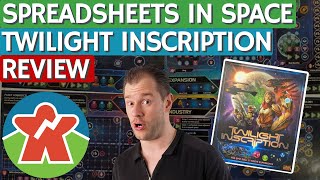
- Excellent rulebook and a dedicated learn-as-you-play guide, which eases entry
- High replay value due to eight variants per sheet and mix-and-match sheet layouts
- Vibrant, high-quality components including dry-erase sheets and clearly legible dice
- Strong interconnection between sheets; progress on one sheet benefits others
- Alien faction twists add varied playstyles and strategic depth
- Balance concerns around relics and certain council phase effects can be punishing or overpowered
- With more players, downtime increases and the pace slows significantly
- The theme is secondary to mechanics for some players; could feel less thematic than TI4
- Some minor component frustrations (erasers on dry-erase markers) and setup/cleanup friction
- Solo mode is separate and not as fleshed-out in multiplayer-focused play
- Resource management, strategy interdependency, and planetary expansion within a sci-fi setting
- Galactic exploration and empire-building via four interlinked sheets with a space-faring backdrop
- Theme-forward but largely mechanical; emphasis on systems over heavy lore
- Twilight Imperium
- Hadrian's Wall
- Seven Wonders
Mechanics (from transcript analysis)
- deck of events with agenda voting — Council phase uses agendas that players vote on, affecting scoring and board state.
- grid/row-column progression — Expansion, industry, and warfare are represented by interconnected grids that must be filled efficiently to score.
- Resource management — Trade goods and dice resources are spent to activate actions on the active sheet and to unlock bonuses.
- roll-and-write — Dice are rolled and results are recorded on multiple sheets that represent different domains of play.
- simultaneous/turn-based hybrid action — Rounds feature events that drive most actions; players execute on their sheets with coordination and timing considerations.
- unlockable dice and long-term asset synergy — Assets and bonus dice unlock on sheets, creating cross-round strategic layering and planning.
Video topics + discussion points
Quotes (from this video)
- your scientists were so preoccupied with whether or not they could they didn't start to think if they should
- two player is a great game
- burning out your retinas by giving you all these color sheets in your face
- regardless of which sheet you do or whether you prefer a big Forex or rolling right it's still only a game
References (from this video)

- strong fanbase anticipation
- legendary IP feel with new content
- longer playtime; complex rule set
- city-building with handling a lore-driven overlay
- Twilight adaptations and expansions
- epic sci-fi/fantasy lore overlay
- Twilight Imperium
- Magic-realms crossovers
Mechanics (from transcript analysis)
- Expansion-driven card drafting — New expansions add cards and scoring opportunities
Video topics + discussion points
Quotes (from this video)
- this is the epitome of an incredible party game
- we opened up space so let's talk about another game that is really hard to explain
- it's a hard game to explain, but I highly recommend Soul Forge
- you could win the gen con exclusive bigfoot roll and smash and a lanyard
- I love reconnecting with friends and meeting people in person after two years
- this is a rolling-right that scales incredibly well