Now the trumpet summons us again, not as a call to bear arms, though arms we need; not as a call to battle, though embattled we are – but a call to bear the burden of a long twilight struggle. – John F. Kennedy
In 1945, unlikely allies toppled Hitler's war machine, while humanity's most devastating weapons forced the Japanese Empire to its knees in a storm of fire. Where once there stood many great powers, there then stood only two. The world had scant months to sigh its collective relief before a new conflict threatened. Unlike the titanic struggles of the preceding decades, this conflict would be waged not primarily by soldiers and tanks, but by spies and politicians, scientists and intellectuals, artists and traitors.
Twilight Struggle is a two-player game simulating the forty-five year dance of intrigue, prestige, and occasional flares of warfare between the Soviet Union and the United States. The entire world is the stage on which these two titans fight to make the world safe for their own ideologies and ways of life. The game begins amidst the ruins of Europe as the two new "superpowers" scramble over the wreckage of the Second World War, and ends in 1989, when only the United States remained standing.
Twilight Struggle inherits its fundamental systems from the card-driven classics We the People and Hannibal: Rome vs. Carthage. It is a quick-playing, low-complexity game in that tradition. The game map is a world map of the period, whereon players move units and exert influence in attempts to gain allies and control for their superpower. As with GMT's other card-driven games, decision-making is a challenge; how to best use one's cards and units given consistently limited resources? Event cards add detail and flavor to the game. They cover a vast array of historical happenings, from the Arab-Israeli conflicts of 1948 and 1967, to Vietnam and the U.S. peace movement, to the Cuban Missile Crisis and other such incidents that brought the world to the brink of nuclear annihilation. Subsystems capture the prestige-laden Space Race as well as nuclear tensions, with the possibility of game-ending nuclear war.
TIME SCALE: approx. 3-5 years per turn
MAP SCALE: Point-to-point system
UNIT SCALE: Influence markers
- Deep strategic depth
- High replayability
- Strong historical feel
- Long playtime
- Steep learning curve for newcomers
- Global influence, diplomacy, ideology
- Cold War era
- Historically rich, large-scale strategy
- Watergate
- 13 Days of Watergate
Mechanics (from transcript analysis)
- area influence — region-by-region influence and scoring
- card-driven — cards drive events and actions; strategic timing matters
Video topics + discussion points
Quotes (from this video)
- I consider a historical board game to be a board game that covers some aspect of history
- they're educational and they will often include a significant amount of historical background text
- it's easy to learn
- the rules are broken by the cards; you offload complexity onto the card
- it's getting better and better
References (from this video)
- high thematic fidelity to Cold War period
- strong solo play options and engine depth
- robust testing and iteration culture described
- long play sessions can be intimidating
- learning curve is steep for new players
- Global competition and ideological struggle
- Cold War geopolitics
- Historical simulation with thesis-driven outcomes
Mechanics (from transcript analysis)
- Asymmetric objectives — victory conditions reflect competing theses
- Card-driven mechanics — cards drive actions and events shaping strategic options
- global influence arenas — players influence multiple theaters of operation
Video topics + discussion points
Quotes (from this video)
- we love people and that is how we solve this problem
- we like games but we love people
- we want lots of eyes on every game
- the designer wins because we brought the designer in
- curiosity is king when you're trying to get feedback
- every game that we don't publish is a trinket
References (from this video)
- definitive edition lineage with collector potential
- co-definitive/comprehensive edition approach that honors long-term fans
- steep learning curve for new players due to depth and historical complexity
- global influence, crises, and high-stakes diplomacy
- Cold War geopolitical rivalry (1945–1989)
- historical, card-driven simulation
- Imperial Struggle
- John Company
Mechanics (from transcript analysis)
- Card-driven mechanics — cards represent historical events that shift influence and control
- global influence and scoring — areas of influence and the DEFCON-like scoring affect victory
Video topics + discussion points
Quotes (from this video)
- we turn over all the content every four months
- player knowledge is a gift, right?
- the hardest part of game development is finding the fun
- not invalidating player knowledge
- three sets ahead
- orange boxes and gray boxes
- we want to maintain the tactile feel, the physical feel of Mr. President
References (from this video)
- Clever card system
- Captures complexity of Cold War in playable time
- Thematic depth
- Great multi-use card design
- Influenced board game designer's own game creation
- DEFCON system eventually bothered designer
- Political and military strategy
- Cold War superpower conflict
- Historical simulation
Mechanics (from transcript analysis)
- Asymmetric card deck — American, Soviet, and neutral cards
- Card-driven war game — Cards represent events and operations points
- DEFCON system — Nuclear tension track
- Multi-use cards — Cards can be used for events or operations points
- Multiple theaters — Score tracked independently in different regions
Video topics + discussion points
Quotes (from this video)
- It's delightfully simple and still delightfully a good game.
- Everyone has a different journey here. Everyone starts off playing different games and ends up with different favorite games.
- It had some of the most amazing world building I've ever seen for a game.
- I think the fact that it's rooted in a single D6 system is just going to hamper it for all time.
- This game got me through a pretty rough period of time.
- I am never getting rid of Arkham Horror second edition unless an Arkham Horror fourth edition comes out.
- I was immediately hooked by it.
- It's an absolute banger of a game.
- I could see myself playing that more.
- There's so many layers and mind games to it that player skill and the ability to read your opponent counts for so much more than just having an awesome deck.
References (from this video)

- tight, thematic two-player experience
- satisfying card-driven pacing and strategic depth
- long playtime
- learning curve for new players
- influence, pressure, and strategic maneuvering between superpowers
- Cold War geopolitics across the globe
- card-driven narrative that simulates world events and political pressure
Mechanics (from transcript analysis)
- area influence and scoring — players vie for influence in regions; scoring cards shift momentum
- card-driven events and operations — cards determine both events and actions; timing of events is pivotal
- hand-management tension — deciding when to trigger events and how to leverage operations
Video topics + discussion points
Quotes (from this video)
- Age of Innovation feels like it delivers the pinnacle experience of that kind of whole system.
- Twilight Struggle is a borderline masterpiece.
- The arc of Twilight Struggle is so exciting; tension grows across the board.
- This is Mage Knight Ultimate Edition—changing it to cooperative mode is incredible; I’d never go back.
- Eldritch Horror highs are the top board game experiences I’ve had.
- Agricola is the best board game we have ever played and it has stayed at the top for years.
References (from this video)
- Scratches the history buff itch
- Thematically rich and fun
- Educational without being preachy
- Excellent two-player game
- Classic status in gaming
- Learn about Cold War era through gameplay
- Host no longer owns this game
- US vs USSR political and military competition
- Cold War era
- Historical simulation
Mechanics (from transcript analysis)
- Area Control — Controlling regions for victory points
- event cards — Various Cold War era events that can be played
- Space race — Space race track providing special abilities
- Two-player asymmetric gameplay — One player controls US, the other USSR
Video topics + discussion points
Quotes (from this video)
- There's nothing really bad about it
- It has a lot of longevity basically because it is a fun game to play
- I really enjoyed the passenger mechanism
- This is a 20 year old game, and people are still wanting to come after it and get it
- You I learned things about the Cold War era that I didn't ever know
- It is a really thematically rich and fun game
- Love cube towers
- Shogun's my favorite one
References (from this video)
- deep strategic depth
- strong historical flavor
- high replayability
- robust competitive play
- steep learning curve
- long playtime
- complex rules for newcomers
- Global geopolitical influence and competition between superpowers
- Cold War era (1960s–1980s)
- historical simulation via card-driven events
- Twilight Struggle Red Sea
Mechanics (from transcript analysis)
- area_influence_and_realignment — regional influence and realignments affect control
- card_driven gameplay — event cards drive actions and events shaping influence
- defcon_and_tension_tracking — global tension track affects options and risk
- scoring_and_end_game — regional scoring determines victory
Video topics + discussion points
Quotes (from this video)
- We need that kind of movement in order to have our voices in industry heard.
- Panic is not a plan.
- Two thousand people going in to see their congressman.
- The main thing is to have a specific ask.
References (from this video)
- Elegant balance of mitigation and tension through events
- Rich strategic depth with historical flavor
- Can be intimidating for newcomers due to complexity
- Competitive tension may slow down for players unfamiliar with card-driven mechanics
- risk management, events, and mitigation of opposing actions
- Cold War era geopolitics, global influence
- round-based historical simulation with event-driven tension
- Card-driven historical war games
Mechanics (from transcript analysis)
- Card-driven actions with events — Cards provide operations and events that affect both players, with some events having day-one impact.
- Event sequencing and timing — Strategic timing around when to trigger or suppress events to minimize damage.
- Mitigation of opponent events — Players must decide whether to resolve their own events first or allow the opponent's events to trigger.
Video topics + discussion points
Quotes (from this video)
- Clues are used to seal gates in the game which is one of the main ways of winning
- one at a time after any skill check failed or not each spent clue token allows the player to roll one additional die and the result is a success
- the Provost can be moved up and down the board
- it's a fantastic atmosphere at the table
- the greatness in games is that they're fun and enjoyable
- you trick yourself into spending your important resource Clues into passing a check out of desperation
- trades are binding and you can't lie
- success is harder to move forward from than failure
References (from this video)

- Historical flavor
- A lot of conflict
- Could have been number one but got placed lower
- USA vs USSR global influence
- Cold War
- Historical political conflict
Mechanics (from transcript analysis)
- Area Control — Control regions like Europe, Middle East, Asia
- Card Driven — Play cards for points or events
- Push Your Luck — Nuclear war risk
Video topics + discussion points
Quotes (from this video)
- Board Game Geeks top 100 sometimes feels like random people voting random stuff
- This is the way by two random people from Latvia
- Your mind feels like a fog after playing Spirit Island
- Frodo really doesn't want to destroy ring at the end he's like nah I'll go home
- It's a fine game it's super boring it just the same thing over and over
- Wrongfully not in the top 20 yet
References (from this video)
Mechanics (from transcript analysis)
- target numbers with modifiers — dice-based/target-number action resolution where modifiers can shift the required roll
Video topics + discussion points
Quotes (from this video)
- dice are probably the first board game mechanic
- the more sides of the dice the more extreme their variables will be
- dice can add uncertainty to actions and while you may recall vividly the fistful of ones you rolled in an important battle the overall distribution of rolls in the game should balance out over time
- there's really no such thing as luck there's just probability
- get better and stop blaming the dice when you lose
- friction is all the random things that happen in war that turn it from a mathematical challenge into the messy chaotic experience
References (from this video)
- Iconic tension and flavorful historical context
- Tightly designed system with meaningful decisions on every card
- High replayability with different card draws and player orders
- Very cold-war heavy theme may not be for everyone
- Can feel punishing when you fall behind in events
- strategy and influence with careful action timing
- Cold War geopolitics
- high-stakes global chess
- Diplomacy
- 1960: The Making of the President
Mechanics (from transcript analysis)
- Area control and conflict — Influence and battles across regions shape the strategic landscape.
- Card-driven mechanics — Cards drive events and actions with global influence.
- Timed progress toward victory — A tense arc where actions must be optimized to avoid catastrophe.
Video topics + discussion points
Quotes (from this video)
- the partner Dynamics in tiu are so fun because you can't talk to each other
- it's the best card game trick-taking game
- this is the game that we keep coming back to for group drama and big moments
- you can't beat the drama at the end when both teams are close to a thousand points
References (from this video)

- deep strategic depth
- strong historical flavor
- complex for new players
- long playtime
- superpower rivalry
- Cold War era geopolitics
- historical simulation
Mechanics (from transcript analysis)
- area_control — Global influence shifts across regions to win the game.
- card-driven — Cards drive actions and influence the geopolitical map.
Video topics + discussion points
Quotes (from this video)
- I'm down to 150 games. Thank you for watching.
- Bye-bye eclipse and remix stays.
- This is one game. It all stays. We're not going to take it out right now.
- My number one game of all time stays obvious.
- I love it. Love it.
References (from this video)
- Masterful design that creates consequential, morally tense decisions
- Iconic one-versus-one strategy with high replayability
- Rich thematic presentation with historical resonance
- High strategic density can be intimidating for new players
- Randomness in card draws can feel punishing
- superpower rivalry and influence around the globe
- Cold War geopolitical tension between the United States and the Soviet Union
- high-stakes, card-driven narrative with space race as a late-game pivot
- Star Wars Rebellion (as a thematic counterpart in the two-player/large-scope war game space)
Mechanics (from transcript analysis)
- card-driven action and events — cards provide either events or operations points; playing an opponent's card can grant operations points while triggering its event
- fog of war through hidden information — players infer opponents' capabilities and plans from cards and board state
- space race risk management — space race acts as a one-use counter to the stalemate; can shift victory conditions
Video topics + discussion points
Quotes (from this video)
- I love, love, love Twilight Struggle.
- Space Empires 4X, if I recall correctly, was the very first game the GMT game sent me to review.
- Twilight Struggle is a Jason Matthews masterpiece.
- This is Prime Minister... it's a great game of political backstabbing and clawing your way to the top.
- I absolutely fell in love with Cuba Libre.
References (from this video)
- tight design
- strong historical resonance
- limit to two players
- lengthy downtime for slower players
- influence via cards and events
- Cold War geopolitics
- historical, card-driven engine
Mechanics (from transcript analysis)
- Area control and scoring — regions score points at key moments
- Card-driven actions — cards provide events or influence actions each turn
Video topics + discussion points
Quotes (from this video)
- it's the most addictive deck builder that I ever played
- it's a two-player war game where you have a map you have your own troops
- the greatest thing in this game is the Tableau
- aliens can kill you
- you can't trust the others
- it's the Lord of the Rings In The Box, I love it
References (from this video)

- Elegant integration of events and operations via cards
- Growing global scope as the game unfolds, with mid-game shift
- Rich bluffing and information management around scoring cards
- Tense, clutch moments that hinge on timing and choices
- Steep learning curve for new players
- Cold-war theme may be opaque to newcomers
- Can be unforgiving and highly punishing if misread
- Superpower rivalry and influence struggle across regions
- Global Cold War era, 1945-1989
- Historical simulation with card-driven events and geopolitics
Mechanics (from transcript analysis)
- Card-driven action — Players use cards to trigger events or use OPS points to perform actions, with events potentially affecting the opponent.
- Endgame tension and bluffing — The threat of scoring cards and events creates tension and strategic misdirection.
- influence and area control — Players place influence in regions to gain scoring opportunities and board control.
- Mid-war deck integration — The mid-war deck is shuffled in, broadening options and shifting global dynamics mid-game.
- scoring cards — Periodic scoring cards reveal regional victory points, creating bluffing and timing decisions.
Video topics + discussion points
Quotes (from this video)
- An absolutely fantastic two-player epic war card-driven war game where you're playing out the Cold War and just really a masterpiece of design
- When these scoring cards come out you're set up to score for them
- the mid-game and you shuffle in the mid-game deck into it and suddenly there's no other game that I can think of that has this feeling of the game just suddenly opening up
References (from this video)

- deep, historical, and highly strategic
- strong player interaction and tension
- long-term planning with meaningful decisions
- asymmetric and heavy for new players
- table presence and downtime can be challenging with larger groups
- geopolitics, diplomacy, and global influence
- Cold War geopolitical tension from post-World War II era through the late 20th century.
- serious, history-informed, and deeply strategic
- Diplomacy
- 1960: The Making of the President
Mechanics (from transcript analysis)
- area control and influence — Players vie for influence in various world regions to gain dominance and victory points.
- asymmetric options — Different political strategies and events create divergent paths to victory.
- card-driven — Multiple cards drive events, influencing control of regions and global strategic posture.
Video topics + discussion points
Quotes (from this video)
- I'm very scared I even like I had a nightmare last night I was like I know I'm going to do so bad
- Camel Up does in fact actually play up to eight players
- you didn't fail you job number two man if I gotten eight that would have been perfect
- ark nova but you did quite well
- Baron Park you can add three points and you are now at four points for the game so far
- takenoko the chibies EXP Manion because it's from a panda
References (from this video)

- deep strategic play
- tension and arc over many turns
- timeless design
- heavy weight and long playtime
- steep learning curve
- superpower rivalry, global influence
- Cold War geopolitical tension
- grim, historical arc with dramatic swings
Mechanics (from transcript analysis)
- area influence — player actions influence global regions and board state
- card-driven — cards drive events and actions with abstracted historical flavor
Video topics + discussion points
Quotes (from this video)
- it is just unbelievable how rewarding of an experience this just little thing can deliver
- the cost per hour per player and play count are a great way to measure value
- this is the greatest value there is because it literally is a deck of cards
- it's cheap and with a high number of plays
References (from this video)
- deep historical simulation
- high tension, replayability
- epic scale
- steep learning curve
- long play time
- heavy rule set
- global influence, political power struggles, crisis management
- Cold War era global tensions
- historical simulation with event-driven card play
Mechanics (from transcript analysis)
- area influence / global regions — control or influence of regions affects game state
- Asymmetric victory conditions — differences in starting positions and objectives for counterfactual play
- card-driven — event cards drive actions and influence; historical events shape turns
- hand management — players manage a hand of events and actions with strategic timing
Video topics + discussion points
Quotes (from this video)
- Wargaming is one of those Vickensteinian words that can just kind of be applied to anything.
- Root by Leader Games, Cole Worley's Design, which the first time I played it, it was strikingly close to one of the coin system games from GMT.
- There's nothing war gamers like more than arguing about what is or isn't a war game.
- Academia is in crisis in general these days and so I think maybe there's a little bit more flexibility in terms of developing ideas that come from outside academic culture coming directly from the designers or coming from amateur academics like myself.
- It's face to face if you can if you can manage it. You know, we all need this kind of community.
References (from this video)

- described as a big, impressive, heavy title on the shelf lineup
Mechanics (from transcript analysis)
Video topics + discussion points
Quotes (from this video)
- I think this is a fantastic look.
- it's a fantastic collection almost I want it.
- I still don't have eclipse.
References (from this video)
- Full of historical flavor
- Multi-purpose card system (event or action points)
- Area control with strategic depth
- Best example of card mechanic design
- Great two-player game
- Has fallen slightly in rankings
- Cold War
- US vs USSR
- Historical conflict
- Geopolitical struggle
Mechanics (from transcript analysis)
Video topics + discussion points
Quotes (from this video)
- there's so many games you will never have time to play all of them
- thematically it's so well represents the theme it feels amazing
- it's one of the most unique designs I've ever played
- don't trust your friends
- every time you win or lose you always feel satisfied about with this game because this is what I build
- what else you want from board games got good times and good stories
- it's Simplicity is what amazes me
- one of my favorite games because of the experiences it gives you
- no two games were the same which I really loved about it
References (from this video)
- one of the all-time favorite two-player games
- strong card-driven tension
- time-intensive and heavy
- nuclear diplomacy and competition
- Cold War geopolitics
- card-driven tug-of-war
- Star Wars Rebellion
- War of the Ring
Mechanics (from transcript analysis)
- Card-driven mechanics — cards drive actions and timing
- two-player strategic tension — tight back-and-forth control of world influence
Video topics + discussion points
Quotes (from this video)
- two-player games are something special for me a lot of my best gaming experiences have been two player specifically with my partner's death
- Santorini is my number one two-player game because it is designed for two to four players
- it's a chess-like game at two players
References (from this video)

- Two-player focused design
- Historical events are educational
- Great area control tug of war
- High tension gameplay
- Classification unclear between war game and area control
- Historical Cold War conflict
- Cold War
- Political and military strategy
Mechanics (from transcript analysis)
- Area Control — Fight for control of countries
- Card Driven — Play cards for points or events, similar to Here I Stand
- Historical Events — Event cards are based on historical events
- Two-Player Game — Specifically designed for two players
Video topics + discussion points
Quotes (from this video)
- if ever somebody says that he has the top 10 games of all time never trust them it's in their opinion
- if i could give a game 11 out of 10 clank legacy would be it
- this is the reason why i fell in love with board games in general
- it's my favorite solo game for sure the more i play it the more i want to play it
- to be honest right now probably next year it will be different maybe tomorrow it will be different
- the unknowing like what's gonna happen what's his agenda it's just an amazing experience
- if you like deck building then i think you definitely like clank legacy like a lot
References (from this video)
- tight integration of mechanics and theme
- highly replayable with balanced tension
- learning curve and potential for analysis paralysis
- era-based political influence and proxy conflicts
- Cold War geopolitical struggle
- card-driven historical simulation
- Twilight Imperium
Mechanics (from transcript analysis)
- Card-driven mechanics — cards drive actions, events, and scoring with historical flavor
- two-player focus — designed primarily for two players with tense duels
Video topics + discussion points
Quotes (from this video)
- it's just such a unique mechanic right throwing dice at a Target going through a dungeon together
- that g that game has one of the best table presence of uh of games you have you know it's one people just look at and like wow that looks really fun
- I love Feast for Odin and it's one that I think about a lot for its tight worker-placement, yet sandboxy feel
- Earth Reborn... it’s ahead of its time in that it was this big over the with like Miniatures
- eight hours per game time commitment
- the mechanics of it are solid; the wall mechanic and the way factions feel different is really fun
- the military side of it was brutal, especially in two-player
- the switch to cooperative really vaulted Mage Knight into our top games
- the best blend of mechanisms tied in with the theme
- card drafting vaulted into the mainstream after Seven Wonders
- there's so much content for campaigns; you can play forever with a great group
- it's so satisfying to get those cards and build this engine
- rolling dice and it feels so overwhelming and hard, but in a good way
- Dominion—you can randomize the set of the cards; it's the purity of deck-building
References (from this video)
- excellent card-driven game
- clever card system
- managing bad draws is key
- best head-to-head games
- some wrinkles annoy like DEFCON system
- us vs soviet union
- cold war
- card_driven_war
Mechanics (from transcript analysis)
- Card Driven — card-driven war game
- forced plays — forced to play cards benefiting opponent
Video topics + discussion points
Quotes (from this video)
- this is my list the video says the top 100 board games of all time but it really is just my top 100 board games of all time
- three minute board games is an independent channel we dont take money from publishers and we do not do any form of paid content
- Mosaic has the ambitious goal of being a civilization game that can be played in two to three hours and it very much succeeds at this goal
- a game that does not need to be played with a traitor because the inherent selfish goals in this game created enough internal conflict
- I love space racing games and space corp is the game that is most racy as far as space racers go
- the term I use instead of gateway game is foundation game
- Sentinels could easily be a forever game the kind of game you just play over and over and over and over again endlessly
- Modern Art is a simple and brilliant and beautiful game and easily the best pure auction game Ive ever played
- Black Orchestra models some very clever things about how conspiracy is run
- when I asked the question hey what game should I play with my non-gamer friend who's interested in gaming but hasn't done much gaming I almost always answer Sentient Golem Edition
- Arkham Horror is the game that really made board gaming my number one hobby
- there are a few things more fun and rewarding in board gaming than organizing a fight in the arena
- Twilight Struggle is one of the best head-to-head games out there
- Santorini is the definition of an elegant design
- Arkham Horror the card game absolutely should be for you it's a hundred percent for me and it is my number one game of 2023
References (from this video)

- global influence battles and pressure
- Cold War geopolitics
- card-driven geopolitical drama
Mechanics (from transcript analysis)
- area influence tug-of-war — compete for influence in regions; tension rises and falls
- Card-driven action selection — events influence political actions and operations
Video topics + discussion points
Quotes (from this video)
- we're going to bask in the world's negativity today
- the world's negativity cuz that's really what we need more of
- we want to be a beacon of negativity in this world
- the special cards are pictorially meaningless
- randomness disguising itself as difficulty
- it's an evil game
- sandbox experience
- I feel like a boy that has cheated on the test because that was one of the comments
- three faces on the cover
- three big faces one of them is wearing a cowboy hat
- this game is clearly inferior
- the rule book was great but everything else was weak
References (from this video)
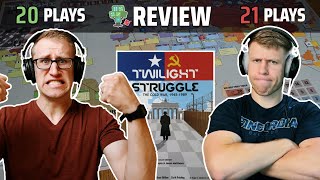
- Strong integration of theme and mechanics, with events feeling historically grounded
- Tense, iterative head-to-head play that rewards long-term planning and bluffing
- Elegant rule set that maintains depth without becoming opaque
- High replayability due to card order randomness and variable regional focus
- Excellent two-player experience; scales well with mutual skill development
- Steep learning curve for new players, particularly around strategic nuance and card interactions
- The confrontational nature can be off-putting to casual players or less competitive groups
- Luck elements exist via card draws and occasional die rolls, which can swing outcomes
- Teaching/setup complexity can be challenging for first-time instructors
- superpower rivalry, influence, brinkmanship, and global balance of power
- Cold War geopolitical competition across the globe from 1945 to 1989
- historical-event-driven, card-driven simulation with tension and momentum
Mechanics (from transcript analysis)
- card-driven engine — cards provide operation points or events; when a card with an opponent's event is used for operations, the opponent's event triggers automatically if applicable. players must play all but one card each round, producing constant strategic tension.
- global influence placement — players place influence in regions (Europe, Middle East, Asia, etc.) to shape control and prepare for scoring; regional stability and proximity affect feasibility and risk.
- military/Defcon tension — the Defcon track creates risk: higher tensions constrain actions and nuclear war ends the game; players balance military actions against geopolitical influence.
- realignment rolls and coup attempts — certain actions involve a die roll to determine outcomes; dice introduce thematic unpredictability and swing potential despite strategic planning.
- regional scoring and deck-shuffling effects — scoring cards are region-specific and shuffled into the deck; players must manage timing and deduce which regions will score, balancing expansion with concealment.
- Space Race track (progress/points) — a card-per-round mechanic that can be burned to advance progress without triggering events, granting points and abilities for Progress.
Video topics + discussion points
Quotes (from this video)
- Twilight Struggle is one of the best two-player games of direct conflict that captures the tension of the theme while keeping a relatively low rules complexity.
- Twilight Struggle is two players only and especially shines with a consistent gaming partner.
- The theme comes through extremely strong as the various historical events on card's trigger as well as the constant feeling of tension that the mechanisms evoke.
- It is one of the best examples of balancing strong theme and solid mechanisms while keeping the rules elegant and intuitive.
- Any game with shuffled cards and die rolls is going to have luck but in Twilight Struggle it is completely outweighed by strategy and tactics.
- This is an outstanding game from a design perspective; sublime.
- Twilight Struggle is a 9.5 out of 10.
References (from this video)

- rich historical theme
- deep strategic decisions
- heavy for new players
- long playtime
- geopolitics and influence
- Cold War politics
- historical
Mechanics (from transcript analysis)
- card-driven/global influence — card-driven system where actions reflect geopolitical events.
Video topics + discussion points
Quotes (from this video)
- I am known for my channel Minimum Player Count mainly on YouTube but I first started on Instagram
- Welcome to the show
- we are not going to take it easy on you so maybe you should be a little bit nervous
- stop watching and go play a game
- you can also see some of my videos on board game spotlight
References (from this video)
- deep historical context
- high strategic depth
- very heavy for casual players
- long playtime
- global influence and power balance
- Cold War geopolitics
- historical simulation
Mechanics (from transcript analysis)
- card-driven diplomacy/area influence — cards drive events and actions; players compete for influence globally.
Video topics + discussion points
Quotes (from this video)
- I am known for my channel Minimum Player Count mainly on YouTube but I first started on Instagram
- Welcome to the show
- we are not going to take it easy on you so maybe you should be a little bit nervous
- stop watching and go play a game
- you can also see some of my videos on board game spotlight
References (from this video)
- Iconic COIN-era title with strong historical flavor
- High tension and strategic depth with strong player interaction
- Learning curve can be steep for new players
- Long play sessions may be required to reach meaningful conclusions
- global political tension, diplomacy, ideological struggle
- Cold War era
- historical fiction-style framing with abstract mechanics
- Gandhi
- The Pure Land
- Fire in the Lake
Mechanics (from transcript analysis)
- card-driven play with global influence — cards drive actions, scoring, and event timing with global stakes
Video topics + discussion points
Quotes (from this video)
- essential differences you see between the skill sets of a very good designer and the skill sets of a very good developer
- impostor syndrome is real you know how do you handle that at the start
- this is just a game and isn’t that important
- I take a lot of feedback, but I also try to field that for the designers
- the coin system is very flexible and very fun to play while also showing you interesting stuff about history
- it's important to deliver feedback in a constructive way, not to just dump on a game
- the biggest challenge is delivering feedback so the other person can hear it
References (from this video)

- strong thematic feel
- deep strategic decisions
- long playtime
- learning curve
- great power competition and influence
- Cold War era geopolitics
- card-driven historical simulation
Mechanics (from transcript analysis)
- area/linear influence — influence in various regions shifts power balance
- card-driven — cards simulate historical events that influence zones and control
Video topics + discussion points
Quotes (from this video)
- cartographers that's got a solo mode doesn't it
- I'd like to play the Teenage Mutant Ninja Turtles Shadows of the Past I've got that game it works brilliantly for five players
- Twilight Struggle there we go
- Fantasy Realms nice little portable card game simple to teach lots of nice strategy
- this dragon's gold now
- that game is the meanest game I think I've got
- Power Grid plays with six and it's quite good with bigger numbers but I'm rubbish at it
- Pitch Out flicking game really good totally overlooked
- self-serving because it is my own design but would play a nice three-player game of Doodle Rush
- rock paper wizard that's what I'd go for
- I've changed a lot over the years didn't enjoy killer bunnies
- Ticket to Ride is very predictable isn't it
- Identic that's what I'd go for duplic or identic it's the same game
- the most complex games that I have are Dominant Species and Poseidon
- Poseidon that's a heavy economic game an introductory 18xx game
- I could easily imagine a bunch of six to eight year olds asking to play Monopoly that would ruin my day
References (from this video)
- iconic, highly regarded design
- strong thematic integration; highly replayable
- heavy and mentally demanding
- some find the rules dense
- strategic influence, diplomacy, and proxy conflict
- Cold War geopolitics
- dramatic historical simulation with tense pacing
- Combat Commander Vietnam
- Ancient Civilizations of the Inner Sea
Mechanics (from transcript analysis)
- card-driven control and action selection — cards drive both operations and events, shaping global influence
- hand-management and diplomacy — players balance interference, alliances, and pressure
Video topics + discussion points
Quotes (from this video)
- If you contact me about it and say, 'Hey, I want to do this or I have this or please post this for me or whatever,' I'm going to do it.
- We have a marketing meeting every month between me, my brother, and my dad.
- I actually think Instagram is the move for GMT; it’s the millennial platform, at least among my friends.
- If you bring it to a convention, it's the best way to get your game seen.
- We do two videos per month because that's what we have time to do.
- If you want to review something, you can email me.
References (from this video)
- deep strategic depth and replayability
- historical realism
- elegant, card-driven design
- easy to teach but hard to master
- highly analyzed and discussed in strategy forums
- steep learning curve for new players
- requires knowledge of many cards and timings
- can be brutal if you come in cold
- nuclear war risk can end games abruptly if misplayed
- Geopolitical strategy and influence during the Cold War
- Cold War world
- historical simulation, card-driven
- Rising Sun
- Kemet
- Terraforming Mars
- Lords of Waterdeep
- The Expanse
Mechanics (from transcript analysis)
- Card-driven actions — Cards provide events or operations; timing and value matter; some cards are more valuable to one side than the other.
- hand management — Selecting and timing card play and managing the hand is crucial for strategic depth.
- influence / area control — Players place influence on the global map to control regions and score points.
- Regional scoring — Regions score when certain conditions arise, rewarding presence across the board.
Video topics + discussion points
Quotes (from this video)
- "it's a very replayable game"
- "the coolest thing about this game is that it is equal to chess on Board Game Geek"
- "it follows history very closely"
- "the game itself is dirt simple to play there aren't that many mechanics"
References (from this video)
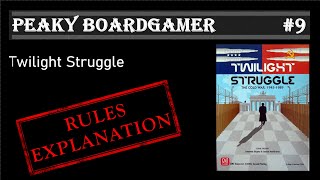
- Deep strategic depth and replayability with robust historical theme
- Elegant integration of geopolitics with abstract mechanics
- Two-player head-to-head tension with meaningful choices
- Clear thematic flavor in scoring, events, and regional dynamics
- Steep learning curve due to dense rules and nuanced interactions
- Long playtime can be a barrier for casual players
- Initial balance can feel swingy for beginners or early game skew
- geopolitics, influence, and power balance during the Cold War
- Cold War era (1945-1989) geopolitical struggle between US and USSR across regions worldwide
- educational, rule-focused explainer with embedded historical context
Mechanics (from transcript analysis)
- Battleground vs normal countries — Different scoring and control conditions depending on country type
- Card-driven mechanics — Event cards drive actions and events; cards are dealt and used to trigger events or operations
- Coup attempts — Dice-based attempts to remove enemy influence from a country and gain influence in its place
- Deck management and era progression — Early, Mid, and Late War card decks with phased introduction of new cards and reshuffling rules
- DEFCON status — Global danger level restricting actions; dropping to certain thresholds can cause penalties or loss
- Influence placement — Players place influence in countries to gain control, with adjacency and regional limitations
- Realignment rolls — Dice-based attempts to shift influence away from the opponent in target countries
- Region Scoring — Regions have dedicated scoring cards; scoring occurs when those cards are played, awarding VP based on control and battlegrounds
- Space Race track — Optional attempts to move markers along a track for bonuses and victory opportunities
- victory conditions — Reach 20 VP or trigger regional control conditions; regional control in Europe can lead to auto-win
Video topics + discussion points
Quotes (from this video)
- I could do a whole video series speaking for this game
- I always feel thrilled whenever I see this game
- What would be the only game you would take if you were marooned on an island
References (from this video)

- deep strategic depth
- classic two-player experience
- heavy rules and long playtime
- superpower rivalry and influence
- Cold War geopolitics
- highly thematic and strategic
- Innovation
- Lord of the Rings Confrontation
Mechanics (from transcript analysis)
- Area Control — influence across global battlegrounds.
- Card-driven strategy — event cards drive major actions.
Video topics + discussion points
Quotes (from this video)
- it's a fantastic engine building game
- Rules are important for checking mine
- cheater cheater pumpkin eater
- I am crushing you like a grape
- Town 66 going right above
- that Lord of the Rings confrontation pack
- this is the cube challenge
- Calico fits perfectly in the cube with room to spare
References (from this video)
- Iconic and highly regarded in the hobby
- Digital implementation supports async play with good tutorials
- Can be lengthy and heavy for casual sessions
- Asynchronous timers require discipline to avoid timeouts
- Global influence via political and military moves
- Cold War geopolitical tension
- historical and strategic
- Game of Thrones
- Root
Mechanics (from transcript analysis)
- card-driven gameplay — Cards drive actions and events across the globe
- Influence and scoring by region — Control influence in key regions to score victory points
Video topics + discussion points
Quotes (from this video)
- und aunted can be played asynchronously uh because you are playing down cards and taking your turn moving uh troops on a collective board
- there's a commonality of a lot of these physical games that you can play asynchronously and they're usually driven by a common deck or cards
- this does require trust like you sure yeah but again I don't want all the people I'm playing these games with I trust
- it's a really fun way that actually feels like you're playing a game with your friends because you have those videos
References (from this video)
- highly thematic and immersive for a two-player experience
- deep strategic planning and long-tail thinking
- long learning curve
- часто takes several hours to play
- often considered overrated by some critiques
- global influence and political strategy
- Cold War geopolitics
- deep, thematic, historically flavored
- Risk
- Gloomhaven (contrast in scale)
Mechanics (from transcript analysis)
- card-driven area influence — cards drive actions across the world map with long-term consequences
Video topics + discussion points
Quotes (from this video)
- it's really quick five minutes to teach and play
- the art is just so clean and the color scheme is so pleasing to the eyes
- you're busy rolling Yahtzee dice but you're attacking each other
- it's a role-playing game
- Lost Cities is a fantastic gateway game
References (from this video)
- deep strategic feel with strong narrative
- teaches about historical dynamics through gameplay
- complex and long to play
- steep learning curve for new players
- influence, alliance-building, and political risk
- Cold War geopolitics on a global map
- historical geopolitical simulation
- Oath
- Pax Por
Mechanics (from transcript analysis)
- card-driven — events are resolved by cards that drive actions and outcomes
- global influence map — countries with influence track political power and scoring
- hand management — managing a hand of events with limited look-ahead
Video topics + discussion points
Quotes (from this video)
- necessity is the mother of invention
- the whole point is to get six people around a table and have them argue about this
- bot design is data structures it's all data structures
- rough edges are fine in our games at GMT we like rough edges
- the bot turns are to be as non-intrusive as possible
References (from this video)
- Host's number one game for a long time
- Iconic wargame
- Host became designer for GMT Games coin series, creating conflict of interest
- Political conflict
- Cold War
Mechanics (from transcript analysis)
Video topics + discussion points
Quotes (from this video)
- I used to call this a shelf of shame that was a pretty common thing to call it back in the day and I don't never really liked that term because I don't feel shame that I haven't got to these games
- this is mostly work like this is just a backload of things I probably should get to
- people will still be looking for it
- it doesn't matter if the game is like 20 years old people will still be looking for it
- I've painted this one and I spent a lot of time doing it
- there's no point putting them on the channel I think both of them have been out of print for like a decade
- one of the worst kickstarters by one of the worst studios in board gaming history
- Golden Bell Studios did everything wrong you could possibly think of
- purely toxic company run by incredibly terrible people
- it would be kind of a joke that I'd be able to do a three minute video of feudum
- this game has a tutorial video online that's like 40 minutes long
- The Rose explanation video feels like a parody but it's actually how the game is played
- nothing personally to me puts me off playing a game that then sitting down unboxing it and having a craft assignment
- stop making me spend hours assembling your damn games
- this is an uncontrollable mess right now
- I'm a full-time dad and I'm really doing this in the evenings
- I have a finite space and also it just puts pressure and stress on me having a whole bunch of crap there that I know I'm not going to get to
- I'm going to do a big cull
- I will be published by this company but that doesn't mean I'm going to be slavishly devoted to every single game they put out
- I am a sucker for cute animal games like I really am
References (from this video)

- rich theme and historical flavor
- deep strategic depth with robust interaction
- highly thematic and immersive
- longer playtime; can be content-heavy
- paralysis risk with heavy options and planning
- geopolitics, influence, crisis management
- Cold War global conflict between USA and USSR
- tense, grand strategic theatre with hidden agendas
- 13 Days
Mechanics (from transcript analysis)
- Area/region control and influence tracking — Players shift influence to regions and track DEFCON for win/loss conditions.
- Bluff/double bluff and hidden agendas — Public and private objectives shape decisions and risk management.
- card-driven play — Event-based actions drive both players’ choices and scoring.
Video topics + discussion points
Quotes (from this video)
- chess is like marriage it lasts forever you're always waiting for the other person to make a mistake and you get upset when she takes your porn
- Onitama is like chess it's a lot more fun it's over quicker and every time you try it it's a bit different
- The challenge is in reading your opponent trying to work out where they've hidden the winning card or what traps they've set for you
- 13 days captures its theme but it also transcends it
- this game completely delivers Twilight Struggle
- this would still be brilliant if it was themeless and that's what makes it a great couple's game
References (from this video)

- Deep strategic gameplay
- Historical theme integration
- Event-card driven narrative
- High replayability
- Explores strategic nuance
- Fun to play despite losing
- Continuous strategy discovery
- Available on app for learning and play
- High learning curve
- Frequent losses as new player
- Political conflict, Influence, Espionage, Superpowers
- Cold War era
- Two-player tug of war between superpowers
- Shores of Tripoli
- Cuba
Mechanics (from transcript analysis)
- Coup mechanics — Throw coups to take control of regions
- Death contract — Risk management mechanic
- event cards — Event-driven gameplay with historical flavor
- Influence gathering — Build influence in regions around the world
- Space race — Parallel space race component
- Two-player conflict — USSR vs USA asymmetrical conflict
Video topics + discussion points
Quotes (from this video)
- Lord of the Rings a confrontation is an amazing two-player only game and it's essentially like Stratego
- Dominant species is a area control game where you are playing as different classes of animals
- Mansions of Madness second edition this I think Will Always Forever ever be one of my favorite games
- an acrony is a worker placement game with a unique twist
- Obsession is like Downton Abbey Bridgerton the board game
- I love polyaminos I love polyamino towels I think they're amazing and they're cats
- Shores of Tripoli is a two-player card event based war game
- root everybody plays a different faction of some type of Woodland creature
- dwellings of Elder Veil is a hand management worker placement game
- kanban ev is a car building game you are working in a car factory
- we just like love this game it comes with us when we travel
- Rise of Fenris is still one of the best board gaming experiences I've ever had
- Unmatched is a head-to-head battle game where you are playing as a character
- the Simplicity of it it gives so much depth but it's so easy to play
- Twilight's struggle is a game I'm still continuing to explore
- I don't drink wine but I love viticulture
- Wonderland's War gives me everything that I enjoy in board games
- Scout is a small box card game I love it
- Star Wars Imperial assault this is the highest campaign game currently on my list
References (from this video)
- deep strategic options
- rich historical flavor
- heavy rules
- long playtime
- narrative of global tension and competition
- Cold War geopolitics
- historical, strategy-heavy
Mechanics (from transcript analysis)
- Card-driven / card play — Actions and events are driven by a deck of historical cards
Video topics + discussion points
Quotes (from this video)
- we're gonna have 20 questions you're our first test kind of guinea pig subject matter on this
- you can earn up to 20 points through three rounds
- the big next kickstarter would be bloodstone
- it's been the best ever
- you are the best guest we've had on this show
- go play a game
- the ticket to ride that figures
- ah very good very good it is a blood rage
- clank
- twilight struggle
- blue moon
- five minute dungeon
- sorcerer city
References (from this video)

- tight tension and impactful decisions
- strong thematic flavor and historical resonance
- high replayability with various strategies
- long play time
- steeper learning curve for new players
- geopolitical strategy, influence, and brinkmanship
- Cold War geopolitics
- historical simulation of 1945-1989
- Twilight Imperium
- Twilight of the Gods
- Twilight: The Board Game
Mechanics (from transcript analysis)
- area_influence — compete for influence in global regions and influence battles
- card_driven — cards drive events and actions with global influence
- military_ops — limited military actions to deter opponents and shape the board
Video topics + discussion points
Quotes (from this video)
- this is the board game quiz show
- i'm quizmaster christina
- viewers you can feel free to pause after the questions to play along at home
- it's just great
- i started with agricola
- it's a fantastic game
- you can check out our bi-weekly podcast
References (from this video)

Mechanics (from transcript analysis)
Video topics + discussion points
Quotes (from this video)
- Twilight Struggle is one of my all-time favorite games.
- Tabletop Simulator is one of the best ways to be able to play a whole bunch of board games on your computer.
- Terraforming Mars is my evening unwind game.
- Slay the Spire is a really clever deck-building dungeon-crawler.
References (from this video)
- Deep historical simulation with tense decision-making
- High strategic depth and replayability
- Atmospheric theme that rewards foresight
- Long playtime and heavy rules for new players
- Two-player commitment can be intense
- Geopolitics, influence, and balance between USA and USSR
- Global Cold War era
- Card-driven, historical theater of operations with deep strategic tension
- Risk
Mechanics (from transcript analysis)
- area_influence_and_realignment — Place influence across regions and realign to score points.
- card_driven_gameplay — Cards drive events or operations that influence the board.
- hand_management — Careful management of a hand of events and operations each round.
- space_race_discard — Discard to advance in the Space Race, removing more advantageous cards.
Video topics + discussion points
Quotes (from this video)
- this is the game that actually introduced The Legacy concept
- it's layered on top of what's already a better version of risk
- the primary action selection mechanism on your turns you have this pyramid that has different actions
- two-player only game where you and your opponent are actually playing out the historical event of the Cold War
- it's highly asymmetrical and by that I mean the different factions literally play completely differently
References (from this video)
- Iconic card-driven war game
- High replayability with deep strategic layers
- Steep learning curve
- Longer play time for some groups
- geopolitics, nuclear brinkmanship
- Cold War era, global influence
- historical, card-driven strategy
- 1775 Rebellion
- Europe Divided
Mechanics (from transcript analysis)
- area influence / world tension — Managing influence in multiple theaters with strategic risk
- card-driven, event-based turns — Cards trigger events and determine global influence moves
Video topics + discussion points
Quotes (from this video)
- coin games have asymmetric factions that blow my mind
- it's a great entry point to heavier coin games
- these games are fascinating and worth learning
- the playbooks are great and walk you through a turn
- i enjoyed Verdun 1916 and i’m excited to play more World War I games
References (from this video)

- deep historical teaching through events on cards
- engaging portrayal of Cold War dynamics
- high complexity and downtime
- geopolitics, influence, and power balance
- The Cold War
Mechanics (from transcript analysis)
- card-driven — cards drive events and actions
- influence/area control — influence projects control of regions
Video topics + discussion points
Quotes (from this video)
- when we all do better we all will do better
- our goal is to make this world a better place one board gamer at a time
- the history and the education is in the game but it doesn't beat you over the head with it
References (from this video)
- High educational value
- Engaging geopolitical simulation
- Can be lengthy and rule-heavy for some learners
- Geopolitical struggle using cards and events
- Cold War
- Historical geopolitical simulation
- Twilight Struggle
Mechanics (from transcript analysis)
- card-driven gameplay — Cards drive events and actions
- Strategic influence and alliance formation — Simulates geopolitics through turns
Video topics + discussion points
Quotes (from this video)
- it's one of the best political games ever made
- the joy really comes in the group of people you've collected around that table and how they interact
- we are constantly looking for connections between our games and other games
- the sky's the limit
- i think we're going to see designers coming out of high school and that's a good thing
References (from this video)
- diplomacy, power politics, and historical simulation
- Cold War geopolitics and global influence
- historical, highly strategic
- Pandemic
Mechanics (from transcript analysis)
- area influence and scoring — Players influence regions and score points based on control and events on the board.
- card-driven gameplay — A hand of event cards governs political and military actions to shape the global balance.
- Endgame/Victory conditions — Victory can come from control and influence culminations assessed at specific milestones.
- High interaction and tension — Decisions consistently impact both players, creating a tense strategic duel.
Video topics + discussion points
Quotes (from this video)
- I love pandemic I played that game to death
- this is a much nicer board than the original
- get all the expansions with it
- it's pretty and maybe if you're just gonna play with basic pandemic
- this wasn't cheap
- I can't help but notice all this extra space in the box
- I think it's actually a very cool collector's item
- I can't help but notice all this extra space in the box
- I would buy expansions for the 10th anniversary edition perhaps
References (from this video)

Mechanics (from transcript analysis)
Video topics + discussion points
Quotes (from this video)
- it's an experience
- it's incredibly mean in Cutthroat
- I would never stop playing it on BGA
- this is the best game one of the best games ever in my opinion
- it's crazy chaos I love this game
- it's not overly light racing game
- I love this game I wish so badly was on BGA
- it's an engine builder
References (from this video)
- deep historical scope and real-world context
- engaging two-player head-to-head with clear victory conditions
- teaches macro-level geopolitical history through gameplay
- can be intimidating or lengthy for beginners
- weighty rules that may require persistence to master
- influence, brinkmanship, and competing narratives between the US and the USSR
- Cold War geopolitics across global theatres
- card-driven simulation of global events
- 13 Days
- Watergate
- Memoir 44
Mechanics (from transcript analysis)
- area_control — players vie for influence across world regions, with scoring based on geopolitical influence and events
- asymmetric_end_conditions — the two sides pursue different victory conditions (military/defense, prestige, etc.)
- card-driven — actions and events are driven by a shared deck of event/operation cards; players manage a political influence and operations economy
Video topics + discussion points
Quotes (from this video)
- the number one game on BGG was Twilight Struggle
- 13 Days which is based on the Cuban Missile Crisis and it's like a trimmed down version of Twilight Struggle
- Memoir 44 is a classic one to get into
- Watergate… very easy to learn