Aliens have arrived to conquer Earth. Enemy ships fill the skies. Humanity retreats to underground bunkers located below cities across the globe. Stand against the common threat! Fight the invaders city by city. Build a team from around the globe to save your planet and defeat the aliens!
GAMEPLAY
Under Falling Skies is a solo game with a multi-mission campaign. In each mission, you take charge of defending a besieged city.
Your actions are powered by an innovative dice placement mechanic. When you choose an action, you are also choosing which enemy ships will descend. Bigger numbers give better effects, but they also cause ships to descend faster.
Expand your underground base to gain access to more powerful actions, allowing you to shoot down enemy ships or deploy robots to increase your workforce, but don't forget to work on your research and watch your energy supply.
The mothership draws closer every round, ratcheting up the tension.
Can you complete your mission before your base is destroyed?
Official rules: https://czechgames.com/files/rules/under-falling-skies-rules...
Under Falling Skies is based on the print & play game that won the 2019 9-card Nanogame P&P Design Contest. Built on the same intriguing mechanics, it now comes with a full-scale campaign providing even more content for hours of intense fun.
- AI responds to player actions, avoiding reliance on luck-based events
- deep solo-focused experience with low luck and high skill
- tunable difficulty through multiple cities, robot workers, and skyboards
- campaign content adds optional depth
- campaign components can be heavy and may not fix core appeal if the base game doesn't resonate
- the board is lengthy; long playtime
- solo-focused design may limit audience
- sci-fi space-defense with strategic dice placement and AI-driven aliens
- Earth under alien invasion; global defense with underground bunkers and a mothership
- campaign-focused with core solo gameplay
- Assembly
- Dawn of the Zeds
Mechanics (from transcript analysis)
- AI-driven enemy actions — Alien movements and actions are automatic responses to player choices rather than random event cards
- dice placement and dice drafting — Roll five dice each turn and place them in various base rooms to take actions; remaining dice are rerolled as allowed
- mothership and skyboard mechanics — Mothership advances and interacts with the board; skyboards provide double-sided faces affecting difficulty
- resource/power management — Spending power to activate rooms; managing power to push tech tracks and defend the base
- solo play objective — Play is designed for one player with victory condition via advancing research and defending against attacks
Video topics + discussion points
Quotes (from this video)
- Under Falling Skies is a solo game designed for solo play, so this is definitely one made for solo gaming and with that experience in mind.
- The best thing about this game is that the AI responds to your actions, you are always screwed over by your own mistakes not an unlucky event card
- This is one for the solo gamers and specifically those solo gamers who want a low luck, high skill experience.
- If the core game doesn't work for you, adding more bells and whistles to it won't fix that
- The game itself has a lot of levers to adjust the difficulty to suit your needs, from different player cities with different abilities, robot workers and different skyboards, you can tune the game a lot.
- Long board is long.
References (from this video)
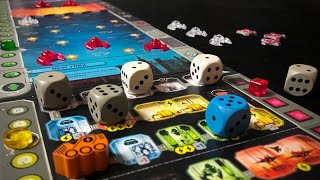
- Very quick setup and teardown for a solo session
- Strong solo-friendly design with rules that are easy to hold in memory
- Engaging dice puzzle with meaningful room interactions
- Campaign content adds variety and potential for replayability
- Clear, compact loop that scales well for a solo player
- Luck can dominate dice outcomes, affecting pacing and decision quality
- Some turns may stall or feel less consequential, depending on rolls
- Rule interactions can be dense for new players transitioning from base game to campaign rules
- Space invasion, resource management, and dice-driven action with modular room interactions.
- Space-based defense against alien ships with a campaign mode; exploration and progression on a research track.
- Procedural, campaign-driven with evolving rules and scenarios.
- Roswell (scenario/content) as a cross-reference for campaign-style content
Mechanics (from transcript analysis)
- campaign mode — Campaign content adds new rules and changes as you progress, altering game state over time.
- dice placement — Roll dice and allocate them to various rooms to activate effects; some rooms allow combinations (double rooms) to boost results.
- Double room interaction — Two dice can be merged in a double room to create a larger combined effect; independent dice in separate rooms cannot be added.
- Resource management — Manage energy and research to progress on the research track and perform actions.
- Robot synergies — Robot units provide buffs or mutations to rooms, with optional usage and diminishing effects as turns progress.
- Spawn and movement pacing — Mother ship and alien ships advance/spawn; board mechanics determine when ships are destroyed or damaged.
Video topics + discussion points
Quotes (from this video)
- so it's a nice quick game nice and easy
- as a solo game just so quick to set up
- i think we've won guys i think we've done it
- under falling skies super game
References (from this video)

- Excellent solo game with ongoing campaign variety
- Not played as often; may become a forever game
Mechanics (from transcript analysis)
- solitaire / puzzle — Puzzly optimization with solo play and dice interaction.
Video topics + discussion points
Quotes (from this video)
- There were none in 2024.
- I'm trying to get my collection down to 200 games.
- Clans of Calonia is fantastic. I only discovered it a year ago.
- Vestage is basically Vindication Mini.
- I think Obsession is a very unique worker placement deck-building game.
References (from this video)
- Engaging solo/coterminous campaign with modular scenarios
- Deep dice-driven engine with meaningful, tangible choices
- Varied city setups and character upgrades increase replayability
- Tension from reactor leak and energy limits adds strategic depth
- Rule complexity and bookkeeping can be heavy
- Energy management and early-round constraints can feel punishing
- Balance between room types and energy availability can be tricky to manage
- alien invasion, defense, resource management
- Earth's cities defended against alien invasion; campaign progresses through scenarios with evolving threats.
- campaign progression with evolving chapters and character upgrades
- Pandemic
- Montreal
Mechanics (from transcript analysis)
- campaign choice and branching — Polls determine scenario options and city assignments, shaping the campaign's path.
- dice placement — Worker dice are placed into rooms to perform actions; dice values constrain available options and outcomes.
- Energy management — Energy tokens power rooms and influence upgrades, robot deployment, and track advancement.
- excavator and room opening — An excavator mechanism opens new rooms; placement decisions determine when and how rooms become available.
- robot upgrades and command rooms — Robot dice and command rooms modify dice values and enable transfers or multi-die effects.
- ship combat and reinforcement — Aliens and ships move and can be shot down in spaces; managing ships and explosions is central to defense.
Video topics + discussion points
Quotes (from this video)
- The defense forces in this city are short-handed.
- Reinforcements are coming.
- Energy is going to be the problem.
- Big numbers. Big numbers. But is that good?
- We win.
- Pandemic? As enemy ships are shot down, our team seizes the opportunity to research the alien biotechnology.
References (from this video)

- tight dice-driven choices; scalable campaign
- lower price; but expansion content is optional
- dice-driven base management
- Alien invasion; base defense
- tactical, tense
- Warp's Edge
Mechanics (from transcript analysis)
- Dice-based base actions — Each die activates a column; enemy ship moves accordingly.
Video topics + discussion points
Quotes (from this video)
- this is just my opinion my list if your favorite game isn't on here it's more likely that I haven't played it
- it's a solid tense game
References (from this video)

- appeals to solo gamers
- dense theme for a quick play
- described as not a star shooter but evokes that vibe
- space combat/arcade shooter
Mechanics (from transcript analysis)
- arcade shooter-style solo — solo play with a space-defense/shooter motif
Video topics + discussion points
Quotes (from this video)
- this is being put to the top of the list it is anyways
- if somebody asked what my favorite game of the con was it was going to be this
- this is my new favorite game
- this is the best moment of my life basically
- they probably gave it to the right people because i'm gonna pump the heck out of this game
- we got to demo a new game that's coming out in January from Plaid Hat Games called Familiar Tales
References (from this video)
- Strong campaign flavor with modular chapters and varied city rules
- Character abilities add variety and strategic depth
- Clear setup and campaign notebook for progress tracking
- Campaign setup and rule-learning curve can be steep for new players
- Complex interactions risk mistakes during play
- Defend cities, manage resources and make strategic decisions to save civilians and disrupt mothership tactics
- Global alien invasion; urban defense (New York City and other cities) described in the campaign chapters
- Campaign-driven, story-led with chapters and city/special characters
Mechanics (from transcript analysis)
- Character abilities (one-use per campaign) — Characters have unique abilities that can be activated; some are limited to once per campaign.
- Citizens and civilian rescue — Protect civilians in cities; failing to save civilians increases damage when ships crash.
- Dice placement and resource management — Roll dice and allocate to actions such as energy, research, movement, and combat. Dice values influence outcomes.
- Enemy ship spawning and mothership mechanics — Mothership descends, ships spawn in grid; threats escalate with fatigue/damage tracking.
- Energy management — Energy is spent to perform actions and to unlock or boost abilities; energy economy drives pacing.
- Modular campaign with chapters — Two piles per chapter select which city/character/scenario will be played; chapters unlock new cities and components.
Video topics + discussion points
Quotes (from this video)
- This is great and this costs no energy
- This is incredible
- This campaign notebook is going to be exciting
- I'm really excited for this campaign
- This was a very strong power
- This is shaping up to be one of my most favorite solo games
- We finished that mission on the first try
References (from this video)
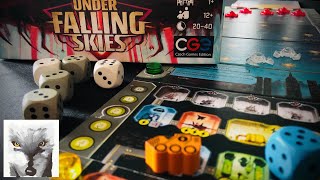
- Campaign-driven variability and unlocks
- Tension between dice placement and enemy movement
- Modular, scalable setup with replayability
- Steep learning curve
- Large table footprint
- defense, progression, base-building, campaign-driven variability
- Earth under alien invasion; cities defended from mothership and drop ships
- campaign-based scenarios with unlocked characters and tweaks
- Space Invaders: The Board Game
Mechanics (from transcript analysis)
- campaign variability — Chapters unlock new characters and abilities; tiles can be flipped to adjust difficulty.
- city defense and threat tracks — Mothership track advances; reaching top means victory, bottom means defeat; base damage and energy tracking.
- dice placement and action selection — Roll five dice and place to activate rooms and progress threats; placement behind/excavator path determines available actions.
- excavator gating — A central excavator determines which actions are accessible; moving it opens new actions.
Video topics + discussion points
Quotes (from this video)
- it's a solo game it's a solo dice game
- this is all modular
- lots of variability and then as you play your individual games you can use components you've unlocked
- campaign chapters unlock different characters and abilities
References (from this video)
- Compact yet deep puzzle with high replayability
- Strong thematic coherence and variety of scenarios
- Good solo-feeling experience and strategic depth
- Small footprint with strong perceived value
- Rules can be dense and require careful study
- Sabotage and token systems can feel punishing and complex
- Setup and component management can be fiddly without organization
- Sci-fi military defense; alien contact; evolving bases and sky tiles
- Multinational space-defense campaign across cities (Beijing, Tokyo, Soul, Singapore, Sydney) with sky-tile mechanics and a newly allied alien.
- Campaign-driven progression with chapter-based twists and evolving allies
Mechanics (from transcript analysis)
- Die-based action economy — Players roll dice and allocate pips into columns and rooms; die values constrain what actions can be taken.
- Excavat or track and robot deployment — A movable excavator governs room access and robotics production; Tokyo limits to one robot unless mitigated.
- Mothership and ship movement — All enemy ships descend columns each round; the mothership moves and triggers damage if they reach the city.
- Sabotage column — A sabotaged column can lower/delay die values, forcing adaptive planning and risk evaluation.
- Teleporters — Teleporters pair tiles and can shuttle ships between them during movement, adding volatility and reach traps.
- Weather/scenario disruption — Weather-control/sabotage scenario introduces tokens and column effects that disrupt radar/flight, increasing difficulty.
Video topics + discussion points
Quotes (from this video)
- Holy crap. I am stressed out playing a board game so much in such a long time.
- This game is epic.
- The puzzle is rough but very rewarding.
References (from this video)
- engaging solo campaign with a structured, replayable chapter system
- Montreal-style room interaction adds depth and planning opportunities
- campaign components unlock a beefed-up standalone experience after progression
- diverse setup options and comic-book storytelling provide thematic flavor
- accessible entry point for players returning to a long-stored collection
- component quality of some game bags and physical components could be better
- early rounds can induce analysis paralysis on stream due to complex setup
- some rules phrasing and edge cases require cross-checking with FAQ or later rulebooks
- price and niche solo-only design may limit broader appeal
- alien invasion defense with city-scale battles and tech-forward experimentation
- Earth and space during an alien invasion; cities defend themselves against planetary threats across a multi-chapter campaign
- comic-book campaign panels and chapter briefs; modular story elements
- Marvel Champions (campaign-style elements)
- Buttons & Bugs (campaign/solo playthrough)
- Legacy of You (solo campaign lineage)
Mechanics (from transcript analysis)
- campaign structure and replayability — the game is organized into four chapters with two piles of options per chapter; chosen scenarios are saved, others are shuffled away to create replayability
- combat and ship control — combat revolves around shooting down alien ships with dice outcomes, applying effects in sequence, and managing the threat level
- dice placement and dice management — roll a pool of dice each turn and place them into columns to activate rooms with varied effects; higher dice unlock stronger actions
- energy economy and resource management — spend energy to activate rooms, move the excavator, and advance on the research track; balance immediate needs with long-term goals
- multiroom interaction and Montreal rule — some rooms allow combining effects from multiple rooms of the same type; Montreal-like rule lets players sum room values for more powerful actions
- satellites and research tracking — satellite tokens affect research progress and can be destroyed, adding risk and tension to the campaign progression
Video topics + discussion points
Quotes (from this video)
- Underfalling Skies definitely super simple, like super easy.
- I am not a professional at this game.
- This game is fun even without the campaign.
- Screw you guys. I'm never playing it on stream again. Deal with it.
- I love the brain crunchiness of this game.
- Backseat Gaming is like kind of frowned upon, but yell at me.
- This effect was cool.
- I like legacy games.
References (from this video)

- Space Invaders theme works really well with mechanics
- Clever dice game system
- Good value for money
- Works well solo or cooperatively with two players
- Mini campaign adds extra content
- Dense mental puzzle of optimization
- Not a big box game
- Space Invaders board game - defend against alien invasion
- Space/sci-fi - outer space invasion
- Solo dice game with escalating threat
Mechanics (from transcript analysis)
- Base digging — Dig out rest of base to find better locations underneath
- Dice game — Use and manipulate dice to activate locations
- Dice mitigation — Significant dice mitigation through clever location use
- Location Management — Use locations to shoot lasers, do research, beat aliens
- Mothership descent — Mothership creeps down sending ships in columns trying to stop you
Video topics + discussion points
Quotes (from this video)
- It's that great banter game that's just great for like a good party setting
- The game needs to be quick and snappy and that's the way it should work
- When I got the game myself and finally got it out and played it with fellow gamers it was brilliant
- I don't see this really rising further up the top 100 though I think this is going to be its peak
- If there's a slight flaw at this game it's that the card system needs a little bit of tweaking it can get quite swingy
- The fans recommended this game and the fans were right
- It's kind of like that awesome experience that you only get to experience every now and again in a blue moon
- I found brian board to be a big surprise one of those big exceptions to the rule
- It's that great sort of climactic tension where throughout the game you're trying to figure out who is not on our side here
- It's a really clever system there's a decent amount of dice mitigation you know every time you roll those dice you are there racking your brains
References (from this video)

- Rich, puzzle-driven decision space from a small set of components (five dice)
- Solitaire-focused design with effective co-op family play opportunities
- Campaign mode adds long-term replayability and variability
- Tension builds toward a climactic final turn, rewarding careful planning
- Accessible rulebook and clear feedback in-game
- Board layout is long and arguably awkward to film and accommodate at a home table
- Endgame can feel less thrilling than the midgame or setup once the tension peaks
- May not remain a keeper for all players after completing the campaign
- Alien invasion and strategic defense with research and puzzle elements
- Subterranean base defense against an ongoing alien invasion; mothership descends; cities like Roswell, Washington DC, and New York featured on the map
- Puzzle-driven solo experience with cooperative co-review framing and campaign variability
- Friday
- Warp's Edge
- Space Invaders (as inspiration)
Mechanics (from transcript analysis)
- Campaign vs standalone play — Standalone sessions or a campaign with a comic book and character powers to spice up play
- Combat resolution and ship movement — Dice values determine ship movements and shooting power; explosions and vulnerable spaces affect outcomes
- Dice allocation and placement — Roll five dice and place them into rooms/columns to trigger actions; each room provides different effects depending on the die value
- Excavator mechanic — An excavator track reveals more rooms as it advances, unlocking higher-value actions and options
- Mothership phase and consequences — After each turn, the mothership descends and triggers consequences (spawn ships, move excavator, etc.)
- Multi-die rooms — Certain rooms require two dice to activate more powerful actions
- Power management — Dice spent in the power room convert into power to fuel actions; managing power is crucial to progress
- Research track progression — Advancing the research track by allocating dice to research spaces and spending power to progress
- Turn structure and phases — Each turn includes a dice phase, action resolution, and the mothership phase with cascading consequences
Video topics + discussion points
Quotes (from this video)
- Under Falling Skies is fantastic
- this is the Hall of Fame for solo games
- you can do a lot with very little
- the tension climbs toward the last turn
- for solo Gamers highly recommended
- I think you're going to get your money's worth out of it
- it's a puzzly game with a lot of decisions and a huge decision tree
- the last little bit of experience... as humans the last thing we feel is what sticks with us
References (from this video)

- deep, flexible puzzle with many viable paths to victory
- multi-use dice mechanics (transfer, upgrade, and research) add strategic depth
- campaign structure supports character development and evolving scenarios
- theme and tension from contamination create high-stakes decisions
- moments of aha when clever transfers or robot placements unlock powerful turns
- contamination mechanic can be opaque and punishing without clear rules
- high complexity with energy management and rule interactions
- risk of analysis paralysis or overplanning due to many interacting options
- rule clarity around placing vs transferring vs installing can be confusing
- cooperative defense against an escalating alien threat; strategic resource and dice management
- Earth, near-future, during an alien invasion with city-scale contingencies and a modular base-building system
- campaign-driven episodic narrative with evolving characters and city outcomes
Mechanics (from transcript analysis)
- combat and ship threats — alien ships descend in columns; players shoot down ships using jet-fighter and other room effects, with various ship types and special behaviors
- contamination and contamination tokens — tokens move under dice faces to contaminate spaces; placing a die on a contaminated space damages the base, and contamination ramps over rounds
- dice placement in base rooms — players place worker dice into different rooms/columns within their base to activate room abilities and trigger cascading ship/room effects
- energy management and excavator track — energy is spent to move lines on tracks, open rooms, or fuel attacks; the excavator track shifts ships and can teleport components around the board
- robot installation — robots can be installed (exhausted vs unexhausted) to provide ongoing benefits; installation occurs in the rooms phase rather than the dice phase
- transfer to research spaces — certain characters allow transferring a die value to a research space, enabling new actions or bonuses at a cost of energy
Video topics + discussion points
Quotes (from this video)
- Contamination is more difficult to contain than we thought.
- This is maybe trickier than I'm thinking.
- This game is so dense and twitchy, it's brain-burning but good.
- I screwed up big time. I think I messed up that turn big time.
- Contamination sucks ass. Not a fan of contamination.
References (from this video)
- Solid solo puzzle with meaningful choices
- Accessible rules and quick playtime
- Campaign or multiplayer modes are less central
- space defense and base-building in a dice puzzle format
- space invasion theme with dice-driven actions
- puzzle-driven, solo-focused
Mechanics (from transcript analysis)
- base-building challenges — Expand your base while mitigating threats.
- dice allocation and resource management — Assign dice to generators and weapons to respond to threats.
- solo-focused puzzle — Primarily designed for solo play with tight pacing.
Video topics + discussion points
Quotes (from this video)
- Carpet bombing 25 solo games that you should be checking out if you're a solo player like me.
- This is the life. Ark Nova.
- Dripping with theme. You're a monster.
- Regardless of whether you're a sad loner like me who has to play games in this fashion, it's still only a game and it's still fun.
References (from this video)
- High campaign variability with six cities and evolving rules
- Audience interaction drives city and character selection
- Flexible planning around both energy management and ship interdiction
- High complexity and steep learning curve for solo play
- Heavy decision fatigue due to numerous interacting rules and options
- Resistance against a malevolent AI puppeting aliens; tactical, modular campaign with evolving rules
- Earthbound campaign with sky tiles, alien AI, and a final battle against an orbital satellite; cities, characters, and sky tiles influence play
- Campaign-driven, episodic progression with choices affecting outcomes
- Mage Knight
- Nemo's War
Mechanics (from transcript analysis)
- die-placement — Assign dice to different rooms to resolve effects and advance the narrative and objectives
- excavator / sky tiles / threat track — Moving an excavator to uncover or alter room availability; threat level and sky tile setups affect difficulty
- jet fighters / anti-air / color-coding — Systems to shoot down ships using color-coded spots; strategic placement and timing matter for defense and offense
- robot rooms / multi-room — Rooms occupy multiple spaces and may require dice in each space; multi-room interactions enable combined effects
Video topics + discussion points
Quotes (from this video)
- The end begins.
- Mexico City for the win.
- We win the campaign.