The year is 1913. The steamship SS Atlantica is two days out from port on its voyage across the Atlantic Ocean. Its unsuspecting passengers fully anticipated a calm journey to Boston, Massachusetts, with nothing out of the ordinary to look forward to. However, strange nightmares plague the minds of the people aboard the ship every night; rumors circulate of dark shapes following closely behind the ship just beneath the waves; and tensions rise when a body is discovered in the ship's chapel, signs of a strange ritual littered around the corpse.
Lurking within the depths of the Atlantic Ocean are a swarm of vicious, unspeakable horrors: the Deep Ones, led by Mother Hydra and Father Dagon. For reasons unknown, they have set their sights on the Atlantica, and their minions, taking the form of human-Deep One hybrids, have infiltrated the steamship to help sink it from within. Each game of Unfathomable has one or more players assuming the role of one of these hybrids, and how well they can secretly sabotage the efforts of the other players might mean the difference between a successful voyage and a sunken ship.
If you're a human, you need to fend off Deep Ones, prevent the Atlantica from taking too much damage, and carefully manage the ship's four crucial resources if you want any hope of making it to Boston, all while trying to figure out which of your fellow players are friends and which are foes. Everyone shares the same resource pool, but humans will try to preserve them while traitors will strive to subtly deplete them. Being able to tell when someone is purposefully draining the group's resources is harder than you think, especially when you take crises into account!
At the end of each player's turn, that player must draw a mythos card. Each of these cards represents a crisis that the whole group must try to resolve together. Some of these crises, such as "Food Rationing", call for a choice that could potentially put the ship's passengers or resources at risk, while others, such as "Hull Leak", call for a skill test in which failure could have disastrous consequences.
During a skill test, each player contributes skill cards from their hand to a face-down pile shared by the group. Once everyone has contributed (or chosen not to), the cards are shuffled, then revealed. If enough of the correct skills were contributed, then the group passes the test! But if the wrong skills were contributed, they can actually hinder the results, leading to failure. Thus, skill tests are dangerous opportunities for traitors to sabotage the humans' efforts, so you have to stay on your toes at all times.
—description from the publisher
- high thematic tension and social dynamics
- strong role-based asymmetry and hidden objectives
- educational burden to understand loyalties and interactions
- hidden loyalties and shipboard intrigue
- high-sea voyage with Lovecraftian horror elements
- social deduction with thematic flavor
- Blood on the Clocktower
- Wavelength
- Code Names
Mechanics (from transcript analysis)
- hidden loyalties / hidden roles — each player has a secret objective and hidden loyalty that drives play
- teamwork with deception — players must collaborate while pursuing conflicting goals
Video topics + discussion points
Quotes (from this video)
- asymmetry is The Game's capacity to encourage and force different decisions from players by creating unique advantages or disadvantages
- turn order is the plague the kill of so many otherwise symmetrical games
- it's a pure unfiltered symmetrical game and it's a perfect example for our base level
- a single difference will create a Cascade of changes that dramatically changes the play style and strategy between each player
- asymmetry lets us express and connect to a very human feeling of having personal strengths and weaknesses
References (from this video)

- Complex, epic space-coop with a strong production
- Campaign-like narrative depth
- High learning curve and long play sessions
Mechanics (from transcript analysis)
- hidden movement / traitor-style deduction — spacecraft crew facing threats with hidden roles, reminiscent of BSG mechanics
Video topics + discussion points
Quotes (from this video)
- it's a treasure trove of puzzling riches and i love it
- this box is the campaign that takes the form of a delightful comic
- a gorgeous game unlike any i've played this year or most other years
- it's an app-driven competitive storytelling game which just boggles my mind a little
- it's all about family
References (from this video)

- strong thematic mood
- solid social deduction mechanics
- trust dynamics can be intense
- traitor/crew deduction
- ship crew social deduction in Cthulhu-esque setting
- mysterious, tension-filled
- Battlestar Galactica: The Board Game
- The Resistance
Mechanics (from transcript analysis)
- hidden traitor / social deduction — players deduce who is a traitor and who is human
Video topics + discussion points
Quotes (from this video)
- It's kind of like The Mind but better.
- it's a very, very good two-player game
- we are so competitive that we need to be able to turn it off
- I loved it so much I spilled my water all over the table
- we've met some of our best friends this year
References (from this video)
- Atmospheric Lovecraftian theme
- Strong narrative potential
- Familiar IP flavor for fans of FF Games
- Potential rules complexity
- Licensing constraints and market reception unknown
- Deception, hidden roles, and investigation
- Lovecraftian-inspired narrative in a thematic, possibly nautical or mysterious setting
- Story-driven with tension between players
- Detective: A Modern Crime Board Game
- Arkham Horror
- Descent: Legends of the Dark
Mechanics (from transcript analysis)
- asymmetric player powers / drafting — Different player abilities influence actions and outcomes.
- hidden roles / social deduction — Players may be assigned roles with conflicting objectives.
- story-driven module-based scenarios — Campaign-like scenarios with evolving stakes.
Video topics + discussion points
Quotes (from this video)
- the visual overhaul and the potential for modernization has me really excited about this one
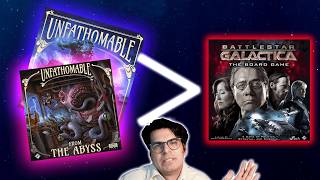
- this is a re-implementation of the Battlestar Galactica game
- the art designer now or never the box blows me away and i love that color scheme
- it's important to highlight some light games in the face of ff g behemoths
- the visual overhaul and potential for modernization has me excited about this one
- i think this award has historically been pretty spot-on
References (from this video)
- strong emergent storytelling with high interaction
- deep, interconnected decks and a broad suite of mechanisms that encourage varied strategies
- clear thematic integration and satisfying narrative payoff
- expansion content adds meaningful richness without diluting core loops
- long playtime (typical 2.5–4 hours) and heavy rule overhead
- admin burden requiring a dedicated organizer or 'glue' player
- perceived balance issues with hybrids in certain counts
- steep learning curve for new players
- trust and betrayal under pressure; social deduction aboard a stranded vessel
- A cruise ship bound for Boston on the SS Atlantica, plagued by hidden horrors and social tension.
- emergent storytelling driven by player actions, loyalties, and Mythos events
- Battlestar Galactica
- Nemesis
- Blood on the Clock Tower
- Dead of Winter
Mechanics (from transcript analysis)
- Action economy — Two actions per turn create a puzzle of optimal moves and trade-offs for both human and hybrid players.
- ally system — Allies provide additional actions or abilities; they add strategic depth but can be consumed or removed.
- deception and bluffing — Players can mislead others about loyalties, increasing the game's social maneuvering.
- Loyalty cards — Each player receives a loyalty card at start; halfway the game one card can flip allegiance, reshaping objectives.
- Mythos deck — A central deck of crises and events that drive ship actions, escalating tension and forcing decisions.
- ship movement and threat management — Movement of the ship interacts with enemy placements, driving tactical positioning and resource management.
- social deduction — Players have hidden loyalties (humans, hybrids, or fish hybrids) influencing goals and actions.
Video topics + discussion points
Quotes (from this video)
- I give unfathomable with from the abyss a solid 9 out of 10 it's just a very good time
- unfathomable is a long and sometimes complex game
- zone it out the noise
- trust one another to push the right button and have trust in one another
- there is nothing wrong with a juicy meaty game that isn't designed as a competitive game
References (from this video)
- Rich Lovecraftian atmosphere and strong production value
- From the Abyss expansion introduces new allies, skills, waypoints, and mythos cards, expanding play variety
- Hidden traitor dynamic adds tension and social deduction flavor
- Captivating moments and emergent storytelling during playthrough
- High complexity and rule density; easy to get bogged down in rules
- Balance can feel finicky with expansion content and multiple card decks
- Gameplay length can be lengthy and iterative, potentially causing fatigue
- Rigidity of some interactions can make it feel impossible to win in certain runs
- Lovecraftian horror featuring deep ones, hybrids, and ritual/horror cycles
- Atlantic Ocean aboard the Atlantica cruise ship
- cooperative with hidden traitor mechanics and evolving mythos events
- Arkham Horror
Mechanics (from transcript analysis)
- cooperative objective with travel track — Players work together to fill a travel/arrival track and reach Boston to win.
- deck-based action economy — Multiple decks (waypoint, ally, item, spell, etc.) feed into skill checks and character actions; managing these decks is central to pacing.
- hidden traitor/loyalty system — Some players are hybrids or traitors; loyalty tokens and revelation mechanics influence play.
- horror/monsters activation hierarchy — Monsters activate following a priority order (humans, passengers, interior spaces, water spaces) with unique effects per monster.
- mythos deck and crisis checks — Mythos cards drive crises, monster spawns, and signal monster attacks; players resolve skill checks with chaos/boon/treachery cards.
- passenger and ally management — Passengers can be rescued or suffer consequences; allies provide deck space actions and may be activated under conditions.
- ritual/banishment track — A ritual track advances to potentially wipe out outer-space horrors; risky to progress with sanities and resources at stake.
- ship spaces and room effects — Each ship space grants a unique action (galley, boiler room, chapel, etc.) with specific benefits or costs.
Video topics + discussion points
Quotes (from this video)
- This game is easy.
- This game is hard.
- This game is brutal, but a lot of fun.
- Arkham Horror is a comparison.
- From the Abyss expansion adds three new nasties to Harry the Journey.
References (from this video)
- Stunning production and artwork
- Immersive theme that translates well to table
- Solid combination of deck-building, combat, and deduction
- Rules can be dense for new players
- High production cost may deter some collectors
- Mystery, deception, crew dynamics, and eldritch threats
- Lovecraftian/Arkham Horror-inspired nautical horror on a pirate-ship-themed structure
- Story-driven, atmosphere-rich with hidden-role elements
- Arkham Horror
- Dreadful Circus
Mechanics (from transcript analysis)
- Area control and combat on a board — Players maneuver ships and combat threats on a big board.
- Deck-building / hand-management — Card-driven actions with deck-building implications.
- Social deduction / hidden roles — Players have ambiguous roles and motives influencing information flow.
Video topics + discussion points
Quotes (from this video)
- the puzzles were excellent as far as for our intellect being able to figure them out
- the card play is just so clever
- field rotation and having to clear the rocks
- six ways to score; putting out tiles; very competitive
- Clash of Cultures Monumental Edition … congratulations
References (from this video)
- rich theme
- diverse modular scenarios
- published details and components can vary by edition
- mysterious deception and storytelling with space/sea lore
- Lovecraftian-themed Arkham Horror universe
- narrative-driven, episodic
- Battlestar Galactica
Mechanics (from transcript analysis)
- cooperative with betrayal — blend of cooperation and suspicion
- hidden traitor / social deduction — players have secret roles influencing decisions
Video topics + discussion points
Quotes (from this video)
- Spirit Island my all-time favorite game
- Arkham Horror holds a special place of my heart
- it's joy in a box
- Leaving Earth is my favorite in that space
- this is one of those few games where I'm like yeah I think the streamlined version is the way to go
- June is the original game for this spot
References (from this video)

- ambitious Arkham Horror Files crossover with new twists
- promises strong storytelling and interactions
- shipping delays impacted availability
- complexity may deter some players
- traitors and terror, cosmic horror ambiance
- Arkham Horror Files universe
- cooperative/hidden-traitor style with investigation
- Arkham Horror: The Card Game
- Dunwich Legacy (Arkham LCG)
Mechanics (from transcript analysis)
- co-op with traitor elements — investigators cooperate but must discern traitors among them
- time-bound investigations — mysteries span across periods with evolving mechanics
Video topics + discussion points
Quotes (from this video)
- Legends of the Dark is the first game to take place in the newly rebranded Terranoth Legends universe
- this is compatible with epic multiplayer mode and will be released in early 2022
- the lord of the rings lcg revised core set is designed to support one to four players out of the box
- we're going to make all of those boons and burdens freely available as print and play content on our website
- two robust expansions the investigator expansion and the campaign expansion for Arkham Horror LCG
- what does a legacy game look like? that's a question we explored in an RD session
References (from this video)
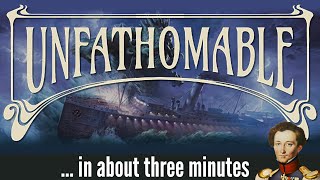
- Strong social interaction and high-energy group dynamics
- Tension builds slowly as ship degrades and challenges mount
- Faithful yet streamlined rework of Battlestar Galactica that preserves the core experience
- Develops its own life and legacy when played with the same group
- Effectiveness depends heavily on the group; new players can appear suspicious or traitorous
- Long playtime and complexity can be a barrier for casual players
- Group mood and behavior can influence perceived betrayals and hostility
- Not ideal for new players who are unfamiliar with social deduction tropes
- cosmic horror, paranoia, hidden loyalties, survival under pressure
- A passenger ship voyage into the deep, with Lovecraftian eldritch forces awakening aboard
- story-driven with social deduction, escalating challenges and track-based outcomes
- Battlestar Galactica (board game)
- Dead of Winter
- The Resistance
Mechanics (from transcript analysis)
- brig system and penalties — A brig mechanism imposes penalties on players, delaying their effectiveness and creating stakes for decisions about loyalty exposure and rescue, which in turn influences social dynamics and blame-trading.
- card-driven actions and voting — Cards serve both as actions and as voting tokens; players use hand cards to influence outcomes and to attack or defend, reinforcing a deck-building feel within a social-deduction framework. Resource and action economy become a core strategic layer.
- combat and removal of Deep Ones — Attack mechanics allow players to remove Deep Ones from the board with a die-based or card-assisted resolution, providing direct player impact on threats and creating moments of catharsis amid mounting suspense.
- cooperative ship management and resource tracking — Players collectively manage ship resources and locations; actions on ship locations provide multiple options, requiring coordination and prioritization under threat. The ship track and ritual track serve as pressure valves that push players toward critical choices.
- hidden loyalty / social deduction — Players are secretly assigned human or Deep One loyalties; human players must cooperate to stabilize the ship while Deep Ones work to undermine it. Loyalties may shift via mid-game revelations or mythos effects, driving tense accusations and strategic misdirection.
- mythos cards and challenges — Mythos events present tests and challenges that affect tracks and ship status; players contribute cards to challenges face down, creating uncertainty about who is aiding or sabotaging the effort. Successes and failures shift the balance of momentum.
Video topics + discussion points
Quotes (from this video)
- unfathomable is a rework of the incredibly popular battlestar galactica game and it's 90% the same game with a few simplifications
- this is the perfect game for a group who loves high energy interactions and a bit of friendly mudslinging
- new players can also play poorly which can be perceived as being a traitor and end with a lot of name calling
- the best thing about this game is playing it routinely with the same group it develops its own life and legacy
- for a much simpler social deduction game try the resistance
- three minute board games does not do paid content please keep us independent by supporting us on patreon