Uprising: Curse of the Last Emperor is a strategically challenging and fully cooperative board game for 1 to 4 players set in a deeply immersive post-apocalyptic dark fantasy setting. As the known world is about to end, the players take over the role of a great hero to lead their faction through these dark times.
Uprising is a 4X cooperative game played against two asymmetric enemy factions controlled by the game itself: Chaos and the Empire. Explore the wasteland, expand your dominion, exploit the resources of the liberated territories, and exterminate the Legions and Hordes around you.
Every game tells a completely different story due to a modular board, asymmetric factions and a huge variety of different events. The game ends after four chapters. If you have not collected more victory points than Chaos and the Empire, the world will truly end.
—description from the publisher
- diverse factions and rich giant-scale battles
- epic scope and compelling campaign
- campaign length and complexity can be intimidating
- cooperation options could be richer
- factions, exploration, empire-building, and epic boss encounters
- fantasy 4X with solo and cooperative play
- grand campaign-driven storytelling with extensive world-building
- 4X epics
- Other boss battler epics like Oathsworn (for scale)
Mechanics (from transcript analysis)
- desperate and exciting boss battles — large-scale antagonists and powerful encounters
- solo and cooperative 4X mechanics — faction-driven exploration, expansion, and combat with a sprawling campaign
Video topics + discussion points
Quotes (from this video)
- there's basically like a little tactical game you have these varied factions that like hugely vary the game
- the solo mode is very complicated I'm super impressed
- this is an amazing one in a small package for a small price
- the story grabbed me and would not let go
- the racing is the smoothest solo racer I've ever played by far
- it's an emotional ending—the most emotional game experience I've had this year
References (from this video)
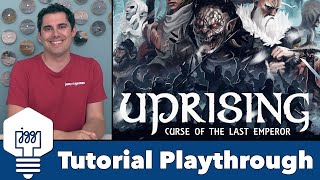
- Rich thematic integration with a strong campaign feel that blends uprisings, imperial threats, and Chaos incursions.
- Cooperative design that emphasizes teamwork, planning, and sequential chapter progression.
- Deep combat system with color-coded dice, archery vs clash phases, and modular druid bolt mechanics.
- Varied threats (hordes, legions, curses) and dynamic event/quest cards that drive replayability.
- Flexible campaign length and adjustable difficulty via chapter counts and event selection.
- High complexity; the tutorial is lengthy and can be intimidating for new players.
- Prototype components shown in the video; final components may differ in the retail version.
- Rules interactions are dense and require careful tracking of resources, hex states, and combat modifiers.
- Many checks and edge cases (terrain effects, druid bolts, hero abilities) may slow play and require careful reference sheets.
- Cooperative faction uprising against a tyrannical empire, contending with external Chaos forces and a proliferating system of quests, events, and hex-based exploration.
- A fractured empire under siege by uprisings and a rising Chaos threat, centered around an Imperial Capital, with factions fighting for autonomy and survival as hordes of undead and monstrous forces threaten the world.
- Chapter-based campaign progression with evolving events, quests, and nemesis threats that require strategic planning, resource management, and tactical combat.
Mechanics (from transcript analysis)
- chapter-based progression — The game is structured into chapters, each containing seven phases. Chapters can be configured for different lengths and difficulties (two-, three-, or four-chapter options; advanced variants exist).
- dice-based combat with archery and clash phases — Combat is resolved through color-coded dice with various results (skulls, shields, bolts). Archery and clash rounds occur in sequence, with modifiers from terrain and feats.
- havens, towers, and walls — Players can build havens on hexes, which generate resources and victory points. Towers and walls can be added to havens to modify combat dice and defenses at a cost in plunder.
- hero-driven cooperative play — Each player controls a faction with a unique hero token that leads uprisings. The hero is not a unit and moves independently, enabling exploration, questing, and actions separate from troop combat.
- markets, items, and feats — A market provides purchasable items that grant bonuses; feats give ongoing or situational advantages. Both counts toward a hand limit of 10 feats/items and interact with resource management.
- nemesis threats: hordes and legions — Two primary nemesis factions—hordes and legions—activate via initiative tokens. Hordes advance toward the capital and attack havens; legions target specific hexes and drop hazards.
- quest system and objectives — Quests are chosen at chapter start; players roll hero dice to fulfill goals. Completing quests yields victory points and potentially sub-rewards that affect future turns.
- resources and economy — Resources include salt, plunder, and food (and other types via quests and market rewards). Resources power actions, market purchases, and haven defenses; some actions grant resources as outcomes.
- skeletons, curses, and horde dynamics — Skeletons spawn and accumulate on hexes to form hordes; curses add negative effects; bolts from dice trigger horde-specific actions. Three skeletons convert to a horde with special rules.
- tile exploration and hex-based map — The map is composed of hex tiles; heroes explore tiles by flipping them and resolving effects, including curses, garrisons, and special terrain features.
Video topics + discussion points
Quotes (from this video)
- overview of this fully cooperative game
- each player is in charge of a faction that has its own individual strengths and weaknesses
- the empire used to rule the entire world with an iron fist
- we win or lose this game together
- combat is resolved through a series of quick dice rolling phases
- you move your hero to an adjacent hex even if it is unexplored
- you gain two salt from the don tower tile
References (from this video)
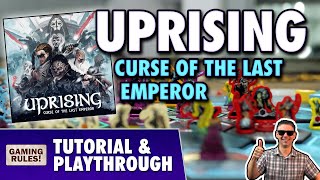
- High component quality and deluxe upgrade options
- Strong thematic integration and vivid flavor through cards and visuals
- User-friendly aids (player aids, flowcharts) to guide complex sequences
- Rich variety through expansions and multiple modes (solo, true solo coming via Kickstarter)
- Complex rule set; some ambiguities noted and discussed live
- Heavily networked setup with many tokens can be visually overwhelming on camera
- Long playtime, especially at higher difficulties or with 3+ chapters
- Uprising against an oppressive empire and the defense of refuges (havens) against endless chaos and external threats.
- A frozen, backwater region (Azul) where four factions—the Crow/Durkar, the Dwun, the Moya, and the remnants of the Empire—rise to resist domination by encroaching chaos and imperial remnants. The game is framed around a cooperative uprising rather than a pure competitive skirmish.
- Campaign-like, with per-chapter events, escalating threats, and episodic narration driven by event cards and quest/toy-box cards.
Mechanics (from transcript analysis)
- asymmetric factions — Different factions (blue/green/red/other) have distinct unit distributions, costs, and special abilities, creating varied strategic approaches per player.
- chapter-based progression — The game is divided into four chapters (three played in the video). Each chapter defines its own sequence of rounds and escalating threats.
- Combat sequence with terrain and special dice — Combat is staged in a defined sequence: terrain checks, archery, and clash rounds, with special dice types, bolts, shields, and druid/god-power interactions.
- Cooperative victory point system — All players contribute to a shared objective; the team loses or wins collectively based on aggregate points, with separate faction scores contributing to end-state outcomes.
- Deck-building and quest/item/feats management — Starting decks for quests and feats are drawn, with some quests not refreshing; items drawn from a market deck refresh continuously as you buy them.
- Druid powers and ether — Druids provide ether for rerolls and can trigger god powers; ether expenditures balance dice outcomes and enable dramatic plays.
- Events and quest-based dynamic changes — Event cards drive chapter-specific changes and can alter turn order, threat levels, level of difficulty, curse placement, and more.
- Hex-based exploration with terrain effects — The board consists of explored and unexplored hexes; exploring can reveal resources or hazards; terrain (e.g., highlands, woods, mountains) modifies outcomes.
- Hordes vs Legions vs Skeletons — The Chaos Horde and Empire Legions have setup mechanics (activation tokens, threat levels) that dynamically alter the board state; skeletons can spawn and potentially form a Horde.
- Resource management (salt, plunder, food) and havens — Players manage multiple resources to buy units, build havens, and trigger various druid/god powers; havens generate ongoing resources and can be defended.
- Sea towers and teleportation — Sea towers act as teleport hubs, making hex adjacency global and dramatically affecting pathing and reach.
Video topics + discussion points
Quotes (from this video)
- This is a victory point game.
- The designers have put a lot of effort into making this game user friendly and accessible by putting a lot of player aids on the game board.
- This is a sponsored playthrough video.
- Points mean prizes.
- Sea towers are like teleports.
- End of chapter cookie.
References (from this video)

- High production quality with deluxe components and sturdy, visually clear standees that reduce confusion.
- Exceptional table presence with unique fortress garrisons and impressive capital models when present in deluxe form.
- Ringbound rulebook and well-structured organization improve accessibility and reference during play.
- Strong thematic alignment between the mechanics and the narrative: campaigns, quests, and escalating threats feed immersion.
- Modular chapter design allows for shorter or longer games and scalable player counts without sacrificing flow.
- Expansions (Titans, Arch Nemesis) promise to broaden replayability and introduce new strategic dilemmas.
- Base game lacks a true solo mode; solo play relies on a two-faction arrangement or subject to expansion features.
- Overall component footprint is large; the table space required can be a barrier for smaller setups.
- Rules are dense with numerous interacting systems; new players may need a few sessions to internalize everything.
- Deluxe components dramatically raise price and storage requirements, which could deter casual buyers.
- No minis by default may disappoint players who prefer miniature scale combat despite standees being clearer on a busy board.
- rebellion against tyranny, coalition-building among diverse factions, and a high-stakes apocalypse scenario with magical and martial elements.
- A postcataclysmic fantasy world where an oppressive Imperial Empire rules a central hex, undead hordes push from the edges, and rebel factions fight to survive and gain victory points.
- episodic, chapter-driven campaign with four chapters, quest-driven objectives, and escalating threats that require planning, cooperation, and tactical decision-making.
- Border Control
Mechanics (from transcript analysis)
- Chapter tracks and seven-phase rounds — Each of four chapters has a seven-step cycle (setup/find resources, refresh, build/action/production, scoring, etc.), providing structured progression and floaty pacing.
- Character progression and gear — Players control two hero concepts with varying stats; feats and item cards improve dice pools and abilities across the game.
- cooperative gameplay — Players work together to survive a scripted campaign against a shared threat rather than competing for points or resources.
- Deck-driven quests and events — Two distinct decks drive play: a quest deck for objectives and a separate event deck that introduces chapter-specific dynamics and enemy spawns.
- Dice-based combat with archery and clash steps — Combat uses themed dice with skulls, shields, bolts, and other symbols; there are distinct archery checks and hand-to-hand clashes with sequential steps.
- Druids and ether mechanics — Druids provide reroll opportunities and checks; ether tokens enable rerolls under certain conditions, affecting resource management and risk.
- Enemy AI and activation order — AI units activate in a defined order, moving toward targets using activation tokens and a threat hierarchy that shapes their behavior.
- Garrisons and multi-level fortifications — Garrisons can grow through multiple levels, supporting defense and unlocking strategic options on the board.
- Havens and fortifications — Players establish havens, then upgrade with walls and towers to protect assets and control areas.
- Market and equipment economy — A market deck supplies items purchasable with salt; items move to players' hands and enhance quest performance and combat power.
- Sea towers, mercenaries and cross-board movement — Sea towers enable movement across the board; mercenaries can be hired from towers by paying salt to reinforce forces.
- Standees instead of minis — All units are represented by color-coded standees rather than minis, increasing readability and saving space on the board.
- Tile-based exploration with resources — The board uses hex tiles; exploring reveals new locations, which yield Salt, Plunder, or Food (elephants) and trigger additional effects.
- Titans and Arch Nemesis expansions — Expanded content introduces Titans as alternate focal figures, plus endboss Arch Nemeses and related cards, altering balance and adding new endgame threats.
Video topics + discussion points
Quotes (from this video)
- We are here for an unboxing video with a difference, because we're going to cover the game while unboxing it.
- The base game is cooperative, and the expansion will bring a real solo mode later.
- They don't use minis; they use standees with color coding to keep things readable on the hex map.
- The Titans expansion includes big end bosses and more advanced druids with larger cards.
- The rulebook is ringbound and very friendly for quick lookups during play.
- The production quality is very good; the deluxe components really elevate the table presence.
- This is not sponsored, but the future playthrough will be sponsored content.
References (from this video)
- Impressive components and standees
- High-scope production value
- Very large footprint and potential for complexity
- 4X-esque ambitions in a sprawling, large-scale system
- Epic fantasy realm with empires, chaos, and rebellion
- Solo and group play with a heavy emphasis on upgrading and battles
Mechanics (from transcript analysis)
- area-control/territory interaction — There are multiple factions and heroes supporting distinct strategies
- boss encounter style battles — Large-scale threats and monsters on the board
Video topics + discussion points
Quotes (from this video)
- This game will beat you down and you're going to love it.
- I don't like that whole like your friends are going to hate you.
- The board looks like a roll and write, but it's actually a dungeon crawl.
- You will understand why people love these big-box Kickstarters, or you won't.
- The art on the shelf together is one of the selling points.