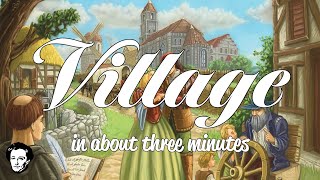
Life in the village is hard – but life here also allows the inhabitants to grow and prosper as they please. One villager might want to become a friar. Another might feel ambitious and strive for a career in public office. A third one might want to seek his luck in distant lands.
Each player will take the reins of a family and have them find fame and glory in many different ways. There is one thing you must not forget, however: Time will not stop for anyone and with time people will vanish. Those who will find themselves immortalized in the village chronicles will bring honor to their family and be one step closer to victory.
Village is a game full of tactical challenges. A smart and unique new action mechanism is responsible for keeping turns short and yet still tactically rich and full of difficult decisions. Also unique is the way this game deals with the delicate subject of death; as a natural and perpetual part of life in the village, thoughts of death will keep you focused on smart time-management.
Paraphrased from Opinionated Gamer's review:
Each player’s turn consists of taking a cube and then taking the action of the area they just took the cube from. The board has multiple different zones with specific attributes, a market, a travel zone, a crafting zone, a church, and a council house. Many of these offer multiple options, so even if you take a cube from the crafting area, you can get an ox, a horse, a cart, a plow, a scroll, or convert wheat to gold. Each zone is seeded with cubes of four colors plus black cubes which serve as curses, there are lots of turns per round. Some areas offer short-term scoring, others offer long-term scoring, and still others offer only end-game scoring. The round ends when there are no cubes at any location. The game ends when either the village chronicle or the anonymous graveyard is full.
- Worker aging creates long-term engine-like progression
- Difficult to characterize as an engine-builder by strict definitions
- Viticulture
- Machi Koro
Mechanics (from transcript analysis)
Video topics + discussion points
Quotes (from this video)
- furnace hits the my definition of an engine builder.
- it's a feeling not a mechanism.
- Terraforming Mars as being like a quintessential engine building game to me.
- Concordia... your hand in and of itself is an engine that you are building towards.
- Steampunk Rally matches your definition and it also matches mine in that it is you're making this frankenstein's monster of a racing machine.
- Golem is where you stack the cards and then you keep reactivating them.
- Darwin's Journey comes to mind.
- Dominion is deck builders but can build engines; it sits in a spectrum.
- Villages, vineyards, and aging workers can feel engine-like but not always.
- income is not an engine.
References (from this video)
- Really enjoyed when first had it
- Wife enjoyed it after replaying
- Interesting action selection game
- Traded it away then regretted it
- Wife didn't particularly like it on second play
- Felt limited variety in box
- Didn't invest in expansions
- Action selection
- Medieval village
- Thematic
- Village Port
- Village Inn
Mechanics (from transcript analysis)
- action selection — Selecting actions to take
Video topics + discussion points
Quotes (from this video)
- It wasn't just the hundred sort of best designed games this was the hundred games that I feel that I'm particularly sort of connected to
- The games that have a place in my heart really games that I've got a lot of nostalgia for
- It felt a bit like doing a roll and write game but without all of the sort of convenience
- I wish I still had castles of burgundy and notre dame
- The main thing that got in the way for me was all the iconography
- I do use board games as an escape from screens and technology
- I really like the production of cockroach poker
- I found it was a game where I could see the ending coming and then someone would just go and there we go we've got another 20 minutes now
- It feels like something other than a board game
- The decisions you make in the game are very very slight
- Right up my alley
- I do really like push your luck
- That's my favorite game
- Abyss is my second favorite game
- I love pekka pig
- I just think it's ugly
References (from this video)
- Innovative cube/action mechanic
- Thematic aging/death integration
- Deep but accessible with expansions
- Rich endgame scoring and multiple paths to victory
- Two-player balance constraints with limited cubes
- Complex rule set requiring careful tracking
- Expansion components can complicate setup and pacing
- Life cycles, aging, population management, and social development in a frontier village
- A medieval village where inhabitants age and die over time, with a river/ocean, inn, brewery, and port expansion.
- Euro-style thematic engine with aging villagers and social roles
- Village (base game)
Mechanics (from transcript analysis)
- Aging and death of villagers — As time advances, villagers age; aging leads to death and placement in chronicles or graves, affecting scoring and resources.
- Chronicle and endgame triggers — Endgame triggers when chronicle or graves fill, ending the game; scoring includes endgame points from multiple sources.
- Cube-driven action selection — You pick a cube from a fixed pool to determine which action you take, and the cube color hints at the resource or action type.
- Endgame scoring cards and points economy — Endgame cards, church, council, chronicle, and other scoring tracks create varied goals.
- Market and sailing modules (Inn/Port expansions) — Expansions add a port with ships and cargo, an inn for everyday life, and a brewery to generate beer; sailing adds travel and treasure mechanisms.
- Time as a resource and bridge mechanic — Time is spent to perform actions; crossing the bridge ages a villager and triggers death or moving to chronicles.
- Training and worker placement flavor — You train villagers to perform actions, but you can also substitute by spending time and cubes.
Video topics + discussion points
Quotes (from this video)
- This Cube mechanism is very cool
- the puzzle of death
- I love how thematic the game is
- endgame scoring is triggered by the chronicle
- The port expansion adds more depth
- It's a fast game with a lot of depth
References (from this video)

- solid engine
- balanced tension
- setup and downtime for some players
- building a self-sustaining hamlet
- medieval village life and development
- historical/renaissance village vibe
Mechanics (from transcript analysis)
- worker placement — send workers to gather resources and take actions
Video topics + discussion points
Quotes (from this video)
- it's only a game
- it's the real juicy bit
- the only way for this channel to evolve is to test new things
- top 10 two-player games collaboration on Feb 6th
References (from this video)

- Thematic cohesion with time-driven scoring
- Deep tactical choices in action selection
- Heavy planning required; can feel deterministic
- Rule explanations are non-trivial
- Rural development, family lineage, and time management
- Medieval village life with multigenerational characters
- Thematic euro with resource-cube timing and elder deaths as scoring pivots
Mechanics (from transcript analysis)
- cube_management — Manage cubes to trigger actions, craft, market, or special effects
- multi-layer_actions — Cube-draft style actions with multiple outcomes per action space
- time_track — Actions take varying amounts of time; aging/death triggers scoring shifts
Video topics + discussion points
Quotes (from this video)
- The joy of Power Grid comes from the economic planning and watching what the other players are doing.
- The better you're doing, the later in turn order you go.
- One of the key gameplay mechanisms for me is I always have to be anticipating the future actions and making my board ready to take full advantage of it.
- The game does an excellent job of blending dice drafting, tile placement, and engine building into a satisfying strategic puzzle.
- This game is a feast for Odin.
- The engine building and kind of a deck builder. The theme is pretty shaky for this one.
- What sets this game apart is the time aspect.
- The joy of this one is seeing what cards you have to work with and coming up with a long-term strategy, but being agile enough that if you get cards that may be a better engine or scoring, you can pivot midame, maybe even pivot several times during the game to figure out what's best for you.
- The dice drafting is not just about luck. It is a layer decision-making puzzle.
References (from this video)

- strong thematic integration (family aging, legacy)
- rich, immersive feel
- heavy weight for some players
- complex logistics for new players
- legacy, family dynamics, mortality
- medieval village life and family aging
- story-driven, family-centric progression
- Rise of Queensdale
- Andor
- Terraforming Mars
Mechanics (from transcript analysis)
- dice-based/village action — dice-driven actions representing villagers and aging them through life
- family management — tracking family members and their ages toward a final score
Video topics + discussion points
Quotes (from this video)
- the original game was all about leading a good life and uh zeiss were like you know tools of the devil
- you have lots of family members that age and then they eventually die and you stick them in the cemetery
- gambling is the devil
References (from this video)
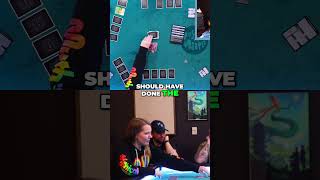
- Engaging interaction and table feel during decision points.
- Dynamic information flow from card visibility and choices.
- Fast-paced moments with tangible tension (e.g., discarding to zero).
- Rule clarity can be challenging for new players.
- Luck elements may overshadow strategic planning in some sessions.
- Community life, social interaction, and strategic cardplay within a village ecosystem.
- A village setting where residents manage resources and actions via card interactions.
- Procedural and event-driven, with light storytelling around village decisions.
Mechanics (from transcript analysis)
- card-drafting — Players select from a shared pool of cards to shape their strategies and possibilities.
- hand-management — Players curate and optimize a hand of cards to maximize future actions and scoring opportunities.
- set-collection — Points are driven by collecting specific card combinations or symbols that align with scoring rules.
Video topics + discussion points
Quotes (from this video)
- View one card from each village.
- You could discard any card. Make it a zero.
- Don't look at that one.
- Two zebras. One turn.
- That's the toughest one.
- I can't hold.
References (from this video)
- tight euro game with numerous decision points and multiple paths to victory
- immersive theme with personalized meeple life stories
- well-regarded expansions (Village Inn) that enhance the game
- time system provides momentum and meaningful consequences
- fiddly rules due to many area-specific rules
- not ideal for casual players or solo mode lacking
- new version seen as sterner/sterile and less charming than older version
- Family, time, community building, ritual life
- A small village across multiple generations; community life and growth.
- immersive with personalized meeples and character life stories
- Villagers
- Architects of the West Kingdom
Mechanics (from transcript analysis)
- action_selection — take a cube from the board and perform the corresponding action
- building_tiles_and_training — craft buildings; train family members to acquire tiles
- death_and_burial — dead meeples are recorded in a book and sent to graveyard when spots fill
- market_and_trading — market phase to sell resources for points
- resource_management — manage grain and knowledge cubes on your farm
- time_track — a disc advances time; passing a bridge can trigger family deaths
- travel_and_visits — travel to new areas; visiting areas yields points and bonuses
- worker_placement — family members can be placed on buildings for bonuses
Video topics + discussion points
Quotes (from this video)
- Village is such a clever game and there are many reasons it stayed in my collection for years
- the best thing about this game is the time system, it propels the game along but also leads to the inevitable deaths of the family
- it's a very tight euro game with a lot of great decision points and multiple paths to victory
- the big box is coming out soon with both expansions in it
- two excellent expansions that actually improve the game especially Village Inn
- for a small box game about a village try villagers
- Architects of the West Kingdom
References (from this video)

- Tells a village-centered, thematic story
- Mechanically satisfying with a unique aging mechanic
- Heavier than some life-adjacent games; may require more experience
- legacy of a community, collective story
- a village whose inhabitants age and die across generations
- story of villagers' lives told through their actions
- Life
- Pursuit of Happiness
Mechanics (from transcript analysis)
- aging / death mechanic — Workers age, creating a narrative around the village's lifecycle.
- resource management / scoring — Managing resources to maximize victory points while advancing the village story.
- worker placement — Assigning villagers to actions to gather resources and score points.
Video topics + discussion points
Quotes (from this video)
- it's literally just about the journey that you're on.
- you are simply moving along a track.
- you craft a story.
- This is a story of your villagers of how they're going to go around collecting the things you need as you try to find the various ways to find victory points.
- you are telling your story, but you're doing so with dice rolls and cards
- it's incredibly accessible
- you are going to lend itself to full fantasy over here
- you are trying to set up all these marriages to try to get these various people into your family