Wavelength is a social guessing game in which two teams compete to read each other's minds. Teams take turns rotating a dial to where they think a hidden bullseye is located on a spectrum. One of the players on your team — the Psychic — knows exactly where the bullseye is, and draws a card with a pair of binaries on it (such as: Job - Career, Rough - Smooth, Fantasy - Sci-Fi, Sad Song - Happy Song, etc). The Psychic must then provide a clue that is *conceptually* where the bullseye is located between those two binaries.
For example, if the card this round is HOT-COLD and the bullseye is slightly to the "cold" side of the centre, the Psychic needs to give a clue somewhere in that region. Perhaps "salad"?
After the Psychic gives their clue, their team discusses where they think the bullseye is located and turns the dial to that location on that spectrum. The closer to the center of the bullseye the team guess, the more points they score!
- clear information asymmetry that is easy to grasp
- strong collaborative feel with teams translating clues
- clue quality depends heavily on communication clarity
- translating location of a target into clues
- party/party game
- team-based information puzzle
- Code Names
- Wavelength
- Monikers
Mechanics (from transcript analysis)
- objective clue translation — players provide location-based hints to target a bullseye on a continuum
Video topics + discussion points
Quotes (from this video)
- asymmetry is The Game's capacity to encourage and force different decisions from players by creating unique advantages or disadvantages
- turn order is the plague the kill of so many otherwise symmetrical games
- it's a pure unfiltered symmetrical game and it's a perfect example for our base level
- a single difference will create a Cascade of changes that dramatically changes the play style and strategy between each player
- asymmetry lets us express and connect to a very human feeling of having personal strengths and weaknesses
References (from this video)

- Excellent with large groups
- Encourages discussion and banter
- Requires clear communication to align on interpretations
- Reading teammates' minds through a spectrum
- Party room with a spectrum-based clue mechanism
- Clue-giving on a spectrum to reach a guessing target
Mechanics (from transcript analysis)
- Social guessing — One clue giver places a position on a spectrum for others to guess.
- team play — Competing to align with the team’s guess on the spectrum.
Video topics + discussion points
Quotes (from this video)
- top party games to play once we kick kova to the curb
- these games all play really well with a high player count
- these games should be easily accompanied with a beveragino
- after this pandemic is over you know i'll be ready to celebrate with a drink in hand
References (from this video)
- great group game; fosters discussion
- replayable with many player counts
- leader-dial setup can be stressful for some players
- communication and perception
- party/social deduction
- dynamic, discussion-driven
- Edo
Mechanics (from transcript analysis)
- clue-giving / guessing — teams try to align on a spectral clue to place a dial
- real-time discussion — debate and reach consensus on where the dial should be set
Video topics + discussion points
Quotes (from this video)
- it's yatsi with monsters fighting
- open it up, play right away
- this is one game that I will sort of put any wager on
- Just One is a guaranteed winner
- Star Wars and Memoir 44 together
References (from this video)
- Accessible and social
- Encourages conversation and banter
- Fast to teach and play
- Great for groups
- May overthink prompts for some groups
- Not ideal for very large or incompatible groups
- Communication and alignment of ideas via a spectrum clue
- Social game night / party setting
- Abstract, humorous
Mechanics (from transcript analysis)
- Clue-based guessing on a spectrum — A player gives a clue describing a target position on a spectrum; teammates guess where the target sits.
- cooperative scoring — Players work together to maximize the team’s score across rounds.
- Dial/slider proximity — A dial/knob is used to place the target on the spectrum, scoring by proximity.
Video topics + discussion points
Quotes (from this video)
- Are Jeff and I on the same wavelength?
- We're going to play to 10 points.
- That's three points.
- Did you win? I got 10 points.
- Rocket science requires luck, requires skill.
References (from this video)

- Highly engaging for video calls due to discussion and interaction
- Strong social deduction and miscommunication humor
- Requires a good display of the spectrum for all players
- Can be pricey depending on the physical components
- Perception, communication, and shared understanding
- Conversion and perception game centered on locating a concept on a spectrum
- Clue-giving and guess-the-location on a spectrum
Mechanics (from transcript analysis)
- Iterative scoring and discussion — Clue quality and alignment with the target influence scoring; laughter and debate often follow.
- Range clues and needle placement — One player suggests a position on a spectrum; others place a marker to indicate their guess.
Video topics + discussion points
Quotes (from this video)
- The aim of the game is to think exactly how everyone else thinks you get a question like what's the best hot drink
- Simple but there is this one trickery the pink cow
- the game is best played from four to eight players
- Codenames is a party game that blew up in 2015.
- the basic idea is that you're all spies and you give each other cryptic messages to find the right answers
- the best way to play this game on a video call is through this app and we're going to link it down in the description
- we feel that this game is best for 4 to 12 people
- this is the localized version but it's just one so this is the localized version
- it's a word guessing game it's a co-op game where all of you give clues to a single player that tries to guess his word
- the trick is that before we show these clues to the guesser we compare them and all clues that are the same or similar gets erased
- it's a really good party game for all ages
- one person to have the physical version and everybody else can just have a paper and pen
- i'm a bit biased here but i would say this is my favorite game to play on video call
- the best part is that you basically can play from three to unlimited number of players
- they are all accessible meaning that they are for free or really really cheap
References (from this video)
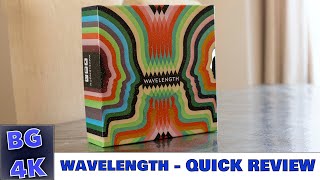
- Very easy to set up and start playing; minimal setup friction
- Quality components; durable plastics and card stock with a linen finish
- Keeps all players involved; high social engagement throughout the game
- Opposites provide a fertile ground for humor and discussion, sparking spontaneous banter
- Big reveal moments create a memorable dramatic payoff
- Two-player mode is weak and largely not enjoyable
- The contraption/box can be awkward to manage with many players, and may encourage peeking
- Some players may experience brain-fart moments on tricky polar-opposite prompts
- Strategy can be dominated by the loudest players (alpha tendencies) if the group isn’t balanced
- Communication and guessing through binary opposites; social discussion and humor
- Casual party game setting focusing on two teams solving clues in a social vibe
- Expository/onsite review with live examples and reactions
- Ol'Ma Showdown
- Carcassonne
Mechanics (from transcript analysis)
- Clue-giving based on binary opposites — One player (the psychic) provides a clue aligning with a position on a revealed polar-opposite scale; the other team deduces the correct location.
- Live scoring with left/right scoring opportunities — Teams earn points based on proximity of their guess to the revealed position; bonus opportunities arise during play.
- Physical contraption as a game device — A dial/disc mechanism and a pie-chart readout control how clues are revealed and how positions are displayed to players.
- Team-based play with alternating roles — Two teams compete; one member acts as psychic while teammates guess, then roles rotate as rounds progress.
Video topics + discussion points
Quotes (from this video)
- it's really easy to set up
- the oppositions of the cards give rise to an infinite wealth of hilarity
- it's almost like sort of feasts or endgame score ... big reveals
- we love big reveals in games
- we are gonna say yes this is an innovative and highly engaging party game
- this is a five and a half party game
- easily the best party game we've played in a long time
References (from this video)
- promotes group participation
- engaging and funny with the right players
- depends heavily on players' sense of humor
- shared sense-making through a spectrum
- societal spectrum from good to bad smells and vibes
- vibe-based party deduction
- Dixit
Mechanics (from transcript analysis)
- team guessing on a spectrum — players place a dial on a hidden target clue and teammates guess the target
Video topics + discussion points
Quotes (from this video)
- What's the best entry-level board game? Wrong question. There is no best entry-level board game. There's only the chart.
- This is the chart chart.
- Don't optimize too hard. We aren't playing scythe right now.
- This is the gateway to an entire genre.
- For entry-level gamers, you want to have that fun to admin ratio heavily tilted towards fun.
- If someone has real enthusiasm for a game, just play it.
- Trust on your group, trust on your instinct.
- It's the gateway game that opened the floodgates to the modern industry.
References (from this video)

- Very accessible for mixed audiences
- Encourages group discussion and banter
- Clue quality heavily influences outcomes
- Communication, alignment, and shared understanding across a spectrum of positions.
- A social guessing game where teams try to align clues with a concealed spectrum.
- Light, party-like, with emphasis on proximity of guesses to a target.
Mechanics (from transcript analysis)
- Social deduction / signaling — Players infer the target position through strategic hints and interpretation.
- team-based clue giving — Teams give clues to help teammates locate a position on a spectrum.
Video topics + discussion points
Quotes (from this video)
- this is the board game league six
- they're going to earn different numbers of victory points
- our finale Cosmic Encounter
References (from this video)

- highly accessible
- fast to teach and play
- great for large groups
- some hints can feel abstract
- variability in clue quality
- communication and reasoning
- team-based guessing game across a spectrum
- light, party-oriented
- Codenames
- Just One
Mechanics (from transcript analysis)
- Cooperative clueing — Teams give hints to place a spectrum marker
- estimation / range guessing — Guess where an item sits on a spectrum based on hints
- Team competition — Two teams work against each other to place correctly
Video topics + discussion points
Quotes (from this video)
- Sleeping Gods is a story game where there are tons of choices you just get stranded with your ship and a logbook.
- Arc Nova is on the heavy side, super heavy side where you build a zoo.
- You always can draw as many cards you want from your deck until you either burn or you stop.
- it's the party hit for this year for sure.
- Wavelength is the party hit for this year as well.
- The Crew Deep Sea Edition is the most played game this year because it's much easier to play.
References (from this video)

- Unique and elegant mechanic
- Encourages discussion and interpretation
- Strong thematic and social play
- Requires careful listening and trust among players
- Some players may prefer more direct wordplay
- psychology of distance and perception, opinion-based clues
- Mind-reading and categorization game built around a wavelength scale
- conversational, debate-driven party game with a big reveal
- The Mind
- Monikers
Mechanics (from transcript analysis)
- Bonus turn for perfect hit — If you place the clue exactly, you earn an extra turn, adding drama and comeback potential.
- Clue giving on a spectrum — A clue must place a target category on a spectrum; teams discuss where the item belongs.
- Hidden wavelength reveal — A wavelength value is revealed privately to a clue giver and informs the clue.
- Opposing team scoring — The other team can earn points by correctly guessing relative positions on the spectrum.
Video topics + discussion points
Quotes (from this video)
- this is best described as a game show for your family or your friends
- it's not the sort of game you would play all the time like Conan's
- it brings the party to life
- it just completely fit a gap in my collection
- a brilliant opportunity for miscommunication
- such a cool idea that I've never really played a game quite like it
- it's got that vibe of Happy Salmon and things like that
- you start to dissect this topic and discuss how it relates to the person giving the clue
References (from this video)

- Promotes robust discussion and social interaction among players
- Easy to learn with quick rounds and accessible symbolism
- Highly adaptable to different group sizes and lockdown contexts
- Replayable with broad clue vocabulary and pop-culture references
- Clear and aesthetically appealing components and setup
- Clue design can backfire or reveal information too quickly
- Pace can slow when players overanalyze or argue about interpretations
- Dependent on moderator skills to manage discussion and keep the game flowing
- Some players may rely on pop culture references that exclude new players
- Communication, inference, and collaborative guessing on a shared axial scale
- Modern social/game-night setting, players split into two teams and work to locate a target concept on a spectrum
- Lighthearted, conversational, improv-influenced banter with mild competition
Mechanics (from transcript analysis)
- Iterative discussion and interpretation — Clues are designed to provoke discussion rather than precise answers, encouraging participants to justify reasoning and challenge each other’s interpretations in a social context.
- Range-based clueing — A clue-giver secretly notes their target on a spectrum and provides a clue that nudges teammates toward a point on that spectrum. Teammates adjust a slider to match the presumed target and then reveal how close they were relative to the opposing team.
- Two-team competitive guessing — Two teams each attempt to place their slider near the target. After both teams guess, the actual target is revealed and points are awarded based on proximity, with the central wedge often carrying different value than outer wedges.
- Wheel-driven randomization — A wheel spin determines the exact points distribution or nudges the discussion in a given direction, adding an element of chance to balance skill and luck.
Video topics + discussion points
Quotes (from this video)
- I love this game.
- peas are an ugly messy food.
- it's the fondue reference point you just gotta plant that flag back from fondue.
- Let's play Wavelength.
- I love peas.
- This is going to be tricky.
References (from this video)

- Elegant, clever mechanism that centers on communication
- Beautiful components and thoughtful design
- Replayable with varied clue types
- Some players dislike abstract guessing
- Rules can be fiddly for new players
- positioning beliefs and ideas on a scale
- communication and perception on a spectrum
- clue-based deduction with blind guessing
- Codenames
- Monikers
Mechanics (from transcript analysis)
- collective reasoning — Team attempts to converge on the best interpretation of the clue
- range-based clues — Clue-giver places a dial anywhere on a spectrum and teammates guess the position
Video topics + discussion points
Quotes (from this video)
- interpretation is at the heart of dixit
- it's a beautifully simple game
- the closest you can get to role playing as an actual spy
- telestrations is the beautiful child of pictionary and the telephone game
- we all like each other and the experience is as comforting or as wholesome or as mean as the group wants it to be
References (from this video)

- Great for parties; reveals friends' opinions
- easy to teach
- Requires larger groups
- communication and guessing positions on spectrum
- Party game focusing on opinions
- social and humorous
- Clank? (party staples
- Codenames
Mechanics (from transcript analysis)
- spectral positioning — players guess where statements fall on a spectrum
- team play — teams attempt to align with the opinions of others
Video topics + discussion points
Quotes (from this video)
- This is a double feature game. So, it's actually two games.
- It's totally affordable and you can print-at-home.
- Reverse Jenga with cats.
- Crocodile is the greatest dexterity game.
References (from this video)

- Great spectrum concept
- Easy to understand
- Portable (box is the game)
- Works for any team
- Group interpretation makes it interesting
- spectrum
- temperature
- perspective
Mechanics (from transcript analysis)
Video topics + discussion points
Quotes (from this video)
- I have found that hosting board game nights is an excellent way to get non-board gamers into the hobby, because after they've played some of these games with you, they immediately say 'I need to go get this game, I love this game, can't believe I've never heard of it'
- Our hobby is terrible at marketing itself to people outside of the hobby. Yeah once you get in, yeah you're golden.
- There are so many board gamers out there than I think any of us even know, and even more people who are just adjacent to the hobby.
- It's definitely not going to be for everyone, especially the charades part
- The game takes a backseat to the discussion between rounds
- You're actually better at this game if you can't draw well. The worse you draw, the more fun it is.
- It's just been something that's been on my mind a lot because I've been hosting some game nights at my workplace
- I'm the fun police, but in the opposite way - I want to bring the fun
References (from this video)
- Highly interactive with the audience through chat and live guessing
- Low barrier to entry; accessible party-game format
- Energetic host banter and playful dynamic between John and Serena
- Wide range of categories encourages varied discussions and humor
- Reliance on chat for input can be unstable or buggy (as acknowledged during show)
- Some categories touch on sensitive or controversial topics (e.g., political figures, royals) which can polarize viewers
- Certain in-show mechanics (e.g., score tracking) can lag or require manual intervention
- communication and inference; interpreting clues to position a target along a spectrum
- Live online game show with rotating category wheel and a guessing target on a spectrum
- humorous and social, built around audience participation and banter between two hosts
Mechanics (from transcript analysis)
- Audience guessing via chat — Viewers submit guesses in the format A-1 to A-10; the system tracks and aggregates guesses for scoring.
- Category rotation wheel — A wheel is spun to select the current category and guide the host's prompts for the round.
- Live moderation/tooling — A helper tool (Neil) captures chat guesses and computes results; the host acknowledges occasional technical hiccups.
- Public scoring and reveal — At reveal, the actual target position is shown and points are allocated based on proximity to the correct value.
- Spectrum-based clueing — Clues place on a 1–10 scale along a spectrum defined by two endpoints; players guess where the target sits on that spectrum.
Video topics + discussion points
Quotes (from this video)
- we're playing wavelength and wavelength works a bit like this
- the first category is stressful experience - relaxing experience
- the clue is a massage
- start with a and then you pick a number from 1 to 10
- you would guess in the comments by saying the round letter
- the answer is a six
- the winning answer is ten
- it's like the World Cup for music
References (from this video)

- Accessible and quick to learn, making it suitable for casual game nights
- Encourages social interaction and helps players learn about teammates
- Facilitates lively, funny banter and group dynamics
- Humor and comfort level depend on participants; some prompts can veer into awkward or risqué territory
- Performance can hinge on group chemistry; in groups with less social rapport, it may feel weaker
- social inference via spectrum-based clueing; alignment of mental models within a group
- Casual gaming night; living room around a table with friends, banter, and on-camera play
- friendly banter, improvisational clue-giving, playful competition, and peer-to-peer banter
- Goonies
Mechanics (from transcript analysis)
- Clue on a spectrum — One teammate provides a clue based on a spectrum on the card (e.g., left to right, or dark to light). Their teammate must judge where the target lies on that spectrum without being told explicitly.
- Relative positioning scoring — Points are awarded based on how close the guess is to the target location on the spectrum relative to the card’s endpoints.
- Two-team guess-off — The opposing team can attempt to guess as well, trying to place a guess on the same spectrum and see if they can score points too.
Video topics + discussion points
Quotes (from this video)
- Pretty simple, very fun, and a great way to get to know a lot about your friends.
- The psychic on the team knows where the target is.
- Guessing whether they think the correct answer is more to the left or the right of what my teammate thinks is correct.
- It's the perfect combination of comfort and support.
References (from this video)

- Engaging for large groups
- Encourages discussion and alignment
- estimation and proximity
- two teams guessing on a range
Mechanics (from transcript analysis)
Video topics + discussion points
Quotes (from this video)
- Be good humans. Let other people live their life in their way.
- Live and Let Live.
- Two-player games are vicious.
- One board gamer at a time.
- It's such a cute and clever game.
References (from this video)

- Strong social interaction
- Engaging for mixed groups
- Replayable due to different prompts
- Requires good communication and a facilitator
- May hinge on player engagement to shine
- Spectrum-based guessing and alignment
- Online/remote social game session; party context
- Light, playful debate and social interaction
- Code Names
- Spyfall
Mechanics (from transcript analysis)
- Collaborative deduction — Teams work to interpret clues to locate a target on the spectrum.
- Spectrum alignment — Players give clues to place a topic somewhere along a spectrum; teams try to align guesses with the clue-giver.
Video topics + discussion points
Quotes (from this video)
- it's easy the makers of the game have uploaded their own online version for people to use
- this is a collection starter and here are 10 board games you can play over zoom that aren't awful
- it's absolutely wonderful and you have no reason we should ever have another boring zoom call during lockdown
- st stay safe everyone let's get through this together
References (from this video)
- Engaging and accessible party-game format
- Interactive with audience (live chat, donations, moderators)
- Flexible category design that adapts to current topics
- Occasional confusion around scoring, especially with new players
- Audio/tech reliability variability in a live stream
- Moderation overhead to manage chat and timing
- Semantic guessing and perception on a 1–10 scale
- Online livestream during quarantine; home setup adapted for a social game
- lighthearted, improvisational, audience-driven
- Codenames
Mechanics (from transcript analysis)
- Clue-based scale guessing — A host provides clues tied to a secret wavelength value on a 1–10 scale; players guess where the clue lands on that scale.
- Round-based, interactive scoring — Rounds proceed with categories; players type in guesses (1–10) and points are awarded based on closeness to the secret value; live reveal determines the winner for that round.
Video topics + discussion points
Quotes (from this video)
- it's a very very simple party game
- you've got a minute to state your guess
- not cute animal on the left-hand side - cute animal on the right-hand side
- round A - and the number from one to ten
References (from this video)
Mechanics (from transcript analysis)
Video topics + discussion points
Quotes (from this video)
- Times Up, one of the greatest party games ever.
- Pictures is a game I don't understand.
- Just One's such a great game. It works in every situation.
- Detective Club where everyone's lying.
References (from this video)

- engaging social dynamic
- adaptable to many audience sizes
- great for a party/social setting
- depends on clear clue interpretation
- some players may resist non-competitive structure
- cooperative party game with guessing across nebulous spectrum
- spectral color spectrum as a guessing axis
- friendly, collaborative
- Codenames
- Just One
Mechanics (from transcript analysis)
- audience/poll input — players or audience influence via opinions on scale positioning
- Cooperative guessing — teams guess where a target lies on a spectrum using clues
Video topics + discussion points
Quotes (from this video)
- Code Names it's only the best game ever
- the clues you have to give are board game names
- we are playing Code Names with a twist
- Stock market game of insider trading and it's a great Gateway game
- Wavelength is a cooperative party game
- it's a NeverEnding live stream
References (from this video)

- Strong fit for groups with high familiarity
- Flexible player count and drop-in/drop-out play
- Encourages in-jokes and social bonding
- Relies on shared context and inside jokes
- May be less engaging for completely new groups
- Communication and inference about location on a spectrum
- Social gathering / party
- Team-based clue interpretation with a bullseye mechanic
- Connections
Mechanics (from transcript analysis)
- Clue interpretation on a spectrum — A psychic points to a bullseye with a clue that teammates interpret to place a marker toward the correct location
Video topics + discussion points
Quotes (from this video)
- Wavelength has a lot of good things going for it
- it's perfect for close friends at a holiday party
- Poetry for neanderthals is a team based game that's all about using one syllable words
- Codenames is an ultra popular board game about giving secret clues to your teammates
- Blood in the Clock Tower is an evolution of the classic Mafia and Werewolf
- Camel Up is the greatest crowd pleaser of them all
- Skull comes in a small box and it's a super quick teach and keeps the attention on one another
- Zuus is a negotiation game where up to seven people are trying to make their animal faction the star attraction in a zoo
References (from this video)

- great with the right group of friends
- high party appeal and accessibility
- depends heavily on group dynamics
- clue quality can swing results
- color/distance spectrum with clues
- abstract spectrum guessing party game
- social, party-driven
- Horrified
- Rococo
Mechanics (from transcript analysis)
- color/scale spectrum clueing — give clues to place a marker on a spectrum arc to guide teammates
- team-based deduction — teams interpret clues to align on the correct range
Video topics + discussion points
Quotes (from this video)
- it's kind of fun right
- it's kind of structured
- we're gonna be playing them in order of release so we're gonna be starting with video this first release and all the way up until on Mars
- we'll probably do it again in the future with a whole new list of games
References (from this video)

- easy to teach and play quickly
- great for families and mixed groups
- high replayability with flexible party setups
- depends on group dynamics for the best experience
- some players may dislike guessing games with gaps in knowledge
- Guessing alignment with a topic along a spectrum
- Party/social gathering
- Light, fast, social deduction-lite feel
- Wavelength (self-reference)
Mechanics (from transcript analysis)
- order-based reveal — Answers are revealed and players try to infer the correct order relative to the target value
- secret number and ranking prompts — Players receive a secret number and then respond to prompts that must be ranked or ordered with others' answers
- Team-based guessing — Players cooperate to align on the best placement of answers to match a target concept
Video topics + discussion points
Quotes (from this video)
- This game has the best character customization in board games period.
- I'm pretty sure it's going to be in Board Game Geek's Top 100 really soon.
- This is one of the surprises of the year so far.
- I think it's a perfect Pusher luck Gateway game.
References (from this video)

- great social bonding game
- app version adds accessibility and distance play
- requires a group comfortable with discussion and interpretation
- communication and clueing
- color spectrum guessing
- light social deduction
- board game Wavelength
Mechanics (from transcript analysis)
- word/phrase clueing — players give hints to guide teammates to guess a specific point on a spectrum
Video topics + discussion points
Quotes (from this video)
- it's very important that kids and grown-ups enjoy it
- you either lose together or win together
- menara would be a great unique option for this
- one guy is a quick polyomino speed game ... it's a bit thinky
- the avengers robin hood is a storytelling adventure game
- it's a story game where you are pirates and try to fulfill your destiny
- you can play magic maze... it's a real-time experience
- don't blame the kid if you lose
References (from this video)
- Beautiful art
- Really easy to learn
- Score-optional
- Can play for as long as you want
- Great for showing off to guests
- Might not merit top overall game status
- Communication and party game
Mechanics (from transcript analysis)
- communication — Players communicate concepts
- Party Game — Social party game mechanics
Video topics + discussion points
Quotes (from this video)
- I play Qwirkle every morning - it's a perfect way to start my day
- The art is just beautiful and I'm really proud to own and show off to people when they come over
- The game is whatever you create it to be
- This game blew my mind
- It feels like you can do anything and because of that I was just blown away
- You can play a hundred different ways and you could probably still win
- This is not gonna get old - we may not play it a ton but when we do play it it's always a blast
References (from this video)

- compact box fits outdoors
- two-team dynamic feels close to Code Names
- thematic depictions may confuse new players
- requires clear communication
- word association and clue-giving
- team-based party guessing
- competitive yet lighthearted
Mechanics (from transcript analysis)
- cooperative clueing with scoring gates — two teams try to place a marker to hit a precise location based on clues; fast feedback loop
Video topics + discussion points
Quotes (from this video)
- Hive is a two-player abstract game where players are trying to surround the other players queen bee.
- these components are cardboard they're basically coasters you can put your drink on it
- Jungle Speed does not fit in your pocket
- it's cobb coop cube coop actually another name for it is viking chess
- you can leave your box at home but it absolutely fits your pocket
References (from this video)

- great for casual settings and mixed gaming audiences
- easy entry with a flexible learning curve
- replayable through many topic prompts
- humor can skew perception of clues
- can stall if players are hesitant to speak up
- communication and shared perspective
- Party style inference game, no specific setting
- social
Mechanics (from transcript analysis)
- Coalition building — teams compete to align the group around a correct interpretation
- deception/communication — teams guess where a clue sits on a spectrum to match a target concept
Video topics + discussion points
Quotes (from this video)
- This is Azul.
- this game feels like the kind of game that starts really chill and then slowly ramps up.
- I love games that use a standard deck of cards.
References (from this video)

- Accessible and fast-paced with clear rules
- Strong social interaction and banter
- Flexible for mixed groups and lockdown-friendly play
- Clues can be awkward or hard to map for some players
- Less engaging with very small or very large groups
- Communication, interpretation, and alignment under uncertainty.
- Two teams attempt to map clues onto a shared spectrum to identify the target position on a dial.
- Abstract, energetic party-game flavor with humorous banter.
Mechanics (from transcript analysis)
- Clue giving on a spectrum — One player provides a clue that guides teammates toward a target on a 0-100 spectrum.
- Range card and window reveal — The clue maps to a wedge; outcomes are revealed and scored based on both teams’ guesses.
- Slider/dial placement — Teams use a physical slider to place their guess on the spectrum after a clue is given.
- Two-team competition — Teams race to reach a set point total, adding tension and banter during play.
Video topics + discussion points
Quotes (from this video)
- it's the game of giving clues and trying to get on the same mental wavelength as your teammate
- we are divided into two teams team a consisting of adam tom laurie and john and team b led by blair brooke debra and sully
- the game of giving clues and trying to get on the same mental wavelength as your teammate
- oh no it's a bug's life guys
- this is a game about mouthfeel and texture
- we are on the board
- thank you so much for tuning in get on board everyone
References (from this video)

- Easy to explain
- Great for getting to know people
- Works well with large groups
- Social interaction and guessing
- Party game
- Team-based spectrum guessing
Mechanics (from transcript analysis)
- Clue giving — Players give hints to help team guess a point on a spectrum
- team play — Competing teams try to score points by guessing accurately
Video topics + discussion points
Quotes (from this video)
- vacations are hard because you can't really bring with you your entire library of board games
- summer and games are all about being carefree and having fun
References (from this video)

- Engaging party game that encourages conversation
- Flexible for large groups and varied dynamics
- Clear path from app version to physical/tabletop experience
- Clue quality can be subjective and may skew results
- Requires at least two players, limiting solo play options
- Communication, clue-giving, and deduction through a shared scale.
- Two players locate a position on a spectrum between two opposing concepts.
- Collaborative discussion with subjective interpretation of clues.
- Magic Maze
- Flick Em Up
- Dead of Winter
- Dwellings of Eldervale
- Calico
- Fallout Shelter
Mechanics (from transcript analysis)
- clue-based guessing — One player gives a clue to place the partner on a spectrum between two ends.
- Spectral position guessing — Players try to align a needle to the correct position on a scale based on the clue.
Video topics + discussion points
Quotes (from this video)
- we're gonna play a game called wavelength
- it's app version we both have the app
- a scale at one end is weak and on the other like strong
- it's a real-time cooperative game
- team-building activity
- this is our big main plan
- cooperative game and the basic idea is that you are all on mars
- super action-packed and i really can recommend it as a team building activity
- calico nice game
- i was underwhelmed by calico
- please subscribe and like this video
References (from this video)

- Accessible and social
- Encourages group brainstorming and quick rounds
- Engages both clue-giver and guessers
- Relies heavily on player dynamics and banter
- Can be confusing for newcomers
- perception and communication
- Two teams attempt to locate a target on a spectrum using clues about topics and vibes
- banter-driven host-and-player banter; observational commentary
- Feed the Kraken
Mechanics (from transcript analysis)
- Clue giving — One team member gives a clue intended to guide the team toward the target position on a spectrum
- point-based scoring — Scores are assigned by proximity to the target position on a scaled pizza-slice board
- Spectrum placement — The game uses a spectrum with discrete target zones (points) that players try to land near
- Team guessing and discussion — Teams discuss and deduce where the target lies based on clues and vibes
Video topics + discussion points
Quotes (from this video)
- We're trying to catch a Vibe as we play wavelength.
- The Vibes of the clue isn't it—that's Vibes.
- I'm going to reveal where the pizza slice of points is.
- I would lose to you in a race.
References (from this video)

- highly accessible for newcomers
- great for family gatherings
- promotes conversation and laughs
- depends on clear prompt interpretation
- less depth for experienced gamers
- association and communication
- Party/social game night with a guessing dial
- casual, inclusive
- Codenames
- Dixit
Mechanics (from transcript analysis)
- range-based scoring — points awarded when guesses fall within a defined window.
- social / cooperative guessing — players give prompts; others place a dial to estimate the target range.
Video topics + discussion points
Quotes (from this video)
- it's just a word game it's very very fun
- mom loves auctions
- it's a perfect family gathering game
- this is Azul, a tile board builder
- moms love auctions
References (from this video)

- Strong social interaction; great for groups and large tables.
- Rich contextual clues lead to memorable moments.
- Relies heavily on verbal communication; can be challenging for quieter players.
- communication and interpretation through contextual clues.
- Team-based clue-giving with a big wheel that sets a spectrum from hot to cold.
- social, collaborative, and contextual
Mechanics (from transcript analysis)
- Comparison clue cards — Players use descriptors to refine guesses relative to a given comparison card.
- Team guessing with contextual clues — One team member gives a clue to steer teammates toward a number on a spectrum.
- Wheel-based difficulty / range — A large wheel defines the numeric range (1-14) and helps guide clue precision.
Video topics + discussion points
Quotes (from this video)
- "we're easy to love and these games are as easy to love as we are"
- "there's no real downtime and you always feel like you're doing something"
- "it's just one of those games that seems to sing really, really well with a lot of different people"
- "real talk is as much as I love Feast for Odin, they're more important than like a Feast for Odin"
- "it's very satisfying to do"
- "you want a game that's going to go over well with like 90% of people? We think these 10 could do that."
References (from this video)

- nice test of communication and teamwork
- great for two players or small groups
- flexible with playful prompts and a light rule set
- chemistry between players heavily influences success
- can be chaotic if all players try to steer clues without alignment
- shared mental model and communication
- party/gaming group scenario; guessing game
- light, humorous, collaborative with some competition
- Perch
- Donuts for Donuts
Mechanics (from transcript analysis)
- clue-based guessing — one player gives a clue to guide a partner to a target card value on a dial.
- hot-cold style scoring — points awarded based on proximity to the target; closeness yields more points.
Video topics + discussion points
Quotes (from this video)
- This is a mean game.
- We are playing Perch, everybody.
- Zip, zap, Zork.
- Are Jeff and I on the same wavelength?
- We are going nuts for donuts.
- Tinder blocks and barbecubes!
References (from this video)

- highly accessible
- great with families
- replayable with many target words
- some players overthink the range
- requires at least two teams
- social word-guessing with a range
- party game night with teams
- team-based clue giving and guessing
- Codenames
- Charades
Mechanics (from transcript analysis)
- guessing within a range — One player clues a word with a hint spanning a spectrum; teams try to place where the target falls on that spectrum.
- team communication — Teams collaborate to interpret the clue and locate the target point on the scale.
Video topics + discussion points
Quotes (from this video)
- it's super quick
- this is my number one rated party game
- it's the drawing game hands down and I think it is my favorite party game of all time
- it's a tournament in your party and have tons of fun
- it's a hidden roll game with tons of TW tsts and it's not intimidating
References (from this video)

- great for large groups
- sparks hilarious discussions
- may rely on participant willingness to discuss
- communication and perspective alignment
- group discussion and guessing game
- discussion-driven, lighthearted
Mechanics (from transcript analysis)
- group discussion — players justify and argue positions to sway guesses.
- party/social guessing — teams clue a position on a spectrum to guide guesses.
Video topics + discussion points
Quotes (from this video)
- "This game is a banger"
- "it's mainly about The Vibes"
- "I would give this game a nine"
- "the art is adorable"
- "go check it out on BGA"
- "hilarious prompts"
References (from this video)

- great party game
- engages everyone in the room and prompts discussion
- dense humor or misalignment can hurt flow in some groups
- communication and guessing on a spectrum
- party/social game
- Codenames
Mechanics (from transcript analysis)
- spectrum guessing — teams attempt to place a target on a spectrum based on a clue.
- team scoring — points awarded based on proximity to the target on the spectrum.
Video topics + discussion points
Quotes (from this video)
- Wavelength's a lot of fun
- Canvas is a great game it's beautiful and clever
- Crowd games sponsoring this giveaway
- a smaller more portable version of Terraforming Mars
References (from this video)

- high interaction and conversation
- great icebreaker for new groups
- Some players may overthink or dominate discussion
- word association and inference
- philosophical spectrum guessing
- party/social deduction-lite
- Camel Up
- Deception Murder in Hong Kong
Mechanics (from transcript analysis)
- word-spectrum guessing — teams try to place a clue on a spectrum
Video topics + discussion points
Quotes (from this video)
- leave your biases at the door
- we come to these conventions to have a good time
- it's not your fault
- it's heartbreaking
- we have to be good humans
- everyone deserves to have fun at the table
References (from this video)
- Great social game for large groups
- Accessible with quick rounds
- Guessing games with a probabilistic spectrum
- Party inference/communication
Mechanics (from transcript analysis)
- Party/social deduction and clue-giving — Teams try to locate a value on a spectrum via clues
Video topics + discussion points
Quotes (from this video)
- there are no rules there are no rules there's nothing I was trying to say it's our Channel we get to do whatever we want
- Green Team Wins is the king we're talking Tom Brady the goat of party games
- Hands down the best racing game I've ever played
- the coziest board game
References (from this video)

- Excellent example of social interaction as the core of the game
- Clear structure helps focus conversations
- Less depth for players who want heavy strategy
- Shared understanding through communication
- Social perception and clue-based discussion
- Cooperative playful exploration of ideas
- Food Chain Magnet
- Wingspan
Mechanics (from transcript analysis)
- Communication / clue-deduction — Players give clues to shift group perception and guess the target category
Video topics + discussion points
Quotes (from this video)
- We love that magic circle. We know that there's a social container that's created, and it's made through the cardboard and ink of the board game itself.
- If you're not playing to win, you're disrespecting the game and everyone at the table.
- Go is a haiku. Minimal words, maximum impact, endlessly interpretable.
- The healthiest approach is probably having three or four anchor games that your group can love and dive deep into supplemented by regular new experiences.