In the far-off future, the solar system is inhabited by 3 races: Humans, Robots, and Animods.
Civilization runs off of Zenithium, a clean and renewable energy source, but coexistence is a struggle.
Your goal: unite the planets to gain control of the senate!
Players will struggle to gain Influence on the 5 planets: Mercury, Venus, Earth, Mars, and Jupiter. This Influence is represented by discs in different colors.
In Zenith, there are 3 victory conditions:
Absolute victory: Gain 3 Influence discs from the same planet.
Democratic victory: Gain 4 Influence discs from strictly different planets.
Popular victory: Gain 5 Influence discs (from any planets).
The game ends immediately as soon as one player meets 1 of these three conditions.
—description from the publisher
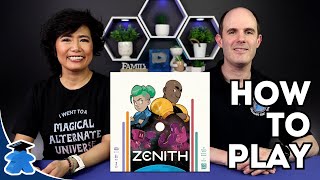
- Three distinct action modes provide strategic depth (agent, technology, diplomacy).
- Strong two-player and team play variants with clear rules for interaction.
- Discouraging yet rewarding card column discounts create planning opportunities.
- Iconography and multiple tokens can require a significant learning curve.
- High interaction can slow down with analysis-heavy turns in later stages.
- Influence, technology development, and diplomacy determine the winner across planetary tracks
- Interstellar competition across five planets with humans, robots, and animals vying for influence
- Strategic, card-driven, modular interaction with multiple victory paths
Mechanics (from transcript analysis)
- Area influence / planet tracking — Advance influence markers on planetary tracks and resolve benefits from technology and diplomacy fulfillment.
- Card-driven actions — Play a card from hand as an agent, a technology advance, or a diplomacy action to influence planets and earn resources.
- Diplomacy board and leader token — Resolve diplomacy effects to gain resources and the leader token, which increases redraw size.
- Endgame and scoring conditions — End when a player achieves three matching influence, four different influences, or five total influences.
- Opponent interaction: mobilize, exile, transfer — Interact with opponents by drawing extra cards, discarding/exiling cards, or stealing from them to alter discounts and influence.
- Resource management — Manage credits and zenithium to pay costs and activate card effects; discounts accrue within columns.
- Technology tracks and bonuses — Three faction tracks with row bonuses; first players to reach certain steps unlock special rewards.
Video topics + discussion points
Quotes (from this video)
- Zenith is a lane battling game in which two sides compete to gain influence over the five planets.
- There are three different ways to take your turn: as an agent, as a technology, or for diplomacy.
- Simple yet strategic.
References (from this video)

- Clean core loop with depth through upgrades and card-driven actions
- Thematic sci-fi setting with straightforward but engaging decisions
- Not yet played; opinions are based on description and wishlist
- Solo play and AI handling are unclear at this stage
- Line battler with planetary progression
- Sci-fi space lanes with planetary lines
- Direct, strategic competition
- Battle Line
Mechanics (from transcript analysis)
- Card Play — Cards are used to advance on lines, upgrade abilities, and generate resources.
- Line battling — Players compete to move or claim lines that grant advantages and access to planets.
- Resource management — Money earned from cards is spent on upgrades and actions.
Video topics + discussion points
Quotes (from this video)
- Let's talk about the hottest and most popular board games out there right now.
- these character powers are insane.
- after four races of rolling dice and using your abilities, you'll check who's going to be the winner.
- Zenith is a line battler.
- Eternal Decks, which is a cooperative board game all about playing out cards.
- the theme is through and through true to the true material real.
- The hottest board game out there right now is The Old King's Crown.
- You reveal those cards, but then all of the players can manipulate cards, chaos ensues.
References (from this video)
- Keeps players engaged by not ending the tug outright
- Simple, fast-moving core mechanic with high interaction
- Scoring resets may feel repetitive over long plays
- Endurance contest with ongoing tension
- Tug-of-war with continuous scoring and resets
- Competitive yet persistent tug-of-war struggle
Mechanics (from transcript analysis)
- Continuous tug-of-war with point-accumulation — Winning a tug does not lock in place; it grants a point and resets.
Video topics + discussion points
Quotes (from this video)
- Actions always succeed in Vantage; the challenge is how much time, morale, and health you lose along the way.
- the limited information of I can see something that you can't see and how that encourages communication and cooperation.
- one player is playing a card and that card has instructions that the other player must follow or you lose.
- if you roll seven bells on your turn, you just instantly win.
References (from this video)
- two-player tug-of-war lanes
Mechanics (from transcript analysis)
- tug-of-war / lane control — Three lanes with leader tokens; players advance on technology tracks while blocking the opponent.
Video topics + discussion points
Quotes (from this video)
- This is 10 through 1. This is not easy.
- Logic and Lore is a two-player logical game with tons of variants.
- Shout out to Puerto Rico. That would have been my number one.
- Flamecraft DS is a two-player head-to-head where you are placing out these different dragon tile chips.
- Zenith is absolutely delightful.
- Amber Leaf is my number one game from 2025.
References (from this video)
- dense two-player puzzle with significant interaction
- strong thematic flavor and components
- clear strategy around influence tracks and token economy
- two-player limitation may reduce replayability
- iconography and rules can be heavy for new players
- space politics and domination via planetary influence
- solar system with alien races vying for influence
- strategic sci-fi
- Dominion
Mechanics (from transcript analysis)
- area influence / track-based engine — budgets and cards are spent to influence planets and gain tokens
- Deck/hand management — draw up to four cards, then play actions to tracks and spend Zenith tokens
- Resource management — credits/Zenith tokens used to fuel actions and influence
- Two-player asymmetry — first player token provides an edge and pacing advantage
Video topics + discussion points
Quotes (from this video)
- The cool thing about this game is the way that you take your turns in the game.
- Studying actually pays off big.
- There are lots of cool magical things that the potions do for you.
- Simultaneous play.
- This is a tableau building game where you are trying to basically stack the characters that are in front of you.
- The deck is massive, and I don't think there are repeats; each card is unique.
References (from this video)

- Elegant tug-of-war mechanism with strategic depth
- Good tension and position-crafting through card play
- Multiple strategic lanes via tech tree and color tracks
- Two-player focus may limit audience
- Some strategies can be highly dominant with optimal play
- color-driven tug-of-war competition
- two-player dueling arena with color tracks
- abstract tactical duel with evolving track dynamics
- Duel for Cardia
Mechanics (from transcript analysis)
- color-synergy and discounts — investing in a color increases efficiency and discounts on that color’s cards
- tech tree and board depth — a side board with tech options that influence strategy
- tug-of-war tracks — five color tracks where advances reset when completed
Video topics + discussion points
Quotes (from this video)
- In the world of Vantage, nobody cares that I'm trans. I'm merely a passer by chatting with the Denizens, playing games, and participating in trials.
- Dispatch is eight scenarios. It's a little bit like a superhero animated TV show where you are making story choices.
- Inkorn is a deck builder in the style of Slay the Spire, but it adds a lot of things that aren't in Slay the Spire without overly complicating the game.
- Here Lies is a cooperative mystery solving game that does a brilliant thing with limited communication and limited information where one player has all the answers.
References (from this video)

- Extremely interactive two-player experience
- Heavy variety of cards and abilities
- Tense, time-bound play that rewards timing
- High card variety can be intimidating at first
- dynamic planetary movement with a richness of card interactions
- head-to-head planetary tug-of-war
- rapid, aggressive, highly interactive combat
Mechanics (from transcript analysis)
- card-driven positional tug-of-war — Play cards in three areas to move planets and influence scoring; high interaction is central.
Video topics + discussion points
Quotes (from this video)
- 2025 is shaping up to be the year of two-player games, and I am totally here for it.
- This is easily his best design to date.
- Stuper Mundy is the most Eurol looking Euro game you will ever see, but unbelievably interactive.
References (from this video)

- Feels fresh with six simultaneous tug-of-wars
- Vibrant artwork and a fun sci-fi theme
- Complexity can be high for newcomers
- colorful tug-of-war across multiple tracks
- Futuristic solar-system struggle with robots, humans, and animid beings
- fun, competitive, fast-paced
Mechanics (from transcript analysis)
- Card resource management — Play cards for effects, with cost and movement on tracks.
- multi-track tug-of-war — Several simultaneous tug-of-war duels across different tracks with varying card costs.
- Strategic choice between defense, offense, money, and tech — Decide when to use cards for abilities or to advance on a track.
Video topics + discussion points
Quotes (from this video)
- This is going to be a wild venture.
- It's an adorable setting with these little animals that are going out on their adventure.
- The endgame scoring is really unique as well as the scoring is just going to be a multiplier of your completed cards.
- It is fast. There's multiple scenarios. You can quickly set it up and play through it.
- Duel for Cardia is a really interesting clever play in which you'll be playing a card simultaneously revealing that card and see how you affect each other.
- Leaders you are drafting and every single one plays so differently.
- you can also remove one. If there's one character that you simply hate playing against, you're like, 'No, you can't use him.'
- Tag Team surprised me because it's a very simple auto battler where you're putting the cards in the order you want them to flip.
- six different tug-of-wars going on any moment.
References (from this video)
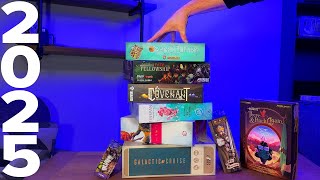
- highly thematic with a lot of variety
- numerous card interactions and combos
- strong component quality and art
- complex for new players
- involves deep planning and optimization
- influence projection and tech advancement
- space-themed tug-of-war over planets
- strategic, system-driven
- Gaia Project
- Twilight Imperium (in spirit of big space games)
Mechanics (from transcript analysis)
- card play and color coding — cards represent different factions (animals, robots, humans) and colors to control planets.
- planet influence and adjacency — placing cards to influence planets and gain points for color-based objectives.
- tech track progression — spend resources (zenithium) to advance tech tracks for powerful effects.
Video topics + discussion points
Quotes (from this video)
- This is the perfect kind of game to play like late in the evening with maybe some people who aren't into like super heavy games.
- I played it 80 times as a result.
- Moon Colony Blood Bath. Try and think of a crazier name. You can't.
References (from this video)

- Excellent two-player game
- Strategic card puzzle with constant back-and-forth
- Multiple win condition paths create interesting decisions
- Fun cartoony art style
- Works well at multiple player counts
- Head-to-head competition for planetary control
- Space conflict over planetary systems
- Abstract space conflict simulation
- Captain Flip
Mechanics (from transcript analysis)
- Card Play — Playing cards matching planet colors and providing various effects
- multiple win conditions — Win by collecting three same color, four different colors, or five total planets
- technology tracks — Three faction tracks (animals, robots, humans) with cascading benefits
- Tug of war — Pushing and pulling five planets between players for control
Video topics + discussion points
Quotes (from this video)
- 2025 is halfway done. And this year, honestly, so far for board games has been super strong.
- This year has been really really strong.
- Race Chicago was a big surprise for us. We really liked it a lot.
- this just it doesn't feel like any other game I've played
- The Anarchy is an absolute banger.
- It's like the 2.0 level up from Hadrien's Wall.
- I love Molly House.
- it's really about coming together
- Luier is really really good. If you like big heavy euros that are pretty, it's a banger.
- this game is dope
- this is what I wanted Too Many Bones to be. It feels like too many bones leveled up.
- It's such a banger
- I just love the double-sided cards.
- Unstoppable is truly unstoppable.
- for my money, one of the best like two-player games I've played in a long time
- it's so good. It's so awesome.
References (from this video)

- Satisfying tug-of-war feel across multiple lanes
- Rich tech-tree integration creates powerful combos
- Appealing two-player head-to-head with clear strategic paths
- Can be heavy for two players new to lane-battle designs
- Lane battler with a tech tree and dynamic actions
- Space lane control with five planets
- Competitive, flavorful, tactical
Mechanics (from transcript analysis)
- Card-driven actions — Cards placed in lanes cost credits; discounts apply with cards already in lane.
- Lane control / area majority — Play cards to lanes to gain control and score points.
- Tech tree progression — Advancing through tech branches triggers bonuses and new actions.
Video topics + discussion points
Quotes (from this video)
- It's just so cozy and charming.
- The theme is thin. [laughter] Okay, y'all. It's thin, but I do not care.
- Zenith, my number one game of 2025.
- The further down you go with your pyramid, the more times you get to take the actions on the card.
- This game feels different every time you play, with a big deck of different cards and you hope you flip the right ones at the right time.
References (from this video)

- tight, rewarding tug-of-war
- beautiful production values (yellow side is pretty)
- theme may feel abstract to some players
- tech race and resource management
- glossy sci-fi tug-of-war with color-based tracks
- competitive but strategic
- Watergate
- Lord of the Rings Duel
Mechanics (from transcript analysis)
- card-driven resource allocation — spend yellow tokens to advance on tech and other tracks
- tug-of-war/pressure track — three areas where tokens move along a line toward your goal
Video topics + discussion points
Quotes (from this video)
- I'm judging a little.
- I want a deluxe version of this game.
- This is a solo puzzle, and it's a five out of five for me.
- I would pay for a deluxe version.
- Skyrise is a crossover we both have in the same video.
- This is a fantastic set of games. This is a good set of games.
References (from this video)
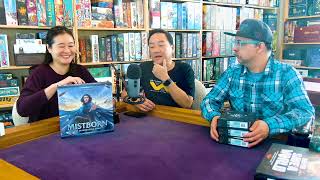
- rich interaction between card play and lane control
- strong engine-building feel for a two-player game
- heavy iconography and rules sheet; may deter new players
- lane control with suits, tech tracks, and Zenithium resource
- space empire conflict across planets
- engine-building and tactical lane battles
- Compile
- Yomi 2
Mechanics (from transcript analysis)
- card-driven lane battles — play cards to influence planets and push influence toward you
- leadership token / draw cards — spend cards to gain leadership tokens that increase card draw
- resource engine and card discounts — cards grant discounts for future plays and enable chain effects
- technology tracks — move up tracks to unlock powerful rows and triggers
Video topics + discussion points
Quotes (from this video)
- The metal system is like really cool.
- If you like Shards of Infinity or Ascension or Star Realms, check out Misborn because it's just this metal system is like really cool.
- Beaverton, Beaverton, Beaverton—beaver town vibes.
- This is a quick two-player card game.
- Zenith is a lane battle game at heart, but with a lot more depth.
References (from this video)

- Multiple strategic paths
- Quick turns
- Interesting multi-use card system
- Three different board areas
- Complex decision-making
- Multiple resource management
- Planetary Influence
- Space
- Strategic Conquest
- Castle Combo
Mechanics (from transcript analysis)
- Area Control — Players move planets towards their side of the board
- Multi-use cards — Cards can be used for multiple actions across different board areas
Video topics + discussion points
Quotes (from this video)
- Play some games, will you?
- We're going to rule the universe
References (from this video)
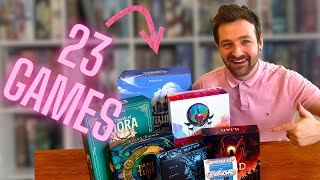
- fast, smooth gameplay
- high interaction and tension
- not for those averse to high player interaction
- competition and calculation
- space-themed tug-of-war with planetary mechanics
- fast-paced, tense, competitive
Mechanics (from transcript analysis)
- tug-of-war — players pull from opposing sides with card-driven actions to gain advantage.
Video topics + discussion points
Quotes (from this video)
- Starting off with the two-player game, Agent Avenue.
- It's a boatload of fun and it's another game which I've just brought out and it just never misses.
- This is another two-player abstract game that I can't stop playing and that's Zenith.
- Rival Cities takes Tug of War to another level.
- The production on Shackleton Base is through the roof.
- Ponzi scheme is one of the most stressful games you'll ever play and it's brilliant.
References (from this video)

- Very engaging, high replayability
- Feels like a standout in its class
- Can be overwhelming at first due to depth
- tableau/engine synergy and discovery
- Lure of epic skirmish mischief with heavy engine emphasis
- exuberant, highly addictive
- Airline and Sea
Mechanics (from transcript analysis)
- Engine-building / card-driven play — Players chain actions for efficient cycles and scoring momentum.
Video topics + discussion points
Quotes (from this video)
- The Crew is back.
- it's mostly Astronauts. Like, it's basically Astronauts with a rethe.
- 2026 has just begun, which means there's plenty of times for things to get better.
- Zenith is absolutely amazing.
- I will burn Mountain Ghost Legacy down to hold on to this one.
References (from this video)
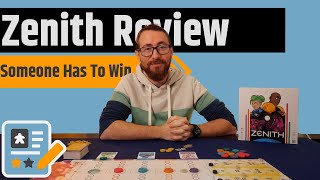
- tight, tense back-and-forth between players
- three distinct win conditions provide multiple paths to victory
- well-designed tug-of-war with separate lanes reduces monolithic pressure
- highly satisfying token/track mechanics with meaningful choices
- great depth and replayability even after many plays
- initial randomness can feel tacked on or unclear until players understand card synergies
- a minority of cards can be less effective in certain strategies
- some players may experience a slower start as the deck thins and familiarizes itself with combos
- leadership tokens, track-based bonuses, and tactical card play to outmaneuver an opponent
- futuristic, space-age competition involving diplomacy and token-driven power balance
- highly tactical, with a focus on back-and-forth confrontation and multiple winning avenues
- Watergate
- The Lord of the Rings: The Duel
- 7 Wonders Duel
Mechanics (from transcript analysis)
- area control via majorities — gaining majority in certain zones or colors helps determine control and possible bonuses
- card play and deck-building — players draft and play cards into their own zones, triggering effects and discounts that shape turn economy
- leader/holding tokens and hand-size management — taking and upgrading the leader token increases hand size and offers strategic choices about resource risk and reward
- multi-track tug-of-war — three distinct advancement tracks (technology, token collection, and one other lane) create simultaneous pressure toward multiple win conditions
- take-that style interactions — cards can directly impact an opponent's position or resources, creating tense back-and-forth moments
- token and resource management — players collect and move colored tokens, with bonuses tied to symbol tracks and card interactions
- variable tech board with 6 options — technology actions are board-based and can be configured in different ways, providing replay variety
Video topics + discussion points
Quotes (from this video)
- an absolutely fantastic game.
- This is an incredible back and forth experience.
- There is nothing I don't like about the game.
- Zenith is possibly better than those.
- This is a five out of five game for me.