Collection Status
Your Rating
Year Published
2025
Transcript Analysis
Browse transcript mentions, sentiments, pros/cons, mechanics, topics, quotes, and references.
Total mentions: 12
This page: 12
Sentiment:
pos 10 ·
mix 2 ·
neu 0 ·
neg 0
Showing 1–12 of 12
Video 6MJLYHzIhCM
Dice Tower top_12_list at 0:48 sentiment: positive
video_pk 8885 · mention_pk 26186

Click to watch at 0:48
Overall sentiment (raw)
positive
Pros
- Adorable, appealing theme with animal characters
- Encourages deliberate planning within a tight action window
- Unique endgame scoring twist adds strategic depth
Cons
- Publisher and designer are not stated in the video, which may limit discoverability
- New IP may require broader marketing for visibility
Thematic elements
- cute adventure, exploration, companionship
- Adorable animals venturing in an urban/city setting
- light, family-friendly
Comparison games
none
Mechanics (from transcript analysis)
- card tableau building — Players play cards into a personal tableau to build combos and maximize actions.
- Endgame multiplier scoring — Final score is a multiplier of completed cards, encouraging targeted completion.
- Two-action optimization — Players balance two actions per turn to maximize payoff.
Video topics + discussion points
No key topics recorded for this video.
Quotes (from this video)
- This is going to be a wild venture.
- It's an adorable setting with these little animals that are going out on their adventure.
- The endgame scoring is really unique as well as the scoring is just going to be a multiplier of your completed cards.
- It is fast. There's multiple scenarios. You can quickly set it up and play through it.
- Duel for Cardia is a really interesting clever play in which you'll be playing a card simultaneously revealing that card and see how you affect each other.
- Leaders you are drafting and every single one plays so differently.
- you can also remove one. If there's one character that you simply hate playing against, you're like, 'No, you can't use him.'
- Tag Team surprised me because it's a very simple auto battler where you're putting the cards in the order you want them to flip.
- six different tug-of-wars going on any moment.
References (from this video)
No references stored for this video.
Video vqhwpqulsWI
Tamashi Chronicle of Ascent top_10_list at 7:22 sentiment: positive
video_pk 7380 · mention_pk 21843
Click to watch at 7:22
Overall sentiment (raw)
positive
Pros
none
Cons
none
Thematic elements
- two-player/solo challenge
Comparison games
none
Mechanics (from transcript analysis)
Mechanics unknown.
Video topics + discussion points
No key topics recorded for this video.
Quotes (from this video)
- This is absolutely amazing.
- It's not a solo mode. It's a real solo game.
- Wingspan is my most favorite game of all time.
- Can't Stop is an S-rank game for me.
- Beckas... this was one of my most anticipated games at Spiel.
- A Wild Venture... This is amazing.
References (from this video)
No references stored for this video.
Video LxG8U4hdyig
The Broken Mele top_10_list at 35:09 sentiment: positive
video_pk 7064 · mention_pk 20924
Click to watch at 35:09
Overall sentiment (raw)
positive
Pros
- Engaging and unique card/die interactions
- Two-player friendly with strong interconnectivity
Cons
- Longer play with four players; solo viable but not ideal
Thematic elements
- Adventure/quest engine with diverse dice-based actions
- Two-player engine-building with a board adventure track
- Narrative-driven engine-building
Comparison games
- Valheim (in terms of engine-feel)
- Underwater Cities
Mechanics (from transcript analysis)
- Gear and dice card system — Upgrade cards and choose die values for actions
- Mini-boards/adventure track — Two sides of board create different scoring and actions
- two-player engine-building — Build up an engine using dice and cards on a shared board
Video topics + discussion points
No key topics recorded for this video.
Quotes (from this video)
- 2025 just felt like yeah, a meh year.
- SECOND PLACE. THAT'S A FANCY WORD FOR LOSING.
- WE HAVE FOUND THE WITCH. MAY WE BURN.
- There is no bathroom. Get stuffed.
- Mine Clash Games take my number one spot with Ember Heart. I do highly recommend you try it.
References (from this video)
No references stored for this video.
Video V-S57Pl5Txw
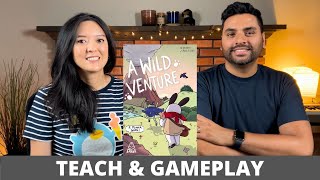
Before You Play playthrough at 0:04 sentiment: positive
video_pk 6259 · mention_pk 18545
Click to watch at 0:04
Overall sentiment (raw)
positive
Pros
- Rich, interlocking card-driven engine-building with meaningful synergy between villagers, gears, and buildings.
- Multiple viable routes to victory via chests, upgrades, and enchantments, enabling varied strategies.
- Two-player playthrough effectively demonstrates interaction, timing, and sequencing intricacies.
Cons
- Game length can be long for a two-player session, especially with deeper synergies.
- Learning curve is steep due to the number of card types, tokens, and board interactions.
- Early currency generation can be tight, making initial turns feel slower for some setups.
Thematic elements
- community building, exploration, resource management, and endgame scoring through tucked cards and on-card supplies.
- A village in a magical forest where three critter adventurers (rabbit, frog, crow) vie to improve their town and win the Community Cup through deeds, upgrades, and clever card interactions.
- light fantasy, whimsically framed as a family-friendly village quest with cooperative-competitive vibes.
Comparison games
none
Mechanics (from transcript analysis)
- adventure_and_path_movement — Adventure actions move a token along routes with forks and costs that vary by board side. End spaces grant bonuses, and movement rules enforce forward progress away from home.
- deck_and_card_activation — Two core actions on a turn: play a card from hand or activate a card already in play. Activation often triggers effects on villagers, gear, or buildings.
- enchantment_and_relics — Enchantment tokens and relics modify scoring and card interactions. Relics trigger on certain events (for example when a card is drawn) and can provide ongoing or end-of-turn effects.
- engine_building — Players layer effects across buildings, villagers, and gears to generate coins, supplies, and endgame scoring potential. Synergies emerge as cards interact with one another and with relics.
- grid_and_tuck_scoring — Cards enter play in a multi-row grid and can be tucked under scoring piles. Endgame scoring depends on how many supplies exist on buildings, how many villagers and gears are tucked, and how enchantments are used.
- resource_management — Coins and supplies drive card costs and activations. Supplies on cards can be converted into coins or used to unlock additional effects. Balancing coin income and supply placement is central to engine timing.
Video topics + discussion points
No key topics recorded for this video.
Quotes (from this video)
- This is a two-player only card-driven game in which players will need to be playing cards from our hand
- There is an engine building component to this game
- End of the game you'll tuck the cards underneath your scoring pile
- Community cup
- Gears are mutually beneficial, and relics trigger effects at the end of turns
- You must move away from home when adventuring along the paths
- Autumn side of the board adds costs on pathways, affecting pacing
- Endgame scoring is complex and depends on tucked cards and supplies
References (from this video)
No references stored for this video.
Video gvdheqB4ZL0
Sethos top_10_list at 3:53 sentiment: positive
video_pk 5702 · mention_pk 16942
Click to watch at 3:53
Overall sentiment (raw)
positive
Pros
- personal highlight of Spiel year
- both strong two-player and emerging solo potential
Cons
- solo mode untested at time of recording
Thematic elements
- discovery and exploration; hidden gem
- Spiel year; fantasy/adventure vibe
- storyful exploration with high excitement
Comparison games
Mechanics (from transcript analysis)
- multi-actor interaction — two-player focus with solo option; exploration-driven decisions
Video topics + discussion points
No key topics recorded for this video.
Quotes (from this video)
- Dungeons of Doria is an amazing game.
- This is amazing. This is like one of my most favorite dexterity games at the moment.
- A Wild Venture is my personal highlight of spiel this year.
- Wingspan, of course, this is clearly Srank.
- Distilled will always be an S probably.
References (from this video)
No references stored for this video.
Video LdCC0vqDUC8
Board Game Geek / YouTube game_discussion at 2:48 sentiment: positive
video_pk 5485 · mention_pk 16344
Click to watch at 2:48
Overall sentiment (raw)
positive
Pros
- Engaging engine-building with interacting gear cards that influence opponents.
- Strong thematic art and charming animal iconography that reinforce the theme.
- Clear tension between coin economy, investment, and tuck-based scoring that motivates strategic planning.
- Board pathing choices create interesting risk/reward tradeoffs and encourage planning ahead.
Cons
- Iconography and card text can be dense and small; readability issues may hinder new players.
- End-game scoring has several layers (species groups, gear vs buildings, tuck piles) that can be confusing without careful teaching.
- Some rule interactions around relics and the timing of upgrades can be fiddly in practice.
Thematic elements
- village building, exploration, and competitive engine-building
- fantasy village/adventure world with anthropomorphic animal villagers
- lighthearted, family-friendly, with modular deck elements and evolving board state
Comparison games
- Root
- Code Names Online
- Blood on the Clock Tower
- Simolo
- Elder Sign
- Witcher (Witcher: Family/solo games context)
Mechanics (from transcript analysis)
- adventure board / path-based movement — A central board presents three paths; moving along a path yields rewards and may trigger nest actions.
- deck-building / card drafting — Starting decks and encounter cards are drafted from a common pool; players add cards to rows (villager, building, gear) and invest to score.
- enchantment tokens / relics / gear — Tokens and relic effects modify ongoing or immediate actions; gear cards interact across players and can reveal/convert pouches into money.
- end-round / round-limit scoring — The game ends when the draw deck is exhausted, with a final round completed and then final scoring that tallies tucked cards, gear, buildings and village diversity.
- investment / coin economy — Coins on cards are invested to trigger effects and to pay for upgrades or to score end-game points.
- tucking / end-game scoring — At round end, certain cards are tucked under to determine final scores via species group tallies and a separate gear/building scoring track.
- two main actions + free actions — On a turn, players perform two main actions (play/activate a card, move/adventure or gain coins) and can insert free actions between or after the main actions.
Video topics + discussion points
No key topics recorded for this video.
Quotes (from this video)
- Game night. How you guys doing?
- We are adventurers. We are in a community cup that happens every year.
- The board is double-sided. And this is the side they recommend for the first time you play it.
- Gear cards can be triggered by other players. When that happens, the pouch is turned over and money moves.
- If you activate a relic action, you resolve relic effects, which can be powerful but risky.
References (from this video)
No references stored for this video.
Video JoqHHl2xKbY
Gaming Rules! playthrough at 2:20 sentiment: positive
video_pk 5094 · mention_pk 15100
Click to watch at 2:20
Overall sentiment (raw)
positive
Pros
- Rich inter-card synergy enables varied, emergent strategies
- High replayability due to deck composition and path layouts
- Clear introductory path with depth for experienced players
Cons
- Rule interactions can be tricky (exceptions to activation limits, gear effects, etc.)
- End-game scoring and variant rules may be fiddly for new players
- Memory element (tucked cards) is optional but can affect play feel
Thematic elements
- tableau-building, village/gear management, and questing through a shared map
- Fantasy woodland world with villages, adventuring paths, and seasonal boards
- procedurally generated adventure with variable card interactions and endgame tuck scoring
Comparison games
none
Mechanics (from transcript analysis)
- adventuring_and_movement — Villagers move along branching adventure paths; choices determine progress and end spaces; tokens grant on-landing abilities.
- deck_variants_and_core_cards — Core deck of 51 cards plus optional academy/tidings decks; players select one deck to play, affecting strategies and card availability.
- end_game_scoring_and_tucking — End-game points come from tucked villages and enchanted buildings; villagers’ type (rabbit, frog, crow) counts toward a max-min scoring formula.
- gear_and_enchantment — Gear cards trigger relic effects when exhausted; enchantment tokens can be spent to enchant buildings for immediate or ongoing effects.
- tableau_building — Players build a personal tableau of buildings, villagers, gears; cards have limited uses and are tucked under a score pile for end scoring.
Video topics + discussion points
No key topics recorded for this video.
Quotes (from this video)
- There is no hand limit. No hand limit in this game.
- You found a ruby chest, which is the best type of chest in the game.
- The official rules of the game are that you are not allowed to look at cards that you have put under here.
References (from this video)
No references stored for this video.
Video Bk87MwjycR0
Dice Tower game_review at 0:05 sentiment: mixed
video_pk 4632 · mention_pk 13582
Click to watch at 0:05
Overall sentiment (raw)
mixed
Pros
- Engaging engine-building with satisfying, flavorful combos
- Humor and art are standout features and broadly appealing
- Accessible to a wide age range, including families
- Tight two-player head-to-head interaction with meaningful decisions
- Distinct factions (crow, rabbit, frog) with clear personalities
Cons
- End-game scoring can feel detached from the play flow and can be fiddly
- Memory variant (if used) adds a heavy cognitive load and can be unwelcome
- Some card text readability issues (design on leather-banner style text) can be hard to read across the table
- Because scoring rewards multiple axes (adventure, enchantments, card variety), optimal play can feel like doing everything
Thematic elements
- faction-driven engine-building through adventure and area progression
- woodland fantasy featuring crow, rabbit, and frog factions with a lighthearted, humorous tone
- humorous and playful
Comparison games
- Terraforming Mars
- Creature Caravan
Mechanics (from transcript analysis)
- adventure / map movement — Adventure actions move a character along a map path to gain coins, abilities, and treasure chests that influence future turns.
- deck-building / hand management — Players start with a hand of cards and build an engine by playing villagers, buildings, and gears; cards trigger abilities and are tucked away for scoring.
- enchantment of buildings — Enchantments placed on buildings modify their abilities and contribute to multiplicative scoring considerations.
- end-of-deck scoring with multipliers — When the deck runs out, players score by grouping tucked cards into three piles and multiplying the smallest pile by the largest; buildings and enchanted cards contribute additional multipliers.
- memory / hidden scoring — A variant (memory version) requires recalling how many of each type are tucked under the scoring card; standard rules hide those details.
- Resource management — Coins, supplies, and tokens are spent to trigger abilities and to upgrade or enchant cards.
- two-player head-to-head interaction — Designed specifically for two players with direct interaction through triggers and shared resources.
Video topics + discussion points
No key topics recorded for this video.
Quotes (from this video)
- This is an offshoot of Fantasia Games. A different line here.
- Two player head-to-head game.
- It's a box of two games.
- The humor punches at like a few different levels very well.
- I really like the engine building... the combos.
- Endgame scoring is an algorithm.
- I will never play with the memory variants.
- The journey is the winner here, not so much the destination.
- This frog card is so good for what I'm doing.
- I find it to be very elegant and an interesting way to do to not feel bad that your engine is designed to break down.
References (from this video)
No references stored for this video.
Video 402yZ7kUKO0
Ronald Runs Through top_10_list at 1:57:36 sentiment: positive
video_pk 4130 · mention_pk 12117
Click to watch at 1:57:36
Overall sentiment (raw)
positive
Pros
- wonderful cooperative synergy and tight interdependence
- art and components attractive; fun theme
Cons
- ramping complexity via gear interactions can be dense
- some players may want more direct player interaction mechanics
Thematic elements
- micro engine-building through card-driven actions
- anthro-backed forest village
- cozy, village life with strategic planning
Comparison games
- Power Grid
Mechanics (from transcript analysis)
- cooperative synergy with shared gains — players gain benefits from others' gears and actions.
- micro engine-building with discard-based economy — cards become engines; coins power activations; decks get discarded.
- multi-use cards and synergy — cards synergize to unlock actions; gear footprints benefit others.
Video topics + discussion points
No key topics recorded for this video.
Quotes (from this video)
- Damn, this game is mean.
- This is the best trick-taking game we've ever played.
- Entwined drafting is excellent; the arithmetic can be heavy but rewarding.
- Peak Team is the best cooperative game of 2025 so far, by far.
References (from this video)
No references stored for this video.
Video xQkl9IW4udE
Tabletop Turtle general_discussion at 29:13 sentiment: mixed
video_pk 3972 · mention_pk 11590
Click to watch at 29:13
Overall sentiment (raw)
mixed
Pros
- Simple, approachable engine-building feel
- Rapid rounds with frequent decisions
Cons
- Ends up feeling a bit generic after several plays
- Some cards and interactions can feel underdeveloped
Thematic elements
- Village-building and engine-building feel
- Village tableau with changing landscape
- Light, charming, and quick to grasp
Comparison games
none
Mechanics (from transcript analysis)
- engine_building — Construct and cycle through a changing village tableau
- set_collection — Collect sets to gain points and trigger abilities
Video topics + discussion points
No key topics recorded for this video.
Quotes (from this video)
- it's one hell of a looker. This is a this is a really good looking game.
- I don't like this game.
- Playtime's important. It's sort of like when you watch those comedies and horror movies from like the 90s and early 2000s, they all clocked in under 90 minutes.
- This game does have a beautiful board but the mechanics aren't as deep as the art.
- If you're not the biggest Euro fan, you're not going to like Forestry.
References (from this video)
No references stored for this video.
Video edOg33w2ugY
Dice Tower top_10_list at 5:14 sentiment: positive
video_pk 2672 · mention_pk 7857
Click to watch at 5:14
Overall sentiment (raw)
positive
Pros
- Unique engine-dismantling mechanic
- Combo-focused card gameplay
- Vibrant and silly aesthetic
- More depth than appearance suggests
- Cards with abilities
- Interesting visual design
Cons
- Bizarre appearance may deter some
Thematic elements
- Wild adventure
- Adventure Time aesthetic world
- Whimsical
Comparison games
none
Mechanics (from transcript analysis)
- Card combinations — Fast-paced strategic game with cards that have abilities
- Engine dismantling — Unique mechanic where you're dismantling engines rather than building them
- Shared deck — Players share a deck of cards, play cards to trigger abilities
Video topics + discussion points
No key topics recorded for this video.
Quotes (from this video)
- I love two-player games. It's one of my favorite player counts
- Bruno Catala who is a fantastic designer excels even more when it comes to two-player games
- I tend to like this designer's games. They're always just a little bit outside the box, just a little bit strange and quirky, and I love that
- I love comboorific card games in which you uh in this one you have a shared deck of cards
- I want it to have some teeth. I want it to be a player interactive combat hitting each other kind of game
- one of the ones I am the most interested in
References (from this video)
No references stored for this video.
Video clQyNf-k-Q4
Tantrum House playthrough at 0:20 sentiment: positive
video_pk 1827 · mention_pk 5270
Click to watch at 0:20
Overall sentiment (raw)
positive
Pros
- very engine buildingy feel
- cards interact in interesting ways
- engine changes and wears out over time
- included expansion in the box
- meaty gameplay with lots of chaining and comboing
- expansions likely in the future
Cons
- doesn't feel like a traditional two-player game
- complex interactions may be daunting
Thematic elements
- adventure
- tableau building
- exploration
Comparison games
- Everdell
Mechanics (from transcript analysis)
Mechanics unknown.
Video topics + discussion points
No key topics recorded for this video.
Quotes (from this video)
- Grab your dice and shuffle your deck. It's game time now.
- We're playing games with wood and meeples.
- It's a hit. Everybody enjoys it.
- Really low entry to rules. Just move and pick and it's fun.
- I would love to share even more thoughts on it. It's in my top 10 games I've played this year.
- Don't give candy corn to trick-or-treaters - it's only good as candle jar filler for decorations.
- This is a set collection game with team-based gameplay.
References (from this video)
No references stored for this video.
Transcript Navigation
Showing 1–12 of 12