Collection Status
Your Rating
Year Published
2025
Transcript Analysis
Browse transcript mentions, sentiments, pros/cons, mechanics, topics, quotes, and references.
Total mentions: 10
This page: 10
Sentiment:
pos 8 ·
mix 2 ·
neu 0 ·
neg 0
Showing 1–10 of 10
Video F1gNe7Oaq5Q
The Dice Tower top_10_list at 0:22 sentiment: positive
video_pk 12597 · mention_pk 36754
Click to watch at 0:22
Overall sentiment (raw)
positive
Pros
- IP appeal and thematic flavor
- rolling-right core mechanic with map variability
- replayability via multiple maps
Cons
- first scenario can feel basic or underwhelming
Thematic elements
- IP-driven adventure and exploration in a Tolkien-inspired setting
- Middle-earth/Hobbiton adventure extrapolated into a board game
- thematic, IP-based adventure with rolling-right mechanics
Comparison games
none
Mechanics (from transcript analysis)
- roll-and-write / rolling right — dice rolled to generate actions on a map and fill tracks; players interact with map layouts
- variable map layouts — different maps provide distinct play experiences and pacing
Video topics + discussion points
No key topics recorded for this video.
Quotes (from this video)
- this one's a rolling right got a board
- Acquire is very neat.
- A classic for a reason from 1980.
- the best game I played today was Code Names
- my favorite game from the Saturday today is The Hobbit
- it's a really fun worker placement game with boats and colonies
References (from this video)
No references stored for this video.
Video HPQ3_KIMxAE
The Dice Tower general_discussion at 3:55 sentiment: positive
video_pk 12187 · mention_pk 35626
Click to watch at 3:55
Overall sentiment (raw)
positive
Pros
- charming theme with recognizable Tolkien references
- thematic storytelling through dice and path drafting
Cons
- some humor and jargon in the narration; potential for confusion with the long subtitle list
Thematic elements
- Fantasy quest narrative
- Hobbit-themed adventure with dice and route/story progression
- light, humorous, nostalgic
Comparison games
none
Mechanics (from transcript analysis)
- dice_rolling_and_roll_and_write — roll dice and draft paths/chapters to advance the story
- pathway_drafting — draw paths and complete missions across chapters
Video topics + discussion points
No key topics recorded for this video.
Quotes (from this video)
- Very simple tile laying, very straightforward, but it feels like you're doing all these mini races all at once.
- It's 30 minutes, 40 minutes tops.
- I really enjoy this one. I got to teach it to some people that have never played it before.
- Really nice art, a cool theme where you are kind of getting olives and you're converting them into olive oil and there's a big card market.
- It's a deck building game. Really satisfying, pretty easy to understand.
- This had a really interesting kind of multi-use cards going on in it that was really engaging and honestly I was just charmed by the artwork.
- You draft some dice. You're going to be drawing pathways and completing different little missions.
References (from this video)
No references stored for this video.
Video Ch1oIOb3qxI
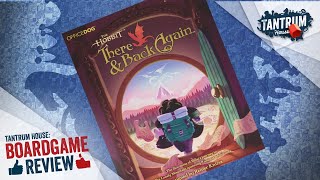
Tantrum House Studio D game_review at 0:38 sentiment: positive
video_pk 10202 · mention_pk 30086
Click to watch at 0:38
Overall sentiment (raw)
positive
Pros
- Strong thematic integration with The Hobbit setting and Bilbo’s journey
- Eight standalone chapters provide replayability and avoid campaign lock-in
- High-quality components (thick player books, durable tokens) and dry erase surfaces with reliable markers
- Integrated rulebooks with a clear, consistent layout for each adventure part
- Flexible path-drawing mechanics and mitigation options that add strategic depth
Cons
- End conditions in many chapters create a race-like dynamic that can favor speed over broad exploration
- Drafting is uneven (five dice for four players) and can lead to confusion about who rolls next in some rounds
- Several chapters feel structurally similar, which can reduce novelty over repeated plays
- A few components bow slightly; long-term durability for dry erase elements is uncertain
- Two chapters using D12 feel distinct from the rest, which can disrupt rhythm for some players
Thematic elements
- Fantasy quest, journey, and adventure in Middle-earth with thematic nods to Bilbo's tale
- The Hobbit storyline adapted into standalone adventure maps; Dalish terrains and story milestones tie into Bilbo's journey
- Board-game chapters that echo the structure of chapters in a book, with quotes and Tolkien-inspired moments
Comparison games
- Trick Taker
- Pandemic (co-op)
Mechanics (from transcript analysis)
- black D12 hazard — A black six-sided die (D12) introduces negative effects on certain rounds or maps; effects can be mitigated by spending specific resources.
- dice drafting — Players draft dice to gain resources or movement options; the draft pool is exhausted each round before the next player rolls.
- mitigation options — Burglar wilds and wizard hats provide flexible choices and mitigation when drafting and executing paths.
- path drawing on adventure pages — When you select a path die, you must draw a connected path on an adventure page starting from an approved start space; overlapping paths are allowed.
- Resource tokens — Tokens such as bread, swords, wizard hats, and pine cones are collected and spent to enter spaces, activate effects, or modify paths.
- space entry and scoring — Entering spaces yields rewards, completing tasks, or creating connections; some spaces reward the first to complete a task with extra points.
- variant dice chapters — Two adventures replace the standard dice with D12-driven mechanics that determine everyone’s options, removing the drafting phase.
Video topics + discussion points
No key topics recorded for this video.
Quotes (from this video)
- One of the things that I really like about this game is that it is not a campaign.
- The theme is integrated well into what you were doing in the different chapters.
- The game is quick.
- There has eight different chapters, eight different games, but you don't have to play them in order.
- I would put this on a medium weight.
References (from this video)
No references stored for this video.
Video nH1wuD606xU
Dice Tower general_discussion at 6:33 sentiment: mixed
video_pk 9159 · mention_pk 26990
Click to watch at 6:33
Overall sentiment (raw)
mixed
Pros
- art style is interesting
- depth through mission-based progression
Cons
- frustrating roll-to-route mechanic at times
- thematic fit is uneven with the Tolkien setting
Thematic elements
- Roll-and-route race to gather resources and deliver dwarves to Bag End
- The Hobbit’s journey; Bilbo’s hole to Bag End
- Story-driven with map-based progression
Comparison games
none
Mechanics (from transcript analysis)
- Resource Scoring — Bread and swords function as scoring resources; bread must be collected to score dwarf routes; swords are collectibles.
- roll-and-route — Roll dice, draft and navigate routes on a board to connect dwarves to Bilbo’s Hobbit hole.
Video topics + discussion points
No key topics recorded for this video.
Quotes (from this video)
- Tolken's works are massive but they're also personal
- it's one of the greatest card games of all time
- art is beautiful
- it's not Lord of the Rings, but it's a Tolkien world
- Journeys of Middle-Earth does something that I like... app-driven combat
References (from this video)
No references stored for this video.
Video Ca0BW6tYNFo
Dice Tower review at 2:58 sentiment: positive
video_pk 5535 · mention_pk 16460

Click to watch at 2:58
Overall sentiment (raw)
positive
Pros
- Eight unique maps
- Each scenario unique and engaging
- Great production
- Solid game
- Something unique in roll-and-write genre
Cons
- With repeated plays, only four maps really shine
- Some maps too basic or lack direction
Thematic elements
- Hobbit
- fantasy
Comparison games
none
Mechanics (from transcript analysis)
Mechanics unknown.
Video topics + discussion points
No key topics recorded for this video.
Quotes (from this video)
- It's really lightning fast
- The expansion is fantastic
- Just tremendous card game
- I quite enjoyed Brink
- Real great production, very solid game
- Absolutely fabulous game
- Eight great characters
- The expansion that we always needed but didn't know we wanted
References (from this video)
No references stored for this video.
Video u_i39uDctaw
Moonshot Games Gen Con Coverage interview at 7:50 sentiment: positive
video_pk 5247 · mention_pk 15524

Click to watch at 7:50
Overall sentiment (raw)
positive
Pros
- gorgeous production and heavy-but-light duality
- story flavor integrated with mechanics
- accessible drafting with depth for seasoned players
Cons
- some rules complexity for a small footprint
- availability limited before Essen release
Thematic elements
- fantasy quest with drafting and pathing
- Hobbit adventure inspired by the Tolkien saga
- story-driven with dice drafting
Comparison games
- Gloomhaven (narrative-driven campaigns)
- Seven Wonders (drafting elements)
Mechanics (from transcript analysis)
- area play with modular board — explore a modular adventure board with various paths and encounters.
- dice drafting — draft from a pool of dice to determine paths, gear, and actions.
- set collection / path drawing — collect items (bread, hats, swords) and draw paths to score.
Video topics + discussion points
No key topics recorded for this video.
Quotes (from this video)
- The flavor is the mechanic.
- Gloom Haven for working people.
- The poops and the hearts: that's Tamagotchi logic in a board game.
- The Hobbit is heavy and light at the same time.
References (from this video)
No references stored for this video.
Video xQkl9IW4udE
Tabletop Turtle general_discussion at 18:33 sentiment: mixed
video_pk 3972 · mention_pk 11586
Click to watch at 18:33
Overall sentiment (raw)
mixed
Pros
- Cozy, couch-play friendly vibe
- Light, accessible roll-and-write with familiar license
Cons
- Not very interesting to players who dislike roll-and-write
- Some find it not highly strategic and a bit repetitive
Thematic elements
- Roll-and-write adventure with story-driven missions
- Fantasy journey along Bilbo's path
- Cozy, story-driven, light thematic tie-ins to Tolkien
Comparison games
- Creature Caravan
Mechanics (from transcript analysis)
- dice_drafting — Roll dice and draft to determine actions or paths
- story_missions — Complete predefined story-driven missions on personal maps
Video topics + discussion points
No key topics recorded for this video.
Quotes (from this video)
- it's one hell of a looker. This is a this is a really good looking game.
- I don't like this game.
- Playtime's important. It's sort of like when you watch those comedies and horror movies from like the 90s and early 2000s, they all clocked in under 90 minutes.
- This game does have a beautiful board but the mechanics aren't as deep as the art.
- If you're not the biggest Euro fan, you're not going to like Forestry.
References (from this video)
No references stored for this video.
Video rt2NtshCyDg
Watch It Played rules teach at 0:13 sentiment: positive
video_pk 2222 · mention_pk 6484
Click to watch at 0:13
Overall sentiment (raw)
positive
Pros
- Scenario-based design with unique rules per scenario increases replayability
- Dice-driven path-building provides variability and strategic choice
- Strong thematic integration with The Hobbit (Bag End, Gandalf, Thorin, dwarves)
- Multiple play modes (hard mode, epic mode, solo mode) extend longevity
- Clear end-game framework and accessible map-based scoring when learning
Cons
- Rule complexity can be dense for new players
- Bread tracking and management can be fiddly and require careful bookkeeping
- Path overlap and border-entry restrictions can be fiddly to visualize during play
- End-game scoring can be complex and may require reference during your first playthrough
Thematic elements
- quest/adventure with route-building, resource management (bread, swords, hats), and scoring tied to guiding guests (dwarves) to Bag End.
- Middle-earth journey focused on guiding dwarves to Bag End, with Gandalf and Thorin as key figures; a map-based path-building adventure drawn from the Hobbit narrative.
- scenario-based mini-games; each scenario presents a self-contained story arc within The Hobbit universe.
Comparison games
none
Mechanics (from transcript analysis)
- burgle_actions — On a die choice, players may ignore the die symbol and instead resolve the burgle action by filling in an open box to its right, providing alternative rewards.
- dice_resolution — Roll five journey dice and resolve one die per player turn to draw path segments on your map, enabling you to connect dwarves to Bag End and collect resources.
- end_game_scoring — End of game occurs when all 12 dwarves are connected to Bag End; scoring includes dwarves connected, meals earned via bread, and glory points from Thorén and Gandalf, plus sword-based scoring.
- magic_actions — Gandalf hats trigger magic actions; each hat space can be used once per action, and multiple hats can be combined to complete a magic action; if multiple hats are triggered together, unused hats are ignored.
- path_building — Paths are drawn as sequences of 1–3 squares, rotatable and mirrorable, starting from guest spaces and extending toward Bag End or other paths. Paths must be drawn within map spaces and cannot enter spaces bordered by thick lines.
- region_edges_and_dashed_lines — Dashed lines create regional boundaries; crossing them ends path-building in the previous region and restricts drawing in spaces from the prior region.
- resource_management — Bread, swords, and hats are collected by entering corresponding spaces or by triggering symbols on dice; hats enable magic actions when enough are filled in the wizard action area.
- scenario_rules — Each scenario has its own unique rules; reference a two-page spread in the rule book for scenario-specific setup and constraints, including which spaces can start a path and new challenges.
Video topics + discussion points
No key topics recorded for this video.
Quotes (from this video)
- Dice will be rolled and collected by the players in order to draw paths on their map and collect items to achieve objectives that will help them score points.
- You can rotate and mirror this path to draw it in different orientations.
- the game ends immediately as soon as any one player has connected all 12 dwarves to bag end.
- Just be aware you do not gain a resource from a space you enter a second time with a different path, but you would gain another sword the next time you enter a different path showing a sword.
- Always resolve any bread you gain from a path first.
- There is also a hard mode for each of the scenarios, which you can attempt by modifying the maps as indicated on these pages and following any new instructions shown with them.
- A bonus epic mode allows you to combine scenarios seven and eight into a single game.
References (from this video)
No references stored for this video.
Video rIas5FLI8Xw
Dice Tower game_review at 0:00 sentiment: positive
video_pk 748 · mention_pk 2186
Click to watch at 0:00
Overall sentiment (raw)
positive
Pros
- Eight distinct scenarios providing the feel of eight different games in one box
- Strong production, art, and compact componentry
- Progression across maps with meaningful decision points
- Nostalgic Hobbit theme balanced with fresh twists
Cons
- Some scenarios can feel simplistic and may not have lasting replay value for experienced players
- Initial hook may wear off after repeated plays
Thematic elements
- adventure, journey-building through Middle-earth
- Middle-earth journey following The Hobbit's major story points
- scenarios map-based with branching paths
Comparison games
- War of the Ring
Mechanics (from transcript analysis)
- campaign progression with branching choice — Eight chapters with progression choices; some paths become unavailable after crossing thresholds.
- path/path-building — Drawing paths on the board to connect dwarves and key locations, with resource-based constraints.
- polyomino placement — Some scenarios introduce polyomino-style placement and area control elements.
- Resource management — Collect and spend bread, swords, wizard hats and other resources to unlock routes and score points.
- roll-and-write dice drafting — Players roll five dice, draft one, and progress around the board, rolling again when no dice remain.
- scenario-based modular rules — Each chapter has its own setup and twist while following a shared core rule set.
- solo/hard mode options — Hard-mode and solo variants per scenario for increased difficulty.
Video topics + discussion points
No key topics recorded for this video.
Quotes (from this video)
- Eight different games in this box which is incredible.
- Production is topnotch in my opinion.
- The Hobbit There and Back Again feels eight different games in one box.
References (from this video)
No references stored for this video.
Video f5yZrc583A8
The Dice Tower top_12_list at 8:20 sentiment: positive
video_pk 774 · mention_pk 2260
Click to watch at 8:20
Overall sentiment (raw)
positive
Pros
- eight chapters provide variety and replayability
- epic finale feel
Cons
- roll-and-write may feel repetitive over time
Thematic elements
- eight chapters representing board-game adventures
- The Hobbit narrative arc
- episodic with escalating twists
Comparison games
- Clank
- Legendary
Mechanics (from transcript analysis)
- chapter-based progression — eight chapters build to a finale with replayable boards.
- polyomino path drawing — draw paths with shapes on a board-book style interface.
- roll-and-write — dice-based path drawing and scoring on chapters.
Video topics + discussion points
No key topics recorded for this video.
Quotes (from this video)
- This is a critical darling, a bestseller of the year, and one that really earns that place with its interesting gameplay and punchy return of investment in time to game play.
- Really love this one. Certainly one to play if you value your time.
- gorgeous world that you are living in for those 30 minutes to an hour.
- This is a really neat game that also plays very quick because you are drafting them into your deck.
- one of the funniest games that you will have your entire family rolling on the ground laughing about.
References (from this video)
No references stored for this video.
Transcript Navigation
Showing 1–10 of 10