Collection Status
Your Rating
Year Published
2025
Transcript Analysis
Browse transcript mentions, sentiments, pros/cons, mechanics, topics, quotes, and references.
Total mentions: 11
This page: 11
Sentiment:
pos 10 ·
mix 0 ·
neu 0 ·
neg 1
Showing 1–11 of 11
Video i0yk64qPbhE
Beyond Solitaire analysis at 0:40 sentiment: positive
video_pk 11335 · mention_pk 33335
Click to watch at 0:40 · YouTube ↗
Overall sentiment (raw)
positive
Pros
- High degree of character customization and player agency
- Flexible skill lines, allowing personal playstyle and adaptation
- Expanded battle formats and tactical depth beyond a single map
- Strong thematic integration with Elder Scrolls lore and world-building
Cons
- Large table footprint and component complexity
- Steeper learning curve and heavier overall weight
Thematic elements
- adventure-driven, lore-rich roleplaying within a strategy board game
- Tamrielic setting spanning multiple provinces (e.g., High Rock, Morrowind, Black Marsh) with a campaign-driven quest arc
- campaign-level storytelling with lore woven into quest progression
Comparison games
- Too Many Bones
Mechanics (from transcript analysis)
- character customization and class building — Players build their own Elder Scrolls character by selecting skills, starting stats, and battle stances, shaping a unique playstyle.
- combat dice progression and dice upgrades — Dice upgrade paths and skill-line interactions drive deeper customization and progression.
- Cooldown Track — Dice rotate through a cooldown row, influencing which dice return and what actions are available over time.
- Fatigue Management — Fatigue dice in the cooldown row affect future turns and require strategic mitigation.
- multiple battle types — Clash battles, delves, and dungeon-like encounters provide varied tactical challenges.
- tenacity and class abilities — Tenacity can be spent on special class abilities as dice results surface, adding strategic depth.
Video topics + discussion points
No key topics recorded for this video.
Quotes (from this video)
- I think Elder Scrolls might be the better game.
- what makes Elder Scrolls really different uh is that everybody gets this same character Matt
- There is an improvement from this game to this one specifically because these characters are more flexible.
- What you're seeing is an evolution in design where this is really cool.
References (from this video)
No references stored for this video.
Video cl3a1WZvJtE
Going Analog top_10_list at 24:32 sentiment: positive
video_pk 10917 · mention_pk 32150

Click to watch at 24:32 · YouTube ↗
Overall sentiment (raw)
positive
Pros
- Faithful Elder Scrolls vibe with a smooth combat flow
- High character variety and progression depth
- Open-world feel in a cooperative board game format
Cons
- Long play sessions; heavy and complex to teach
- Still in development/shipping status at the time of review
Thematic elements
- Cooperative RPG with open-world exploration and dungeon-crawling
- Elder Scrolls universe; Skyrim-inspired fantasy RPG
- Living-world RPG experience
Comparison games
- Too Many Bones
- Skyrim (video game)
Mechanics (from transcript analysis)
- Character classes, races, and dice — Each player builds a character with unique class/race and dice that affect actions and cooldowns.
- Character progression — XP unlocks more dice and new skills; builds feel like classic Elder Scrolls progression.
- Cooperative campaign structure — Overworld choices lead to dungeon runs, side quests, and longer campaign arcs.
- Dice-based skill checks and cooldowns — Dice faces determine actions; cooldowns limit actions between turns.
- Open-world overworld and encounters — Cooperative exploration with an Overworld map and dungeon encounters.
- Terrain and combat tokens — Poker-like chips for units, attacks, and defenses; streamlined combat.
Video topics + discussion points
No key topics recorded for this video.
Quotes (from this video)
- it's not terribly complicated but you get that same feel as more complicated games it's just really elegantly designed
- the stone thing is so cool it's so weird is because it looks like a limitation and it almost feels initially like oh they didn't really think this through but then totally thought yeah
- I absolutely love this game but if I had to pick something negative to say I think I've already played it a bunch and I'm starting to be familiar with the deck
- the 3x3 grid like that alone ... that's a really cool idea of like having to pick which row and which column to trigger
- it's a contender for my early game of the year
References (from this video)
No references stored for this video.
Video CxcROrC8YDM
Good Time Society rules_teach at 0:00 sentiment: positive
video_pk 10311 · mention_pk 30424
Click to watch at 0:00 · YouTube ↗
Overall sentiment (raw)
positive
Pros
- Deep cooperative campaign with modular setup
- Strong IP flavor and thematic ties to The Elder Scrolls universe
- Rich physical components and organizer trays included
- Guided setup with comprehensive rulebook and tutorial pathways
Cons
- High complexity and lengthy setup may deter new players
- Rulebook breadth can be intimidating to learn thoroughly
- Numerous components require organization to avoid misplacement
Thematic elements
- Cooperative fantasy adventure featuring exploration, quests, and faction-driven progression in a campaign.
- Tamreel, a region inspired by The Elder Scrolls universe, explored through provinces and gazetteer-driven quests.
- Campaign-centered storytelling with per-session day tracking, quest-based objectives, and delve/dungeon narrative arcs.
Comparison games
none
Mechanics (from transcript analysis)
- Campaign journal and day tracking — XP and day dials track character progression and session pacing across days.
- Combat with multiple battle modes — Battles occur as clashes, delves, and dungeons, each with distinct setup and enemy dynamics.
- Delve tiles and sky shards — Delve mechanics add tiles and sky shards to pursue special objectives with delve cards.
- Overland exploration — Players move on an overland map divided into hexes, triggering encounters and story events.
- Quest and gazetteer-driven progression — Quests are selected from a guild deck, each with a starting location, objectives, and XP rewards.
- Resource and cooldown management — Dice cooldown, fatigue, and tenacity costs regulate actions and combat stamina.
- Skill lines, tenacity and class systems — Characters build skill lines and can spend tenacity on class abilities, advancing in combat and skills.
Video topics + discussion points
No key topics recorded for this video.
Quotes (from this video)
- There's a whole lot more in terms of skills, visiting towns, completing quests, both standard and side quests, companions, items, and so much more.
- If you're interested in diving deep into Tamreel, it's for sale at your friendly local game store.
- This is The Elder Scrolls: Betrayal of the Second Era. There's a whole lot more in terms of skills, visiting towns, completing quests, both standard and side quests, companions, items, and so much more.
References (from this video)
No references stored for this video.
Video jzSsS-TKwYs
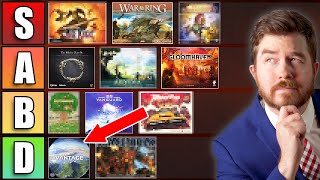
Unknown Channel top_100_list at 2:27 sentiment: positive
video_pk 9915 · mention_pk 29165
Click to watch at 2:27 · YouTube ↗
Overall sentiment (raw)
positive
Pros
- vibrant world feel
- deep tactical battles
Cons
- solo play can be unwieldy
- example items could be better balanced
Thematic elements
- living world with evolving map and narrative
- Tamriel
- story-driven with world-events and random encounters
Comparison games
- Too Many Bones
Mechanics (from transcript analysis)
- skirmish campaign — tactical battles with class-based powers and route-planning
- world map events — random encounters and evolving map influence the route
Video topics + discussion points
No key topics recorded for this video.
Quotes (from this video)
- This is obviously an S tier game.
- I'm combining a few Clank games here, but they're all A tier.
- I hate Kingdom Death Monster. I hate it.
- This is an easy A tier game.
- This is an S tier game.
- Don't yuck yums.
References (from this video)
No references stored for this video.
Video DjSi2y0VaVk
Good Time Society general_discussion at 2:27 sentiment: positive
video_pk 9709 · mention_pk 28677

Click to watch at 2:27 · YouTube ↗
Overall sentiment (raw)
positive
Pros
- Impressive scale and ambition
- Becca provides approachable guidance for large, heavy games
Cons
- Complex rules; steep learning curve for new players
Thematic elements
- epic fantasy exploration with campaign-style play
- The Elder Scrolls universe in a board game format
- immersive storytelling with heavy lore
Comparison games
- Skyrim (video game experience as fan context)
Mechanics (from transcript analysis)
- campaign/education format — how-to-play and instructional approach to a large, complex game.
Video topics + discussion points
No key topics recorded for this video.
Quotes (from this video)
- This game has been around since 1963.
- This is Acquire. This game is fascinating.
- The world series of board gaming is super competitive, but super friendly.
- The art is beautiful; I wish I could punch in on it quick.
- Becca did The Elder Scrolls how-to play. It hurts to bring it inside the house; literally, it was like rocks.
- I love puzzle games; labberia looks wild.
- Magical Athlete is back now in a new version implemented by Richard Garfield.
- You just grab a tile, put it on. Nope, that's not it.
References (from this video)
No references stored for this video.
Video ovBi-cXr9Zg
Tabletop Turtle top_10_list at 36:05 sentiment: positive
video_pk 8041 · mention_pk 23678

Click to watch at 36:05 · YouTube ↗
Overall sentiment (raw)
positive
Pros
- highly thematic dungeon crawl with robust character options
- strong tactical combat and campaign potential
Cons
- solo play is strong; two-handed (two-hero) mode noted
Thematic elements
- hero progression with tactical battles
- Tamriel, dungeon-crawl exploration
- campaign-like with modular experiences
Comparison games
- Jaws of the Lion
- Skyrim / Morowind campaigns
Mechanics (from transcript analysis)
- Character building — distinct hero abilities with campaign-driven progression
- cooperative dungeon crawl — group of heroes engaging in tactical battles
Video topics + discussion points
No key topics recorded for this video.
Quotes (from this video)
- This is the kind of game you play when you want to feel smart.
- Everything feels like a good decision.
- The card play in this game is absolutely stellar.
- A lot of little things come together to feel cohesive and satisfying.
- You reap what you sew, you know, you need to be strategic and methodical about it.
References (from this video)
No references stored for this video.
Video gEl1z35HXhw
Broken Mele Show general_discussion at 40:54 sentiment: negative
video_pk 5320 · mention_pk 15829

Click to watch at 40:54 · YouTube ↗
Overall sentiment (raw)
negative
Pros
- visually appealing components
Cons
- high price point
- complex and cluttered rule set
- maps and icons can slow play
Thematic elements
- adventure in Tamriel with betrayal dynamics
- Elder Scrolls universe
- map-driven, chip-based components
Comparison games
- Tainted Grail
- Nemesis
Mechanics (from transcript analysis)
- chip_and_map_overlay — chips overlay maps altering layout and effects
- encounter_variability — varied boss and event encounters
Video topics + discussion points
No key topics recorded for this video.
Quotes (from this video)
- it's only a game
- it's not worth it to hype something that may never come out
- remember, it's only again merry Christmas and have a happy new year
References (from this video)
No references stored for this video.
Video IsbMqrjqfl0
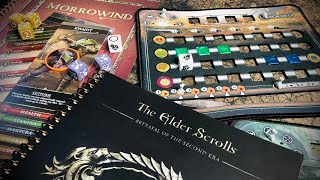
Box of Delights rules teach at 0:00 sentiment: positive
video_pk 3184 · mention_pk 9368
Click to watch at 0:00 · YouTube ↗
Overall sentiment (raw)
positive
Pros
- Strong thematic integration with the Elder Scrolls IP and campaign-style progression
- Co-op capable with solid solo play options and multi-character depth
- Content-rich production with varied regions and dynamic encounters
- Deep character customization through skill lines and dice-based progression
- Region-specific rules and quests offer replayability and scalability
Cons
- High complexity and lengthy setup typical of Chip Theory Games
- Steep learning curve and dense rulebook that may deter newcomers
- Prototype/demo status may indicate final components or rules could shift in production
Thematic elements
- adventure, exploration, artifact collection, guild-driven quests and assassination contracts
- Tamriel universe with multi-region exploration (Morrowind, Skyrim, Black Marsh, High Rock, etc.)
- campaign-driven, modular quest arcs with region-specific rules and evolving objectives
Comparison games
- Too Many Bones
- Marcus Victorum
Mechanics (from transcript analysis)
- Artifacts and artifact tracking — An artifact track records artifact discoveries by a nemesis and scales progression/difficulty accordingly.
- Campaign arc and day tracking — The scenario unfolds over a fixed number of days (up to 12); day progression and quest objectives shape pacing and reward scaling.
- Combat dice and cooldown — Combat uses dice with different levels and a cooldown mechanic to manage action economy across encounters.
- Enemy bags and region-specific foes — Enemies are drawn from bags; region codes restrict which foes may appear, creating region-specific variety.
- Gazette region pages — Each map region has a dedicated page in the Gazette that reveals shops, guilds, and region-specific events when explored.
- Guild-driven quest setup — Players select a guild to align with; a session snapshot details the main objective and narrative flavor for that guild.
- Overland movement — Players use Overland tokens to move across a branching map; travel distance and encounter options vary by region.
- Skill lines and tokens — Characters have up to eight skill slots represented by tokens; players allocate health, stamina, magicka, and other skills across lines, adjusting as the game progresses.
- Town encounters and Overland deck — Town encounters can add items to the peaceful Overland deck; advancing encounters can increase the Moro Tong presence for quest tracking.
Video topics + discussion points
No key topics recorded for this video.
Quotes (from this video)
- this is not a sponsored video I don't get paid to do any of my videos this is just purely me sharing the love of board gaming with you guys
- this is a production sample that chip Theory games have sent me
- I'm not going to be doing a full campaign scenario because just one game through of this is going to take about six hours
- it's based on a popular video game franchise Elder Scrolls
- I'm going to be playing solo but because it's a co-op game you can play multiple players solo if you want to
References (from this video)
No references stored for this video.
Video 8AWaFF4v3r4
Rolls in the Family top_10_list at 27:48 sentiment: positive
video_pk 1781 · mention_pk 5150

Click to watch at 27:48 · YouTube ↗
Overall sentiment (raw)
positive
Pros
- Epically themed, with a strong sense of campaign progression
- Potential to scale and customize with modules
Cons
- Campaign setup and length may be a barrier
Thematic elements
- Fantasy exploration with overlapping objectives and player powers
- The Elder Scrolls universe
- Campaign-like experience with modularity
Comparison games
- Gloomhaven
- Too Many Bones (as engine-building and campaign-style comparison)
Mechanics (from transcript analysis)
- Cooldown / card-based character progression — Character actions and cooldowns shape strategic timing
- Cooperative exploration with modular objectives — Players cooperate to achieve larger goals while managing personal powers
Video topics + discussion points
No key topics recorded for this video.
Quotes (from this video)
- There's nothing even close really, I think, to what this game is doing with this.
- It's not a campaign. It's a campaign game, but it can be played in one-offs as well.
- This one has the potential to be the best game we try this year.
References (from this video)
No references stored for this video.
Video Bz9SUTUX3C0
Brothers Murf top_10_list at 5:47 sentiment: positive
video_pk 1446 · mention_pk 4182

Click to watch at 5:47 · YouTube ↗
Overall sentiment (raw)
positive
Pros
- deep Elder Scrolls flavor with familiar factions and races
- dynamic dice-cycling adds tactical tone
- strong character customization and replayability
Cons
- heavy rules weight may deter lighter players
- requires a committed group for full campaigns
Thematic elements
- rpg-like classes, skill development, delves and dungeon exploration
- Elder Scrolls world with Tamrielic races and locales
- campaign-ish progression with class and skill advancement
Comparison games
- Too Many Bones
Mechanics (from transcript analysis)
- Campaign-style progression — Short, self-contained campaigns with a set number of sessions and customizable characters.
- cooldown/recovery mechanic — Used dice go on cooldown and recover gradually, creating resource management decisions.
- dice-based skill system — Character skills level up via trainers; dice are earned and used to perform actions.
Video topics + discussion points
No key topics recorded for this video.
Quotes (from this video)
- I think it captures Stardew Valley the video game really well in a board game format and it's just fun to be able to work together and work on that community center.
- It's a cooperative game where people can hop in and out of the game at any point because it's just like very casual.
- The art in this game is so beautiful and it feels like it's from the books and it is again based on the books which of course is how we first encountered Middle Earth.
- Star Wars in a box is awesome and one that does it really well where you're pitting the Rebel Alliance vs the Empire.
References (from this video)
No references stored for this video.
Video s3GfWM-KqYw
Box Delights playthrough at 0:06 sentiment: positive
video_pk 189 · mention_pk 543
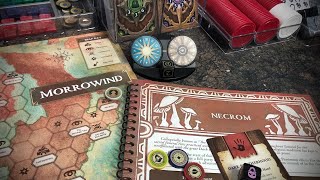
Click to watch at 0:06 · YouTube ↗
Overall sentiment (raw)
positive
Pros
- Strong thematic integration with Elder Scrolls lore (City of the Dead, Mor Tong, Dark Brotherhood, Guild ties) that enhances immersion
- Rich, multi-layered action economy (guild kiosk, alchemy station, town actions, lockpicking-like mechanics) with meaningful choice at every step
- Quests and side quests provide variety and meaningful XP rewards, expanding strategic options
- Persistent effects and revival rules give a sense of continuity across days, reducing harsh failure and encouraging exploration
- Combat-related mechanics (stealth, fear, tenacity, and varied dice outcomes) offer tactical depth and tension
- Flexible play pacing: players can train skills, acquire items, and plan routes to meet day-tree objectives
Cons
- High complexity with many interlocking systems; a steep initial learning curve may be intimidating for new players
- Heavy reliance on reference sheets and inline rules can slow early play and require frequent rule-checking
- No currency economy, while thematically cohesive, may feel unusual or limiting to players who expect traditional market dynamics
- Narrative flow can become opaque if players ignore side quests or mismanage persistent effects, potentially reducing sense of agency
Thematic elements
- adventure, factional intrigue (Dark Brotherhood, Guild), dungeon-crawl motifs, exploration and resource management
- Tamrielic setting with necromantic enclave (City of the Dead / Necron) and surrounding overland exploration in the Elder Scrolls universe
- emergent, session-long narrative driven by town encounters, side quests, and persistent session effects; branching outcomes based on player choices
Comparison games
- Too Many Bones
Mechanics (from transcript analysis)
- Dig track and excavations — an excavation/dig track mechanic interacts with dig sites; progress can be disrupted to prevent artifacts from revealing themselves or empowering antagonists
- End-of-day sequencing — each day ends with drawing an Overland encounter card and resolving its impact on the dig track or other global tracks, feeding into map progression and threat scaling
- Guild actions — guild kiosks unlock special actions tied to the members (e.g., Dark Brotherhood markers) that influence the adventuring options and status effects
- Inventory management — inventory is divided into ready slots and backpack; items can be moved between slots in and out of battle, with end-of-town actions sometimes adding items to the peaceful deck
- No currency economy — the game deliberately omits a traditional monetary system; purchases and actions are resolved via one action per item and resource management rather than coin-based shopping
- Overland movement — the party can move across a map up to three spaces per day with tactical implications for encounters, with the potential to control routing via fatigue and map icons
- Persistent effects and revival — the game features persistent effects that carry across the session; upon defeat, the party may be revived to full health in a specific location (Necron) rather than ending the game
- Quests and side quests — quests are drawn from a quest board and can yield XP, items, or unique narrative opportunities; side quests offer additional objectives and potential rewards
- Shop and items — the local shop provides common and legendary items, but there is no coin currency; items cost a non-economic action and are taken from the shop offer
- Skill tokens and training — tokens drawn at the trainer determine which skills can be trained; advancing a skill requires XP and dice on the chosen line, sometimes needing additional investment
- Status effects and d6-like dice — the game uses status effects like fear and stealth drawn from dedicated dice; certain abilities modify how non-combat skills interact in battle
- Town encounters — each day begins with a town phase where the party can resolve a town encounter, access a shop, take guild actions, or engage with the persistent town effects
Video topics + discussion points
No key topics recorded for this video.
Quotes (from this video)
- it's a new dawn it's a new day
- there's no money all right you don't have any coins to spend
- you can heal up to full HP
- defeat in this game for us means not final defeat
- the party gains this persistent effect for the rest of the session
References (from this video)
No references stored for this video.
Transcript Navigation
Showing 1–11 of 11