City of the Great Machine is a strategy game set in a grim universe of technocratic Victorian steampunk. The game features the conflict between the Great Machine, an artificial intelligence network, and an alliance of Heroes. The Great Machine is either controlled by a player or is automated, which completely changes the game play.
The Great Machine controls a City built on mobile platforms in the sky. As the Great Machine, the player (or game AI) commands a force of perfected Servants and mechanical Guards. The Great Machine's ultimate goal is to suppress social unrest and complete its grandiose Master Plan to perfect the human race.
The other players are Heroes working together against the Great Machine to start a revolution. They encourage discontent in the City, enlist the support of famous citizens, and inflame riots. They also attempt to prevent the Great Machine from completing the Master Plan, as it leads to the enslavement of the human race.
Game features:
City of the Great Machine may be played as One-vs-Many (2-4 players) or cooperatively/solo (1-3 players).
Modular board allows for infinite City layouts. The players may reposition the City Districts during the game.
Hidden movement. Each round, the Heroes secretly choose the Districts they will go to.
Resource management. Both sides of the conflict have multiple actions to take and pay for them in Trust (Heroes) or Bonds (the Great Machine). The same is true for movement and other tasks.
Asymmetric game play and unique victory conditions. The Heroes need 3 Riots to win, while the Great Machine strives to complete the Master Plan.
Secrecy. The Heroes need to conceal their plans from the Great Machine, however, they may discuss their intentions only in the presence of the Great Machine.
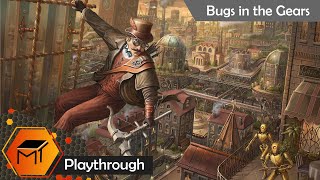
- Engaging solo/co-op play with mission-driven goals and varying paths to victory
- Tense interaction between the Great Machine's progress and riot-based victory conditions
- Strong production design with vivid citizen tokens and district components
- Clear thematic feedback and satisfying escalation as riots accumulate
- Complex rule design and setup can be daunting for new players
- Long playtime; the game can feel sprawling in solo/co-op mode
- Riots and master plan dynamics can feel punishing in competitive variants
- Rebellion, civic intrigue, stealth and district control within a machine-governed city
- A dystopian city guided by a sovereign Great Machine, where revolutionaries strive to incite riots and disrupt the machine's master plan.
- Mission-driven, with rotating directives and an evolving threat level that shapes round-by-round tension
Mechanics (from transcript analysis)
- Access cards and action drafting — Each hero selects an access card to determine where they may act and what actions are available that turn.
- City Event cards — City-wide events introduce round-specific effects that influence trust, discontent, and master plan progression.
- Directives and board actions — Directives and district actions provide special effects or bonuses; some can be canceled to blunt the machine's progress.
- Discontent and master plan track — Discontent moves upward to accelerate the master plan; the master plan reaching high values yields a loss in some modes.
- Famous citizens and intel — Citizens have values and can be equipped with Intel tokens; manipulating these affects riot potential and district control.
- Riot/riot-token system — Riots are the victory condition; players flip and reveal citizens to form riots in certain districts, tracked via riot tokens.
- Servants and detention — Three Great Machine servants move and detain heroes; malfunction cards shift servant behavior round by round.
- Trust economy — Trust acts as a currency to pay for district movements and actions; some hero abilities modify how trust is spent or gained.
Video topics + discussion points
Quotes (from this video)
- this game is super fun
- I love this game I've played it eight times and I can't stop playing
- I love how this game works
- it's epic
- I can't believe we almost won
- this one is so cool
References (from this video)

- Intriguing hidden movement design
- Rich thematic presentation
- Complex for casual players
- Steampunk, hidden movement and area control
- Steampunk city-building with faction interactions
- Strategic, thematic
Mechanics (from transcript analysis)
- Area Control — Control zones on the board for scoring
- Hidden movement — Players move pieces with hidden intent and strategy
- Team/faction interactions — Multiple factions with differing abilities
Video topics + discussion points
Quotes (from this video)
- It's a blast; it's like Magic. I haven't played yet, but I'm going to teach him how to play.
- The ghost adds so many layers of strategy.
- You spend ink points to ready your character, and then you can either fight or quest.
- It's sold out at the show; 90 minutes sold out in the rush.
- Two clever cats—it's a thinking game for two clever cats.
References (from this video)

- Unique one vs. all mechanism
- Modular board design
- Compelling theme
- Artificial intelligence controlling society
- Steampunk city
- One vs. all
Mechanics (from transcript analysis)
- Modular board — Changeable district boards
Video topics + discussion points
Quotes (from this video)
- You can't spell steampunk without steam up
- I want to serve a riot, I mean not in real life, but maybe at the tabletop
References (from this video)
- Steampunk minis
- Miniature skirmish
Mechanics (from transcript analysis)
Video topics + discussion points
Quotes (from this video)
- spreading the gospel of board games
- it's a must-have
- don't sleep on this
- we love talking about gateway games
- we're taking the game out to people
References (from this video)

Mechanics (from transcript analysis)
Video topics + discussion points
Quotes (from this video)
- I've really liked it my many plays of this game over the years.
- it's probably better to move it on.
- I don't think I'd be sad to never play Kalimala again.
- This has been on my mind for a couple of months now honestly.
- we are planning on doing something ... playing games with my friends that also turns into play-throughs that people can enjoy.
- there's a lot of kinks that we're trying to work through.
References (from this video)

- high interaction and thematic tension
- clear, cinematic flavor in the mechanism
- engaging for players who like planning and disruption
- can be heavy and may disrupt others' turns
- requires careful planning and adaptation
- master planning and rebellion against the great machine
- floating city with a mechanized sovereign
- asymmetric roles; dynamic board interaction
Mechanics (from transcript analysis)
- area/board manipulation — move guards and shift board positions to influence paths
- Card-driven actions — play cards to progress on a master plan
Video topics + discussion points
Quotes (from this video)
- Wondrous Creatures is an amazing book Euro game
- it looks like a book and not only the box is appealing but also the board game itself looks beautiful
- this is one of my favorite games of this genre
- the great machine wants to take over the world
- you can move these guards or change places for the boards
- the mobs come and the mobs keep coming until you reveal a mob that is not there
References (from this video)

- Innovative subversion of hidden movement by blending social deduction and a visible master plan
- Event deck adds narrative variety and round-specific twists
- Strong thematic integration of AI oppression and rebel strategy
- Effective four-player dynamic that encourages discussion and collaboration
- Long play sessions; could be burdensome for some groups
- Accessibility quirks in production and rulebook clarity
- Two-player viability is weak; best with four players; some components feel fiddly
- Resistance vs. oppressive AI governance; class dynamics; secrecy and public theater of rebellion
- A dystopian near-future city where rebels resist an AI-controlled Machine across shifting districts, navigating social strata and state apparatus.
- Cat-and-mouse espionage with a grand master plan, combining thematic AI menace with human-scale political resistance
- Mind MGMT
- Beast
- White Hole Mysteries
- Sabotage
Mechanics (from transcript analysis)
- Access cards and districts — Rebels secretly select district cards face-down to determine where they intend to move, revealed after the machine finishes its turn.
- Event deck and rule twists — Each round begins with an event deck card that changes core rules or advances the machine’s strategy, adding variability.
- Hidden movement — The rebels plan and execute moves in secret while the machine acts with apparent visibility, creating tension and deduction.
- Master plan and events — A master plan ladder progresses as rebels are detained; event cards alter core rules and drive the plan forward.
- Resource management and AI actions — Trust, raid tokens, guards, and servants shape movement, arrests, and district control, reflecting AI governance.
- Riots and citizen identities — Riots flip citizen identities to gauge support, tally discontent, and determine riot success against the machine.
Video topics + discussion points
Quotes (from this video)
- the event deck is an extra layer of story and puzzle that make each round feel distinct
- the machine player has no idea whether what you're saying even means anything
- this is not alone in putting a spin on the genre
- it's a four player game it thrives on people showing cars to each other and talking out loud about them
- you'll hand the role of the scheming AI to yamate Colin
- city of the great machine flips it on its head
References (from this video)
- strong thematic integration and atmosphere
- cooperative teamwork feels rewarding
- expansions add depth and replayability
- learning curve can be steep
- component quality and setup time may be impactful for casual play
- steampunk, adventure, heroic fantasy
- Steampunk city under siege by a sentient Great Machine
- cooperative, scenario-driven
Mechanics (from transcript analysis)
- cooperative play — Players coordinate to overcome a powerful adversary and its factions
- story-driven progression (expansion aware) — Campaign-like arc with escalating threats and narrative beats
- Variable player powers — Distinct abilities for each player shape team strategy
Video topics + discussion points
Quotes (from this video)
- board games are an investment in family
- it's a lifestyle
- self-care is important
- we've fallen into this whole world of the board game hobby
- life has to go on
- you gotta sit at the table we gotta eat