In the dark corners of Kulbak Prison, away from the prying eyes of the construct guards, inmates play a game of Goblin Vaults in secret...
Goblin Vaults is a strategy card game for 1-5 players featuring bidding, card placement, and scoring patterns. In the game, you wager cards to win loot from the central cell block, then stash that loot wisely in your vault, earning gears based on the position of cards within that vault. You can also gain gears from scoring objectives that change each game.
With cunning and clever scheming, make your bid to be feared amongst your peers! You'll need wits and luck to play your cards right as you fill your vault and influence the warden in your favor. After nine rounds, whoever has the most gears wins!
—description from the publisher
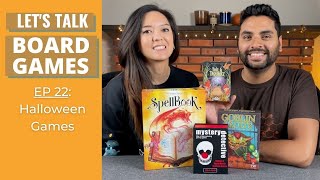
- deep, thinky strategy with clear tension between auction and vault organization
- varied scoring objectives add replayability
- good player count scaling (best at 4-5 players)
- less tension at 3 players
- complexity may be a barrier for casual players
- Goblins, commodity collection, and heist-like vaulting
- Goblins in a prison vault setting with gears and vault-building
- Thinky, resource-management with dungeon-crawl vibes
Mechanics (from transcript analysis)
- auction/bidding with gear costs — Each round you bid on up to three cards on the table using one of your own cards and pay gears if you bid lower than the highest bid.
- scoring cards and public objectives — End-of-game scoring based on card placement, suits, and faction symbols with public scoring cards revealed.
- under-bid tension — Under-bidding creates opportunity and gear costs, influencing strategy and gear management.
- vault/grid building — Construct a vault with up to four columns (Chambers) and up to three rows (tiers). 12 card spaces total.
- warden action — Matching faction symbol on played card and the warden card allows a rearrangement of your vault or drawing a new card.
Video topics + discussion points
Quotes (from this video)
- This is definitely a family weight style card game for two to six players, and there's a lot of push your luck basically in this game you're trying to score the most amount of magic points.
- it's a quick teach
- it's very simple very light
- we're not really big on push your luck
- that is toil and trouble
- I'm not a big fan of Spellbook
- the spells are going to be a bit of engine building
- there's a lot of flexibility in the game
References (from this video)
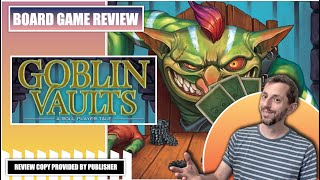
- Innovative blend of trick-taking, auction, tableau, and set-collection
- Dynamic, variable scoring objectives that change every game
- Engaging feedback loop with short turns and meaningful rewards
- Support for solo and two-player play with a functioning AI
- Strong production values and a clear rulebook
- Steep initial learning curve due to thematic terminology
- Limited direct interaction between opponents and relatively subdued drama in the auction
- Hook for new buyers is not immediately obvious at first glance
- Trick-taking auction, tableau building, and set collection in a fantasy setting
- Fantasy world of UlOS; same universe as Role Player, Cartographers, and Dawn of UlOS
- Abstract with thematic vocabulary; terminology can both help and hinder learning
- Role Player
- Cartographers
- Dawn of UlOS
Mechanics (from transcript analysis)
- Auction/Underbidding — A three-card display is drafted and players bid by playing cards; underbidding incurs gear tokens
- Card manipulation via icons — Icons on cards and the trump card allow shifting cards within a Vault or swapping with the deck/hand
- End-of-round scoring with multiple objectives — Scores come from tier placement, faction icon matches, and collected gear tokens; objectives change each game
- Tableau/Vault construction — Each player builds a Vault with four vertical chambers and three horizontal tiers; new cards go to the lowest available tier
- Trick-taking — Players attempt to win cards by value in a column; trump suit affects outcomes
- Variable player counts and solo mode — Rules exist for 1-5 players, with a solo/2-player automated opponent for missing players
Video topics + discussion points
Quotes (from this video)
- the rules are not complex but the strategies are layered
- this game really only functions with three or more players but goblin vaults does provide rules for two players and even solo mode
- it's totally abstract and the terminology sadly works against it
- the game play is great well designed and completely functional it's really fun in fact
- overall score of seven is fine it doesn't top the ladder and it's engaging enough to provide an enjoyable session
- I'll be hanging on to this one