Stefan Feld's 3rd game by Alea is In the Year of the Dragon.
Players take on the role of Chinese rulers around the year 1000. The game plays out in twelve rounds, with each round representing one month in a year that seems to go from bad to worse. Disease, drought, and attacks from the Mongols may claim lives, but make sure you have enough money to offer a tribute to the Emperor.
The game play is easier than it may appear. Every player has a set of "person" cards. Each round, you choose one action (most of which call on your workers' abilities) to help you prepare for the months ahead. Then you play one person card, recruiting that person and placing him into one of your palaces. Each person brings different skills and abilities to help you ride out the year. (Farmers help you gain rice to survive a drought month, Tax Collectors raise money, etc.) At the end of each round, that month's event is triggered, which may cost you some of your workers, some money, or give you points.
Careful planning is the key to surviving "the year of the dragon," but survival alone may not win you the game.

- clever, tight resource economy
- atmospheric theme with tense decision-making
- masterful balance between pressures and available options
- high brain burn and pressure can be exhausting
- complex scoring and setup may deter casual players
- resource/crew management amid evolving threats
- medieval empire-wide management and survival
- grim yet strategic attrition-style play
Mechanics (from transcript analysis)
- crew_management — Maintain pagodas and houses with the right workers to fight threats.
- resource_management — Weather threats (drought, famine, disease) and manage crew to withstand them.
- scene_control — Control of pagodas and troops influences scoring and threat mitigation.
Video topics + discussion points
Quotes (from this video)
- this game does a great job of mashing together the hybrid systems of like euro games and american games
- the engine building is so satisfying
- turns in this game are extremely fast
- you can be extremely creative and clever with the way you link these clues together
- the familiarity of a game like charades is gonna instantly help other people understand the rules
- an underrated and under-appreciated family-friendly puzzle-style game
- a wonderfully put together game
- the dice being used in weird and wonderful ways
- this is a dry euro, one of the most mechanical and most mathematical games out there
- weathering the storm and overcoming all the obstacles
References (from this video)
- steady rise in personal rankings
- distinct pace and atmosphere
- challenging to learn and master
- may punish slow early players
- catastrophe management and staff placement
- fantasy empire under a dragon theme
- puzzly, highly thematic but abstract
Mechanics (from transcript analysis)
- grouped action selection with cascading effects — actions come in clusters; early choices affect later ones
- pacing and event management — weather storms via staff and catastrophes
Video topics + discussion points
Quotes (from this video)
- I absolutely adore this one
- I think it is an absolute blast
- this game is fantastic
- an evergreen to me
- it's stripped back and still a blast
References (from this video)

- Aesthetically unappealing
- Never been enamored with it
- Waiting for reprint
Mechanics (from transcript analysis)
Video topics + discussion points
Quotes (from this video)
- I know the games I play. I know the games I love to play. And I know the games that I theoretically want to play but don't actually play.
- I need at least one of those two things in play - either high personal interest or good reputation
- Designers, reviewers, other people mentioned
- I'm going to be trying to be more mindful about reality as opposed to the desires that I have
- These tend to be less of a priority. Like occasionally I dive into an unplayed game that isn't a review copy, but more often than not if I'm diving into an unplayed game, review copies do take precedence
- I have so many euros I love and so many that I'm behind on
References (from this video)
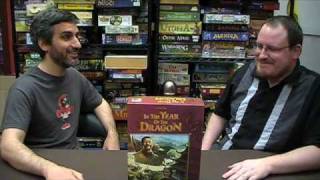
- Offers a rich, multi-faceted planning exercise that rewards forward-looking decisions and timing.
- Event and drought mechanics create meaningful pressure without relying solely on luck.
- Flexibility to pivot strategies mid-game keeps sessions dynamic and reduces stagnation.
- Replenishing money up to three provides a lifeline when resources are stretched, enabling risk-taking at opportune moments.
- Thematic intensity and distinctive setting make the game memorable and conversation-worthy.
- Disaster-centric play can feel punishing and grindy, especially for players seeking steady progression.
- High cognitive load and turn-by-turn management may overwhelm casual players or newcomers.
- Not typically considered a gateway title due to complexity and thematic heft.
- Outcome can hinge on the order of events and timing, which may frustrate players who prefer consistent strategy execution.
- Political maneuvering and resource management under perpetual threat; disaster planning as core tension.
- A historic or mythic Chinese-influenced setting featuring imperial palaces, famine, plagues, Mongol invasions, taxes and courtly life.
- Event-driven, scenario-like feel with cascading threats that require players to adapt strategies.
- Monopoly
Mechanics (from transcript analysis)
- action_selection — Each round, players choose actions that influence resources, palace tile acquisition, and turn order, creating interaction and strategic sequencing.
- event_deck_and_timing — Events are revealed and resolved, introducing negative shocks (famine, plague, Mongol invasions, taxes) that pressure decisions.
- flexible_strategy — Players can shift plans mid-game, trading off short-term losses for longer-term gains, adding depth and adaptation.
- resource_management — Managing rice, money, temples, and other resources is required to weather droughts and penalties while pursuing scoring.
- scoring_and_progression — End-of-round scoring depends on palaces, court tiles, privileges, and other assets; immergent bonuses for percentiles and money.
- tile_acquisition — Palace tiles and court-related tiles are obtained and placed to unlock bonuses, scoring opportunities, and defensive options.
- turn_order_advancement — Your position on the turn order track improves when you are chosen for actions, affecting timing and access to key options.
Video topics + discussion points
Quotes (from this video)
- it's not bad if you plan right
- all you're doing is trying to avert disaster
- it's a building game but just constantly being torn down
- you can replenish it up to three
- not a gateway game; very terrifying
- you can look far ahead and it's so systematic
- you have to weather the storms in case you can't do what you want