Once Upon A Time is a game in which the players create a story together, using cards that show typical elements from fairy tales. One player is the Storyteller and creates a story using the ingredients on their cards. They try to guide the plot towards their own ending. The other players try to use cards to interrupt the Storyteller and become the new Storyteller. The winner is the first player to play out all their cards and end with their Happy Ever After card.
The second edition, published in 1995, features an expanded card set.
The third edition, published in 2012, features multiple changes, including new artwork by Omar Rayyan, a new card set, and a simplified rulesheet.
Box says: Contains 110 story cards, 55 ending cards and a rulebook(my box has 114 role cards)
See Also
Dark Cults
The Secret Adventures of The Old Hellfire Club
- fast-paced
- clear decisions
- low time commitment
- hand management pressure
- replay value may be limited
- military conflict
- medieval battlefield duels via cards
- card-driven
- Lost Cities
- Hanamikoji
Mechanics (from transcript analysis)
- cards drafting — players choose from hands to create combinations and win battles; a shared deck is used.
- set collection — cards grouped into rows; more strength yields victory in rounds.
Video topics + discussion points
Quotes (from this video)
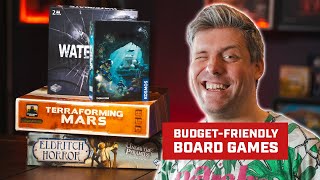
- Hive is a simple two-player game yet it's for gamers because there's a lot of decisions it almost feels chess-like it's zero luck
- this video is going to go head-to-head and find the best board games for gamers under budget
- 75 not that bad for five really good games for gamers
- it's going to be the most expensive ice cream
References (from this video)
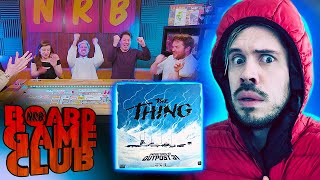
- highly social and tense, strong group dynamics, flavorful theme tied to The Thing film
- varied captain powers and roles add asymmetry
- risky and long game with potential to stall; complex rule set and strategic talk can be exhausting
- paranoia, body-snatching alien shapeshifter, survival
- Antarctic research outpost (Outpost 31) during the events of The Thing
- cinematic survival horror with social deduction
- The Resistance
- Dead of Winter
Mechanics (from transcript analysis)
- assimilations / power shifts — periodic assimilation where more players may become Thing
- Dice-based resolution — rolls determine success of missions; plus/minus dice and power re-rolls
- hidden traitor / social deduction — players secretly assigned as 'The Thing' or humans; trust is tested
- mission-based team assembly — players assemble teams to complete missions with required roles
- sabotage / sabotage cards — cards that hinder the mission and reveal information about others
Video topics + discussion points
Quotes (from this video)
- it's like a mixture of the Resistance and Dead of Winter
- it's going to be wonderful and quite possibly very tense
- who is going to make it out alive
- we're the only ones that can escape on the helicopter
References (from this video)
- Iconic, widely played in families and groups
- Fast, familiar, and endlessly replayable
- High luck factor; less depth for some players
- Limited strategy beyond probability management
- Probability and luck-based scoring
- Generic dice game with scoring categories
- Casual family game; traditional classic
- Bingo
- Risk (as a classic voting/collection of points family game)
Mechanics (from transcript analysis)
- Dice-rolling and category scoring — Roll dice to fill scoring categories; choose when to reroll.
Video topics + discussion points
Quotes (from this video)
- it's a memory game i mean if you say it's not
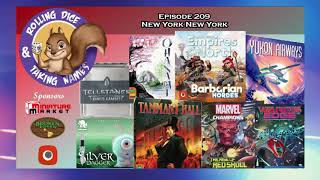
- barbarians adds a whole new element to it you've got all these different expansions
- the production is top notch
- two actions you can do on your turn
- the board is basically a map and the map shows you how elections will be resolved with arrows
- rise of red skull came out and the reason why we're so excited about this was because this is it was introducing campaign elements
References (from this video)
- a good gateway into more economic/stock concepts
- thematic flavor with strategic tension
- may be hard to find in print today
- some players may find the drafting/auction balance fiddly
- insider trading with public and private information
- stock market trading floor
- satirical gateway-style economics with bluffing
- Power Grid
- Black Monday
Mechanics (from transcript analysis)
- auction/stock bidding — players bid for stocks with hidden information revealed later
- hand management — managing a hand of stocks and timing purchases for payoff
Video topics + discussion points
Quotes (from this video)
- Code Names it's only the best game ever
- the clues you have to give are board game names
- we are playing Code Names with a twist
- Stock market game of insider trading and it's a great Gateway game
- Wavelength is a cooperative party game
- it's a NeverEnding live stream
References (from this video)
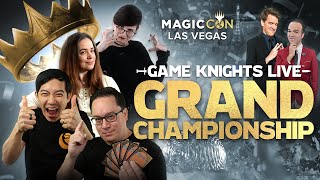
- High-energy, dramatic finish with a last-turn comeback
- Showcased deep deck interactions and multi-deck synergy
- Strong audience engagement and live commentary that enhanced the spectacle
- Complex interactions and dense board states could be confusing for casual viewers
- Some rule interactions (e.g., multiple Pyrohemia activations and cube mechanics) required on-the-fly adjudication
- high-stakes Commander duel featuring four returning champions and prebuilt championship decks
- live stage at Magikon Las Vegas, arena-style Commander battle
- spectator-sport epic with crowd involvement and theatrical narration
- Magic 30 (Madrid/Barcelona/Philly/Minneapolis iterations referenced in commentary)
- Magikon Minneapolis / Magikon Chicago announcements
Mechanics (from transcript analysis)
- Commander format — Players select a legendary creature as their commander; color identities and lead-by-example strategies shape gameplay.
- Equipment and artifacts — Artifacts and equipment (e.g., Skull Clamp, Containment Construct) provide card draw, ramp, and utility.
- ETB and flicker interactions — Many commanders and spells support enter-the-battlefield triggers or blink effects that generate value through repeated ETBs.
- Mass damage and board wipes — Enigmatic engines ( Pyrohemia / Rankle / Torbran interactions) push large, persistent damage to players and permanents.
- Priority and timing — A dedicated commander clock moderator monitors time; priority rules drive when spells resolve and triggers occur.
- Recursive value and reanimation — Graveyard interaction and reanimation effects appear through cards like Underworld Cookbook and other recursion tools.
- token generation — Various commanders create and interact with creature tokens (e.g., Bird tokens, Devil tokens) to pressure life totals and board state.
Video topics + discussion points
Quotes (from this video)
- The Monarch has never looked so good
- Long Live Kathleen
- Welcome to Game Nights Live, only one may stand
- unbelievable, unbelievable
- The crowd wow, look at that thing right there
References (from this video)
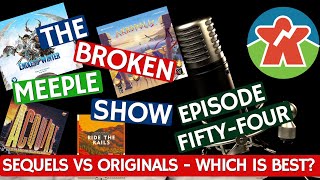
- Smooth and quick filler experience (~30-45 minutes)
- Production quality is solid; tiles are thick and readable
- Accessible entry point with clear scoring cues
- Theme is largely non-existent or incidental
- Heavily derivative of other tile-drafting concepts
- districts and monumental construction
- Ancient Greece city-building
- abstract / Eurogame flavor
- Small World
- Micropolis
Mechanics (from transcript analysis)
- multi-level building (ground level to second level) — Place tiles on the ground and potentially stack higher for additional benefits.
- tile drafting from a row — Draft tiles from a row to add to your city, balancing costs and potential scoring opportunities.
- tile placement for city building — Place tiles to form districts with different scoring implications.
Video topics + discussion points
Quotes (from this video)
- it's still only a game
- top tens trump reviews so much on the channel
- I want five more Spirits
- I am down for five more Spirits
- the audio is not going to be fantastic but at least hopefully this audio sounds a lot better
References (from this video)

- simple rules
- portable package
- classic Knizia lite
- high luck component
- limited depth for some players
- tile-drafting and worm-themed scoring
- grill/tabletop tiles with worms
- abstract dice-tough luck with push-your-luck tilts
Mechanics (from transcript analysis)
- bust_and_return — if you roll a new number, you bust and must return a tile to the grill
- dice-rolling — roll dice to claim tiles from a central grill; keep high values and set-aside dice of the same number
- partial_roll_strategy — decide whether to roll again to improve your total while not increasing numbers you've already taken
Video topics + discussion points
Quotes (from this video)
- "it's a real classic"
- "it's a dice game"
- "it's just as good, it's better, it's higher on the list"
- "it's a perfect filler if you're happy to have a lot of that take that and not take it too seriously"
- "I think this is a fantastic mechanism"