The first delicate flowers herald the end of a harsh winter. The sun shines longer day by day and pushes the snow back. Lush meadows bloom, and curious marmots slowly awaken from hibernation. Finally, spring is coming into the mountains — the perfect time for a hike. Choose your route carefully, watch out for the burrows of the marmots, and pack enough snacks. Your chances to earn an edelweiss hiking pin are rather low if you sit hungry in the snow.
Spring Meadow is the grand finale of Uwe Rosenberg's puzzle trilogy following 2016's Cottage Garden and 2017's Indian Summer. The complexity of this game — the most interactive of the trilogy — is set in between those two games, and fans of the trilogy will find familiar elements combined in an innovative way.
Place your meadow tiles with 0-2 holes skillfully on your mountain board to receive extra tiles when creating or expanding groups of holes. Find your way around the burrows of the marmots because they can restrict you during tile placement. Scoring takes place depending on the players' selection of meadow tiles from a central game board. Whoever has the largest meadow during a scoring receives a hiking pin, and the first player to earn their second hiking pin during scoring wins.
New puzzle challenges are guaranteed with 172 tiles in 49 shapes.

- Calm, satisfying puzzle experience with a tactile feel
- Interesting second level of puzzling that adds depth
- Simple to teach but hard to master, making it accessible yet rewarding
- Pace can be slower than the other games on the list
- Appeals more to puzzle lovers than to everyone
- puzzle fitting and spatial reasoning
- Pastoral meadow with a playful, puzzle-like ambiance
- playful, tactile, and a bit nostalgic
- Tetris (board game form)
- Stockpile
- Magic Maze
Mechanics (from transcript analysis)
- polyomino tiling — Players fit irregular pieces into a grid to complete rows with no gaps, akin to a tactile puzzle.
- set collection and optimization — Choosing pieces to maximize scores while avoiding gaps in the grid.
- two-layer planning — First you arrange pieces, then you reveal or rotate to align holes and maximize points.
Video topics + discussion points
Quotes (from this video)
- In Sheriff of Nottingham you have to work out when your friends are lying to you and Try to smuggle goods past each other.
- The twist is everyone plans their actions before anything happens
- In Colt Express you're vying to be the best outlaw in the West by running around this 3d train Robbing passengers and shooting each other.
- The island is sinking into the ocean
- We’re so in sync that we finish each other's Dignitas applications
- Pandemic is the best dickhead you'll ever meet.
References (from this video)
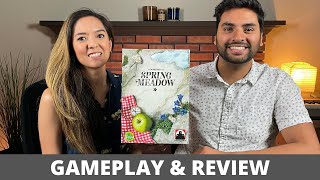
- fusion of Cottage Garden and Indian Summer mechanics
- Tetris-like scoring that rewards planning and timing
- clear two-player pacing with a decisive endgame rhythm
- charming marmot imagery and approachable theme
- odd tile shapes can be awkward to fit and plan around
- some players find the game less engaging than other tiling games
- thematic fluff can feel secondary to mechanics for some players
- potential for misplays (e.g., forgetting not to overhang) due to board interaction
- Marmot burrows and the creeping spring landscape
- Hikers on snow-covered mountain boards revealing grass as tiles are placed
- loose theme centered on hiking, marmots, and tile revelation
- Cottage Garden
- Indian Summer
- Patchwork
- New York Zoo
- A Feast for Odin
Mechanics (from transcript analysis)
- burrow scoring — Holes score when a marmot burrow is exposed under a tile; covering burrows with new tiles can close or reveal scoring opportunities.
- rock tiles from groups — Forming adjacent holes into a group lets you take rock tiles of a size corresponding to the group, with each group providing strategic expansion options.
- scoring phases — When a scoring window is reached (usually near the end of a round), you tally completed rows for points and pay attention to incomplete rows for additional scoring; the active player may gain a bonus token.
- tile placement — On each turn, you select a tile from the active row or column and place it on your board without overlap.
Video topics + discussion points
Quotes (from this video)
- this play was my favorite of all our plays that we've had so far—the most challenging
- the game is a fusion of mechanics from Cottage Garden and Indian Summer
- it's like Tetris style scoring
- the board itself is the most interesting part in terms of timing the end of the rounds
- Spring Meadow by U Rosenberg
References (from this video)

- Vivid color scheme and accessible to newcomers
- Provides a different scoring flavor within the trilogy
- For some, longevity and variety feel limited compared to other entries
- Initial board appearance is less striking than Indian Summer
- Seasonal meadow design
- Floral meadows with marmots in a garden setting
- tile-drafting with evolving scoring mechanics
- Cottage Garden
- Indian Summer
Mechanics (from transcript analysis)
- Bottom-to-top scoring with a new twist — New scoring approach compared to the other two games
- Tiling with geometric pieces — Arrange tiles to maximize scoring potential
- Two-player tight loop — Compact play with a distinct pacing
Video topics + discussion points
Quotes (from this video)
- they are all distinct enough to play as different games and that was the question that we were asking ourselves before we started the series
- Patchwork this game is sort of legendary you know like it's all like everybody's best games for two players lists
- it's the most recent release aside from new york zoo
- the marmots are really cute
- you can steal other people's tiles
- New York Zoo is the best theme
References (from this video)

- innovative use of holes in tiles and rocks as modifiers
- tight, elegant design; better than Indian Summer
- great for players seeking a gateway Rosenberg title
- not as aesthetically striking as Cottage Garden in some eyes
- may feel similar to previous trilogy but with improvements
- patchwork-inspired tiling with holes and bonuses
- meadow tiles on a board with snow melted away to reveal greenery
- elegant Euro design with modular scoring
- Cottage Garden
- Indian Summer
- Patchwork
Mechanics (from transcript analysis)
- hole- and rock-token mechanic — holes align with holes on tiles to generate bonus rocks that fill gaps on the board
- scoring by completed rows and pattern matching — endgame scoring tracks reward adjacency and pattern alignment; tokens grant extra points
- tile placement — place meadow tiles to build rows and patterns; holes and burrow holes matter for bonuses
Video topics + discussion points
Quotes (from this video)
- the art is stunning it's got just a beautiful cover on the front
- adorable art this game is called Q Birds
- this might be the best game that I played this year
- the way all of the stuff bounces around is incredibly satisfying on a tactical and strategic level
- it's a lightweight set collection hand management style game
- this is easily the best of this trilogy
- Spring Meadow does it really well
- Underwater Cities might be the best game that I played this year
- Winner's Circle is still really good
References (from this video)

- accessible and satisfying puzzle
- clear, elegant mechanics
- current favorite within its genre for the reviewer
- may feel repetitive for some players after multiple plays
- puzzle-building with tile placement
- a Tetris-style tile-laying puzzle
- light, abstract puzzle
Mechanics (from transcript analysis)
- hole management — the holes in pieces add constraints and scoring bonuses when connected.
- tile placement — place Tetris-like tiles to fill a board efficiently.
Video topics + discussion points
Quotes (from this video)
- it's intensely thematic as you spend the game drawing on your map trying to eliminate possible areas and deduce where it could be
- Chronicles of Crime is a crime solving game in the vein of Sherlock Holmes consulting detective that uses an app to deliver its clues and story
- the game lets you step into the crime scenes yourself by using virtual reality glasses with the phone app
- Shadows Amsterdam feels like a wonderful combination of Code Names and Mysterium turned up to eleven by introducing the frantic stress of a real-time game
- Detective a modern crime game is a crime solving cooperative game from Portal Games
- the cases are rich and complex and you will feel like real detectives as you take notes, pour over all the information and argue with your friends about suspects and leads
- Railroad Inc hits that perfect spot for a roll and write game of being easy to jump into
- the river is the latest game from Days of Wonder who are famous for beautiful approachable games for newbies like Ticket to Ride
- timing is everything you desperately want to build early as bonuses dwindle
- Western Legends the freedom of sandbox means they can be loose and there's some expectation to balance the game if you don't want someone to achieve a runaway outlaw strategy you need to stop them but that's keeping with the theme
- it's the closest boardgames will come to the video game Red Dead Redemption
- Pictomania is fast fun and chaotic
References (from this video)
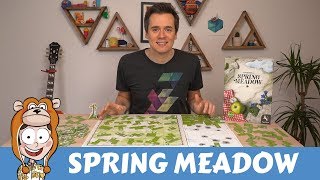
- Sleek, streamlined rules that emphasize pure puzzling over heavy encumbrances
- Accessible surface-level play with surprising depth for experienced players
- Strong two-player experience and good head-to-head competition
- Quality visuals and a satisfying sense of completion when holes align
- Theme is primarily aesthetic; some players may want more thematic integration
- For players seeking heavy engine-building, the design focuses more on puzzle fitting than variety of mechanics
- Puzzle tiling and complete-row optimization with a decorative, nature-focused aesthetic
- Alpine meadow landscape with marmot burrows and rocks
- Two-layer puzzle experience: accessible surface play with deeper strategic hooks for experienced players
- Patchwork
- Cottage Garden
- Indian Summer
Mechanics (from transcript analysis)
- Polyomino tiling / hole management — Pieces with holes and holes on the board interact to create opportunities for scoring as you connect holes and fill gaps.
- Rock/patch tokens as scoring aids — Rocks act as patches or fillers that enhance scoring when holes align and clusters are formed.
- Row completion scoring — Only completed rows count toward the score; an incomplete row truncates scoring potential.
- tile placement — Draft and place polyomino tiles from a line onto your board to fill rows and create holes that must be managed.
- two-to-four player interaction — Game scales from 2 to 4 players with shared puzzle tension and competitive tile placement.
Video topics + discussion points
Quotes (from this video)
- it's a puzzle on top of a puzzle
- Spring meadow is my favorite
- the rules are simple
- the horse is very much alive and it's got plenty of flogging left in it
References (from this video)

- Indian Summer
- Patchwork
Mechanics (from transcript analysis)
- Tile-laying — seasonal scoring via tile placement on an evolving board.
Video topics + discussion points
Quotes (from this video)
- We're going to be playing Root live via TTS tabletop simulator with two other people who are previous tournament winners of Root.
- This is not sponsored at all this is just kind of a big shout out.
- Let's break down those barriers, let's get those games played.
- Tricarion is one of my favorite games of all time.
- Patchwork is the classic two-player puzzle game.
- We were sent the newest box which we're going to be reviewing as well as a second box.
- Put the word unlock in there, that way we know you want to be part of this.
References (from this video)

- Accessible, approachable for new players
- Elegant fixed-board design creates clean strategy
- Nice artwork and theme integration
- Can be less punishing than other polyomino games
- Comparison to stronger classics like Patchwork may highlight gaps
- tetris-like interlocking garden tiles
- seasonal garden/tile-placement theme
- pragmatic puzzle with forward planning
- Patchwork
- Baron Park
- Spring Meadow
Mechanics (from transcript analysis)
- fixed board with expansion — Board grows as you place tiles, creating forward-looking choices
- pattern/goal-based scoring — Optional goals add points for specific configurations
- tile placement — Place tiles to fill squares and create useful patterns
Video topics + discussion points
Quotes (from this video)
- it's quick and it's snappy and I love trying to interpret these types of cards
- I love that this brings these art cards into a different type of game
- it's like right up there with party games is one of the best of the year
- I can't wait for this game to be available to a wider audience
- Harvest Dice is a rolling right game
- I would recommend Harvest Dice if you like roll and write games
- this one's a cute one
- it's a nice one to play in the pub
- the artwork is wonderful I really like the style they've used
- I would highly recommend Hollywood Golden Age
- there's actually no text in the game
References (from this video)

- satisfying interlocking puzzle
- very streamlined rules
- tight, elegant puzzle design
- minimal theme might limit appeal for some
- less depth beyond puzzle alone
- spatial optimization, interlocking puzzle
- abstract puzzle setting inspired by tetris-like tiling
- none (abstract)
- Patchwork
- Indian Summer
- Cottage Garden
Mechanics (from transcript analysis)
- pattern/row completion scoring — score based on the number of completed rows from the bottom up
- tetris-like puzzle — fit irregular pieces into a board with the goal of maximizing completed lines
- tile placement — place pieces onto a personal grid to form neat rows/columns
Video topics + discussion points
Quotes (from this video)
- the satisfying interlocking puzzle
- I would much rather play this than Cluedo
- it's such an amazing theme that sure is set in a futuristic city but has such a comment on our modern world
- I just really love that form of communication
- this is one of the best party games there is