
1817 is a railroad operations and share trading board game in the 18xx series with a distinct financial flair. It is named after the year the New York Stock Exchange opened at 40 Wall Street in New York.
1817 differentiates itself from other 18xx games with its sophisticated financial mechanics that simulate the laissez faire capitalism of early America. While all the familiar mechanics of an 18xx game are present, such as placing tiles, purchasing tokens, and running trains, the game is won or lost based on the financial decisions you make.
1817 includes financial mechanics seen in other 18xx games such as mergers, friendly takeovers, and conversions to different share structures. Beyond these basics, 1817 introduces several additional financial mechanics such as short selling, market driven interest rates, hostile takeovers, and corporate liquidations. The most unique is selling stock short. Short selling is the practice of selling stock you don’t own with the intention of buying the stock back at a later date. You hope to profit from a decline in the price of the stock between the sale and the repurchase. Conversely, you will incur a loss if the price of the stock increases before the repurchase. You are also liable for dividends paid while holding the short position.


Images

- Introduced concepts like player funds and company funds that helped understanding
- Enjoyable for those who like stock market games
- The core gameplay loop of stock market and company running is engaging
- Very complex and rules-heavy
- Can be a 'dry simulation'
- Player elimination is a negative aspect
- The decision of dividend payouts (full, half, none) is complex and was difficult to grasp
- Stock market game
- City of the Big Shoulders
Mechanics (from transcript analysis)
- Company operations — Players manage companies, including laying track, buying engines, and determining dividend payouts.
- Player Elimination — The game includes player elimination if a player goes bankrupt.
- Player funds — Distinction between personal player funds and company funds is a key mechanic, introduced from 'City of the Big Shoulders'.
- Stock market — Players buy and sell stocks in companies, aiming to make the most money.
Video topics + discussion points
Quotes (from this video)
- The only thing I would like to see is one of my kickstarters get fulfilled that's all
- I lost my faith in Kickstarter in in 2022 2023 with the supply I just I'm not doing that so hopefully it'll turn back in 2024
- Less is better MH I would love to see more emphasis put into higher quality games instead of just a bunch of games sort of deal
- It is dry 100% like you said it is a dry simulation of a stock market game but you know I kind of like stock market games
- The biggest difference here because of that is that you organize each of your units into individual regiments and so things like how wide uh your unit is and how many rows it has how many ranks and files it has does actually have an impact on the gameplay
- I think this will remain the more Niche game cuz I think in terms of mainstream war games this might be the most complicated mainstream war game right now
- College football bowl games suck
- I really loved the movie thought it was amazing the only thing I did not realize and someone explained it to me was that yes straw was that vindictive he was that mean I didn't real I'm like why would the man just a few incidents and he was that bad he says oh yeah he was that bad oh okay okay
- I thought where where you oh maybe it was on our Discord Channel where you talk about vaness yeah uh what what did you and Donna think of it I can't remember it was a very light feel-good movie okay
References (from this video)

- A lot of game in a small box
- Takes all the boxes
- Medium weight euro
- Pretty hard to get (in Australia)
- Expensive (in Australia)
- Tiny Epic Games
Mechanics (from transcript analysis)
- action selection — Mentioned as a preferred mechanic.
- Card Drafting — Implied by the description of actions on cards and moving from one card to another.
- Worker Placement — Mentioned as a preferred mechanic.
Video topics + discussion points
Quotes (from this video)
- I went from zero to like 250 games in less than a year.
- Most of my friends now because of board game.
- We're the cool kids now.
- My favorite games are medium weight euros.
- I don't like player elimination.
- I don't like anything that destroys anything that somebody has built.
- LvlUp, that was top notch.
- Networking is important, especially for us guests, we're in Australia.
- It's a lot of work, there's people who don't know it's a lot of work.
References (from this video)

- The double-impact drafting system works well for two players.
- Players can take lesser actions to block opponents from gaining majorities.
- The game remains tight and doesn't devolve into players specializing in separate categories.
Mechanics (from transcript analysis)
- Drafting — Features a double-impact drafting system where players choose actions and column placement, which dictates majority scoring. This allows for strategic blocking of opponents from high-scoring majorities.
Video topics + discussion points
Quotes (from this video)
- I think the biggest thing for me is we play a lot of four player games four and five player that's sort of our the that's the best count for a lot of the games we play a lot of the heavier euro types of things mostly actually to four players I noticed yeah and where general we're kind of Care Bears when we play really we don't like the big area control sort of things all that much compared with resource building and we're not that take batty or vindictive about things and one of the well there are some exceptions but carry on and I think one of the bigger things in a three or four player game is that I don't like singling out someone to attack or singling out someone to block just for the sake of it and that's a key part of tactical gaming is blocking people out from things when you're playing with higher player counts it for me it's time to do it kind of like I know what you mean though it's like it's about a bit like King making as well especially if somebody is ahead and do you attack that person or do you attack the person that is I don't know that you think that always wins in the game or but is it based on the strategy or is it based on that particular game or you don't want to attack your partner because you're scared that you gonna get kicked out and sleep in the spare part anyway sorry carry on yes okay King making or the need to for the collective team to block each other equally is something that it's something I don't enjoy and I like when I like in a two-player game you strip all of the complexity of that away and a lot of the games that I find scale best to two players or that I like best as two players bring you down to a point where it's just as valuable to block somebody else as it is to forward your own game and that forms a critical part of the strategy so for me that's what I like in a two-player game particularly one that scales down is one where I've got a very clear way of responding to what my opponent is doing
- I think one thing that I like it I like it when a game recognizes that even though it could technically mechanically scale down to two players when they realize that they don't do it very well and they just leave that off the play account all right I think raise an example is flotilla it's a three to five player game I don't I don't believe there's any mechanic reason why you couldn't play that with two players but because it's got the sink side sky sky nezam and you need to what one side is doing affects the other yes that asymmetry is critical to the game and so they just drop two players off you're right I always wonder I haven't thought about that further why doesn't has to be minimum of three players in flotilla is because of that balance that needs to be you know you know strike for the sink site in the side side thank you
- I find treating it as a dual and responding more directly to mice I think it's two things firstly it's responding directly to my single opponents cards if I know they're getting a lot of attacks I'll go and get a lot of moats or whatever the defensive one is if they look like they going a fast game I've got to adjust my pace to that I find that a lot cleaner at two players and four players and the fact that the game almost always ends from the provinces being empty rather than the the decks being out I think that also to play it turns it into a race and I just find that works well for plays yes out of all the minions that you have well this this attacking one I hate I play this you get a curse god and although there's a other type as well that affects others I think I can I haven't played all of the minions played most of them I play more than your thing in Dominion there's a van cart and things like that that probably might change it a little bit but you're talking about the basic good just just any of the well the ones I've played certainly I've enjoyed it a to players and that's how we usually play it
References (from this video)

- 18xx
Mechanics (from transcript analysis)
Video topics + discussion points
Quotes (from this video)
- I've owned this table since 2006. I picked this up for 60 at a used furniture store.
- I call it the tank.
- I will honestly be emotional today I don't have this table anymore.
- Trans-Siberian Railroad is currently my favorite by a squeaker.
- Imperial Steam is supposedly a heavy logistics type train game.
- I would love to play oath.
References (from this video)

Mechanics (from transcript analysis)
Video topics + discussion points
Quotes (from this video)
References (from this video)

- Like the cover
- Looks boring
Mechanics (from transcript analysis)
- Deemed rolling — 18xx deemed to Rolling right.
Video topics + discussion points
Quotes (from this video)
- it's exciting to watch um you know your team do well and win so yeah sports ball
- the Philly fans go nuts with that we were tearing the streets up they actually greased the poles so they stopped climbing like poles when that happens down there in Philly
- it's a weird thing the city feels like I noticed that a couple times with Philly with a couple you know the Eagles and and you know the whole the whole city gets excited
- if anybody can find pib zero anywhere I will um gladly pay you the shipping and the and the and the purchase price plus a little extra
- as of July 24 2023 copenhall has confirmed that pep zero has not been discontinued
- it just hasn't been disconnected you just can't find it anywhere
References (from this video)
- designer's other designs are enjoyed by the speaker
- unique focus on Uruguay and that period
- not the speaker's favorite kind of train game
- cattle farming exports overseas and nationalization
- Uruguay
Mechanics (from transcript analysis)
- foreign investor — there's a foreign investor mechanism
- Nationalization — and nationalization in addition to that
- Pick up and deliver — new stuff is there is pick up a deliver going on
- ship track — I'm pretty sure there's like a ship track or something like that where you can do things around the outside
Video topics + discussion points
Quotes (from this video)
- Tiny Epic Game of Thrones it's a 2024 game it says assume the role of a mighty House of the Seven Kingdoms
- players utilize an Innovative limited action dice mechanism M to strategically choose cards such as plot whisper event March and sail with the options to follow other players actions
- players will yield an immense amount of Power with their respective houses through a versatile hand of multi-use cards that allow players to plot against the influential houses of Westeros orchestrate grandio events and partake in exhilarating battles
- Worms span I'm being factious this is like one of the most talked about games over the last few weeks this is a reimplementation of wingspan all about dragons
- Build a cavernous Sanctuary for Dragons of all shapes and sizes
- your player board starts out small they're caves and at the beginning of the game your cave is Tiny I think there's only room for one Dragon but as you play through the game you can dig out your cave allowing you to put more dragons in there
- Wormspan looks cool I like dragons I think they're cool I think the artwork looks neat
- I'm intrigued like wingspan is one of the more popular games to come out in the last seven years and here is a follow-up game with a new theme and some new mechanics I want to see how this one goes
References (from this video)

Mechanics (from transcript analysis)
Video topics + discussion points
Quotes (from this video)
- my only fear is that it runs too long
- it's so much but now I am
- it is the most feudum stress biotics looks at feudum says ha hold my beer it's a lot but it is about as heavy of a Euro as you're ever going to get in your life and if you want just an insane theme and the kitchen sink it's a lot of fun and I cannot wait to play it more
- heaviest game I've ever played non war game
- my take on nucleum was it's fine um I don't think it was as good as it seems a lot of the critical world out there thought um I don't think nucleum is going to be uh played in five years
- perfectly forgettable in a sense that it's just the same old
- the lack of respect is staggering to me but I welcome it because I guarantee Dan Lanning is going to find a way to use this and I cannot wait till tomorrow and I think Oregon houses them
- The Bear oh my God that is the most stressful I've ever or most stressed I've ever felt watching the show
- if you've ever wanted to watch me cry yes 100% I cry at the end of Great British baking show almost every episode it is wonderful
- it's a lot of work and a lot of fun
- I would love to have you over maybe in the summer when you're up at at the cottage over on the cape I would love that
- it's the most surreal place I've ever been to weatherwise and if you ever get a chance it's worth making a drive
- half y'all still don't subscribe I don't I I just don't get it
- my Cowboys are atrocious but good God do do I have everything riding on my ducks tomorrow
- it is a lot but it is about as heavy of a Euro as you're ever going to get in your life
- I'll tell you what I don't drink beer and I'm still down to make that bet that's fine that works done book it
- I think the concept in the theme of Cerebria is fantastic
- Nemo's War that's a great way to end the year
- The Colonist that's a game I could get back into I miss that
- stress biotics Odyssey somebody make one so I don't have to try and help design it I would love that You' be my best friend ever
- stress spox Odyssey heaviest game I've played n war game honestly it might be the heaviest game I've played
- Three Kingdoms Redux bought and got it to the table this year Hidden Gem needs more awareness
- just a fantastic great game that if you play with three players and you enjoy heav your it's a game that should be in your collection
- Mount Washington is the weirdest place on Earth weatherwise that I've ever experienced
- happy New Year everybody I hope everyone H uh be safe if you go out on amateur night tonight be safe don't drink a drive please
References (from this video)
- they've been my favorite games ever since
Mechanics (from transcript analysis)
Video topics + discussion points
Quotes (from this video)
- Stressbotics Odyssey is probably the heaviest Euro, biggest Euro, craziest Euro I've ever played.
- We're trying to make it more brand friendly.
- Spain has late dinner times (9:30 PM to 10:30 PM).
- The fact that war games continuously using real conflicts to base their games on... I kind of fall on the opposite side of that.
- You lose the passion with AI you can see him working works of art that's fair yeah like I don't want AI making movies and so like where do you draw the line or making music and right yeah no just anyway I'm curious I'm I'm going to delve into that briefly to just get a feel for it I'm glad I've had nothing never heard of the game nothing yeah
- Over easy it's probably number one.
- I think Clinic's great I love small City more that is a top 50 game for sure probably higher
- all AI art looks the same to me it's instantly identifiable to me and that's not a good thing
- you lose the passion with AI you can see him working works of art that's fair
- I am grateful to that uh it's just another benefit for yall for sure
- Please like And subscribe legitimately it helps half yall that watch this don't subscribe it really does help the channel
References (from this video)
Mechanics (from transcript analysis)
Video topics + discussion points
Quotes (from this video)
- It's going so fast. It's going faster and faster.
- Number one, uh, you will get our happy faces on your in on your screen.
- It's called improv. Oh, I mean scripted.
- A lot of trick takers, some other fun games, some not so fun games.
- It is our own Easter hunt that our friends Osa and Christ made for us.
- My my biggest and most fun experience was again for like I think the third month in a row.
- Basically he made like a list. These are just like a bunch of games I want to play that I haven't played.
- My biggest surprise is in the name.
- It's weird because you put it up and it looks like a game like a game. Yes. But it is basically just like abstract puzzle.
- It's like Ticket to Ride but with bolts.
- Yes, indeed you forget.
- Thank you. Bye.
- Trickeron is gonna be my number star because I was not allowed to do my own number one this time.
- Blood Rage is fantastic. I love Blood Rage. I think Blood Rage is it's not that complicated to get into and it has so much fun depth and strategy and tactics and I just enjoy my time with it a lot.
- Blood Rage you like more than Rising Sun.
References (from this video)

- Can lose the game in the first play due to auction missteps.
Mechanics (from transcript analysis)
- Auction — Can lose the game if you outbid the wrong person in an auction.
Video topics + discussion points
Quotes (from this video)
- And then and then um you know, could I get some bacon? And she's like, of course you can get some bacon now. But I'm I with the bacon, if you could if you could make it really rare, like really rare, like very I mean like raw if possible, if that's possible, if I get get that. And she's looking at him like, 'What do you'
- It is the greatest game. Every single group of people that I've introduced that game to that I've seen people immediately take out their phone and buy it.
- He's like, 'It's raining outside. this this this guy standing next to me with a with a Viking sweatshirt on and and he's with with with Crocs with Ver Crocs and and uh and and gym shorts screaming at me that I yelled at this kid a couple of You know what? I'm just going to throw my cigarette away and get back on my bus and drive away.
- I'll fight it and send it to you.
- And the thing is like she's got like 20,000 subscribers and it's just she just doesn't care. She's just like yeah I'm going to do this. This is this is what I'm going to do. I'm just going to talk about every episode of Columbbo and I just god bless her heart you know.
References (from this video)
Mechanics (from transcript analysis)
Video topics + discussion points
Quotes (from this video)
- All right. Good night everybody.
References (from this video)

- new version of an older game
Mechanics (from transcript analysis)
Video topics + discussion points
Quotes (from this video)
- nobody, including us, need this many games.
- This is Divan. Mhm. I don't know anything about this game. I bought it because it looks beautiful.
- This could have easily been a Reiner Knizia game I feel like.
- And I love a reason to play Lost Ruins of Arnak Lost Ruins of Arnak because I think it's a great game.
- We have to empty our unplayed game shelf from everything that's not 2025 releases and then we'll put it in there and the rest go on the floor until we manage to play them.
- And it's based on the problem called what is called again it's based on the seven bridges of somewhere.
- I feel kind of like bad about bringing a hundred games back home.
- I I usually they go in, they go out. And that's also the thing like if I haven't played a game in a month, I will not remember the rules most of the time.
- The longest line I saw was for coffee. In the morning before the whole office.
- What's more important for you for the channel? Playing the popular ones or the less known niche ones?
- My favorite animal beside the monkey which is my favorite animal. The capybara.
- We are basically very lucky because we share a lot of hobbies.
- The building thing Ah, it was too much building. I didn't like that too much.
- It's been super fun. It's so many people. It's been so long since we did a live.
- Thank you so much for watching. Like it. We wouldn't have done this if it wasn't for you.
References (from this video)

Mechanics (from transcript analysis)
Video topics + discussion points
Quotes (from this video)
- So, we're going super cash today.
- We are going to see.
- So, you get that back this way.
- All right. So, uh, Robert came up with a cool little trick.
- So, mine is slowly ticking down to below 20 seconds and it should be similar for you all if you want.
- So, my delay for what I'm looking at here is about 15 seconds.
- So, we're not going to do anything like no top down cameras.
- And before I did, I wanted to kind of clean up the table this way when I come back.
- So, we've been running tests for the last couple hours, me and the patrons, but I was like, 'Hey, why don't I just go live?'
- Happy Thanksgiving, everybody.
- So many pixels.
- So, T-Ball says, 'I've always found it difficult to tell the difference between 2K and 4K.'
- It's about 2K difference.
- And it is it is a massive undertaking to be able to stream at 4K, especially with six cameras.
- So, here's my question for y'all watching.
- So, thanks for being my little lab rats.
- But also in the end it benefits y'all.
- Okay. All right.
- So, I will certainly send Jess uh everyone's best.
- T-ball says, 'The recent stream of Aegis Steam looked fantastic.'
- So, I thought so, but however, uh there uh I had a viewer point out the fact that even if I'm able to stream at 2K or 4K, which obviously I can, not everybody can receive it in that.
- So, therefore, they still I I'm still going to make use of the PTZ cams.
- So, Diffy brings up a really good point.
- Also, the the difference between 4K and 2K is much smaller.
- Diminishing returns, right?
- So, if you drop down from 4K to 2K, you notice a difference, but it's pretty minimal.
- Where you're really going to notice the difference, and again, I didn't turn on the overhead cuz that's not what today is about.
- So, the biggest difference in my testing is going from 720 to 1080.
- That is the most significant difference.
- That jump up.
- Then the jump up from 1080 to to 2K is noticeable but not dramatic.
- And same from 2K to 4K.
- Noticeable but not absolutely dramatic.
- So, on my end, just to kind of since this is kind of a test slash, you know, kind of how the sausage is made to some degree for the public.
- So, I've worked hard to get it that way.
- But my point is if on your end you're able to see how many drop frames and how stable your connection is.
- So for instance, I am broadcasting on the main new super high-end computer that we built here for the studio.
- What I am watching it on is on the old PC which there's a reason it got replaced.
- So, Just again trying to give context.
- Plus you all get to play around and look at some of the numbers that we've been messing not messing with but um using to troubleshoot.
- So, Salt Pestian said, 'I think it's awesome you can stream in 4K, but I also hope this doesn't mean you're always going to be zoomed out.'
- It doesn't.
- Still going to use the PTZs.
- I got them for a reason.
- Don't worry about that.
- So, rest assured the like nothing negative.
- The goal of this is only to continue to evolve and and get better and everything you're used to is going to continue.
- It's just a matter of upping the quality.
- So, the PTZs and all that stuff, uh, those are going to be in use.
- Uh, we currently have two.
- I am working I'm using one of them on most streams.
- I will eventually integrate the second one as well.
- It's a process and it it it requires more up here for me.
- So, I'm I'm gradually working my way up to that.
- But don't worry the the zooming in and the PTZs and all that stuff that is still going to live.
- So, rest assured on that.
- So, Bob says, 'Even at 4K, assuming I'm actually getting 4K, I couldn't read that, but it's close.'
- So, all right.
- But that's the difference.
- That's really what it's going to come into where where things are going to come into play a little bit more.
- This would be a little bit easier.
- Like you can pretty easily read those numbers I reckon at 4K, right?
- So, so yeah, that's that's all we're working on is because we focus on medium and heavy strategy games here at Heavy Cardboard, upping the quality is going to allow y'all that are capable of being able to receive the 4K is you're just going to be able to see and read things better and it's just going to make for that much better of a presentation.
- So it that that's all it is.
- It's just prettier and easier and and more user friendly in that regard.
- That's all.
- That's all it is really.
- Well, the reason 1080 is going to be crisper than it was in the in the old studio is um
- A lot of money went into these cameras.
- That's why the cameras have been upgraded.
- Cameras and lenses.
- So, that's how this looks, right?
- So, um, Diffy says, 'The only problem is going back to the old streams.'
- I get it and we're aware of that.
- And so, what that means is we're going to revisit games.
- I mean, I don't know, three, four streams a week.
- Do the math.
- As always, we're going to mix and match old with new.
- Like Friday, we're doing Sweet Lands.
- That I I would categorize that in the new category.
- Uh, last night we did Power Grid.
- That'd be in the old category.
- So, yeah, I think y'all can rest assured that it's going to be a a a really good mix.
- I I feel very comfortable with where we're at in general on the streams with the mixing of old and new.
- So, it seems that nobody is having here.
- Let let's just pause the the the chat for a moment here.
- And for anybody that's having any kind of issues, like chime in, speak up, let me know what they are.
- But it seems as of now everything's going pretty all right for y'all.
- That's awesome.
- Obviously, I didn't turn on any of the lights behind me other than the uh Ow, don't do that.
- The Edison bulbs.
- I think those fill that space pretty well.
- Don't mind the box over here on the edge of the table here.
- But well, that that's encouraging.
- I like that.
- The lighter says everything looks and sounds perfect.
- The sound is so good.
- So good.
- I appreciate that. Thank you.
- Um, the everything has been a it's been it's been a lot, but so it's good to hear that the work's paying off.
- I'm glad to hear that.
- Max says, 'I'm pretty ecstatic for you, Edward. Really deserve this. Best board game content creator, hands down.'
- I appreciate it.
- Now, now if we can just get the numbers bigger, that'd be awesome.
- That'd be cool.
- But I think that'll come in time.
- Uh, the quality, I think, is is there.
- So, I think we'll get there.
- I appreciate that though, Zack.
- Did I say Zack?
- Really Max?
- My bad.
- Thank you, Rob. I appreciate that.
- By the way, Rob is in work with new merch uh for for Heavy Cardboard.
- So, that that is going to be coming.
- Uh, hopefully by the end of the year we'll have something for y'all.
- Um, and that'll be a constantly evolving process of what's available and that.
- So, the salt pest say other than having to swap a new stream link at the start of every stream everything looks great.
- Well, that's what today's troubleshooting uh behind the scenes was.
- And I think we finally eliminated or found the culprits.
- There are potentially six six gotcha points in the process of setting up and starting streams that can cause issues.
- And I think I've caught all of them.
- Knock on wood.
- I think so.
- It's now a much more involved process to stream honestly.
- But once the stream is actually going, uh, today was kind of a a test to see, hey, is this going to work?
- Um, and and so yeah, so far so good.
- All right, John. Maybe maybe it's a New England thing.
- So the glory to Rome board, it exists over there.
- It's too big for the shelves.
- So the previous shelf didn't had a didn't have a lid lid or other shelves on top of it.
- So uh Greg is aware of this.
- He is the creator of the Glory to Rome board.
- And so he he has the dimensions and it will it will make an appearance when it's ready.
- Okay.
- That's crazy.
- Okay, that's a little disturbing.
- Ian says 4K has so many pixels I can zoom in on my phone and read the monitor and the reflection in your glasses.
- I might have to start wearing different glasses.
- Chip says, 'Part of me wants to say 'relax, it's good enough.'
- Then I watch other streamers with the shadows, the bad sound, the player boards that are always offscreen.
- I realize I've been spoiled.'
- I You know what? I will not disparage any other content creator, period. The end.
- Um, you know what? It's a lot of work doing this.
- And I I am happy for other people to be in the the content creation space.
- You know what? It's a lot of work.
- I get it.
- So if if somebody wants to put in the effort, regardless of who that may be,
- Hey NB, I I've seen your messages.
- Now that now that I'm getting the the the studio squared away, uh, I'll be reaching out to Rachel.
- So, thank you.
- Um, I'm hoping and I I'm not trying to put you on the spot, but I'm going Whenever somebody says, 'I don't mean to.'
- Yeah, they do.
- That's exactly what they're about to do.
- They're about to do the thing they say they don't mean to do.
- So, I'm not going to lie to you, NB.
- I'm going to totally put you on the spot.
- Uh, here at the table, we have we have we have six chairs and off camera at the end of the table.
- I'm just saying there's a there's a chair with your name on it.
- If you want to come up and when we stream, I would love to have you in the studio for that.
- Just throwing that out there.
- By the way, uh, non-breaking space, NB, um, designer of Cross Bronx Expressway and a number of other upcoming games.
- Isn't it nice to have a real challenge to make you feel real satisfaction?
- Didn't need to be that big a challenge, though, Chip.
- I'm just saying.
- I will take care of that salt.
- Thank you.
- Martin says, 'The Glory to Rome board suffering from exhaustion due to all the glory to Romes Edward uttered during setting up the new studio.'
- So the patrons saw a lot of the uh a lot of the behind the scenes on a near not exact but near daily basis.
- The amount of this that this process has had has been enormous.
- At some point it'll be funny.
- It's not there yet.
- Little fresh.
- NB says let's do it in December.
- You name it, dude.
- It's on.
- Awesome.
- I'm here for it.
- Yeah.
- Oh, Max, it's your chair when NB is not here.
- Oh, this feels good.
- All right.
- So, while we're while we're chitchatting, I'm actually going to do the thing that I was going to do here, which is try and clean this up.
- But feel free chat chat away.
- Uh, I am excited at that prospect.
- MB, I would love to have you here in studio.
- That'd be awesome.
- So yeah, just cleaning up Power Grid from last night.
- By the way, how many of y'all have watched last night's stream of Power Grid?
- I thought that was that was pretty epic.
- The the turnaround and the just the the the way the game played out and everything.
- Pretty awesome.
- I was very pleased at how that turned out.
- Let's put it that way.
- Uh, Ian says, 'We focus on the studio side, but are you feeling settled into your new home?'
- No.
- The priority has been to get this space ready.
- And it's still not finished.
- There's a lot of stuff that you guys will never see, like tying up some of the cables that are up through here and a little bit of just refinement.
- But there's still a fair bit up and around and with the background and all that that I want to finish.
- But the focus has been getting this space ready.
- And now that this space is ready, I'm going to be able to do things in the rest of the of the studio here that will make it way more way more comfortable.
- Um, it's just not there yet.
- But that's okay.
- The priority is here.
- And doing I mean this week we're only streaming twice tonight not with or today notwithstanding cuz this is kind of a really informal thing but last night's Power Grid and Friday's Sweet Lands like this weekend I don't really have a whole lot going on.
- Now if we have a game day during the day on Saturday cool but if we don't the entire weekend is going to be spent trying to organize this place a little bit and it's going to take more than a weekend.
- But yeah, that'll that'll certainly help get settled, get me settled.
- And the other thing, if you're not a patron, you don't really know about this, but up there is a whole second studio we're setting up.
- And by we, I mean me, and I guess Lincoln watches me set it up.
- But that is going to be where we do these things.
- There's not going to be a lot of that down here because this is cool.
- Don't get me wrong.
- I it's comfortable.
- I'm in a comfortable chair.
- I think the background's all right and the camera is great, but I want to be a little bit more intimate whenever we do Ask the Elephants or top 10s or whatever stuff.
- So, I'm going to be doing all that in the other studio.
- I still got to come up with a good name for the the talking studio.
- But that is basically whenever I don't need the overheads and everything.
- I'm going to do stuff up there with it.
- But as it is right now, that's still a work in progress, but it's there.
- The background's there.
- The chair is there.
- The the monitor.
- Um, I still got to go buy a new laptop to be able to do it, but we're not far from being able to do that.
- So, uh, definitely I'm thinking by the by the new year we should be doing the second be able to have the second studio.
- And once that's done, um, that tells me this whole place is just about settled.
- So, by the end of the year should be golden.
- I appreciate you asking.
- The end that was really nice.
- Yeah. Oh, Max, it's your chair when NB is not here.
- All right. So, while we're while we're chitchatting, I'm actually going to do the thing that I was going to do here, which is try and clean this up.
- Yeah. Oh, Max, it's your chair when
- I generally think that I tend to lean more towards Oath than Arcs as far as at least with arcs in the campaign game. That's not my favorite way to play the game because I think it's a little too Calvin ball as Kyle says for the third chapter and it's just the rules get in the way too much.
- But even then, Oath isn't my favorite go-to. But I like them both quite a bit.
- But I think I lean a little bit more towards Oath than Arcs.
- So, um, historically games are streamed on heavy cardboard one of three ways. Edward wants to stream it, that's one. One of the loco group wants to stream it too. or paid sponsored uh streams by the publishers. That's three. Now, patrons also get a say in this as well.
- And that is 1817.
- So they they legitimately just straight up said, "Hey, can I go ahead and pay to get a a game streamed and the idea like had been floated in my head previously to allow something like that like non-publishers to be able to, hey, I really want this older game or this other game that you haven't streamed or to reream or whatever and to make it a priority."
- Have I played Twilight Imperium? We have. We have not done it on the channel though.
- Could we stream Twilight Imperium? It's not a priority at this moment, but yes, that is something that we could possibly do.
- So, hey, 4K is doable, y'all. Uh, I didn't hear, outside of the delay, I didn't hear any issues from y'all as far as any negative results with a higher bit rate, which is really, really exciting.
- We're going to be playing Sweetlands. I'm looking forward to that.
- My goal is to get it as good as anything else that you're going to hear, whether it's in the board game content space or outside of it.
References (from this video)
Mechanics (from transcript analysis)
Video topics + discussion points
Quotes (from this video)
- I'm not an image guy.
- Oh, my God, me and I look so freaking young.
- We're innovators.
- I don't know how to like talk about the game without like It's It's incredibly complicated.
- I don't know how to win that game.
- The raw and write is really good. Which is and it's really simple.
- It's a trading card game where the sizzle is more than the steak there.
- Harvest now, decrypt later.
- I feel like I've talked about it for a long time.
- You got to watch The Blues Brothers.
- He's the second coolest guy of all time.
- We're only on two We've only done two slides.
- This is a super super deep cut.
- I don't know what the name of this thing.
- This is a movie that was on HBO or Cinemax all the time when we were kids.
- My favorite movie of all time.
- You don't know what you're talking about, man.
- There's not that many laughs.
- This is a deep deep deep deep cut.
- We're trying to throw our goblins cuz like tossing goblins is the only thing I could think of.
- It's it's a little it's a little uh it's a little uh it's a little uh it's a little uh it's a little uh it's a little uh it's a little uh it's a little uh it's a little uh it's a little uh it's a little uh it's a little uh it's a little uh it's a little uh it's a little uh it's a little uh it's a little uh it's a little uh it's a little uh it's a little uh it's a little uh it's a little uh it's a little uh it's a little uh it's a little uh it's a little uh it's a little uh it's a little uh it's a little uh it's a little uh it's a little uh it's a little uh it's a little uh it's a little uh it's a little uh it's a little uh it's a little uh it's a little uh it's a little uh it's a little uh it's a little uh it's a little uh it's a little uh it's a little uh it's a little uh it's a little uh it's a little uh it's a little uh it's a little uh it's a little uh it's a little uh it's a little uh it's a little uh it's a little uh it's a little uh it's a little uh it's a little uh it's a little uh it's a little uh it's a little uh it's a little uh it's a little uh it's a little uh it's a little uh it's a little uh it's a little uh it's a little uh it's a little uh it's a little uh it's a little uh it's a little uh it's a little uh it's a little uh it's a little uh it's a little uh it's a little uh it's a little uh it's a little uh it's a little uh it's a little uh it's a little uh it's a little uh it's a little uh it's a little uh it's a little uh it's a little uh it's a little uh it's a little uh it's a little uh it's a little uh it's a little uh it's a little uh it's a little uh it's a little uh it's a little uh it's a little uh it's a little uh it's a little uh it's a little uh it's a little uh it's a little uh it's a little uh it's a little uh it's a little uh it's a little uh it's a little uh it's a little uh it's a little uh it's a little uh it's a little uh it's a little uh it's a little uh it's a little uh it's a little uh it's a little uh it's a little uh it's a little uh it's a little uh it's a little uh it's a little uh it's a little uh it's a little uh it's a little uh it's a little uh it's a little uh it's a little uh it's a little uh it's a little uh it's a little uh it's a little uh it's a little uh it's a little uh it's a little uh it's a little uh it's a little uh it's a little uh it's a little uh it's a little uh it's a little uh it's a little uh it's a little uh it's a little uh it's a little uh it's a little uh it's a little uh it's a little uh it's a little uh it's a little uh it's a little uh it's a little uh it's a little uh it's a little uh it's a little uh it's a little uh it's a little uh it's a little uh it's a little uh it's a little uh it's a little uh it's a little uh it's a little uh it's a little uh it's a little uh it's a little uh it's a little uh it's a little uh it's a little uh it's a little uh it's a little uh it's a little uh it's a little uh it's a little uh it's a little uh it's a little uh it's a little uh it's a little uh it's a little uh it's a little uh it's a little uh it's a little uh it's a little uh it's a little uh it's a little uh it's a little uh it's a little uh it's a little uh it's a little uh it's a little uh it's a little uh it's a little uh it's a little uh it's a little uh it's a little uh it's a little uh it's a little uh it's a little uh it's a little uh it's a little uh it's a little uh it's a little uh it's a little uh it's a little uh it's a little uh it's a little uh it's a little uh it's a little uh it's a little uh it's a little uh it's a little uh it's a little uh it's a little uh it's a little uh it's a little uh it's a little uh it's a little uh it's a little uh it's a little uh it's a little uh it's a little uh it's a little uh it's a little uh it's a little uh it's a little uh it's a little uh it's a little uh it's a little uh it's a little uh it's a little uh it's a little uh it's a little uh it's a little uh it's a little uh it's a little uh it's a little uh it's a little uh it's a little uh it's a little uh it's a little uh it's a little uh it's a little uh it's a little uh it's a little uh it's a little uh it's a little uh it's a little uh it's a little uh it's a little uh it's a little uh it's a little uh it's a little uh it's a little uh it's a little uh it's a little uh it's a little uh it's a little uh it's a little uh it's a little uh it's a little uh it's a little uh it's a little uh it's a little uh it's a little uh it's a little uh it's a little uh it's a little uh it's a little uh it's a little uh it's a little uh it's a little uh it's a little uh it's a little uh it's a little uh it's a little uh it's a little uh it's a little uh it's a little uh it's a little uh it's a little uh it's a little uh it's a little uh it's a little uh it's a little uh it's a little uh it's a little uh it's a little uh it's a little uh it's a little uh it's a little uh it's a little uh it's a little uh it's a little uh it's a little uh it's a little uh it's a little uh it's a little uh it's a little uh it's a little uh it's a little uh it's a little uh it's a little uh it's a little uh it's a little uh it's a little uh it's a little uh it's a little uh it's a little uh it's a little uh it's a little uh it's a little uh it's a little uh it's a little uh it's a little uh it's a little uh it's a little uh it's a little uh it's a little uh it's a little uh it's a little uh it's a little uh it's a little uh it's a little uh it's a little uh it's a little uh it's a little uh it's a little uh it's a little uh it's a little uh it's a little uh it's a little uh it's a little uh it's a little uh it's a little uh it's a little uh it's a little uh it's a little uh it's a little uh it's a little uh it's a little uh it's a little uh it's a little uh it's a little uh it's a little uh it's a little uh it's a little uh it's a little uh it's a little uh it's a little uh it's a little uh it's a little uh it's a little uh it's a little uh it's a little uh it's a little uh it's a little uh it's a little uh it's a little uh it's a little uh it's a little uh it's a little uh it's a little uh it's a little uh it's a little uh it's a little uh it's a little uh it's a little uh it's a little uh it's a little uh it's a little uh it's a little uh it's a little uh it's a little uh it's a little uh it's a little uh it's a little uh it's a little uh it's a little uh it's a little uh it's a little uh it's a little uh it's a little uh it's a little uh it's a little uh it's a little uh it's a little uh it's a little uh it's a little uh it's a little uh it's a little uh it's a little uh it's a little uh it's a little uh it's a little uh it's a little uh it's a little uh it's a little uh it's a little uh it's a little uh it's a little uh it's a little uh it's a little uh it's a little uh it's a little uh it's a little uh it's a little uh it's a little uh it's a little uh it's a little uh it's a little uh it's a little uh it's a little uh it's a little uh it's a little uh it's a little uh it's a little uh it's a little uh it's a little uh it's a little uh it's a little uh it's a little uh it's a little uh it's a little uh it's a little uh it's a little uh it's a little uh it's a little uh it's a little uh it's a little uh it's a little uh it's a little uh it's a little uh it's a little uh it's a little uh it's a little uh it's a little uh it's a little uh it's a little uh it's a little uh it's a little uh it's a little uh it's a little uh it's a little uh it's a little uh it's a little uh it's a little uh it's a little uh it's a little uh it's a little uh it's a little uh it's a little uh it's a little uh it's a little uh it's a little uh it's a little uh it's a little uh it's a little uh it's a little uh it's a little uh it's a little uh it's a little uh it's a little uh it's a little uh it's a little uh it's a little uh it's a little uh it's a little uh it's a little uh it's a little uh it's a little uh it's a little uh it's a little uh it's a little uh it's a little uh it's a little uh it's a little uh it's a little uh it's a little uh it's a little uh it's a little uh it's a little uh it's a little uh it's a little uh it's a little uh it's a little uh it's a little uh it's a little uh it's a little uh it's a little uh it's a little uh it's a little uh it's a little uh it's a little uh it's a little uh it's a little uh it's a little uh it's a little uh it's a little uh it's a little uh it's a little uh it's a little uh it's a little uh it's a little uh it's a little uh it's a little uh it's a little uh it's a little uh it's a little uh it's a little uh it's a little uh it's a little uh it's a little uh it's a little uh it's a little uh it's a little uh it's a little uh it's a little uh it's a little uh it's a little uh it's a little uh it's a little uh it's a little uh it's a little uh it's a little uh it's a little uh it's a little uh it's a little uh it's a little uh it's a little uh it's a little uh it's a little uh it's a little uh it's a little uh it's a little uh it's a little uh it's a little uh it's a little uh it's a little uh it's a little uh it's a little uh it's a little uh it's a little uh it's a little uh it's a little uh it's a little uh it's a little uh it's a little uh it's a little uh it's a little uh it's a little uh it's a little uh it's a little uh it's a little uh it's a little uh it's a little uh it's a little uh it's a little uh it's a little uh it's a little uh it's a little uh it's a little uh it's a little uh it's a little uh it's a little uh it's a little uh it's a little uh it's a little uh it's a little uh it's a little uh it's a little uh it's a little uh it's a little uh it's a little uh it's a little uh it's a little uh it's a little uh it's a little uh it's a little uh it's a little uh it's a little uh it's a little uh it's a little uh it's a little uh it's a little uh it's a little uh it's a little uh it's a little uh it's a little uh it's a little uh it's a little uh it's a little uh it's a little uh it's a little uh it's a little uh it's a little uh it's a little uh it's a little uh it's a little uh it's a little uh it's a little uh it's a little uh it's a little uh it's a little uh it's a little uh it's a little uh it's a little uh it's a little uh it's a little uh it's a little uh it's a little uh it's a little uh it's a little uh it's a little uh it's a little uh it's a little uh it's a little uh it's a little uh it's a little uh it's a little uh it's a little uh it's a little uh it's a little uh it's a little uh it's a little uh it's a little uh it's a little uh it's a little uh it's a little uh it's a little uh
References (from this video)

Mechanics (from transcript analysis)
Video topics + discussion points
Quotes (from this video)
- This is a fundraiser for us.
- Please bid with some decency and help us out.
- We could really use your help.
- It's your old pal Rob.
References (from this video)
- Scheduled for release this summer.
Mechanics (from transcript analysis)
Video topics + discussion points
Quotes (from this video)
- And everything from the gang was played on up to High Frontier.
- Orville was probably the game of the convention. I would argue.
- Yeah, I think they were playing the full Monty, but they only played one um whatever you call the how it delineates the the chapters, if you will.
- You know, a game's long when people are saying, 'Yeah, I love High Frontier, but the game's just too long for me.'
- The joy I get from running the convention isn't, 'Oh, what games did you play?' Cuz let's face it, as the convention runner, I don't get to play a lot of games during Heavy Con.
- And without those discussions, um Ryan Courtney the designer never happens.
- Whoa. Okay.
- If you weren't running a board gaming channel on YouTube, how often would you play epic games like High Frontier 1822, Mega Civ, etc.?
- It's not a space issue. It's a when I cut things off, I cut things off.
- My answer is going to be a lot different than probably most.
- And so, yeah, usually Saturday morning, that moment is is pretty cool.
- It is the most stressful thing I do every year, but as long as people keep enjoying it, I will keep putting on the convention.
- Um, like dude, settle on a design and develop it.
- It's it's it's not worth talking about at this point.
- There's there's a pacing there's to the to the to the story of the hand.
- Bro, you know exactly what you did. Just just don't do that. That's all I said.
- You have an absolute maniac.
- Bro, what are we even doing here?
- If you're not betting your hands with these hands, you're why are you playing poker? Because you can't win money this way.
- Staggering negligent play on his part.
References (from this video)
- More mechanically complex than Twilight Struggle
- Interesting mechanics
- Nice counterpiece to Twilight Struggle
- Less epic scale than Twilight Struggle
- Fall of Communism
- End of Communism in Eastern Europe
- Twilight Struggle
- Westerrns us VOC
Mechanics (from transcript analysis)
- Area Control — only in Germany and Eastern Europe
- battle cards — with like the battle cards which was in another card driven game I can't remember which one
- card-driven — has a lot of the same mechanics
Video topics + discussion points
Quotes (from this video)
- it's just really tight this game is a game that if you invest time in it it's relatively straightforward and simple mechanically
- it's just a fantastic amazing game two player only
- 1989 is almost like the epilogue Twilight struggled
- it is just a majestic piece of ancient design that somehow Reiner canizia dug up from the substrate of the human subconsciousness
- the game feels like it was originally designed during the time that it takes place
- it's like a Euro game with direct conflict
- every time I crack it open and play it I like feel like there's sand coming off of these tiles
References (from this video)
Mechanics (from transcript analysis)
Video topics + discussion points
Quotes (from this video)
- I've been going through all the most anticipated lists on Board Game Geek starting with 2010 I'm up to 2014.
- I don't need to play it anymore and how much do I need to play a game to have gotten my worth out of it or whatever I'm not talking about dollar amount either it's like you know
- better to let it move on to somebody else and they can enjoy it and they can pass it on to somebody else as well
- so I think that's okay doesn't doesn't it because it's on my shelf has nothing to do with the quality of the game
- so we have seen those disappear a little bit no still being made it's still being played and as we add more people to the Hobby by osmosis some of them are going to you know find out about war games
- those big crazy games those coffin boxes and those those big splash releases from Fantasy Flight they just really haven't been doing that
- I don't like that and I don't know that any of the games on the on the last two lists are like that but I'm sure God I know there was some of that
- it's no different than like let's say GMT or Fantasy Flight or whoever has a newsletter you know that goes out let's say every month an email newsletter and they tell people hey we're nominated on this list go vote for
- it's a reviewer getting a review copy is much less biased than a Kickstarter backer
- The way the hobby has worked I think going back to the 70s somebody will do something and this is the way a lot of things work somebody will do something that's successful and so you get copycats you get people trying to iterate on that
- expansions will show up on these anticipated lists and that kind of says something to the kind of known quantity
- there was a fair number of games that had a lot of trouble whether it was licensing trouble like glory to Rome nothing personal alien frontiers or other kind of Kickstarter Shenanigans
- crowdfunding we're going to see more of that for sure moving forward in the years but it was also kind of still like the wild west back then
References (from this video)
- The game offers deep strategic choices.
- The player interaction is engaging.
- The map building aspect is interesting.
- The game has a lot of replayability.
- The game is described as having 'heavy lifting' and being 'scientific'.
- The game has a complex ruleset that requires careful attention.
- Mistakes can be costly ('mistakes were made', 'collateral damage').
- The game can be 'brutal' and 'hard'.
Mechanics (from transcript analysis)
- Auction — Companies are auctioned off at the start of the game, with bids determining ownership.
- Company Mergers — Two minor companies can merge if their presidents agree, combining their assets and abilities.
- Route Building — Players lay track to connect cities and destinations, enabling company operations.
- Stock market — Players invest in companies, with stock prices fluctuating based on company performance.
- tile laying — The primary focus of the early part of the video is the players building the game map by placing tiles.
- Train Acquisition — Purchasing trains is a core mechanic, impacting a company's operational capabilities and train limits.
- Train Rust — Trains can 'rust' and be removed from play if certain conditions are met, impacting a company's train capacity.
Video topics + discussion points
Quotes (from this video)
- Mistakes were made.
- I hate 18xx so much.
- No, you don't hate it, it hates you.
- The rusted train does not count towards train lock.
- I'm going to sell and buy because I can do an Andor.
References (from this video)
Mechanics (from transcript analysis)
Video topics + discussion points
Quotes (from this video)
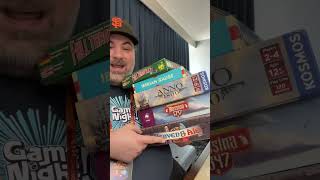
- I think it's fairly S tier stack for 90 bucks
- how do you rank this $90 spent?
- how do you think we did for 90 bucks?
References (from this video)
Mechanics (from transcript analysis)
Video topics + discussion points
Quotes (from this video)
- But out of that conversation, someone mentioned that when they're finished learning a game, then they said about trying to figure out how they're going to store all the bits and pieces back into the box.
- And this has really become almost a side hobby to our gaming hobby.
- The publishers don't always include a good insert or the right kind of storage material so that once you've got everything out of the shrink wrap, all the different pieces punched out, then you have a good way of storing it.
- So, it's going to be very easy to get all those pieces back out onto the table so you can start playing again as quickly as possible.
- So, for example, in this game here, 1812, there are different dice that go with different cubes and then also cards that go with these particular packages.
- So, when I'm ready to play, I can just say, "Okay, you're the blue player. Here's all your pieces. yellow. Here's all your pieces and off we go."
- Uh cards though, sometimes I will keep them separate from the pieces because I don't want them getting dinged up.
- So, I will sometimes sleeve them.
- The cost to sleeve a full game if it has a lot of cards can be almost as much as the game itself.
- So, I will really only sleeve things that I'm going to be using a lot.
- And so, this is a nice way to organize different sets of of uh cards.
- And once I've got all the sleeves out of it, sometimes I'll use this to store the cards as well.
- But I'd really like to hear what do you do?
- Have you come with some special solutions for certain games in particular or games in general?
- Maybe you don't do anything at all and you just throw everything back in the box.
- If so, I'd like to hear that too, to be honest.
- And listen, I would love to get video responses.
- If you have a special game in particular, you put some time into how you organize it, shoot a quick video and let me know. I'd love to see it.
- Maybe I have the same game and I can learn some tips from how you've done it.
References (from this video)
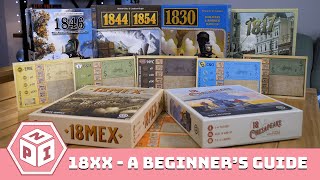
- Massive historical scope and replayability across variants
- Deep economic and strategic modeling
- Very long play times and a steep learning curve
- Rulebooks are dense and intimidating for beginners
- railroads, finance, and rapid industrial growth
- early 19th-century American railroad expansion
- didactic-historical with storytelling
- 1830
- Chesapeake
- 1844-1854
Mechanics (from transcript analysis)
- dividends_vs_coffers — decide whether to pay out to shareholders or retain in the company
- operating_rounds — companies lay track and operate to earn revenue
- par_value_and_float — par price sets initial money and float threshold for a company
- rail_construction_and_trains — build tracks, upgrade trains, and use routes to reach profitable locations
- stock_round — players buy and sell shares; presidency share and par value affect control and starting money
Video topics + discussion points
Quotes (from this video)
- 18xx games are long, complicated, require more math than your kids' trigonometry homework.
- the pornographically named 18xx genre is trixie
- as i would watching a PT Anderson film
- it's like one enormous sand pit
- ambition of greed arrogance hubris gambling and ultimately downfall
- you'll start sneezing cardboard hexes out of your nose
- the rulebook is the second worst that we've read in this system
References (from this video)
- Good entry point for players who want a lighter yet authentic 18xx experience
- Faster to play than larger editions
- May omit some depth found in bigger titles
- Can still feel rules-heavy for newcomers
- railroad construction and growth with more controlled choices
- a smaller, more compact 18xx experience with limited scope
- streamlined exploration within a tighter map
- 1830
- 1846
- 1844
Mechanics (from transcript analysis)
- operating_rounds_with_focus — operating rounds and route building with less complexity
- simplified_stock_and_auction — smaller number of companies and streamlined auctions
Video topics + discussion points
Quotes (from this video)
- 18xx games are long, complicated, require more math than your kids' trigonometry homework.
- the pornographically named 18xx genre is trixie
- as i would watching a PT Anderson film
- it's like one enormous sand pit
- ambition of greed arrogance hubris gambling and ultimately downfall
- you'll start sneezing cardboard hexes out of your nose
- the rulebook is the second worst that we've read in this system
References (from this video)
- Accessible starting point within the family for some players
- Quicker to learn than heavier editions
- May not expose players to the full complexity of the system
- Can still be lengthy and rule-heavy
- railroading mechanics with operational emphasis
- early rail development with a focus on operation and route building
- procedural and instructional
- 1830
- 1889
- 1844
Mechanics (from transcript analysis)
- no_stock_market_emphasis — less focus on intense stock market manipulation compared to other editions
- operating_rounds_first — emphasis on track laying, route planning, and profitability
Video topics + discussion points
Quotes (from this video)
- 18xx games are long, complicated, require more math than your kids' trigonometry homework.
- the pornographically named 18xx genre is trixie
- as i would watching a PT Anderson film
- it's like one enormous sand pit
- ambition of greed arrogance hubris gambling and ultimately downfall
- you'll start sneezing cardboard hexes out of your nose
- the rulebook is the second worst that we've read in this system
References (from this video)
- High potential for deep strategic tension and planning
- Rich map variety and scenario variety across versions
- Rulebooks are dense; learning curve remains steep
- expansion, competition, and operational depth
- mid-19th-century rail network across multiple regions
- systematic and strategic with a historical veneer
- 1830
- 1844-1854
- Chesapeake
Mechanics (from transcript analysis)
- operating_rounds — roads, trains, and revenue generation through routes
- stock_round — buy/sell shares with presidency and par-value dynamics
- train_depth_and_eras — progression of eras with new trains and rules
Video topics + discussion points
Quotes (from this video)
- 18xx games are long, complicated, require more math than your kids' trigonometry homework.
- the pornographically named 18xx genre is trixie
- as i would watching a PT Anderson film
- it's like one enormous sand pit
- ambition of greed arrogance hubris gambling and ultimately downfall
- you'll start sneezing cardboard hexes out of your nose
- the rulebook is the second worst that we've read in this system
References (from this video)
- Strong teaching session led by a capable host
- Accessible entry point into 18xx-style play
- train-based strategy and logistics
- 19th-century railroad expansion
- learning game led by a teacher
Mechanics (from transcript analysis)
Video topics + discussion points
Quotes (from this video)
- This is not where I live this is a green screen video laid.
- I'm eternally optimistic right.
- We have over a hundred people entered into this competition.
- I really enjoyed playing Rebel Fury the afternoon.
- There’s a link Down Below in the description to Noble Knight games and if you use that link thank you because they get a little bit of a kickback to the channel.
References (from this video)
- Excellent 18xx game
- Good 18xx entry point
- Less fiddly than some other 18xx games
- Less variety than 1830
- Japanese railways
- Economic strategy
Mechanics (from transcript analysis)
Video topics + discussion points
Quotes (from this video)
- most of what i look for in a train game is about emergent alliances
- the more people you get in there the more entangled it gets and that's what's really exciting for me about train games
- definitions are useful when they highlight affinities and they cease to be useful when they're used to exclude
- i will call it a train game because it will piss off how to train gamers
- this is the game that invented everything i rip off in my games
- it feels very much like a train game that would have been designed like in 2010
- the rules are really very simple they're just they just take a long time to play
- soft spot for games that are designed just for me as a solo player
- i really enjoy automated opponents and seeing what they're capable of
References (from this video)

- Efficient, fast playthrough (~90 minutes)
- Clear demonstration with spreadsheet aid
- Railway expansion and economic competition
- United States, Midwest during the 1840s with railroad expansion
- Array
Mechanics (from transcript analysis)
- speedrun / spreadsheet-assisted teaching — Demonstrates rapid play using a custom spreadsheet to streamline play
Video topics + discussion points
Quotes (from this video)
- we're able to more accurately play and forecast what it is going to be coming each week
- starting July 29th we're going to start releasing the podcast every other Monday
References (from this video)
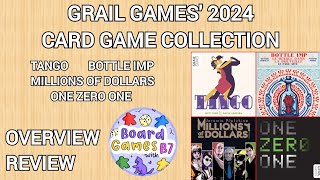
- Strong blend of hand management and area control
- Two-player friendly with a solo variant
- Clear programming motif with elegant and approachable design
- High abstraction level may deter casual players
- Strategic depth requires careful planning and long-term thinking
- coding/algorithm-inspired abstract strategy
- Abstract strategy about program lines and code-like structures
- neutral, puzzle-like
Mechanics (from transcript analysis)
- Area Control — Control lines on a program display to gain points.
- area_control — Control lines on a program display to gain points.
- Hand Management — Players manage a 16-card identical deck to influence future moves.
- hand_management — Players manage a 16-card identical deck to influence future moves.
- programming_theme_placement — Cards are placed to form a running program that determines scoring.
- run_and_score — Points awarded based on how the program runs and line control.
Video topics + discussion points
Quotes (from this video)
- Tango is a really fun trick taker
- Tango really shines ... two players although Tango really shines
- Players secretly select their role and create temporary alliances employing any tactics necessary to outwit their soon to be traitorous Partners
- The bottle imp will take your points away
- This revamped version features brand new and old roll cards as well as refined rules that enhance the gameplay experience
- Now you can enjoy the fun with up to nine players expanding beyond the original 3 to 8 players
- 101 is an abstract strategy card game that combines hand management and area control mechanics
- the game concludes in one of two ways
References (from this video)
- Immersive macroeconomic fandom; long, strategic scope
- Very long, daunting for some players
Mechanics (from transcript analysis)
- economic simulation / long train game — heavy trains, long playtime, deep economics and money handling
Video topics + discussion points
Quotes (from this video)
- i absolutely love cockroach poker
- the big moments and the big swings are quite satisfying
- i find these games hilarious
- i really like the game huh or hein
- watching the value of things change
- the moment when that tower collapses it's exciting
References (from this video)
- educational potential on a complex historical period
- engaging for players who enjoy heavy political simulations
- may be politically sensitive
- complex for newcomers
- historical political influence and upheaval
- Iran around 1950-1979
- historical analysis through gameplay
- Free at Last
- World in Flames
Mechanics (from transcript analysis)
- card-driven — events unfold via cards that model political and social dynamics
- simulation — hex/area control style simulation of historical events
Video topics + discussion points
Quotes (from this video)
- The Dietz Foundation is the world's only not-for-profit game company so that we are set up that when we make money in however we make it that our funds and our profits go towards helping education.
- Donations always go directly to the cause, after the PayPal fee, 97 percent goes where it's supposed to go—much more than the 50 or 60 percent you get from most charitable organizations.
- Games are a great way to learn about everything.
- I don't like working for them anymore, I prefer working for myself.
- Education can be wide and varied, and can be by subject matter as well as by the educational goal.
- If you want to learn about civil rights, you can take the game to your home and interact with it in a safe space to think through difficult topics.
References (from this video)
- 1906
Mechanics (from transcript analysis)
Video topics + discussion points
Quotes (from this video)
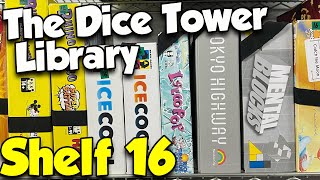
- Shelf 16 is kind of a an odd mix here
- This shelf has twice as many games as most shelves
- one of my favorite two-player games, but it's very difficult to learn and play
- Fantastic abstract strategy game
- Such a classic game and I like it a lot
- I don't know why I like it so much, but I do
- one of the most beautiful dexterity/party games there are
- There are so many games on the shelf
References (from this video)

- Compact, quick engagement with tactical decisions
- Historical premise is approachable for a card-based duel
- Solo variant exists for single-player play
- Limited to two players (in core form) or solo variant only
- Abstract mechanics may not appeal to all history buffs
- Historical warfare
- Battle of Hastings; English history, 1066
- Historical tactical card duel
- Magic: The Gathering
Mechanics (from transcript analysis)
- card-driven scoring — Points are accumulated by damaging wedges; first to claim two wedges wins.
- Hand Management — Players draw and play cards to deploy troops and execute events.
- Wedge-based combat — The battle is represented by three wedge cards; players aim to deal damage across wedges to win.
Video topics + discussion points
Quotes (from this video)
- "it's a two-player game but you can also play solo and it's rather quick"
- "not collectible; it recreates the Battle of Hastings and all the events of 1066"
- "it's a beautiful and strategic Carcassonne style game for two to four players"
- "Minerva is a unique tiling resource management strategy game that relies on cunning spatial strategy and intense competition for timing of actions"
- "the main system is formed by a sandbox of Fighters bosses rivals allies and stages for the players to mix and match"
- "arcade mode for a quick game with a lot of variety and story mode which links your games together"
- "art is beautiful especially the different tribes each tribe is unique"
- "unique dice pushing mechanic which activates two actions per turn"
- "you could say maybe it's like a very very light Dominant Species"
- "it's an atmospheric adventure and it's inspired by 80s fantasy nostalgia"
- "it is a cooperative board game for 1 to 6 players where players control a party of medieval fantasy survivors"