/pic2090197.jpg)
Five Hundred (500) is a simple trick taking card game that uses a standard deck of playing cards. Each player is dealt ten cards, and bids to take 6-10 tricks with the help of cards in the kitty. With 4 or 6, it's usually played in partnerships.
Two or three players use a 33 card deck with all 2-6's removed plus a Joker added. Four players use a 43 card deck: remove 2s, 3s, and black fours (leaving the 4 of Hearts, 4 of Diamonds) and a Joker added. Five players use a 53 card deck with only a Joker added.
Six players need a special deck of 63 cards with 11's, and 12's in each suit and a 13 of Diamonds, a 13 of Hearts, and a Joker.
The variant most popular in French Canada is four players (in partnerships) with a 46-card deck (removing all 2s and 3s, and adding two Jokers, a black-and-white one and a coloured one). Decreasing card strength is white joker, colour joker, first and second "edges" (the trump jack and the matching colour jack), ace, king, queen, 10 down to 4. Decreasing bidding strength is hearts-diamonds-clubs-spades. A special hand is "nulot", in which a player tries not to take any tricks; his partner sits out the hand.


- Relaxing gameplay
- Meaningful decisions
- Charming aesthetic
- Great price
- High agency
- Little tension in turn order phase
- Town
- Forest Shovel
Mechanics (from transcript analysis)
- Card Crafting — Players craft cards.
- Drafting — Players draft buildings.
- Tableau Building — Players build a personal tableau.
- Town Building — Players build towns by laying terraces, piers, and landmarks into streets.
- turn order control — Players can control the turn order, which matters a lot.
Video topics + discussion points
Quotes (from this video)
- Cozy isn't a feeling a game earns anymore. Its squishy components bulk ordered from China. It's watercolor art commissioned off Fiverr and slapped into into shallow mechanics and vapid gameplay.
- Cozy has become a shield against honest criticism.
- Don't let light or beginner friendly or peaceful excuse a game being uninspired and hacky.
- The greatest crime publisher pull is trying to sell that feeling to games that haven't really earned it.
- We're all gamers. I just want us to stay vigilant against the constant barrage of [ __ ]
References (from this video)
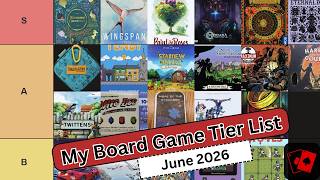
- Very nice puzzly Tableau builder
- Nice art style
- Interesting action selection or initiative system
- Nice enough to give it an A
- Don't think it reinvents the wheel
- Streets
- Wales
Mechanics (from transcript analysis)
- action selection — very interesting action selection or initiative system here.
- Tableau Builder — very nice puzzly Tableau builder where you like build like streets in 10b
Video topics + discussion points
Quotes (from this video)
- "I think Dominion is just the purest form of deck building."
- "I think Terraforming Mars is a masterpiece."
- "Wingspan is my most favorite board game."
- "Root is such a unique game."
- "Spirit Island is a fantastic cooperative game."
- "Ark Nova is a really solid game."
- "Gloomhaven is an epic experience."
- "The Castles of Burgundy is a classic for a reason."
- "Terra Mystica is a brilliant game."
- "Founders of Gloomhaven is an interesting city builder."
References (from this video)
- Always really enjoyed playing 500 at university
Mechanics (from transcript analysis)
- contract bidding — The strategy lies in the bidding phase where players work out how many tricks they think they can take, often starting with low bids to signal their best suit to their partner, and then collectively determining a bid to meet.
- Trick-Taking
Video topics + discussion points
Quotes (from this video)
- there's a lot of jargon a lot of terms in trick-taking games
- so a standard trick-taking game each player will be dealt a hand of equal size and then in a trick one player chooses a card any card from the hand to lead
- and then after everyone has played a the right suit not direct numbered oh yeah the number number doesn't matter it just has to be matching the lead suit
- so essentially once all the cards are played whoever's play the highest Trump wins the trick
- players are only really allowed to communicate by the card they play
- it's called an evasion style of trick-taking game
- and the most basic game is you've got a hand and whoever takes the most track tricks wins
- the difference between old trick-taking games and modern trick-taking games is more chaos more options and therefore more strategy or more tactical play on the cards you've got
- it's kind of the first deck builder
- so the premise there is that you get your cards and you work out how many tricks you think you'll be able to take with those cards
- often I see the question what is the best modern trick-taking game I haven't found anything that I've enjoyed more than five hundred
- Becoming more and more popular these days as well
- I quite enjoyed the new efficient so be I should try to play the old-fashioned as well
References (from this video)
- It was fun and the reviewer played it six times.
- There are interesting strategic elements to learn.
- Can lose the game if you draw bad cards.
- The reviewer doesn't see themselves playing it a lot.
- The reviewer would rather play other games.
Mechanics (from transcript analysis)
- Climbing Game — Players always have to play a higher card than the previous one.
- Hand Management — Managing hand of cards to avoid taking penalty cards.
- Set Collection — Collecting foxes at the right time is crucial.
Video topics + discussion points
Quotes (from this video)
- hello everyone this is sonan and this is Johannes and you're watching board gaming rambling and welcome back to keep or C the show where we play all the games and decide if we want to keep them in the collection or call them from the collection
- a cold game doesn't mean a bad game because we don't have space for all the games and we don't have space for good games
- it's Iron Forest the new game from the people who did Ice cool
- it's awesome it's so fun it's a lot of fun we played it and it was fun we played it more it was fun I it is a super good game
- it is not often you see like a two story board game
- it was just a blast fing around these things and it felt you felt really cool when you made things happen and it's not a very easy thing to flick things around you're also going to miss a lot and car a lot
- stamp swap from stal marst
- a fun game but not one that we are going to keep
- I think for me I think I'm going to have to go with iron Forest as the best because it was just like so much fun of a game
- I'm going to be boring and say the same thing but I like all of these games are poison games yes we are lucky to be able to play mostly fun games
References (from this video)

Mechanics (from transcript analysis)
Video topics + discussion points
Quotes (from this video)
- Congratulations to all the nominees and spectacular and to you for watching this award video Woo we will see you in 2025 bye
- The spoiler alert he has designed set Tea Garden Galileo galile and the designer is obviously then toas holck a designer just like came out of nowhere got so much hype this year and I will say even though like we have ranked those games we like all three of those games like two of them better than the last one but this is a designer I am looking forward to see more games from
- We are going to be bringing you the nominations and the winner for the best card game of 2024 and the nominees are Star Wars unlimited cortis an misos and 5050
- Lone wolves yay and lone wolves was one of my favorite small box games of the year so I am so glad it made the list
- If you like a High degree of uh interaction that head-to-head kind of style game this is I think my all-time favorite two-player trick game
- Congratulations Agonia for winning best narrative campaign game for 2024 in these rambling Awards
- Harmonies congratulations to Harmony is one of the most played games from this last year with the People's Choice as well over at the dice Towers uh game of the year uh so this is one that is very impressive so kudos to harmonies the winner of this year's abstract Game of the Year
- Tranquility the ascent yes congratulations indeed we have played that game do you remember we were we were building the the the oh my goodness I love that game oh there we go I love that game it's a deserved win I'm sorry I don't hate co-op games anymore it's an amazing game it's beautiful on the table if you haven't played it check it out it won fair and square this is a great game
- The winner is flip seven
- To the winner is iron Forest congratulations
- Most Innovative game is War Stories Occupied France designed by David Neil and David Thompson art by Mara and published by Osprey games congratulations to all the nominees but of course congratulations to War Stories Occupied friends
- we have made a big list of awards that we are giving away to different games
- this is all of the awards we have made a big list of awards that we are giving away to different games
- we want to highlight these amazing games that gives our or all so much joy
- I focus on cozy games welcoming games family games card games um also solo games as well
- Winner for the category of the most Innovative game is War Stories Occupied France
- that was amazing I really enjoyed that I hope you did too
- please go check all those amazing people out because they make really good content
References (from this video)

- very short
- don't think it's going to be fantastic
- Liar's Dice
Mechanics (from transcript analysis)
- bidding — you're kind of bidding
- bluffing — You're basically not saying what you have you're playing your card face down and then taking a card and if people think, "Oh, I actually want my card. I I think I'm better than you."
- Hand Management — playing your card face down
- Trick-Taking — This is a trick-taking game.
Video topics + discussion points
Quotes (from this video)
- nobody, including us, need this many games.
- This is Divan. Mhm. I don't know anything about this game. I bought it because it looks beautiful.
- This could have easily been a Reiner Knizia game I feel like.
- And I love a reason to play Lost Ruins of Arnak Lost Ruins of Arnak because I think it's a great game.
- We have to empty our unplayed game shelf from everything that's not 2025 releases and then we'll put it in there and the rest go on the floor until we manage to play them.
- And it's based on the problem called what is called again it's based on the seven bridges of somewhere.
- I feel kind of like bad about bringing a hundred games back home.
- I I usually they go in, they go out. And that's also the thing like if I haven't played a game in a month, I will not remember the rules most of the time.
- The longest line I saw was for coffee. In the morning before the whole office.
- What's more important for you for the channel? Playing the popular ones or the less known niche ones?
- My favorite animal beside the monkey which is my favorite animal. The capybara.
- We are basically very lucky because we share a lot of hobbies.
- The building thing Ah, it was too much building. I didn't like that too much.
- It's been super fun. It's so many people. It's been so long since we did a live.
- Thank you so much for watching. Like it. We wouldn't have done this if it wasn't for you.
References (from this video)
- Clever game with a popular drafting mechanism.
- Works very well.
- Enjoyed the game and would happily play it again.
- Felt like there was too much luck of the draw, leading to less control than desired.
- Wasn't as engaging as other games that resonated more with the host.
- Building up the town
- Welsh town of Tenb
- King Domino
- Seven Wonders
- Sushi Go
Mechanics (from transcript analysis)
- Card Drafting — this game uses the uh what's it called? The king domino draft approach where the more valuable a card you take, the more you are likely to be go later in turn order in a future round
- Set Collection — I'm trying to make a lot of connections between warfs and buildings or, you know, I mean, there's lots of different object. There's tons of objectives
- tile laying — And then we uh take our turns drafting all our stuff. And then once we've got whatever we got this round, and we might not have gotten what we wanted because we basically went through two rounds of drafting. [...] and then we just try to puzzle together um our different streets.
- variable scoring — We've got special landmarks from 10B that give us um objective scoring and all kinds of things.
Video topics + discussion points
Quotes (from this video)
- And countryside is a freaking phenomenal.
- This is one of the best engine building games I have played this year.
- It is very likely going to make it into my top 10 games of the year. It is that good.
- My number three of the month is Rising Cultures.
- Number two is Druids of Adora.
- It's classic feld, making a comeback.
- Number one, Furnish Duel.
- A game that will not be coming out until 2026 will very likely make it into my top 10 games of 2026.
References (from this video)
- Promotional reveal of a board game
- Unboxing video / product reveal
- informal and promotional
Mechanics (from transcript analysis)
Video topics + discussion points
Quotes (from this video)
- Let's unbox 10B
- from Mighty Board.
- Oh, told me on the side what to put in there.
References (from this video)
- light, accessible party game
- mechanics described rather than fully detailed
- numbers-based counting and point accumulation
- party game setting
- party-game vibe
Mechanics (from transcript analysis)
- Compound Scoring — points awarded for numbers called and held by leaders
- counting reveal — rounds progress with players counting and revealing numbers
- scoring based on called numbers — points awarded for numbers called and held by leaders
- secret number selection — players secretly pick numbers between 1 and 49
- Simultaneous Reveal — rounds progress with players counting and revealing numbers
Video topics + discussion points
Quotes (from this video)
- Lunch is served with a side of panic.
- Time Bomb is a quick and fun bluffing and deduction game
- Fantasy Flight losing their mind again.
- Descent: Legends of the Dark. They're discontinuing it.
- We are live y'all.
References (from this video)
- Simple to learn and play
- Engaging race to count
- Strategic number selection with danger zone cards
- Rules can be a bit confusing initially, especially with the danger zone and crowns
- Player count affects the available numbers
- Counting up and scoring points based on when your number is called.
Mechanics (from transcript analysis)
- Counting — Players count from one to fifty, and score points based on when their selected numbers are called.
- Push Your Luck — Players must decide when to say 'Got it' to stop the counting for their number.
- Set Collection — Players select a set of five numbers at the start of the game.
- Variable player powers — The rules change slightly based on player count, with 'crowns' awarded for reaching certain points.
Video topics + discussion points
Quotes (from this video)
- Grab your dice and shuffle your deck.
- We're playing games with wooden meeples, sharing the news for all you geeky people.
- The Op, and we're going to be playing one of their games at the end of the show, so stick around.
- Come and hang out with your tabletop friends.
- The Op games are party games. Lots of things like this that you can play along with us and have fun.
References (from this video)
- Sold out incredibly well
- No more copies available immediately
- Container did not arrive
Mechanics (from transcript analysis)
Video topics + discussion points
Quotes (from this video)
- There was a a new version of Mexico which is actually part of the Mask trilogy of games. And this new version looks absolutely awesome.
- if you like old school Eurogames like I do, go check that out. It's an old school Euro area control game.
- It's take Flip Seven, mix it with craps.
- The really cool things that they've done, you can play without, but there is an app that actually takes away all the mean math that you normally have to do with Flip Seven, for example.
- Ubongo is a cooperative dexterity game and it is the dumbest, most amazing thing. It's so stupid.
- This is the perfect pub game.
- Ridiculous fun.
- Worth a pop for like 15 quid. Great fun. We had a blast with it. Very silly. Very, very fun.
- I met Hugo Myatt who played the original Treguard in uh, in Nightmare and uh, my face just absolutely lit up.
- the Eden game was can't wait and I couldn't wait can't win, sorry. I couldn't I couldn't wait to go and grab it. It's it's all gone. Sold out. It was sold out literally like 10 minutes after the the show was open.
References (from this video)

- A lot of fun
- Host would gladly play again
- Building a town
- A town
Mechanics (from transcript analysis)
- Set Collection — Players are trying to 'complete goals that you are choosing to put within your Tableau'.
- Tableau Building — Players complete goals placed 'within your Tableau and and outside of your Tableau'.
Video topics + discussion points
Quotes (from this video)
- In my opinion, I think they are trying to make the right amount of games for people, but uh print to demand or print on demand is is very different.
- We haven't discontinued Charter Stone. In fact, we haven't discontinued any of our games.
- If there if there is demand for a game, we will make more of it.
- I really love what Covenant is doing lately with these long form discussions that are available on their YouTube channel and also as a podcast.
- I wonder if maybe it was put in there because the designer thought the game was running a little long in general.
- My I've only played Deep Regrets once, but it lasted over 3 hours, which did feel a little long for the game.
- I think um getting uh quantity of blind playtesting with that asymmetry and variability, and also analyzing that data.
- I think it's a good question to ask yourself. Like how how much um if I'm putting a component that I think will cost quite a bit to make, how much value is that adding to the game?
- I do have a recent video about regrets. In fact, I have two videos about regrets, so you can see um the types of things that I regret about game design and product design decisions.
- If we can combine those two together for a seamless experience without increasing the price, we're happy to do that.
- I truly truly am not interested in using AI at all.
- I think the original Between Two Cities box, I think it was too small.
- People the contestants on Survivor have gotten really focused in my opinion of on trying to bring people to the finale that they think they can win against.
- "Human made no generative AI." We have that on the box of the the reprint of the Wingspan European expansion.
References (from this video)
- Enjoyable at all player counts (solo, 2, 3, 4 players).
- Can be as 'stinky' (challenging) as you want it to be.
- Good replayability with different goal cards and scenarios.
- Solo mode has a fair bit of luck.
- Easy to make mistakes with water placement or forgetting the round marker.
- Tenb, a seaside resort town in Wales
Mechanics (from transcript analysis)
- Card Drafting — Players draft cards from a market to build their town.
- Hand Management — Players manage their hand of compass cards and choose which to play based on turn order and resources.
- Resource Management — Players manage 'life rings' to take extra actions or influence turn order.
- Set Collection — Players score points based on sets of building types or features within streets.
- Tableau Building — Players build their town by placing drafted cards into their personal play area.
- track movement — The game progresses over 10 rounds, tracked on a round marker.
Video topics + discussion points
Quotes (from this video)
- 10B. Uh, designed by Benji Talbot, published by Mighty Boards.
- We have terrace cards which are these up here. Then there are pure cards and then there are landmark cards.
- The building cards or terrace cards up here, those are always available. the pier cards, those are always available. And then these will all change each round.
- The game is doing to slow us down and screw us up and cost us points.
- The worst mobile connection in the UK 10B was ranked. It's been that way as long as I've known it.
- Yeah, we have one. Yeah, that's the right answer. Uh we are definitely choosing this guy.
- I've played it solo two, three, and four, and I've enjoyed it at all the player counts. So, yeah, I think I can recommend it.
- Now, now I need a holiday in 10b. I mean I I I I got to be honest, Wales is not on my short list of places to visit, but maybe it is.
- Otherwise, uh, I'll see you all in a few hours, like in good lord, two and a half hoursish with Great Western Trail, Rails to the North.
References (from this video)
- Cooperative play enables teamwork
- Storytelling deduction provides engaging mystery solving
- Light complexity keeps it accessible
- Mobile app integration facilitates interaction with stories
- Dog companion adds thematic flavor and investigative aid
- mystery solving with a knight and a dog companion
- Paris
- storytelling deduction
Mechanics (from transcript analysis)
- barcode scanning with a mobile app — Using a free mobile app to scan barcodes to interact with stories.
- Cooperative Game — Players work together to solve cases.
- cooperative play — Players work together to solve cases.
- dog companion aid — Dog helps track people from items collected and aids investigations.
- location exploration and NPC interaction — Visiting locations and interacting with people; looking for objects.
- Neighbor Interaction — Visiting locations and interacting with people; looking for objects.
- storytelling deduction — Players deduce solutions through storytelling.
Video topics + discussion points
Quotes (from this video)
- I managed to solve my case in 1400
- the Millennium series is about to be launched on Kickstarter
- I like it when a familiar game has new mechanics introduced while retaining what's good at it
References (from this video)

- appealing to solo players and casual gamers
- compact and cute aesthetic
- could be too light for heavy gamers
- town-building with light, accessible design
- village-building tableau in a cute, compact package
- light, cozy microgame vibe
Mechanics (from transcript analysis)
- card tableau building — play cards to build a tableau of buildings
- Cooperative Game — exists as a one-to-five player game
- solo capable — exists as a one-to-five player game
- Tableau Building — play cards to build a tableau of buildings
Video topics + discussion points
Quotes (from this video)
- I'm so excited to get there and hang out and see everyone.
- This is the cozy season that we're moving into—winter, holidays, cozy solo and multiplayer gaming.
- I love the board game community—it's so nice, kind, welcoming, and easy to start conversations.
- Tend is probably one of my favorite games from 2025. I love it so much, both multiplayer as well as solo.
- Cozy Stickerville... I cannot wait for this game. It is bringing two worlds together that I just love so much.
References (from this video)

- Compact, quick plays with deep strategic potential.
- Aesthetically pleasing and tactile components.
- Potentially dense for a small-box game; may feel heavy for a pure light filler.
- Turn order decisions can be tough and may slow early play.
- Urban planning with modular card-driven scoring schemes.
- Compact tableau-building city-building puzzle in a small box.
- Clean, cerebral, with a focus on efficiency and optimization.
Mechanics (from transcript analysis)
- City-scape scoring synergy — Each card interacts with adjacent cards to unlock points (lamp posts, benches, flower pots).
- Market-row drafting — Selecting from a row of cards to influence future scoring in multiple ways.
- Tableau Building — Players draft and place cards to build a scoring tableau.
Video topics + discussion points
Quotes (from this video)
- the perfect type of game to play at a bar or a restaurant while you're waiting for your food
- it's a game full of luck
- looks incredible on the table. It has wonderful table presents
- this gets me into the holiday spirit for sure
- I am here for it. I definitely want to try Trombone Champ
- it's a silly thematic lightweight card game
- this is a game of communication. You're basically using phrases from Simish
- I think it's really fun and one of the things that I would say about Mad Kala is that it's more fun every single time I play it
References (from this video)
- Tight, rewarding decision space with multiple viable paths
- Charming, indie aesthetic and clever theme
- Accessible entry point while offering depth for experienced players
- Satisfying combination of strategic planning and adaptive play
- High variability due to draft and top-deck risk
- Modular expansions can destabilize balance and planning windows
- Some strategies may need careful tuning or house rules in mixed groups
- Last-in-initiative penalties can feel unfair or forced depending on player count
- Building a seaside community with a mosaic of interconnected streets and local color
- Seaside town in Wales
- Whimsical, humorous, indie-spirited
- Forest Shuffle
- Tempi
- Forest Shuffle 2
Mechanics (from transcript analysis)
- Adjacency Scoring — Cards score based on neighboring cards and features, with some cards altering the reach or multiplying points.
- Card Drafting — Players draft cards to add features to their streets, each card with multiple scoring conditions.
- Deck Manipulation — If you are late in turn order, drawing for cards may force unlucky draws ('top decking'), drastically altering strategy.
- landmark cards — Special landmark cards score every card in the street; only one per street.
- Live Boys (resources) and card actions — A resource mechanic where accumulating 'live boys' allows performing powerful card actions, including using landmark actions earlier.
- Module-based expansions — Optional modules (add-ons) that alter rules and add new interactions (e.g., guides module) and can increase chaos or strategic depth.
- Tile Placement — Placed cards into streets; streets can be extended with various card types (terrace vs pier) and must follow adjacency rules.
- Tile/Street placement — Placed cards into streets; streets can be extended with various card types (terrace vs pier) and must follow adjacency rules.
- Top decking risk — If you are late in turn order, drawing for cards may force unlucky draws ('top decking'), drastically altering strategy.
- Turn order and initiative — Turn order cards determine when you act; lower initiative means earlier turns with fewer actions; high initiative can give many options but comes late in the round.
Video topics + discussion points
Quotes (from this video)
- 10B is full of these beautiful trade-offs.
- A one-man 10B band to 10ify your 10B.
- 10B is a crowd-pleaser and it's bound to please you as well.
- No choice is ever quite perfect, and it leaves you wanting for more as you desperately try to round off every element of strategy you introduced into your tableau in a flash of intoxicated hubris.
References (from this video)
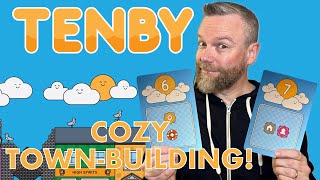
- Innovative turn-order mechanic that adds strategic depth and tension
- Visually appealing table presence with thematic, punny storefronts
- Flexible tableau-building with multiple streets and varied scoring options
- Short playtime per player and solid replayability via residents and achievements
- Table hog due to a large central market and growing tableaux
- Card drafting can feel luck-driven and interaction is primarily via drafting
- Urban planning and neighborhood development through card-based city-building
- Urban redevelopment with streets, terraces, peers, and landmarks forming a seaside town tableau
- Puzzle-like tableau construction with market drafting and sequence-based scoring
- Brass
Mechanics (from transcript analysis)
- Card Drafting — Draft cards from a marketplace to shape your tableau and future scoring opportunities.
- End Game Bonuses — End pieces, opens/closed streets, and landmarks influence scoring and end-game bonuses.
- End-game patterning — End pieces, opens/closed streets, and landmarks influence scoring and end-game bonuses.
- Optional achievements — An optional deck of achievements adds alternate scoring goals for variety and replayability.
- Resource Management — Life preservers serve as a currency to move cards within your tableau or to draft extra cards, enabling strategic flexibility.
- Resource management (life preservers) — Life preservers serve as a currency to move cards within your tableau or to draft extra cards, enabling strategic flexibility.
- Tile Placement — Place cards to form streets with matching edges, aligning buildings, peers, and landmarks to maximize points.
- tile/card placement — Place cards to form streets with matching edges, aligning buildings, peers, and landmarks to maximize points.
- Turn-order mechanism — A day/night-style system where the chosen night card determines action order and market replenishment, creating dynamic planning and risk-reward decisions.
Video topics + discussion points
Quotes (from this video)
- The core of this game, and I think what makes it different from some other tableau building games where you're drafting cards, is that turn order mechanism.
- It's a game where you're building up this kind of almost like a puzzle that you're working on and it's multiple puzzles perhaps because you're building multiple streets at the same time.
- The cards look cute and when you've got everything laid out in your tableau, you have these nice streets with seagulls and all of that stuff.
References (from this video)
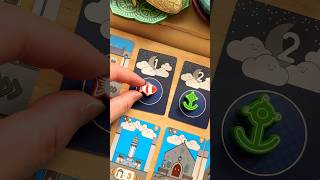
- Beautiful town imagery and thematic setting in Wales
- Puzzly, strategic rhythm with placement and adjacency scoring
- Flexible day-card actions and market-driven resource gain
- Encourages pictorial continuity across streets and panoramas
- Clear, interesting tension between extending existing streets and starting new ones
- Thematic flavor of Welsh coastal towns enhances immersion
- Urban planning and architectural aesthetics with a strong puzzle element, featuring terraces, piers, and landmarks.
- Coastal Welsh town-building in a fantasy-represented Tenb; players build streets with town cards to form panoramas.
- Expository, instructional with enthusiastic personal commentary
Mechanics (from transcript analysis)
- adjacency-based scoring — Scoring conditions apply to features on adjacent cards, with reach determined by the arrows on each card.
- Card Drafting — On a turn, players choose a day card which triggers actions such as gaining terrace or peer cards from the market.
- Card drafting from market — On a turn, players choose a day card which triggers actions such as gaining terrace or peer cards from the market.
- Compound Scoring — Scoring conditions apply to features on adjacent cards, with reach determined by the arrows on each card.
- Landmark limitation — Only one landmark card may be placed per street, adding a constraint to layout planning.
- Market-driven resource gain — Gaining terrace and peer cards from the market to support growth.
- Placement and construction — Town cards must fit pictorially and be placed at either end of an existing street or start a new street; landmarks are limited to one per street.
Video topics + discussion points
Quotes (from this video)
- This is a game where on your turn you will add terraces, peers, and 10b towns landmarks onto your streets.
- 10B is one of the most beautiful towns in Wales.
- You'll be able to wander the colorful streets, walk along the peers, and with some scrumptious fish and chips and relax on the stunning beaches with a nice cold ice cream.
- It's a really puzzly game.
- I gave it 10B out of 10B and I love
References (from this video)
- beautiful production and thematic scoring
- satisfying geometric planning and layout decisions
- clarity of scoring can take a learning curve
- urban planning, aesthetic scoring
- Welsh town-inspired city-building through street rows
- visual, picturesque
Mechanics (from transcript analysis)
- Hand Management — Arrange terraces, peers, and landmarks to score; earlier rounds offer fewer rewards.
- hand/row management — Arrange terraces, peers, and landmarks to score; earlier rounds offer fewer rewards.
- market-like drafting — A round structure akin to a market (like King Domino) where card choice affects scoring and cadence.
Video topics + discussion points
Quotes (from this video)
- It's 100% a game you want to check out if you're a deck building fan.
- If you're looking for a one-on-one tactical game, this one is definitely a great pick from 2025.
- The production quality is definitely helping koi here because those fish tiles are transparent.
- This is a self-contained experience and a really good way for people to learn the game.
- Not every serious gamer is going to be into this, but you can have a busy table and still be able to play this game as your notepad, pencil case, coffee cup, bowl of cereal, all becomes the terrain that your little soldiers are combating around.
References (from this video)

- Cute artwork throughout
- neat and cute city visuals
- cute, children's storybook aesthetic
- Cute city-building world
- whimsical
Mechanics (from transcript analysis)
Video topics + discussion points
Quotes (from this video)
- art is incredibly subjective.
- I love aquariums.
- This is absolutely gorgeous artwork.
- The art just screams anime in every way.
- It's the best art I think of 2025.
References (from this video)

- Innovative and quirky sleeve within the Yellow mini-collection
- Memorable tension in short play sessions
- Not a peak gaming experience for 2025
- Limited depth due to micro-design
- numbers and counting pressure with a gimmick
- Mini game in a Yellow motif collection
- abstract/minimal
- The Mind
- Schnip
- Veg
Mechanics (from transcript analysis)
- rapid counting and interruption — players interrupt a running count to gain points and crowns
- short rounds with mutable scoring — fast play with variable scoring cards
Video topics + discussion points
Quotes (from this video)
- This is your permission to click away now.
- I won't be including games that I designed myself.
- The steady flow of games should continue for at least another year or two.
- It's time for my end-of-year roundup.
- The algorithm is not loving my content at the moment.
References (from this video)
- Unique game based around the number 10
- Interesting push-your-luck mechanic
- Fast-paced
- Number-based card game
- Abstract
Mechanics (from transcript analysis)
- bidding — Using limited currency stones to bid on cards
- Push Your Luck — Players use numbered tokens to bid and build sequential sequences 1-9 without going over 10
Video topics + discussion points
Quotes (from this video)
- do those things that's going to keep us safe yeah so that we don't get overcome again
- the games from 2021 that we loved and we picked our top 10 games from that
- board games that bring the fun to the table
- i used to read yes you did when we first got married i would read yes i loved uh books
- i can do so much more yeah with board gaming than with golf
- they want to be known as the steam platform for board gaming
- embracer is becoming that you know so big that they're gonna be so diversified for geek culture
- we want to be that one-stop shop where if you're looking for people of color you want to hear what they have to say
- diversity inclusion that's what we're shooting for
- it's a beautiful game and you know the market you know because you gotta always look at the market
- i ain't mad at you
- the dice ain't nice
- we love you guys we we we're just glad you're still with us and keep on coming back
References (from this video)

- beautiful components
- engaging theme
- not all interactions fully explored
- urban planning / tile placement
- street-building theme with clouds
- visual appeal with functional depth
Mechanics (from transcript analysis)
- tile placement / street-building — beautiful visuals with a focus on building streets and landscapes
Video topics + discussion points
Quotes (from this video)
- This is a two-player head-to-head game set in the world of Gatsby, kind of. And you are, it's kind of a tug-of-war over three different areas. It's very abstract.
- Moonrise part is the sideboard with tiles that fill up and then they go to one of the players for victory points and then there's just more buildings.
- I recommend it for anybody who plays the game a lot. Though, again, the game is sort of the kind of game you buy at Target.
- This is a neat worker placement game played over two parts of the board on the moon and on the planet. You're trying to blast an asteroid coming.
- the cursing was a little over the top and unnecessary. It didn't really bring anything to the table.
- Star Trek Captain's Chair. Wow, what a game. Nine out of 10. This game takes Imperium, a deck building game, adds a Star Trek theme to it, and does a really good job in that regard.
- Very mass market kind of racing game. You're playing out cards whether you're moving your own ships or your opponent's ships.
- I came in at a six on this game. Ultimately, I did enjoy this as a trivia game. It's a marriage of trivia and blackjack, right?
References (from this video)
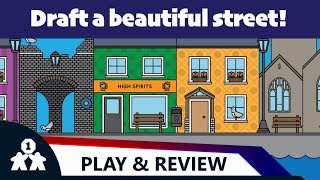
- Fast, satisfying tableau-building
- Strong options to mitigate luck (life preservers, choice of cards)
- Clear visual language and intuitive scoring from cards
- Engaging in multiplayer with social dynamics like hate-drafting
- Solo mode heavily dependent on luck of the draw
- Potential for underwhelming landscapes/landmarks if you draw poorly
- Rules-lite feel may obscure deeper strategy for some players
- Urban planning and neighborhood scoring with maritime motifs
- A colorful coastal Welsh town with terraced houses, piers, and sea edges; city-building through street development
- explanatory let's-play with live commentary
- 10B (multiplayer)
Mechanics (from transcript analysis)
- Card Drafting — Players select cards from a shared offer to shape street-building and scoring opportunities.
- Edge-type constraints — Edges determined by sea/terrace/peer affect where cards can be placed and scoring opportunities.
- End Game Bonuses — Optional end-game modules and goals that affect scores (not shown in solo demo).
- Endgame/extra scoring options — Optional end-game modules and goals that affect scores (not shown in solo demo).
- Life Preservers (mitigation) — Mitigation actions that modify the draft pool or provide penalties/remedy; used to influence draws in solo/multi.
- Pattern Building — Players build rows of cards (streets) left-to-right with constraints for edges (sea, terraces, peers).
- Scoring from cards — Each card has own scoring and also street-wide bonuses, plus landmarks scoring for entire street.
Video topics + discussion points
Quotes (from this video)
- It's a fun breezy time.
- The solo mode is super luck-based.
- Multiplayer 10B is the way to go and it plays really well.
- Say You'll Be Wine. Welks and Cockals.
References (from this video)

- Creates good moments
- Goofy gameplay
Mechanics (from transcript analysis)
- bluffing — Guessing game about who will say what
- Cancellation — Two players calling same number cancel each other
- Secret dibs — Players secretly call dibs on numbers 1-50
Video topics + discussion points
Quotes (from this video)
- This is so much to my taste and I played it a half dozen times really dig it and it's got fewer than 100 thumbs on the preview it's just like your tastes are not necessarily going to match up with anyone else's
- The perfect thing is something you're only going to find through repeated play. It's not going to hit you instantaneously
- It's more about playing something, liking it, you play it again, you play with different people, you want to introduce it to people, and over time it becomes the thing you love
- The good and bad of this job is that you play something, review it, do a video, and then never touch it no matter how much I like it
- You can do anything in games
- I value sleep there more than I value getting a post out
- It's just the cover the cover seems pretty funny to have around and just show people
References (from this video)

- Cutesy yet deep; accessible for families but with gamer depth
- clear scoring tied to card features
- Theme may feel lightweight to some players
- scoring via features of the evolving town (shops, houses, seagulls, etc.)
- Welsh town-inspired thematic city-building
- cozy yet deeply strategic with family-friendly appeal
Mechanics (from transcript analysis)
- open drafting — Draft cards with a chooser-last mechanic to balance power and initiative.
- shared-city drafting and scoring — Players place cards to build a seaside town and score via card features.
Video topics + discussion points
Quotes (from this video)
- This is indie, or the games that they're not really being pushed out.
- The Presence is a strategy horror game set up in the Victorian era.
- Go check out what might be your new favorite game from someone that just brought their first idea to life at the show.
- One of the most exciting things about Shiel is the increasing publishers and designers that come from Asia.
References (from this video)

- Aesthetically appealing with cute, compact art
- Varied scoring on each card provides tactical depth
- Two to five players; 30–60 minutes; retail release planned
- Rulebook and multiple play variants discussed; potential learning curve
- City-building / urban tableau
- Welsh town, street and pier development
- Whimsical, light-hearted
- Santa Monica
Mechanics (from transcript analysis)
- Drafting and tableau building — Players draft cards and place them to form a scoring tableau for a town.
- Simultaneous placement and scoring — Players place cards to maximize points across multiple scoring criteria on each card.
Video topics + discussion points
Quotes (from this video)
- This is an open drafting game where you're going to layer things and try to complete contracts. You are in the kitchen as a cute critter coming up with recipes for your customers.
- We love our cozy games here.
- This is going straight to retail from Mighty Boards.
- The seven discs, they all interlocked. They all move like dancers.
- I love Furnace and I'm sure I'll love Furnace Duo.
- You are drafting cards and placing them into your tableau to make a built street and also a pier. So, you're building this town in Wales.