/pic7803739.jpg)












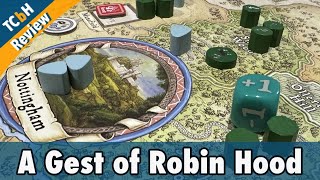



A Gest of Robin Hood Deep Dive
What the Community Thinks About A Gest of Robin Hood
A Gest of Robin Hood is a standout entry for newcomers to GMT Games' COIN system. Reviewers consistently praise it as an approachable gateway into what can feel like an intimidating genre. Board Game Animal calls it a flying success and an intentional exercise in making the COIN system more approachable, shedding complexity without losing strategic depth. The Cardboard Herald calls it a worthy entry point for the COIN-curious and the veteran wargamer alike, balancing classic COIN structure with thematic levity. Most notably, this two-player asymmetric game manages to feel tense and narrative-driven despite a relatively short playtime, delivering something special in the wargaming space.
Core Mechanics That Define A Gest of Robin Hood
The Initiative Action System
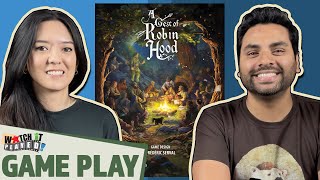
The heart of A Gest of Robin Hood is its action selection system, which reviewers highlight as the game's most elegant design. Each round, players choose among performing a single plot (limited to one space), taking plots and deeds (full power across several spaces plus a bonus deed), or activating the revealed event card. Watch It Played emphasizes that the first eligible player not only takes the first turn but also determines what actions are left for the second player to pick from. Board Game Animal describes this as such a juicy system, a source of so much fret and strategic possibility. Crucially, the leftmost action marker becomes first eligible for the next round, so passing on plots and deeds hands all leverage to your opponent. Foster the Meeple calls it incredibly dynamic, forcing you to weigh whether to do more now or secure initiative for next turn. GMT Games built this single mechanism to create continuous tension without overwhelming new players.
Hidden Movement and Hidden Information
The game's second pillar is hidden movement and partial information. Robin Hood pieces start face down, revealing only when strategically necessary, and the Sheriff's carriages introduce further uncertainty. Watch It Played explains that Robin Hood and his Merry Men start with their symbol side face down, and when a piece is face up it means the Sheriff's henchmen know how to find them. The Cardboard Herald notes that Robin himself is a uniquely stamped piece hidden among the Merry Men and used selectively, adding asymmetry and bluffing. This creates a persistent sense that your enemy could have a trick up their sleeve at any moment, and Foster the Meeple praises it as a game that rewards experimentation and feels flexible, since you are never fully sure what is going on.
The A Gest of Robin Hood Experience
Thematic Narrative and Tonal Richness
Reviewers consistently highlight the game's thematic coherence. Board Game Animal says it delivers a rich storybook quality reminiscent of beloved Robin Hood films. Watch It Played frames it as a struggle between Justice (Robin Hood) and Order (the Sheriff), with the Royal Favour track representing a tug-of-war between the two. The Cardboard Herald calls the theme a boisterous and charming folk hero confounding a savage and brutish law, capturing the playfulness that makes the game feel lighter than traditional wargames. The experience is not relaxing but delightfully tense, and the medieval setting and familiar Robin Hood narrative make every action feel grounded in story.
Asymmetry and Contrasting Playstyles
The two factions feel genuinely different to play. Robin Hood recruits Merry Men, sneaks them around the map, and robs travellers for risky cash, while the Sheriff hires henchmen, patrols to reveal hidden pieces, and captures outlaws. Board Game Animal celebrates how one side has more troops, more institutionalized strength, and more income, but must be careful not to exploit the population too much. Foster the Meeple adds that this creates a tug-of-war where you almost feel bad winning as the oppressive side. The Cardboard Herald emphasizes that the Sheriff must balance taxation against rebellion risk while Robin relies on subterfuge and underhanded shenanigans, so each side feels like a distinct puzzle.
What Makes A Gest of Robin Hood Stand Out
Accessible Gateway to COIN Design
The game's most significant achievement is making the COIN system digestible. Board Game Animal states plainly that it is a flying success and a smooth entry point into GMT. The Cardboard Herald notes that the game carves up this iconic system into digestible chunks with wit and levity, and praises the player boards for offering constant reminders of available plots and deeds. Foster the Meeple emphasizes that despite not being a simple game, it avoids burying players in overly complicated actions, since the complexity comes from strategy rather than rules overhead. The game proves that approachability does not require dumbing down COIN's core tension.
Perfect Playtime and Learning Curve
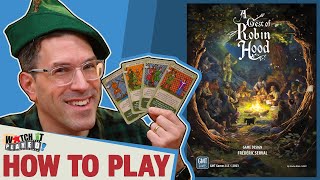
Players and reviewers appreciate that A Gest of Robin Hood delivers a full COIN experience in under an hour. Foster the Meeple notes it plays best at two and does not overstay its welcome, hitting a perfect length that is quick, saucy, and satisfying. Board Game Animal mentions a smaller footprint and smoother on-ramp compared to other COIN games, making it ideal for players who want the richness of a thematic wargame without a multi-hour commitment. Watch It Played's detailed tutorial supplements the learn-to-play booklet and the strategy reminders printed on the player boards.
Potential Drawbacks
Strategic Opacity for New Players
A Gest of Robin Hood requires multiple plays to truly understand what constitutes optimal play. The Cardboard Herald candidly states that, when you are just learning, it can feel somewhat rudderless if you are not willing to experiment and try and fail to figure out what you can capitalize on. Board Game Animal adds that the game both rewards repeated plays and can feel exceptionally lopsided without players on equal footing. Foster the Meeple confirms that the game teaches through failure, so early games may feel unfair. The Cardboard Herald also notes a small irritation: the one reference you could most use, a full detailed copy of your opponent's plots and deeds, is the one thing the game does not provide, forcing clarifying questions mid-game.
Asymmetry Can Feel Lopsided Between Skill Levels
The factions' institutional asymmetry, while thematic, is not always forgiving. The Sheriff's advantages of more henchmen, steady taxation income, and the ability to deploy carriages can feel overwhelming if one player masters the action system before the other. Reviewers note that Robin can be constrained by a scant few available pieces to work with. This is intentional and thematic, but it means games between an experienced player and a novice may feel uneven despite the design's overall elegance.
If You Enjoy A Gest of Robin Hood
Players drawn to the game's blend of hidden movement, asymmetry, and narrative tension should explore other titles in GMT's COIN series. Watch It Played notes it shares DNA with Colonial Twilight and A Distant Plain, each with its own twists and degrees of complexity. Board Game Animal recommends Cuba Libre as a four-player next step, and fans of asymmetric faction play will recognize the COIN influence in Root. For another card-driven two-player duel that balances events with strategy, Votes for Women rewards similar planning and tension.
What Reviewers Are Saying
"It's a flying success. Not only was it a smooth entry point into GMT for me, but I'm sure it's going to end up being one of my favorite board games of 2024."
— Board Game Animal
"The first eligible player not only takes the first turn but also determines what actions are left for the second player to pick from. That choice of whether to do more now or secure the initiative for next turn is where the tension lives."
— Watch It Played
"This game manages to carve up this iconic system into digestible chunks with wit and levity. A Gest of Robin Hood is so good, and a worthy consideration for the COIN-curious and the veteran wargamer alike."
— The Cardboard Herald