/pic4659575.jpg)


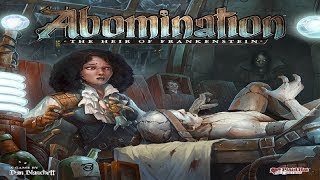
















Abomination: The Heir of Frankenstein Deep Dive
What the Community Thinks About Abomination: The Heir of Frankenstein
Abomination: The Heir of Frankenstein arrives as a standout worker-placement game that turns a gothic premise into genuine mechanical depth. Released by Plaid Hat Games in 2019 and set in 1819 Paris, this experience asks players to assemble and reanimate a creature while managing decay, reputation, and the weight of increasingly sinister choices. The Secret Cabal Gaming Podcast admitted early skepticism that melted into praise, Board Game Coffee leaned into its creepy atmosphere, and Meeple University and The Cardboard Herald dug into its tight economy. The consensus is a game where every mechanism reinforces the dark narrative at hand.
Core Mechanics That Define Abomination: The Heir of Frankenstein
Worker Placement with Moral Stakes
The core action system sends scientists to distinct Paris locations such as the cemetery, hospital, morgue, dark alley, and docks, each providing body parts at varying freshness. The fresher the components, the more points you score, creating an elegant tension between ethical compromise and mechanical efficiency. Reviewers note the game offers multiple valid pathways: you can pursue a tight, efficient strategy that maximizes fresh-part bonuses, or you can deliberately prioritize reputation and humanity even at the cost of points. This flexibility turns what could be a dry puzzle into a genuine roleplay experience, and early access to cadavers through the hospital gives players opening flexibility before their reputation climbs high enough for direct cemetery or morgue visits.
Decay and Ice: Resource Management Under Pressure
Every round, collected body parts decay automatically, sliding down a condition track. This creates constant tactical pressure to either spend parts quickly before they spoil or invest in ice to halt decay. The need for fresh specimens, achieved either through moral compromise or careful timing, makes decay a thematic feature rather than just a timer. Reviewers praised this as a refreshing departure from static resource games, since collection becomes a puzzle of timing and priority. Players can also pursue animal parts as an alternative, accepting a fixed point penalty but sidestepping decay pressure entirely, which some reviewers identified as a sleeper strategy when human parts become contested.
The Abomination: The Heir of Frankenstein Experience
Thematic Mechanisms That Deepen the Narrative
What separates Abomination from typical Euro games is the integration of narrative into every action. Humanity points accumulate as you murder in alleys or exhume graves, directly penalizing the grim work you perform, while lecturing at the Academy or volunteering at the hospital raises reputation, attracting new assistants and expanding your actions. This bidirectional system lets players actively counterbalance the protagonist's coercion with genuine scientific virtue. Event cards introduce story encounters, and activating certain locations can summon the Monster himself, forcing a passage from the storybook and consequences that can help or harm. Reviewers emphasized that these beats feel earned rather than intrusive, because they emerge from the game state instead of interrupting play.
A Grim, Gruesome Aesthetic That Commits Fully
The card artwork pulls no punches. Corpses are visibly decomposed and missing jaws, and body parts are depicted without skin, bug-eyed and misshapen. Reviewers stressed that this is a genuine horror experience, not a cartoonish one, and praised the commitment to theme while acknowledging the artwork will be uncomfortable for some players. The visual presentation mirrors the mechanical tone, so the grotesque nature of the task reinforces the worker-placement puzzle. For those who relish horror and do not shy from disturbing imagery, this authenticity elevates the experience, while for others it remains a legitimate dealbreaker.
What Makes Abomination: The Heir of Frankenstein Stand Out
Rare Mechanical and Thematic Cohesion
Most Euro games achieve flavor through pasted-on storytelling. Abomination reverses this, since every mechanism speaks to the theme. Leyden jars and electricity mirror the classic Frankenstein narrative of bringing dead matter to life, reputation loss from murder maps onto the moral weight of the protagonist's choices, and the need for fresh specimens makes decay a thematic consequence rather than an arbitrary timer. Reviewers consistently returned to this point, describing a game that feels authored rather than assembled, a level of integration that few designs achieve.
Surprising Strategic Depth and Replayability
Despite similar action spaces across locations, reviewers discovered far more variety than first appearances suggested. The freshness system creates cascading decisions about when to start and finish body parts: you can chain starting and completing parts in one lab turn to maximize expertise, or delay completion to build ice reserves and reduce decay pressure. The random event system, combined with variable reputation arcs and expertise tracks, means no two games follow the same optimal path. One reviewer who initially felt disappointed by apparent sameness found those concerns dismissed once play began, since the game offers enough pivoting opportunities to recover from unlucky draws and let multiple strategies compete.
Potential Drawbacks
Length Without Evolutionary Gameplay
Reviewers noted that Abomination runs two and a half to three hours or more, with some groups stretching longer. The complaint is less the length than the absence of evolutionary gameplay. In long games like Through the Ages, the game state transforms as new characters arrive and options expand. Abomination maintains the same loop throughout: collect parts, build them, and improve your creature, with no dramatic shift in available actions. For players who embrace deep exploration of a single system, this is a strength, but those expecting a long game to scale its complexity may find the consistency monotonous by the third hour.
Randomness That Can Sting
The Leyden jar dice rolls determine whether animated parts activate successfully or suffer damage, and event cards add chaos that can disrupt plans. Reviewers noted that while mitigations exist, such as research cards for rerolls, expertise to replace weak dice, and repairs before risky activations, randomness can still punish reasonable tactical choices. They emphasized, though, that the game is long enough and provides enough actions that players can recover from bad variance. It is manageable friction in a game built for tactical recovery rather than the punishing swing of a short, brutal game.
If You Enjoy Abomination: The Heir of Frankenstein
Reviewers framed Abomination as unique but not isolated. If you appreciate gothic horror married to elegant mechanics, Mice and Mystics shares Plaid Hat Games' commitment to narrative that respects gameplay, though it trades the Euro puzzle for cooperative adventure. For the worker-placement and resource-management framework, Through the Ages offers similar strategic depth with more evolutionary arc. The deduction and thematic pressure echo Letters from Whitechapel, a favorite for players seeking immersion and tension. For those drawn specifically to the Frankenstein reimagining and the assembly-based crafting puzzle, however, Abomination stands largely alone, occupying a genuinely underexplored space in the modern board game landscape.
What Reviewers Are Saying
"It's horror, it's Frankenstein, it's a Euro game right up my alley. I got this game, read the rulebook, and I was actually a little disappointed at first. You look at the board and half the action spaces do the same thing. But when I played the game, boy was I wrong. There's a lot of meat to this game."
— The Secret Cabal Gaming Podcast
"What's great about Abomination is how it's got this really creepy feel to it, because you are digging up bodies from a grave, you are stealing bodies from a morgue, and you're committing murder. The theme really is an experience, and if you're looking for a spooky experience, check out Abomination: The Heir of Frankenstein."
— Board Game Coffee
"Man, is that fun to do, because there's all kinds of ways you could go about this. You could be efficient and get maximum victory points, or you could go a different direction where you don't really care about maximum victory points and you just want to do it quickly. It's a really neat concept and a really tight resource management game."
— The Secret Cabal Gaming Podcast