/pic7471323.png)
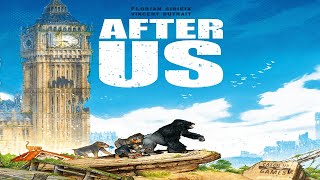
2083. Humankind died out decades ago, leaving behind mere vestiges of its time on Earth. As time went by, nature reclaimed land all over. In this resurgent world, apes have kept evolving. They've been gathering in tribes, growing, mastering human items, and advancing in their quest for knowledge. As the leader of such a tribe, you need to guide it towards collective intelligence.
After Us is a deck-building and resource management game featuring an original and intuitive combo system in which players are each leading a tribe of apes. Starting only with tamarins, they combine their cards each turn to collect resources and gather victory points, attracting new apes into their tribe along the way: powerful gorillas, resourceful orangutans, versatile chimpanzees, and wise mandrills. The first player to obtain 80 points prevails in the race to collective intelligence — and wins the game.
— description from the designer



- Great artwork by Vincent Dutrait
- Easy to teach and enjoyable for new players
- Neat game with unique primate abilities
- Slipped from top 10 inclusion due to cooling off
- Primates taking over a world after humans are gone.
- Post-apocalyptic world.
Mechanics (from transcript analysis)
- Race game — A race to a certain point threshold (80 points) to trigger the end game.
- Set Collection — Attracting more primates to your group, potentially using their cards for more powerful actions.
- Tableau Building — Playing cards into a tableau to form connections and fire off abilities.
Video topics + discussion points
Quotes (from this video)
- Atlantis Rising is a really fun cooperative game where you're trying to get as many people off of or rather away from the island of Atlantis as it's sinking into the ocean as you possibly can through these really neat kind of Stargate-esque wormholes.
- Architects of the West Kingdom is such a cool worker placement game.
- It's one of the one of the better ways that I've seen alpha players be handled in the in the in a cooperative game because it does restrict some information from the alpha player so that they cannot just tell everybody what to do.
- The ART Project also has a really neat theme.
- This is a fantastic implementation of trick-taking, cooperative trick-taking.
- The One Ring is the Trump in this game. But when you play out the One Ring, you can play it as a losing card or you can play it as a Trump card as the Trump card. So you get to pick.
- And the artwork is really what kind of brought it to the forefront for me.
- Aeon's End is a fantastic game where you are mages. You're however many people you are, you're cooperatively trying to fight whatever big bad creature is coming through the breach to a distract to attack and destroy Gravehold.
- This is basically that game that it replaced a little bit more growed up.
- Lord of the Rings
- Jamaica is a really neat game where you have your own pirate ship and uh, the other players have theirs and you're racing around the island of Jamaica.
- it's like this resource management game that's that's kind of enveloped into a racing game, and I really enjoy that that dichotomy that the game represents.
- if you put all of the cards back-to-back, it creates a a diorama.
- It's really light, but it's very fun.
- Burncycle is a fantastic game where you take on a little robot. Um and everybody else takes on a little robot. This is a cooperative game where you are robot espionage.
- It is completely and totally espionage at its greatest or or or that spy type of game is as it's greatest.
- you are running your actions based on the burn cycle, which is where your actions come from.
- So, Burn Cycle is just a fantastic game. It's chip theory games. All of your information is on the chips. Um and they're poker chips, but it's it's a beautiful game. Love it to death.
References (from this video)
- Fast setup, play, and put away.
- Engaging combos.
- Simple but keeps players involved.
- Simultaneous play keeps the game moving (when players aren't overthinking).
- Quick turns keep players eager for their next action.
- Appealing art.
- Better than Splendor.
- Perfect for filling short gaps at game days.
- Can lead to analysis paralysis if players overthink.
- Simultaneous play can be frustrating if one player is slow.
- The deck building aspect lacks strategic depth due to a hidden market.
- The thematic elements feel underdeveloped despite good art.
- Not engaging enough for longer play sessions.
- The game doesn't warrant intense strategizing due to limited impactful combinations.
- Using objects other than point-generating ones felt unnecessary.
- Tainted Grail
- Splendor
- Canvas
- Calico
Mechanics (from transcript analysis)
- Combo Building — Players engage in building combos with their cards, and reactivating abilities can lead to significant point gains in a round.
- Deck Building — The game involves deck building, where purchased cards go on top of the deck, but the market is not face-up, making it difficult to strategize purchases.
- Set Collection — Players collect resources and aim to achieve objectives based on these resources, with different ape types focusing on different aspects like rage (pairing down deck) or collecting batteries.
- Simultaneous action selection — The game is played simultaneously, which contributes to its fast pace but can also lead to analysis paralysis or players waiting for others.
Video topics + discussion points
Quotes (from this video)
- it's nice and simple yeah extremely simple game very uh it kind of hits that same similar Sweet Spot maybe a little bit less but like those filler es games but like you're still kind of involved the entire time
- I feel like this game kind of goes in length you you have to obviously trust the people you're playing with because it's just so simultaneous the entire game
- the actual Crux of the game though I think I've seen before it's in tainted Grail that that card comboing uh like or the card pairing I guess yeah
- the problem with this game is that you don't know what you purchase though
- I will say something that's good for it is I always wanted it to come back to my turn like I wanted to go back to the card thing which is nice Splendor I was like I wanted the game to be [ __ ] over by the time I grabbed my first chip I'm like can someone please combo off and win
- this is a perfect game to kind of be like at a game day and it's like oh when's your guys' game over cuz we want to play a six player game oh you know 30 40 minutes cool yeah just jump after after us and and go to town
References (from this video)

- deck-building and resource management for ape tribes
- post-human future where apes carry legacy
Mechanics (from transcript analysis)
- deck-building — Deck-building with a focus on tribal leadership and resource management
- Resource Management — Managing a tribe of simians towards victory
Video topics + discussion points
Quotes (from this video)
- space bees anyone
- gosh I I love board games
- this game looks pretty beautiful
References (from this video)

- Pretty neat
- Unique mechanic
- Good art
- Nice production
- A little bit more than I was expecting
- Players are apes trying to recover artifacts and rebuild civilization.
- Post-apocalyptic Earth
- Unmatched: "Battle of Britain" (reference to sister game)
- Unmatched: "Revenge of the Forest" (reference to sister game)
Mechanics (from transcript analysis)
- Card Play — Players play cards strategically to achieve objectives.
- Deck Building — Players build their decks to create powerful combinations.
Video topics + discussion points
Quotes (from this video)
- It's one of those games where you are freaking out about the game ending
- You got your special little tiles to build the map with and then you got your different colored tokens that go on the board
- They all have special abilities that are different
- The end game scoring can be brutal, but it's so good
- You can spend like an hour trying to figure out the rules and then you still don't understand some of the rulings
- It's really satisfying placing your little tiles and seeing how the map grows and develops
References (from this video)

- quick playtime
- good for online play (Board Game Arena)
- can trash cards
- strategize for points and actions
- very little interaction
Mechanics (from transcript analysis)
- Deck Building — A deck-building game where players receive four cards per turn, ordered from left to right, to gain resources or points.
- Race game — The first player to reach 80 points wins.
- Tableau Building — Features quick tableau building.
Video topics + discussion points
Quotes (from this video)
- Goblin vaults this year is not only that game but it's all the way up in my top five
- the closest analog I haven't really seen anything exactly like it but the closest analog is Great Western Trail in terms of how the secondary scoring Market works
- for me this takes classic Great Western Trail and adds that Medium interaction I'm looking for
- I like Expeditions more than Scythe but I like Scythe
- I really like a good two-player abstract and this is a really good two-player abstract
- this has got this Euphoria bumping mechanics love it love it love it
- this really hits the mark there is a lot of medium Euro interaction in this game
- my number one game of 2023
- this is my favorite of Great Western Trail well Great Western Trail Argentina is close second but I decided okay I can't really you know I just want to put one great won Trail as one game one entry
References (from this video)
- fantastic art by Vincent Detrit and high production quality
- fast-paced and approachable for new players
- crisp iconography and readable cards
- dynamic engine-building with multiple asymmetrical paths
- theme is skin-deep and may not satisfy players seeking deeper thematic tension
- some players may find the puzzle lightweight
- possible analysis paralysis with the c-layout phase in larger player counts
- ape civilization and survival
- post-apocalyptic Earth with Planet of the Apes flavor
- thematic veneer rather than deeply integrated narrative
- Planet of the Apes games
Mechanics (from transcript analysis)
- Deck Building — players curate an engine by adding cards from a set of primate-themed types, with type-specific bonuses
- deck-building — players curate an engine by adding cards from a set of primate-themed types, with type-specific bonuses
- Resource Management — players manage resources (tamarinds and energy) to fuel actions and purchases
- resource_management — players manage resources (tamarinds and energy) to fuel actions and purchases
- set_collection_and_race_to_points — players build towards 80 points and end the game in a race dynamics
- Simultaneous Actions — each round all players select actions at the same time, reducing downtime
- simultaneous_play — each round all players select actions at the same time, reducing downtime
- tableau_box_matching — cards are arranged on a central tableau in a box-matching grid to trigger bonuses
Video topics + discussion points
Quotes (from this video)
- the heart of this game is fairly simple
- this is a clever fast-paced card game
- Planet of the Apes is my second favorite movie franchise ever
- it's so pretty and it's so quick to learn it can be a surprise hit for bringing newbies into the hobby
References (from this video)

- Load of de and a little bit of skill.
- Strategic placement of treasure chests to make it difficult for opponents.
- Good with nimble dexterity mechanism.
- Very cheap and quick dexterity game.
- Nothing really new, just another dexterity game.
- Party trick is the small box, it's been done before.
- Barrows heavily from Riff Raff, which does it better.
- Dexterity game with treasure chests and rafters
- Riff Raff
- Via Pettie
Mechanics (from transcript analysis)
- dexterity — Players take rafters and lumber cards to build a structure, aiming not to collapse it.
- Set Collection — Players collect penalty points by having their treasure chests fall into the sea, aiming to avoid filling their penalty board.
Video topics + discussion points
Quotes (from this video)
- we generally like to talk a lot of bollocks about tabletop gaming in general
- these oink games are about the size of my brother-in-law's penis
- it's like a sort of reverse Victory Point mechanism where you're trying to give other players victory points so that they lose
- the thing that we don't like about this is is for me personally it's insanely difficult
- don't expect a magnum opus these games have not fallen from Wolfgang Amadeus Mozart's ass
References (from this video)

- Really interesting take on deck building.
- Simple but fascinating mechanic of matching card halves.
- Works well on BGA.
- Great Vince Detroit art.
- Really interesting and nice take on deck building and tableau building.
- Host has almost bought it many times but hasn't yet.
- Rebuilding and survival in a post-apocalyptic world with apes.
- Post-apocalyptic world with apes.
- Wayfarers of South Tiger
Mechanics (from transcript analysis)
- Deck Building — Players acquire ape cards to add to their deck, shuffling and playing them.
- Resource Management — Players gather resources to purchase new ape cards for their deck.
- Tableau Building — Cards are placed next to each other on the table, matching half-boxes on the sides to create full boxes that trigger effects.
Video topics + discussion points
Quotes (from this video)
- Vince Detroit, one of the best.
- like probably the one today still, uh, that has the most name recognition, I would guess.
- So, what we want to do is talk about our favorite games that feature Vince Detroit's art and we're going to do that now.
- Number two is Unconscious Mind, which actually has two artists, very centrally involved in the game.
- So this is one for my money that works the best because it really kind of it reinforces the theme.
- Number one is going to be probably my favorite racing game, and that's going to be uh The Quest for El Dorado.
- I love this game. I really enjoy this race game a lot because this one always ends up being close.
- Quest for El Dorado is great. It's a great intro deck-building game, great intro race game, and make sure to check it out.
- Again, we were ranking them in terms of how much we like the games, not so much how much we like the art. Although again, the art's a banger in all of them.
- So much good stuff out there for Vincent Dutrait. They're so prolific. I don't know how the heck they do it, but they're just it's just the best.
- Vincent, keep doing what you're doing. Please make art forever. You're awesome.
References (from this video)
Mechanics (from transcript analysis)
Video topics + discussion points
Quotes (from this video)
- So we always like to talk about what we got.
- So we spent $70 today.
- So for 70 bucks, looking at this collection, how do you think we did?
References (from this video)

- Favorite of the two Oink games discussed
- One of the best dexterity games played
- A bit more traditional
- Dexterity game with raft building
Mechanics (from transcript analysis)
- dexterity — Players build a raft by placing planks and moving meeples without dropping chests.
- Stacking — Involves carefully placing components to avoid them falling.
Video topics + discussion points
Quotes (from this video)
- these games have a tiny footprint so not only is the Box small the actual game itself is pretty small when it's on the table and also these games are very affordable
- it's much more difficult than it sounds and it's actually much more fun than it sounds as well because normally I don't like games like this but this one is tremendous fun
- it's kind of an efficiency puzzle where you are playing with your luck you know can you keep everything in front of you without banking them or are you going to spend that extra time to be a bit more cautious
- it's a lot of fun and if you like games like cockroach poker this is a great alternative that I actually think is a lot better
- it's only six turns so it's lightning fast and again it's a great way to dip your toe into the kind
- very luck dependent but it's charming and it's fast and easy to play
- this one probably the gamest of all of them in terms of I'm being a bit more restrictive and some of the rules being you know a little bit more gamified but it's still super easy to play
- the more cards you play your options quickly start to dwindle and it's all about trying to squeeze every single point out of this game it's a wonderful design and one of the best filler games to come out in the last 5 years or so
References (from this video)
- Game is largely language independent despite initial French availability.
- Straightforward rules teach.
- Interesting thematic integration with primate species specializations.
- Strategic depth in card arrangement for resource generation and scoring.
- Currently only available in French.
- Primates competing to be the most successful group after humanity's end
- 2083, a post-human world where primates have taken over
Mechanics (from transcript analysis)
- Action Point Allowance — Players use action tokens each round to select a primate species, granting a specific bonus.
- Card Drafting — Players choose action tokens representing primate species, which influences which cards they can purchase from a general display.
- Deck Building — Players acquire new cards from a central display and add them to their deck, improving its capabilities over time.
- Hand Management — Players draw and arrange cards from their deck to create 'cells' for resource generation and scoring.
- Resource conversion — Resources can be spent to gain victory points or other benefits, and some cards allow for repeating cell effects.
- Set Collection — Players collect resources (fruits, flowers, seeds, batteries) and potentially form sets for scoring or trades.
- Simultaneous action selection — Players secretly choose action tokens each round, which are revealed simultaneously to determine bonuses and purchasing options.
- Technology/Object Cards — Human objects (computer, ghetto blaster, moped) provide special abilities that can be used by spending battery tokens during specific phases.
- Variable player powers — Different primate species (Mandrels, Orangutans, Gorillas, Chimpanzees) have unique specializations and associated action tokens.
Video topics + discussion points
Quotes (from this video)
- the game itself is pretty much language independent
- how players arrange their cards is important in determining which cells are complete what resources are gathered what scoring opportunities will present themselves
- this is how you thin your deck potentially of weak cards like the tamarinds
References (from this video)

- Keeps giving rewards and resources.
- Good variety of apes with different abilities.
- Plays up to six players with negligible downtime.
- Simultaneous play reduces downtime.
- The theme is very thin and doesn't integrate well with gameplay.
- The post-apocalyptic theme feels pasted on and is disappointing.
- Hiding action discs seems pointless.
- Turn order for drawing cards matters but is not clearly defined.
- Limited variety in deck augmentation options compared to other deck-building games.
- Abstract puzzle game with a pasted-on post-apocalyptic theme
- Post-apocalyptic (stated as theme, but contradicted by reviewer)
- Dominion
- Seven Wonders
- Race for the Galaxy
Mechanics (from transcript analysis)
- action selection — Players use action markers to select apes, paying resources for different levels of apes.
- Deck Building — Players augment their decks with new ape cards which are shuffled into their draw pile.
- Hand Management — Players draw cards into their hand and decide how to arrange them on their player board to complete objectives.
- Resource Management — Players collect and spend resources like energy and other types to acquire apes or activate abilities.
- Set Collection — Players complete boxes on cards by arranging symbols, which rewards victory points, energy, or resources.
Video topics + discussion points
Quotes (from this video)
- hello welcome back to the channel and this is a channel where we give you reviews playthroughs don't do unboxings we we generally like to talk Al lot of Bullocks about tabletop gaming in general
- so we are going to say no after us seems like a deliberate attempt to cash in on the success of the TV show The Last of Us
- this game has literally nothing to do with the post-apocalyptic genre and more to do with an off-the-shelf suduku puzzle mag
References (from this video)

- Great deck builder
- Satisfying combos
- Good progression
- Fancy artwork
- Works well for multiplayer solitaire
- Trivial player interaction
- Might be better on digital platforms
- Apes in a society beyond humans
- A society beyond humans
- Ecos
Mechanics (from transcript analysis)
- action selection — Simultaneous action selection is the one that gives you extra resources.
- Card Drafting — You could pay two different resources or two batteries or whatever to copy these actions on top of it of other players.
- Deck Building — This is a little deck building race in effect with a whole lot of Icon and pattern matching.
- Engine Building — Makes you choose that time when you're going to swing from engine building to chasing for points.
- Hand Management — You'll draw four of your cards and rearrange them then you'll resolve only the icons which are in a completed box.
- Icon/Pattern matching — A whole lot of Icon and pattern matching.
- Set Collection — Recruit new Apes if you have resources.
Video topics + discussion points
Quotes (from this video)
- five games in 30 minutes is back we got very exciting games today from after us so brother Addison's a great legacy and we've got herd mentality woolies and Beacon Patrol yes so we're going to take you quickly through them all and give you a review
- It's clever simple rule set the on the downside potentially if you have an alpha player that would want to control no I want that tiles give me that tiles or I don't know no you have to put it here you have to put it here you know but that is true all the information is public so you just have to make sure that you're playing that appropriately
- I love tech building and this one is such a great one now this is a bit of multiplayer Solitaire where everyone has got their own puzzle but everyone also trying to work out what's the optimum strategy
- It is a very very solitary game the really the interaction between players is pretty trivial in this game
- if however you are the only person who has an odd out answer so if you stand apart from the crowd and no other player stands apart from the crowd you get the pink cow
- I personally don't feel this Stacks up very well as a party game because I always I think for me the fun in a party game is trying to be creative and trying to find something obscure I understand that tarent so for me a game like this where I'm trying to get the most common answer it's actually quite dull for me.
- This is so bad what is this anyways
- Turning it into a rolling right that's that's a big step back for me.
- I found that the time I spent coloring things in between my turns there was just a lot of it's not downtime per se but it's just upkeep time so I you know so rather was a game that for me it was always just fine I never loved it I didn't dislike it it was just kind of an average game and then this introduces a number of things that just slows it down and boils it down for me so I didn't really didn't really enjoy it
- I do like also the first player marker it is a pencil sharpener the shape of the grudder.
References (from this video)

- No turn order and three simultaneous phases streamline play
- Unlimited basic resources offering flexibility
- Three ape types with distinct flavors and card layouts
- Rage/deck-thinning options add strategic depth
- Diversification benefits and multiple scoring paths
- End-game trigger at 80 points creates a clear goal
- Complex to track interactions may be dense (frame interactions, etc.)
- End-game triggers based on remaining cards can create abrupt round endings
- survival, resource management, and ape evolution
- post-human world
- card-driven tableau-building with framing mechanics; players assemble tribes of apes and build completed frames that resolve
Mechanics (from transcript analysis)
- activate objects — Energy can be spent to activate objects, up to once per round, offering various helpful abilities.
- ape attraction phase — In phase two, players reveal tokens to gain a bonus and recruit an ape of a chosen type by paying the required resources and choosing level one or level two cards.
- attraction restrictions — When attracting, players pay from a limited column matching their token; optional to attract; look at the new card then place it face down on top of the deck.
- deck-building / drafting — Each round you draw four cards from your eight-card deck and arrange them in front of you to form frames that will resolve.
- frame-based resolution — Frames are laid out and resolved left-to-right, top-to-bottom; only completed frames (surrounded by a black outline) count toward scoring.
- Once-Per-Game Abilities — Energy can be spent to activate objects, up to once per round, offering various helpful abilities.
- rage track and deck trashing — Players accumulate rage to trash cards from their tribe; removing cards may give a scoring bonus and impacts frame resolution.
- Reclaim as Action — During resting, players discard cards from their tribe and return their chosen token to their supply, preparing for the next round.
- Resource Management — Four basic resources (energy, fruit, flowers, grain) are used to recruit apes and activate abilities; energy activates objects.
- resting phase — During resting, players discard cards from their tribe and return their chosen token to their supply, preparing for the next round.
Video topics + discussion points
Quotes (from this video)
- the essence of the game is in creating strong combinations of the different ape cards
- there is no turn order
- each round is played in three simultaneous phases
- the game end is triggered when one player reaches 80 or more points
References (from this video)

- fast, simultaneous play with approachable rules
- light deck-building combined with strategic upgrade choices
- thematic primate setting and varied card flavors
- flexible resource economy and end-game tension
- some players may find the interaction chaotic or chaotic-in-a-good-way
- resource availability can stall certain rounds depending on draws
- tribal primate competition with resource-based scoring
- primates form tribes, competing to gather resources and score points
- simultaneous resource gathering and deck-building progression
Mechanics (from transcript analysis)
- Card tiering — cards come in level 1 and level 2 with escalating costs and effects
- Deck Building — players build and upgrade their decks to gain resources and points
- deck-building — players build and upgrade their decks to gain resources and points
- End-game race condition — the game ends when a player reaches a target (80) points, signaling the race to finish
- Mimic/reactivation abilities — certain cards mimic others or reactivate previously used effects
- Opponent-token interaction — spending resources to activate or modify an opponent's token effect
- Rage and trashing — trash mechanics (rage) allow removing cards to thin the deck and influence point gain
- Resource Management — resources include energy, grain, fruit, flowers, etc., used to purchase cards and activate abilities
- Simultaneous action selection — actions are chosen and resolved concurrently without a fixed turn order
- Simultaneous Actions — actions are chosen and resolved concurrently without a fixed turn order
Video topics + discussion points
Quotes (from this video)
- this game is bananas
- this is essentially a very light deck building
- it's a race to 80 points
- we are doing this simultaneously
- the orangutans have more ways of gaining energy
- the humans are gone and so the primates have survived
- planet planet it's like planets of the apes
References (from this video)
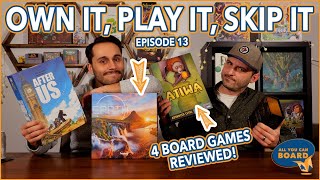
- Innovative rectangle-assembly mechanism for resource generation.
- The power-card system introduces interesting optimization choices.
- Limited direct player interaction; some sections feel tacked-on.
- Theme feels underwhelmingly integrated; artwork is strong but identity is vague.
- Can feel lengthy and fatiguing if overextended.
- tribal leadership, resource gathering, and race to points
- 2083 and beyond; humanity extinct, primates evolve to rebuild civilization
- competitive, engine-building with a shifting power curve
- Tainted Grail
Mechanics (from transcript analysis)
- Card layout to form rectangles — Draw four cards with boxes; align them to complete a rectangle to gain resources, else you get fewer resources.
- Deck Building — Players start with a deck and acquire new cards to improve their capabilities.
- deck-building — Players start with a deck and acquire new cards to improve their capabilities.
- Power cards and Rage — Power cards provide bonuses; every four Rage tokens allows an action to trash a card and thin the deck.
- Resource-to-card economy — Gaining resources from layout allows purchasing new level-1 or level-2 monkey-type cards to add to discard/engine.
- Simultaneous first phase (Mumble phase) — First phase is largely simultaneous with limited interaction; players announce resources and plans together.
Video topics + discussion points
Quotes (from this video)
- this is a mumble game
- top shelf billing was a coined a while ago and this is going to be called Mumble games
- I would skip it
- I really really like Earth
- Earth I'm going to keep playing it for a while
- it's an own it for me
- this is a play it for me
- the quality of cards is among the best I've ever seen in any game
- the artwork is great
References (from this video)

- Ton of fun as a filler game on Game Night with the whole family
- Compact and well-packaged for casual play
- Impressive depth of balance and planning for a small game
- Generally well-received by players in the transcript
- Can be tense or chaotic if players push the balance too far
- Requires steady hands and careful planning; less appealing for players seeking heavy strategy
- Balancing on a fragile raft while collecting treasures
- A raft that grows and shifts as players balance moving rafters and keep treasure chests in place.
- playful, humorous
Mechanics (from transcript analysis)
- dexterity / balance — Players move rafters to balance a growing raft while keeping treasure chests in place.
- Risk Management — Choosing actions under the threat of the raft tipping or becoming unbalanced.
- spatial reasoning — Planning moves to maintain stability and maximize kept treasures as the raft expands.
- Stacking and Balancing — Players move rafters to balance a growing raft while keeping treasure chests in place.
Video topics + discussion points
Quotes (from this video)
- this is a dexterity game
- it's a ton of fun as a filler game on Game Night with the whole family
- Exquisite levels of balance and foresight
- go check it out
- rafter 5 from oink games a small little dexterity game where you have to move the rafters in order to keep your treasure chests on the ever growing raft
References (from this video)

- Limited edition exposition cover art
- Colorful artwork
- Interesting card-linking mechanic as core feature
- Theme is purely aesthetic with no mechanical integration
- Card linking mechanic is sole source of gameplay depth
- Solo mode feels tacked on and underdeveloped
- Solo AI gains points too quickly to be beatable
- No difficulty levels for solo mode
- Essentially solitaire game with weak multiplayer
- Minimal player interaction
- No reason to play with more than 2-3 players
- Players ape over card choices slowing gameplay
- Impulse purchase the host regrets
- Ape society and resource gathering
- Post-apocalyptic Planet of the Apes universe
- Card combos in post-apocalyptic world
- Planet Unknown
Mechanics (from transcript analysis)
- Ape specialization — Four ape types with different mechanics (Rage, Batteries, Victory Points)
- Card lineup — Players arrange four cards each round to create linked combos
- card linking — Create complete chains by linking card edges
- Resource conversion — Cards have resource costs and bonuses with banners
Video topics + discussion points
Quotes (from this video)
- I really enjoyed it clean you just take the cards you move up the prices
- I didn't really know much about this game because I missed a Kickstarter
- I am hyped for this game hegemony has probably been my best game I've played of the year so far
- You need to temper your expectations a bit for this game
- trade show it's just it's kind of irresponsible really
- I'm getting sick of it
References (from this video)

- surprisingly deep for a tiny-box dexterity game
- great portability and shelf-friendly size
- engaging weight-balancing challenge
- strong payoff in group play and repeat sessions
- can be tense or punishing if you drop pieces
- some players may prefer less variability in setup
- Stability, weight distribution, and risk on a scaled raft
- Ocean/raft-building scenario with wooden rafters and chests
- Playful, physical, tactile with strategic placement
- Drop It
- Dro Palter
Mechanics (from transcript analysis)
- balancing and removing components — Choose a rafter, flip a panel to reveal a raft pattern, and remove a rafter to place on your board, balancing weight to avoid collapse.
- optional variants — Nails and wood pattern variants can alter difficulty and visual flair, though base rules are simple.
- placement strategy and weight distribution — Different weights and shapes influence how much stress a raft can bear; players must distribute weight carefully to avoid toppling.
- Risk Management — Players accumulate mistakes by dropping rafters; five mistakes by any player ends the game, and the rest win.
- risk management and mistake-based loss — Players accumulate mistakes by dropping rafters; five mistakes by any player ends the game, and the rest win.
- Stacking and Balancing — Choose a rafter, flip a panel to reveal a raft pattern, and remove a rafter to place on your board, balancing weight to avoid collapse.
Video topics + discussion points
Quotes (from this video)
- it's a hell of a lot of fun
- the catch-up mechanism I think it's genius
- it's an absolute blast to play
- in such a small box this is going to fit that niche perfectly
- it's not going to take up much room on your space at all