/pic7430993.jpg)
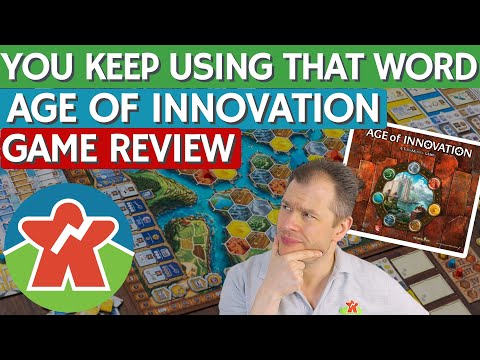
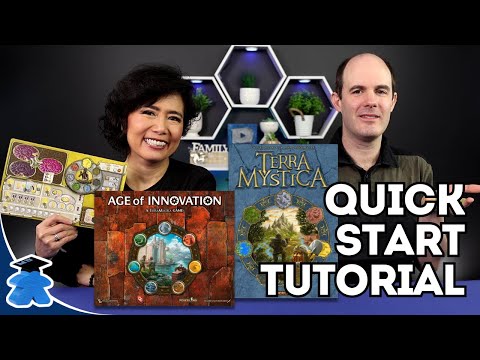










































Age of Innovation Deep Dive
What the Community Thinks About Age of Innovation
Age of Innovation stands as the latest evolution in the Terra Mystica universe, offering board gamers a fresh take on the beloved civilization-building system. The game has generated significant discussion within the community, with reviewers highlighting its balance between familiar mechanics and thoughtful innovations. While universally recognized as a well-crafted strategy experience, opinions diverge on whether its additions enhance or complicate the original formula.
Core Mechanics That Define Age of Innovation
Faction and Ability Drafting
One of Age of Innovation's most significant departures from its predecessor is the introduction of modular faction selection. Rather than playing with pre-determined factions, players draft combinations of races, terrain types, and stronghold abilities at the game's start. This creates approximately 1,428 possible faction combinations, introducing strategic variation from the opening moments. The drafting system directly addresses a concern some players had with Terra Mystica: the sense that certain faction-map combinations were inherently stronger. By allowing players to customize their starting powers, Age of Innovation shifts focus from discovering optimal combinations to exploiting them within each unique game context.
Innovation Tiles and Books
Age of Innovation introduces a powerful new resource in books and a compelling endgame system through Innovation tiles. These limited tiles become highly contested, as they generate substantial round-by-round effects or end-game bonuses. Books, earned through play and player interaction, serve double duty: they unlock powerful board actions and enable access to these transformative tiles. The scarcity of both books and Innovation tiles creates meaningful tension in the late game, forcing players to balance immediate gains against the potential of superior end-game effects. This system significantly amplifies the sense that every decision carries weight and that strategic paths remain viable for multiple player archetypes.
The Age of Innovation Experience
Satisfying Engine Building
Reviewers repeatedly emphasize the deeply rewarding nature of Age of Innovation's core loop: terraform, build, upgrade, and generate resources. The cycle of constructing workshop into guild into school into university, watching income streams expand with each upgrade, delivers the satisfying engine-building pleasure that defines Eurogames. The double-layer faction boards prevent pieces from shifting during play, while the streamlined ruleset keeps mechanical friction minimal. Players report that the system feels intuitive once learned, with theme supporting mechanical decisions and vice versa. This mechanical elegance means learning the game does not require extensive rules mastery, yet strategic depth remains for those willing to explore it.
Tight, Competitive Interaction
Age of Innovation fosters direct player interaction without resorting to conflict or take-that mechanics. Building adjacent to opponents triggers power-gaining opportunities for those neighbors, encouraging players to consider their placement carefully. The science track advancement system creates natural tension as players race toward milestone scoring opportunities. The Innovation tile market forces players into direct competition for limited, high-impact additions. Unlike purely solitary engine-building games, Age of Innovation keeps all players acutely aware of their opponents' progress and engaged throughout turns that belong to others. This interaction elevates the experience from puzzle-solving into genuine competition.
What Makes Age of Innovation Stand Out
Variability as a Design Philosophy
The game's modularity extends beyond factions. Science track advancement costs and reward patterns shift each game, meaning strategies effective in one session may require adjustment in the next. The round scoring tiles introduce additional variability by establishing shifting objectives. This design choice addresses a core criticism of Terra Mystica: that repeated plays risked becoming predictable once players internalized optimal strategies. By ensuring no two games follow identical patterns, Age of Innovation provides the repetitive-play appeal that strategy gamers crave while remaining fresh across dozens of sessions. Even experienced players report discovering new synergies and pathways.
Production Quality as Elegant Design
Age of Innovation stands apart among Euro games for its visual beauty. Vibrant, colorful artwork combined with clear iconography creates an aesthetically inviting game that remains functionally superior to its predecessors. The faction boards utilize double-layer construction for stability, a small but meaningful quality-of-life improvement. Component clarity supports intuitive play, allowing newcomers to grasp spatial relationships and mechanical connections without constant rulebook consultation. The visual presentation reinforces theme in ways that enhance rather than distract from strategic play.
Potential Drawbacks
Complexity Relative to Predecessors
Some reviewers who loved Terra Mystica or Gaia Project experienced disappointment with Age of Innovation, characterizing it as adding unnecessary complexity without proportional strategic depth. These players perceive the Innovation tile system and book economy as mechanical flourishes that interrupt the clean elegance of the core terraforming-and-building loop. For purists of the original design, the expanded rule set and additional resource management represent friction rather than enrichment. The drafting phase, while introducing variation, adds setup complexity and decision-making overhead that some players find excess rather than essential.
Learning Curve and Rules Density
Despite the game's intuitive core, Age of Innovation presents more rules than either Terra Mystica or Gaia Project. The interaction between science track variations, Innovation tiles, round objectives, and book actions creates sufficient complexity that new players may struggle to optimize plays during their first session. The abundance of valid strategic paths, while rewarding for veterans, can overwhelm newcomers unable to evaluate competing options. Teaching the game requires more time and attention than Terra Mystica, potentially limiting accessibility to casual gaming groups. The rulebook layout, while clear, offers minimal guidance on strategy or opening theory, leaving players to discover effective approaches through trial and error.
If You Enjoy Age of Innovation
Players who love Age of Innovation typically gravitate toward other modular engine-building experiences. Brass: Birmingham and Gaia Project offer similar strategic depth and player interaction, though through distinct mechanical frameworks. Clans of Caledonia provides comparable faction-based variability and satisfaction from building toward economic dominance. Teranova serves as an excellent entry point for those curious about the Terra Mystica system but intimidated by Age of Innovation's complexity. For those seeking the pure satisfaction of terraforming without additional layers, the original Terra Mystica remains a masterpiece. Players desiring greater randomness and exploration might prefer Gaia Project, which achieves variability through modular map construction rather than faction crafting.
What Reviewers Are Saying
"Age of innovation feels like it just delivers the pinnacle experience of that whole system. You have the tried and true formula of your, you know, building buildings and terraforming, you know, the different land and upgrading and kind of, you know, it's got the cool power system and all that. It just injects so much variability in terms of the start of the game."
— Rolls in the Family
"Every game is going to play out differently because the same abilities might give you different rewards either in steps or books which come back to depending on the specific strategy that you're adopting this game. So again, adding a whole layer of variability in the setup strategy and setup and everything else."
— Meeple University
"Age of Innovation is that solution for me where I do get that competitive edge that this game can provide that is mirrored with games like Terra Mystica but it also offers the added flexibility for me to still feel clever and feel like I'm still exploring this game."
— The Board Gaming Doctor