
For endless years in a secluded region deep in the heart of a vast continent, four mysterious people have been developing different cultures, merging magic and technology in a delicate balance with nature and among themselves. Now, they must face a challenge: the arrival of new settlers, bringing with them more advanced crafts and technologies, new weapons and fighting techniques, and an entirely different lifestyle.
As the leader of one of the original inhabitants of Altay, how will you react to this challenge? Will you be open to accepting the new settlers and merging with them, or will you focus on your ancient traditions? Will you expand your kingdom or develop new knowledge? Will you build monuments to last forever, or crush your enemies with your armies?
Altay: Dawn of Civilization is an original blend of deck-building, civilization development, and area expansion. Players control one of four factions, each represented by a starting deck with unique cards and with subtle differences in the number of "basic" cards. Each turn, players use their cards to produce resources (stone, metal, wood, knowledge), build new settlements and expand on the board, attack or defend against their enemies, or manipulate their decks or card hand.
The game board represents one of the regions where the four people are in conflict with one another, with each area characterized by a different terrain type and the presence of different resources. Card-playing and board expansions are fully integrated, as many cards will have greater effects if you control the right territories. Using the resources produced by their cards or collected from the board, players can acquire and add to their deck new cards, representing the new settlers and their crafts.
Players can also spend resources to develop "achievements" — special cards that are permanently added to a faction, granting it additional capabilities or providing points.
Victory is granted by the combination of territorial expansion, technological development, and the success in creating long-lasting memories of your civilization's achievements.
—description from the designer

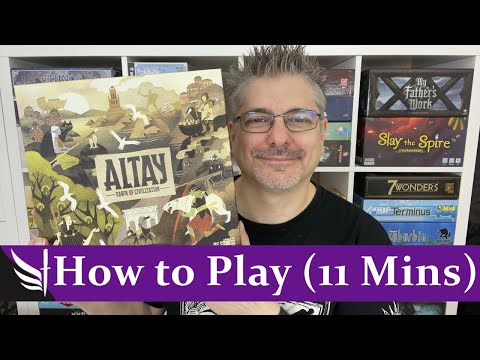
Images


- civilization development and area expansion
Mechanics (from transcript analysis)
Video topics + discussion points
Quotes (from this video)
References (from this video)
- Features a blend of deck building, civilization development, and area expansion.
- Players control one of four different factions, each with a different starting deck.
- Civilization emerging, merging magic and technology with nature, facing challenges from new settlers.
- An age before time, a secluded region in the Basque continent.
Mechanics (from transcript analysis)
- area expansion — A blend of deck building and Civilization development and area expansion.
- Combat — Attacking and defending as you go.
- Deck Building — A blend of deck building and Civilization development.
- Resource Management — Produce resources.
Video topics + discussion points
Quotes (from this video)
- Thankfully long gone are the days when we'd have to spread out our board games on a moist paper towel because that's all we had.
- So follow the link in this video's description to upgrade your gaming space and take advantage of their early bird special available right now but for limited time.
- I absolutely need to play this game it sounds wonderful and looks so bucolic even if it is about making cheese.
- I suppose I have enough dice said absolutely nobody ever and if you play role-playing or tabletop games then you know that you can never have too many dice it's what separates us from the animals.
- There is a tiny hat inside each die a tiny hat this actually isn't the first time that Arby's has rolled out a set of polyhedral components.
References (from this video)

- Excellent game
- Expansion adds new map and mechanics without too much complexity
- Expansion bolts in nicely and smoothly
- Civilization building
Mechanics (from transcript analysis)
- Area Majority — combination deck builder and area majority game
- Deck Building — combination deck builder and area majority game
- Island Hopping — the new map is basically instead of having this giant territory, the territories are going to split in islands, different islands. So you will need ships to cross the to cross the water.
- Naval Movement — there is this new mechanics on how you're moving from island to island.
Video topics + discussion points
Quotes (from this video)
- February edition. Yes. And boys, we got a lot to talk about it this month cuz it's a lot of news, a lot of game like new games coming to retail some of to to the Kickstarter game pound. We've got a lot to talk about it.
- So, we can tell you a little bit more. This is um coming out on Kickstarter. Should be live right now.
- For the Gods is a fantastic easy to learn area majority game that plays in about an hour.
- It's very different from Undanted, but it's Seo Benjamin and David Thompson and um uh Brett Gilbert as well.
- It's so simple and easy to learn and easy to play. It's beautiful.
- So each part, so basically you picking up pieces of a column uh from from your bag. um each one will have some pips on top and you can only use the same pips on the same column.
- So, every time that you play, they're going to be different. And of course, their gods, they're going to do god stuff like let you move around like a prop.
- It's just an awesome game. Very very surprisingly simple to teach and learn.
- So, for those that have been following the channel since the good old days of 2024, you'll know one of our favorite games of that year was Alai Dawn of Civilization, the combination deck builder and area majority game by Balamore and Olistinus.
- B on top of adding a new um uh a new clan, a new a new faction, uh adds a new map and new mechanics.
- So the seaf farers expansion it adds without being too much. It doesn't add too much complexity. It bolts in really nice and smoothly.
- So, we are talking about probably one of our favorite IP in in in life full time. Yeah, full time that never received a lot of love in the top in the like board gaming world.
- Final Fantasy as an IP has been done dirty by the board game industry. The games have been either appalling or bad.
- So there's it's ripe for so much good stuff but it hasn't happened.
- And it's going to be a one to four player cooperative game which we imagine that would be something like a dungeon.
- They talking about they want to bring the the JRPG spirits to the to the board game.
- So take this news with the excitement that we wanted to give to you but with a pinch of salt.
- So we are talking about probably one of our favorite IP in in in life full time. Yeah, full time that never received a lot of love in the top in the like board gaming world.
- The reason why it's been hot is first of all cuz the designer trio the creator game is quite quite huge.
- So yeah, very good. Yeah, we've got Simony. We have I'll say the names. Simony Luchani you you all will know him from New Rats of Whiter Darwin Journey Golem Barrage blah blah blah. H Netor Mangon behind Darwin's Journey Newton Shakon base and then we got Tomaso Batista one of our favorite one uh with Barrage and Died Impera.
- So um quite like three big names that go get together to do uh something that looks like really really interesting.
- Yeah, it looks slightly heavier. uh might be too heavy for our taste, but we'll figure out when we play it.
- This utilizes a few things that M and I really like. We like Rondell system. Rondell's very interesting.
- So, you're going around a a circuit. You choose either an inner or an outer action and you do that specific thing.
- Uh you also have open objectives which are also very good and interactive because it's kind of a race to do those.
- And the game will be a variable length and it will end when any two of the objectives are completed which is very interesting.
- Which one of the objectives? Cuz in this in this game we are creating life creating solar system and filling it with life.
- The theme sounds fun.
- but made it in a more like heavy euro version rather than a multiolitaire.
- A long time ago, I played in lots and lots of different rock bands and, you know, all sorts of bands really. I've been a musician for many, many years.
- And this next game that we're going to talk about basically reminds me of my entire growing up and yours, too.
- Yes. Because we all been in a band and we all been shouting down the the microphones. I've always been shouting. That was my thing in the
- Uh, yes. I'll see if we can find something.
- So this is is very American. It's very different from doing it in the UK or or in Italy where but way harder.
- But uh um these games was on Kickstarter last year. So it's going to be delivered this year and then going straight to retail.
- Basically what you're going to do in this like worker placements bent and upgrading game. You are one of those like garage band, one of those like little band that trying to make it h you need through um throughout the 16 weeks of summer because of course when you offer that is when you put everything in the band is everything.
- You're trying to upgrade your band. trying to buy um new instrument uh putting flyers around to make new image get new clothes.
- Exactly. And all of this leading up to the end of the game where you got the battle of the band.
- So everything will culminate at the end of the game that is going to be the basically the final scoring where the coolest band in the neighbor is going to be going to be the winner.
- The production looks absolutely stunning. I do love the colors. I do like the the the vibe that the game has. This kind of like cartoony punk rock that is just like screams to to us exactly what we grown up with.
- Exactly. This reminds me of my youth. It's freaking awesome.
- Yeah, this looks great. Uh it would be really fun to play.
- So yeah, this one sounds like pretty cool.
- Uh, hope it doesn't do like Yeah, because there's been lately um a couple of other games are trying to do the same things like Rock Car 1977.
- Hit and miss. Uh, but this one and Draft Right Records
- Draft Right Records as well. Yeah, hit and miss.
- Yeah, some love there. Someone a little less I think we were more on on the Yes. Fine. Uh, but this one hopefully is going to be that kind of this could be the one. I'm excited about this one. Absolutely.
- One of the channel um like favorite game at this point is Power Vacuum by Keen Bean Studio. We've been telling everybody, if you've been following the channel, you know how much we love that game.
- So when the same team or the same dude Malachi uh came to us and say like, 'Whoa, I got a new game.' We were like, 'Whoa, let us see. Let's go play it.'
- And we're talking about Almighty.
- Almighty is a very interesting, very cool game that Matt and I have played a bunch at this point.
- And it puts you in the shoes of angry, somewhat grumpy gods. Not all of them. All of them. or or at the very least tempetuous and uh their rival.
- Yeah, they who will manipulate, poke, smite, curse or sometimes bless the mortals of this land that you're going to be playing over.
- The game essentially takes the form of a lane battler where you're going to be playing cards to the various lands, the lanes of the game, which will generate certain amounts of belief.
- There is so much interesting stuff about this game. I think we've had a blast with it over we did really Yeah, we did really had fun.
- This kind of like Yeah. territorial majority with the lame battler uh each god is going to be different. You got four type of gods, each one with their own specific power.
- Uh, so there's going to be a lot of shenanigan and a lot of a little bit of take that, a little bit of strategizing, what where you want to be.
- Beautiful production, beautiful gameplay, so much character in the production as well, man. All the artwork is fantastic.
- The asymmetrical gods are awesome. It's just Yeah, there is so much to like about it as well. It's a really fun project.
- So, that's it for another episode of the Hype Factor.
- Yeah. And it's another one. Matt and I do these all the way up until Essence spiel. Yeah. So, we'll be doing them till around October and then it's in spiel and end of year season.
- But basically, every single month we're picking uh another five or six games to whatever news like kind of like tickle our hype. Our hype senses where that we can get excited about and share the excitement with you, our our lovely boy, stupid fam.
- Um, but we'd like to know which of the games uh from this episode tickled your fancy.
- Tickled you the most.
- Let us know in the comments below.
- Um, but we'd like you to to get tickled by checking the Patreon page by our Patreon where we could tickle you. No, let's not say that. Let's do that. I know. Just check out the pat.
- No one's going to see. No one's getting tickled. No one's getting tickled.
- Well, you can can have a look to all the extra content that we got on the on the patre page.
- Uh we constantly have like the video podcast coming out, the interview with the designer. A lot of good stuff.
- On top of that, we got our WhatsApp group. You're going to get access to our WhatsApp group that is now amazing, very very active and we we absolutely love it and um you're getting a lot.
- Go check it out. It cost you a coffee for you and is a lot for us in terms of like helping the channel out.
- Yeah. Keeping the lights on.
- Other than that, check out the rest of the videos.
- Well, hit the subscribe button first. Do that.
- Have you done it? Well, you should have done it earlier, but sure. And then do it now.
References (from this video)

- deck-building, area control
Mechanics (from transcript analysis)
- deck-building — build a deck of cards and use them to perform actions; then fight for control of space on the board
Video topics + discussion points
Quotes (from this video)
- Oh no, where'd mine go? I can't remember.
References (from this video)

- Simple and straightforward combat.
- Deck building drives area control effectively.
- Players don't feel like they are being picked on.
- Resource management and storage mechanics are appreciated.
- The new board in the expansion felt more restrictive and made games longer.
- The expansion adds complexity that might not be immediately necessary.
- Area Control and Civilization Building
Mechanics (from transcript analysis)
- Area Control — Players compete to control territories on the board.
- Combat — Players can attack adjacent territories using combat and defense cards from their hand.
- Deck Building — Players start with faction cards and acquire new cards to improve their deck.
- Resource Management — Collecting resources like wood, stone, and food to build and upgrade.
- Technology/Building Upgrades — Players can build and upgrade structures that provide advantages or victory points.
Video topics + discussion points
Quotes (from this video)
- The Emperor asked the impossible.
- This is a silly almost beer dexterity game.
- Diplomacy. It's the game where you lose friends.
- bag building combat game
- This is a trick taking game where you as players are going to try to bid on taking the right number of tricks based on the cards in your hand. But here's the twist, y'all. You don't know other than the colors the rank
- So, the the expansion is a brand new board or you can play on the base board the new faction and then like you said, everybody gets wooden ships.
- The boats that were used for sailing are then used to establish a settlement on the other side.
- If you lose, you don't lose one of your settlements. That is good. That is a good thing.
- So, it's I hate to say, you know, I mixed feelings on that, Marty, to be honest with you. Do I Did I like the new board? Yeah, but I You know where I'm I know it's I'm I'm chewing on my words here, but I It didn't grab me like I thought the new board would, but I appreciate having the boats.
- It's not a cheap expansion and you must have the base game to use this expansion because all your faction bits and other cards, market cards come from the base game.
- This is a very challenging trick-taking game because from a standpoint of getting someone to go set or trying to short suit someone or all the rules that that are in your brain from trick taking this is more difficult because once again not knowing the rank is going to be you may say okay I think I'm not going to take this trick and everybody who played suddenly is now below you and you're like oh man I got this trick and you're like I didn't this card was I went on the low end. Haha. It was the second highest one in the suit. So, you really don't know.
- I'm not a big fan of not knowing the rank of cards, but this one was so generic on difficulty. I didn't have a problem with it. Now, would I play this over a basic deck of Opa? It'd be tough for me to get on the table with my gaming group.
- Yeah, I I was going to say it's like a mid-tier trick taking game. Uh, for me it I enjoy the twist and I appreciate playing it for the twist, but if I had my plethora of trick uh taking games in the drawer and I open it up and this one's in there, I would probably reach for something else first.
- You could. If you had gone prior to Mother's Day, you could have gotten a 15% off discount. And I'm sure they're going to run. I think I know. And I'm sure for Father's Day, there's going to be a similar discount. and a back to school discount. But why would you use just 15%? Well, if you do, I know a place that you can use a very special code called RDTN. That'll get you 30% off anything over at the EWIN website.
- So, the new um Territory Freeze. which, you know, it's been a while since I watched the first one, but if I remember correctly, territory freeze. You can, if you win three in a row, you can freeze the territory you're in, and no one can come battle you until everyone has battled. Is that correct? Do I remember that card?
- The news we were talking about with Game Toppers actually dropped. Game Toppers is partnering with Asmo Day to come out with the line of Middleear products. This includes mats and tables and we are super excited about it.
- Guild Wars one on mobile. I just do not see him playing on my Pixel. Even with the Switch though, I mean, is handheld control. Could you Well, I mean, they have controller support.
References (from this video)
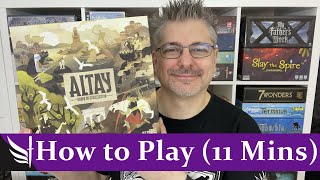
- Clear setup and rule explanation
- Rich theme and thematic depth
- Multiple strategic avenues through technologies, settlements, and wonders
- Dynamic combat and expansion mechanics
- Complexity of setup and rules
- Potential for analysis paralysis with many options
- Balance and interaction sensitivity with player count
- Civilization development, exploration, conquest
- Early civilizations; city-building across lands, mountains, and seas
- instructional
Mechanics (from transcript analysis)
- Card-driven actions — Play action cards from hand to perform actions; some cards can be stored on the table for ongoing effects.
- Combat and conquest — Attack and defend using attack/defense cards; conquest tokens can be captured by defeating opponent settlements.
- deck management — Draw from deck, discard to discard pile, and shuffle discarded cards back into deck when depleted.
- Endgame scoring — Score across five categories including territories, opponent settlements, and conquest tokens.
- Multi-Use Cards — Play action cards from hand to perform actions; some cards can be stored on the table for ongoing effects.
- Resource Management — Gains of food, culture, metals from cards; spending resources to acquire cards, build settlements, and trigger effects.
- Resource production and management — Gains of food, culture, metals from cards; spending resources to acquire cards, build settlements, and trigger effects.
- Resource storage — Store resources or culture on certain cards on the table for future use.
- Settlement building — Spend resources to place settlements on board with placement rules per territory.
- Technology and achievements — Develop level-based technologies and wonders for ongoing or end-game effects; upgrading yields points.
Video topics + discussion points
Quotes (from this video)
- this is a game for two to four players
- the player that does this best earn the most victory points and win the game
- put the board in the middle of the table
- choose a random start player and give them the start player token
- it's important to only shuffle your deck when your deck is empty and you need to draw
- you end your turn you discard any unused unstored resources
- when a player has all their settlements on the board including those on any Technologies the game end is triggered
References (from this video)
- quick to learn and play
- condensed civ experience that remains thematic
- asymmetric factions provide variety in starting decks
- streamlined mechanics help teach and play quickly
- solid Board Game Arena implementation
- static market reduces discovery and variety
- limited depth compared to larger civ games
- promo expansion behind water may frustrate physical copy owners
- not as many cards/tech options as rival civ games
- Civilization development with technology trees and asymmetry
- Ancient civilization theme with quick, civilization-building gameplay
- abstracted civ narrative focused on deck-building and board control
- Age of Civilization
- Mystic Veil
- Small World
Mechanics (from transcript analysis)
- Area Control — place villages on a central board and contend with opponents to control spaces
- area_control — place villages on a central board and contend with opponents to control spaces
- combat_mechanism — battle for neutral locations and against opponents using warrior cards
- Deck Building — build a personal deck from a static market and purchased cards to gain resources and trigger abilities
- deck_building — build a personal deck from a static market and purchased cards to gain resources and trigger abilities
- market_and_achievements — static market of cards and purchasable achievements and wonders that unlock abilities
- Resource Management — acquire resources to pay for cards and achievements
- resource_management — acquire resources to pay for cards and achievements
Video topics + discussion points
Quotes (from this video)
- a very slick and streamlined game
- you can play a Civilization type game in a short amount of time
- it's a very approachable game
- asymmetric factions start decks offer more variety
- expansion potential with more content
References (from this video)
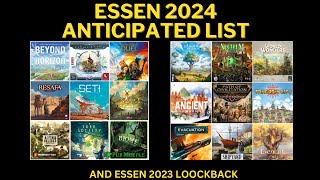
- civilization-themed deck-building angle
- co-designer credit with Palo Mory mentioned in context
Mechanics (from transcript analysis)
Video topics + discussion points
Quotes (from this video)
- I'm huge fan of Sanderson as many people are and I am just really looking forward to this one because it's a John DeClair game
- Beyond the Horizon it's the Standalone sequel to Beyond the Sun looks really interesting as well and a theme that I'm more comfortable with
- cvoluion was actually a game I talked about last year for the Essen
- it's a civilization themed deck-building type of game as well
- it seems like this is more along the complexity lines is like Pulsar 2046
References (from this video)
- Beautiful production and components
- Strong integration of deck-building, area majority, and tech trees
- Asymmetry adds strategic variety
- Tense, interactive combat that rewards points
- Limited number of factions can limit symmetry and variety
- Market variability can stall engine building if cards are expensive
- Requires aggression to maximize fun for many groups
- civilization building, conquest, resource management
- Ancient civilization development with territorial expansion on a shared map
- tech-tree-driven progression with asymmetric powers
- Dune: Imperium
- Blood Rage
- Tapestry
- Dominion
- El Grande
Mechanics (from transcript analysis)
- area majority / area control — players expand and fight to control territories for points.
- asymmetry — factions are lightly asymmetric, with different starting capabilities and specializations.
- combat resolution — attacks are resolved by comparing attacker power and defender defenses plus card modifiers.
- Deck Building — players acquire and use cards from a market to generate resources and take actions.
- Resource Management — gather apples, iron, rock, etc., to buy cards and settle new towns.
- Tech Trees — bronze, silver, and gold tech tracks grant permanent bonuses and unlock new abilities.
- tech trees / civilization cards — bronze, silver, and gold tech tracks grant permanent bonuses and unlock new abilities.
Video topics + discussion points
Quotes (from this video)
- it's a blend of deck building civilization development and area control
- the production of this game is tremendous
- fighting is always a fight
- the market is completely open all the cards from the market are already on the board
- it's a lighter version because it's got some elements of that civ building but not as heavy
- the civilization cards amplify asymmetry more than the faction differences
- the game ends when someone builds all their settlements or is eradicated
- every single point is valuable
References (from this video)
- Tactile components and earthy aesthetic
- Learnable framework with deep strategic options
- Combat can dominate and pull attention from tech and growth
- Setup quirks and busy visuals can slow early play
- civilization-building with military and culture development
- ancient civilizations expanding and competing for resources
- puzzle-like resource management and expansion
- Trains
- Monumental
Mechanics (from transcript analysis)
- combat as central mechanic — military strength defends you and enables interactions with neighbors
- Resource Management — produce goods, build settlements, and develop culture or military
- Resource production and spending — produce goods, build settlements, and develop culture or military
Video topics + discussion points
Quotes (from this video)
- I'm Rob from just the road.com and these are my top 10 debt building games.
- Let's redo the countdown with a wider definition and some new discoveries from the last 5 years.
- Fingers crossed for a 15th anniversary big box in 2027.
- In Trains, you take the classic deck building formula and drop it onto a map of Japan.
- Undaunted Stalingrad is a two-player storydriven campaign game that blends tactical combat with smart debt building.