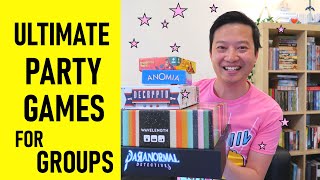



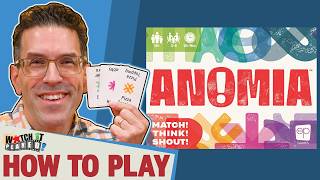













Anomia plays off the fact that our minds are positively brimming with all sorts of random information: things to eat, pop songs, websites, etc... Sure, under normal circumstances, it's easy to give an example of a frozen food or a dog breed, but you'll find that your brain works a little differently under pressure!
To play, draw and reveal a card from the center pile. Does the symbol on your card match one on another player's card? If so, you must quickly face-off with the other player by giving an example of the person, place, or thing on their card before they can do the same for yours. If you blurt out a correct answer first, you win their card and the drawing continues.
Sounds simple, right? Wrong! Wild cards allow non-matching symbols to match, increasing the number of things to which you must pay attention. Cascading face-offs can occur when you hand over a lost card, thereby revealing a new top card on your play pile.
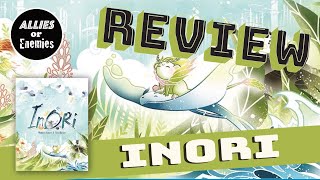
Inori - Review
Spotlight Preview - Utopia
Spotlight Game Night LIVE - Utopia
- beautiful and charming artwork with cute forest spirit characters
- easy to learn, making it suitable as a gateway or family game
- gentle competition that encourages social interaction without heavy pressure
- colorful components and a tidy setup/cleanup process that suits casual play
- Rune tiles feel dull compared to the rest of the components
- some icons and symbols on runes can take a moment to decode for new players
- offering gifts to spirits to gain favor and advance toward keeper status
- Forest spirits and a magical grove culminating in the Keeper of the great tree
- color-coded cards with individual personalities; occasional micro-stories when you line up a color
Mechanics (from transcript analysis)
- card-driven actions and card replacement — cards provide actions and once spaces are fully used, filled cards are replaced and new options appear; unfilled cards are replaced with opposite-colored cards
- set collection / scoring via tokens and tiles — tokens come in six colors; collecting them and placing scoring tiles on the great tree drives end-game scoring and majority bonuses
- worker placement — players place markers on spaces on the board or on cards to gain favor tokens or to trigger scoring opportunities
Video topics + discussion points
Quotes (from this video)
- this is a gateway game so don't expect big choices or tough systems
- very much the kind of thing that will work well with your newer or non-gamer friends
- this is the sort of game you play while having a chitchat and maybe drinking a beverage
References (from this video)
- Hilarious, fast-paced, and highly social
- Strong inspiration for larger party games
- Can be stressful if you struggle under time pressure
- Theme and symbols may feel simple to some players
- Category-matching with rapid verbal responses
- Fast-paced party game around word categories
- Chaotic, humorous, and high-energy
- Jungle Speed
- Snorta
Mechanics (from transcript analysis)
- Category authoring and symbol matching — Players flip cards with categories; when symbols match, players must name something that fits both categories.
- Chain reactions and pile reveals — Completing matches reveals new cards that may trigger further matches.
- Rapid-fire recall under pressure — Speed and instant decision-making with social banter.
- Simultaneous reveal — Completing matches reveals new cards that may trigger further matches.
Video topics + discussion points
Quotes (from this video)
- it's got gorgeous artwork to it
- I think there's multiple editions perhaps they've got different artwork
- it's in the same range as that really good trick taking game
- This is the very definition of a filler game right you're not going to play this for long two minutes per game you'll probably play it four or five times
- it's loud really frantic really active
- anomia is a hilarious game right where you've got a central deck of cards you turn over
- it's absolutely hilarious
- this is a Twist on rock paper scissors
- it's the Mind is this turned into a card game so you've got a hand of cards with different numbers on them and the numbers all go in a sequence
- it's Cooperative you're trying to succeed at getting rid of all your cards
References (from this video)
- High energy and social interaction
- Very quick to learn
- Can be punishing when someone shouts an answer first
- Repetition can dull the experience over time
- word associations, rapid category matching
- Casual social settings, fast-paced word game
- energetic party game
- Wavelength
- Color Brain
Mechanics (from transcript analysis)
- Pattern recognition — Players shout a word that fits a category on the opposing card before the other side does.
- real-time play — There are no strict turns; players respond as fast as possible.
Video topics + discussion points
Quotes (from this video)
- the tent is for reminding you that games are for everyone
- this is the new long-form contest; we won't edit it
- the wow moment
- it's the perfect place people are adding things to their amazon wishlist like during the festival
- you can answer any rules question to this one with the name of the game
References (from this video)
- High energy and laughter
- Great for fast rounds
- Can devolve into shouting; not for every group
- Category matching under pressure
- Fast-paced word association game
- Yelling, rapid answers, and quick thinking
Mechanics (from transcript analysis)
- Category matching under time pressure — Players flip cards and must match a symbol and category with a fast answer.
Video topics + discussion points
Quotes (from this video)
- top party games to play once we kick kova to the curb
- these games all play really well with a high player count
- these games should be easily accompanied with a beveragino
- after this pandemic is over you know i'll be ready to celebrate with a drink in hand
References (from this video)
- Strandunter
Mechanics (from transcript analysis)
Video topics + discussion points
Quotes (from this video)
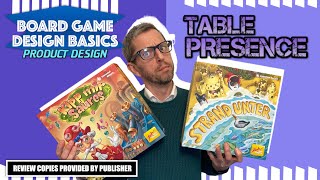
- the defining feature of picoco was not the gameplay as i'd imagined but the presentation
- a strong physical presence can really lift a product
- the spark of an idea can come from anywhere so why not a contraption, a cardboard device, a gimmick, a widget
References (from this video)
- Strong, striking card/art aesthetics
- Leader abilities add variety and replay potential
- Vibrant time-travel mechanics with butterfly effects feel thematic and dynamic
- Tense two-player race with meaningful blocking and interaction
- Can be complex; a steep learning curve for newcomers
- Symbol language and text on cards can require repeated reference
- Some fiddly setup and cyclical deck management may slow first plays
- Butterfly effects, space-time manipulation, and world-building via crew-led actions
- Time-traveling voyage across eras to shape a utopian future
- Emergent, scenario-driven play with individual leader abilities
- None explicit in this video
Mechanics (from transcript analysis)
- Butterfly effects / tech building — Players pursue butterfly-effect missions and construct tech pieces that unlock effects and shift options.
- Deck cycling and visibility — Location decks are cycled: when a location is empty, top cards are cycled to bottom to maintain flow.
- End-game victory condition — The game ends when a player completes three butterfly-effect missions; that player wins the race.
- engine building — Players pursue butterfly-effect missions and construct tech pieces that unlock effects and shift options.
- Leader drafting / card abilities — At setup, players draft leaders with unique text-based abilities that modify recruitment or actions at locations.
- Limbo / blocking and drone reactions — Blocking spots can be countered with limbo mechanics and drones occupying contested locations.
- Resource management — Tokens like science, knowledge, culture, political, and military drive recruitment and tech purchases.
- Time travel / time zones — Movement to time zone locations influences future/past outcomes and enables butterfly-effect pathways.
- worker placement — Players place crew on various locations to gain resources, recruit, or trigger actions; drones and limbo add blocking dynamics.
- Wormholes / timeline interaction — Opening wormholes expands available worker spots and reshapes the spatial-temporal map.
Video topics + discussion points
Quotes (from this video)
- the art in this is really good i really enjoy the art
- it's a race first to three missions wins the game
- the first person to complete three of those butterfly effect missions will win the game
- we are going to travel the universe we are going to time travel i guess
- this is a game where we are going to it's like worker placement right
- the butterfly effect missions from mission control if you have an empty slot
- you may move to a time zone location already occupied by any crew member
- first player moves by assassination right yep
- we're going to create butterfly effects to open wormholes
References (from this video)
- Fast, energetic, great social interaction
- Good for large groups
- Might be too frantic for some players
- Some categories can be harder than others
- Category-based rapid-fire associations
- Cooperative-like social pressure with competitive tension
- Fast-paced, memory-light word play
- Code Names
- Monikers
Mechanics (from transcript analysis)
- Intermittent prompting — A bell or prompt appears; players race to name a matching category.
- Pattern matching & speed — Players must quickly name items from two categories when symbols appear.
- Speed matching — Players must quickly name items from two categories when symbols appear.
Video topics + discussion points
Quotes (from this video)
- Party games are one of the biggest, most important parts of a versatile collection.
- Telestrations has created some of the funniest moments you can have at a table.
References (from this video)
- Fantastic game
- Hilarious
- Really really funny
- Really really good
- Inspired Big Bazaar
- Ugly aesthetics
- Minimal design on cards
- Just text and symbols
- Speed reaction game
- Abstract word game
- Abstract
- Jungle Speed
- Snorter
- Ghost Splits
Mechanics (from transcript analysis)
- speed reaction — Racing to call out answers
- symbol matching — Matching symbols triggers race
Video topics + discussion points
Quotes (from this video)
- It wasn't just the hundred sort of best designed games this was the hundred games that I feel that I'm particularly sort of connected to
- The games that have a place in my heart really games that I've got a lot of nostalgia for
- It felt a bit like doing a roll and write game but without all of the sort of convenience
- I wish I still had castles of burgundy and notre dame
- The main thing that got in the way for me was all the iconography
- I do use board games as an escape from screens and technology
- I really like the production of cockroach poker
- I found it was a game where I could see the ending coming and then someone would just go and there we go we've got another 20 minutes now
- It feels like something other than a board game
- The decisions you make in the game are very very slight
- Right up my alley
- I do really like push your luck
- That's my favorite game
- Abyss is my second favorite game
- I love pekka pig
- I just think it's ugly
References (from this video)
- Hilarious gameplay
- Great for energetic groups
- Works with 3 players
- Word association party game
- Abstract
- Frantic party
- Big Bizarre
Mechanics (from transcript analysis)
- racing — First to call out wins
- real-time — Simultaneous thinking
- word association — Calling out category answers
Video topics + discussion points
Quotes (from this video)
- a series of videos where I take a bunch of different possible scenarios some of them provided by you the viewers and I shuffle them up into a deck of cards I reveal a scenario and roll a dice to see how many players I've got
- I got in lots of trouble last time for using the word dice as a singular so we'll be sticking with die as long as I remember today
- everything economic uh that I really really love seems to cap out at five players
- I can't imagine how long it would take so I think that would probably ruin ruin game
- frankly I played that with uh two players once and we gave up after about seven hours
- there's some good ones but most games before 1995 would ruin game night if you tried to play them today
- you're not allowed to speak to each other and you're playing against the time so it's very frantic
- the only way you're able to communicate is by tapping this wooden token to say look I need you to do something
- I think Mysterium would fall apart if they didn't speak the language and that's odd isn't it because it does isn't a game that has any text in it
- I think a terrible idea there's not that much interaction and the game gets longer with each player that you add
- I don't understand the people who put down a big you know they stick down Scythe in front of kids or boast about the fact their four-year-old can play sides
- there's no reason to be playing um Snakes and Ladders or or Candyland I would say not that Candyland is a big thing in the UK
References (from this video)
- very accessible; quick rounds
- excellent for group play and social interaction
- can become chaotic if players talk over each other
- relies on fast verbal recall; not ideal for all groups
- verbal fluency under time pressure
- card table with fast-paced symbol prompts
- casual, conversational
- Jungle Speed
Mechanics (from transcript analysis)
- symbol-category matching — Match or respond to category prompts under time pressure.
- verbal rapid-fire — Players shout words that match the symbol on the opponent's card as fast as possible.
Video topics + discussion points
Quotes (from this video)
- it's meant to be you make a mistake and you drink, the game gets easier to make as you get more drunk
- the social lubricant—the game is happening and people can drop in and out
- this is the perfect opportunity to drink
- it's almost a definition of the tent—it's fun and chaotic in a good way
- Anomia is a lot like Jungle Speed in spirit
- the rules can be learned quickly, which is ideal for a festival tent
References (from this video)
- Pocket-sized, portable design
- Fast, chaotic rounds suitable for 5-8 players
- Accessible rules with clear resolution hierarchy
- Unique card artwork and Kickstarter upgrade
- Includes a portable bag for travel
- Limited thematic depth
- Outcome can be influenced by card draw luck
- Requires multiple players to shine; potential downtime with fewer players
- Conflict resolution through a rock-paper-scissors-inspired hierarchy with scoring via sacred stones
- Pocket-sized, card-clash game demo during GenCon coverage
- Abstract competitive with a focus on hand management and strategic drafting
Mechanics (from transcript analysis)
- card drafting — Players select five cards from a pool of nine to form their round strategy
- Compound Scoring — Winners gain an advantage totem; accumulation of sacred stones determines the round winner
- portable, starter edition packaging — Starter Edition includes a tuck box, artwork, and a portable bag for travel
- Rock-Paper-Scissors — Attack beats Taunt, Taunt beats Block, Block beats Attack
- rock-paper-scissors-style hierarchy — Attack beats Taunt, Taunt beats Block, Block beats Attack
- set-based round strategy — Players plan five-card strategies to influence multiple clashes across the round
- Simultaneous reveal — All players reveal their chosen card at the same time and resolve clashes
- simultaneous reveal and clash resolution — All players reveal their chosen card at the same time and resolve clashes
- totem-based scoring — Winners gain an advantage totem; accumulation of sacred stones determines the round winner
Video topics + discussion points
Quotes (from this video)
- yeah Anoka is a cards clashing pocket-sized game basically
- three beats to two beats one
- it's a great game
References (from this video)
- Deep engine with multiple strategic layers
- Dramatic theme and butterfly effect motif
- Two-phase game structure provides pacing variety
- Rule complexity and numerous card abilities can be overwhelming
- Asymmetric action benefits and limbo mechanic may slow games
- Butterfly effect and utopian society through time travel
- Historical and futuristic timelines spanning across different moments in history
- Structured, modular mission-based progression with time-zone decks
Mechanics (from transcript analysis)
- Drafting / snake draft — Draft crew members in order, with last player getting second pick.
- Modular board — Complete missions that impact the main board; three completed missions end the game.
- Modular butterfly effect missions — Complete missions that impact the main board; three completed missions end the game.
- Resource management — Knowledge discs are infinite; players spend discs to recruit crew, build checks, etc.
- Resource management with knowledge discs — Knowledge discs are infinite; players spend discs to recruit crew, build checks, etc.
- Set collection / forming combinations on mothership — Tokens placed on ships correspond to abilities and future actions.
- Time travel / wormhole mechanic — Alternate time zones; wormholes allow action repeats and shifts.
- worker placement — Players place chrono-ships and crew on board locations to collect knowledge tokens and perform actions.
Video topics + discussion points
Quotes (from this video)
- knowledge discs are infinite in this game
- the butterfly effect missions are so important to the game
- this is utopia thank you so much for joining me