/pic171444.jpg)
/pic1282841.jpg)
/pic2252678.jpg)
From the publisher's website:
Antike is a challenging strategy game about evolution and competition among ancient civilizations. Ancient nations create cities, build temples, sail the seas, and discover new principles of science and technology. Their legions and galleys open new settlements and defend their people against attacks from their enemies. Two scenarios can be chosen as the game board is two-sided. Players choose from Greeks, Romans, and Germanic tribes and Phoenicians, Carthaginians, Persians, Arabs, Egyptians, and Babylonians.
Every nation tries to win ancient kings, scholars, generals, citizens, and navigators for themselves. The nation that acquires a specified number (depending on the number of players) of ancient personalities first will win the game!
Lead one of these nations to victory! But watch out for your enemies, as they will want to conquer your cities to destroy your temples. The game depends not on the luck of dice or cards, but on thoughtful plans and skillful diplomacy.
This page includes videos and mentions from the whole Antike family. Drill into a specific game below.
/pic171444.jpg)

Fast Sloths Review

- storytelling appeal
- thematic interest in personal narratives
- ai-generated art is a potential concern mentioned
- unclear how well it lands mechanically
- storytelling game about life and personal journey
- ai artwork usage
Mechanics (from transcript analysis)
- Storytelling — story-driven concept with life events as 'game content'
- storytelling / personal narrative — story-driven concept with life events as 'game content'
Video topics + discussion points
Quotes (from this video)
- I'm not an RPG person.
- It's DC, Justice League, all those things are great.
- I like Mindbug. I like Mindbug a lot.
- The unique theme, the presentation designed by Danny Garcia, it definitely has me interested.
- Alterra from IV Studios. Set in the world of 10.
- I am very interested. Again, I have no idea whether this game will land for me or not.
References (from this video)
- Playing through a lifetime, from birth to old age, choosing experiences.
- QE
- A Pursuit of Happiness
- Adulthood
Mechanics (from transcript analysis)
Video topics + discussion points
Quotes (from this video)
- This is the most chaotic opening. I probably should just restart, but it's too late now. We're here.
- This is based on the video game, not based on the board game, which also is not based on the video game.
- Teamwork is optional and betrayal is rewarded.
- A big fan of Terraforming Mars said this is the best Terraforming Mars experience they have ever had, period, full stop.
- A lemonade apocalypse game. That's what it is.
References (from this video)

Mechanics (from transcript analysis)
- Rondel system — Antique is one of the Rond games that uses the same kind of rondle system.
Video topics + discussion points
Quotes (from this video)
- But I could have won better.
- Um, I I think it's crafted magnificently.
- Endeavor competitive is like, you know what, I'll figure out if I win or not, but I'm just going to lean into the systems that I'm good at.
- Whereas cooperative, every single action matters.
- Um, and so, um, yeah, when when we settled on kind of what we found the game to be and we're like, "No, I think like this is this is worth pitching to some places."
- The jaded critic in Ratatouille sits down and eats the food that takes him back to being a kid and understanding why he loves this in the first place.
- big systems, big thematic resonance, and uh elegantly put together with interesting challenge.
References (from this video)
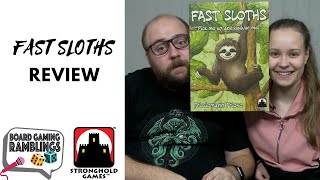
- Easy to learn and teach, especially with a simple rulebook
- Family-friendly and approachable for mixed ages
- Replayability through different boards and animal combinations
- Tight, quick play sessions (~45–60 minutes) with short setup
- Solid interaction and tension from blocking and racing dynamics
- Not particularly groundbreaking or highly ambitious in design
- Artwork/style may polarize players who prefer more modern visuals
- Five-player sessions can feel longer or slower than optimal
- Light, animal-led leaf-foraging race with tactical card play and positioning.
- A whimsical, forest-themed setting where animal cards move between trees to snack on leaves.
- Whimsical and family-friendly with a touch of retro German aesthetic.
- Power Grid
- Gloomhaven
Mechanics (from transcript analysis)
- deck-driven movement — Players draw movement cards for their animals; each card gives a number of spaces to move and may grant special abilities.
- Hand Management — Players manage a hand of animal cards and decide when to play or discard to advance on the board.
- Positioning and capture — Move animals around a shared board; landing near an opponent's animal can trigger pickup or blocking dynamics.
- Set-up and expansion options — Initial animal placements and optional expansions provide varied setups; high replayability through configurations.
- Variable board and animal abilities — Two boards (or modular configurations) and animals with unique abilities create different interaction patterns.
Video topics + discussion points
Quotes (from this video)
- it's a pretty simple game
- it's a race game
- you can teach this game in two minutes
- it's nothing groundbreaking
- it's a great family style game
References (from this video)

- great art
- solo playability
- trick-taking with solo options
- urban park life with hedgehogs as thematic motifs
Mechanics (from transcript analysis)
- Trick-Taking — standard trick-taking with thematic twists
Video topics + discussion points
Quotes (from this video)
- This is my favorite spot in the house.
- I could honestly do it for hours.
- I absolutely love the island cats, so I had to get that.
- The best purchase I ever made.
- I love solo modes, but I don’t want designers to force them when not a good fit.
- I could spend hours browsing that ginormous wall for hours.
References (from this video)
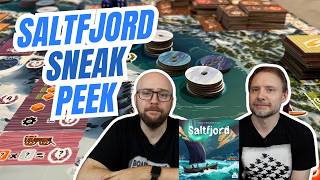
- Keeps Santa Maria DNA but streamlined for easier teaching and quicker play
- Technology tracks and multiple end-game scoring paths increase replayability
- Fishing track adds thematic tension and strategic choice
- Immediate bonuses for completing rows/columns incentivize proactive play
- High variability due to dice drafting and board layouts
- Potential learning curve for players new to the Santa Maria lineage
- Some reported AP at higher player counts or with optimal planning
- Prototype components may evolve before final release
- Fisheries, maritime activity, and local trade
- Fishing village in Norway
- thematic simulation with a light, accessible rule set
- Santa Maria
Mechanics (from transcript analysis)
- Contracts and on-the-fly bonuses — Complete contracts for points and receive end-of-row/column bonuses that affect gameplay mid-round.
- Dice Drafting — Players draft dice of different colors to determine available actions.
- End Game Bonuses — Four final scoring abilities plus immediate bonuses tied to completed rows/columns and contracts.
- end-game scoring and bonuses — Four final scoring abilities plus immediate bonuses tied to completed rows/columns and contracts.
- Fishing track — A track on the boat that can be upgraded to access better resources; includes a reset mechanic when the boat is filled.
- Resource Management — Upgrade resources and the fishing boat to access new actions and better outputs.
- Resource management and upgrades — Upgrade resources and the fishing boat to access new actions and better outputs.
- Row/Column activation — Drafted dice trigger actions by activating a row or a column on the player board.
- Tech Trees — Four distinct technology paths that shape strategy and unlock abilities.
- technology tracks — Four distinct technology paths that shape strategy and unlock abilities.
- Tile building during activation — When activating a die, players can place small or large buildings onto their board mid-turn.
- Track Advancement — A track on the boat that can be upgraded to access better resources; includes a reset mechanic when the boat is filled.
- Unique Player Powers — Each player starts with a unique ability and can acquire an additional one during the game.
Video topics + discussion points
Quotes (from this video)
- "Salt Fu is in name yes"
- "This is a sequel to Santa Maria"
- "Salt Fu is a dice drafting game"
- "The rules for it is very easy you move and take a tile"
- "We have four different strategies that you can follow"
- "The weight is almost the same as Santa Maria"
- "I think also the playing time is maybe even a little shorter"
- "I really like the boat"
- "This is a track"
References (from this video)
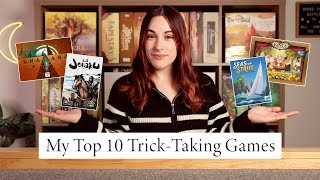
- distinctive twist on traditional trick-taking that adds discard decisions
- cute production and hedgehog motif noted as appealing
- solid solo mode adds replayability and accessibility
- rules complexity can be a bit much for new players
- availability discussed around a niche product line
- casual, lighthearted take on urban life and park activity
Mechanics (from transcript analysis)
- Hand Management — players must manage discards from tricks to balance future round potential and score efficiency
- hand-management — players must manage discards from tricks to balance future round potential and score efficiency
- solo-play variant — solitary play exists with two open hands and round-by-round goals to equalize points or cards across hands
- Trick-Taking — win a trick by playing the lowest-numbered card; the lowest card played in the trick triggers discards from your hand, creating a pressure to decide which cards to shed while trying to maximize points
Video topics + discussion points
Quotes (from this video)
- Park life is a trick taking game that has this really cool kind of spin on trick taking where basically you are going to win a trick if you play the lowest number
- I think it's really cool the solo version of the game is very fun where you are playing two open hands and basically each round you trying to get both hands to win an equal amount of cards or points
- Naku Dice is a game that I have wanted for so long I played it actually early last year and fell in love with it
- Seas of Strife is my favorite trick taking game
- there is no Trump suit in Rebel Princess as well but the princes kind of act like a trump suit