/pic7364080.jpg)













Archeos Society Deep Dive
What the Community Thinks About Archeos Society
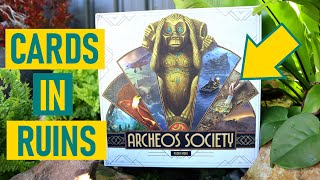
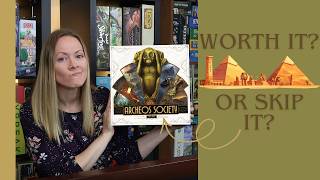
Archeos Society arrives as a fresh take on an established design, and the board gaming community responds with measured enthusiasm. Reviewers recognize it as a streamlined, accessible reworking of the earlier game Ethnos, yet one that carves its own identity by shifting emphasis from confrontational area control toward breezy set collection. JestaThaRogue digs into its card-driven archaeology theme in detail, Board Game Dad praises its pace, and Rolling Dice & Taking Names frames the comparison to Ethnos directly. For players who want fast-moving expeditions over strategic warfare, the rebranding resonates; for area-control purists, the mechanical pivot reads as a missed opportunity.
Core Mechanics That Define Archeos Society
Hand Management Through Strategic Discards
The most elegant rule in Archeos Society is deceptively simple: after you play an expedition, every card remaining in your hand goes face-up to the central display for other players to draw. This single mechanic electrifies the game. You cannot hoard cards, so the moment you draw, you start a clock on what you will ultimately discard. That forces constant tension between holding for a better set and playing now to minimize waste. Board Game Dad highlights how this rule prevents stalling and creates natural flow, rewarding decisive play and punishing greed.
Expedition Sets as Your Engine
Each turn offers a binary choice: draw a card from the deck or the display, or play a set of matching cards. Sets can be all the same role across colors or all the same color across roles. When you play, the top card becomes the expedition leader, and only that leader's color and role ability activates. This means larger sets do not always trigger more effects, encouraging a mix of small targeted plays and ambitious multi-card expeditions. The interplay between hand size, set composition, and leader choice creates a rich decision space inside a simple ruleset.
The Archeos Society Experience
An Archaeology Theme That Lives in the Cards
You are rival archaeologists recruiting society members and excavating sites around the world. Rather than moving tokens across a map, you advance along site-specific tracks, each representing a different region. When your expedition leader's color matches a site and your set is large enough, you may advance there. The theme breathes through these card-to-track connections, and each role brings flavor through a distinct ability: some collect relics, some let you score expeditions as larger than they are, some flood the deck and enable big plays without advancing on their own. These mechanical flavors ground the theme without overwhelming the gameplay.
Season Structure and Momentum
Games unfold over a handful of seasons, each bookended by draws and scoring. A hidden trigger ends each season once enough specific cards surface, which creates organic pacing and hands the next season's lead to whoever set it off. Between seasons, expeditions score based on size and your positions on the site tracks grant bonuses. JestaThaRogue notes how this cyclical structure keeps the game moving and prevents any single season from dragging, rewarding both forward planning and opportunism.
What Makes Archeos Society Stand Out
Accessibility Without Sacrificing Decisions
The ruleset teaches in well under ten minutes, yet the decision space stays substantial. Board Game Dad keeps returning to the central question the game poses every turn: do I keep drawing or do I play? That simple frame engages both casual players and strategists. The design offers a clean entry point for families new to modern board games while giving experienced players enough nuance to chew on, achieving the rare balance where accessibility and depth coexist.
Flexible Setup and Replayability
The box holds more roles than any single game uses, so each play draws a different subset, and site boards offer simpler and advanced sides. This built-in modularity ensures no two games feel identical. Later plays can draft roles for a light negotiation layer, and the advanced site abilities deepen the puzzle for groups ready for more. Reviewers appreciate how the design serves both new players and veterans without requiring separate rulebooks.
Potential Drawbacks
Area-Control Fans Feel the Absence
For those who loved Ethnos, the shift from contested territories to parallel tracks reads as a step back. Archeos Society removes most direct conflict; you advance your own expeditions rather than fighting for dominance. Rolling Dice & Taking Names states the difference bluntly, arguing that Ethnos was an intense area-control game that happened to use set collection, whereas Archeos Society is set collection full stop. If you valued the zero-sum territorial struggle, the rebranding will disappoint, since the game can feel like a multiplayer solitaire race to optimize individual tracks.
Early-Season Card Luck
The shared display can skew heavily toward certain roles or colors in the opening rounds. A player who draws into a strong set early while another sees only mismatches faces unequal footing. This evens out across a full season, but the tight discard economy means an unlucky early run can be hard to recover from, especially in shorter games where seasons compress. Reviewers accept this as the ordinary variance of a card game, but it is worth knowing going in.
If You Enjoy Archeos Society
Players who loved Ethnos for its hand management and set-driven play will find clear kinship here, even with the area-control spine removed. Fans of Ticket to Ride will recognize the same forward-planning, set-collecting core in a friendlier package. Kingdomino shares the quick, accessible-yet-strategic drafting DNA, and Sushi Go! offers the same satisfying tension of building sets from a shared, ever-shifting pool of cards. Groups that value fast setup and a punchy hour-long loop will feel right at home.
What Reviewers Are Saying
"As essentially a card game, it has a really nice flow. You're only doing one of two things: either you're drawing one or two cards, or you're playing a set of cards and conducting the action associated with it. It has a really nice problem-solving space where it's like, do I keep drawing or do I play?"
— Board Game Dad
"You must return all cards still in your hand to the display. So if you've got a big hand and you play a set that uses only two of the five cards you've got, those other cards go back into the central display for everyone else to pick over. It means you can't hoard cards, and there's a real risk you're going to have to discard a whole bunch of meaningless cards later in the game."
— 3 Minute Board Games
"This is not Ethnos. It's a different game. This is a completely different, scaled-down game: set collection. Ethnos to me was an intense area-control game where the area-control mechanisms were done through set collection. This is literally just set collection and managing boards."
— Rolling Dice & Taking Names