

















Argent: The Consortium Deep Dive
What the Community Thinks About Argent: The Consortium
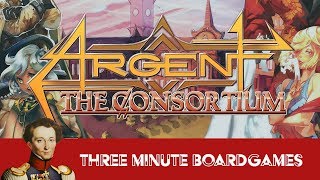
Argent: The Consortium stands out in the heavy strategy genre for its seamless fusion of magical theme and mechanically innovative gameplay. Watch It Played lay out its premise of mages vying to become chancellor, and The Broken Meeple champion it as one of the most thematic and deliberately mean games in their collection. Reviewers consistently praise the hidden voter system as a genuine design breakthrough, transforming what could have been a standard victory-point race into a dynamic, information-driven puzzle, and they note that its aggressive interaction feels thematic and earned rather than arbitrary.
Core Mechanics That Define Argent: The Consortium
Worker Placement with Asymmetric Mages and Hidden Voter Agendas
At its heart, Argent, designed by Trey Chambers and published by Level 99 Games, uses worker placement to guide player actions, but each mage brings a unique ability. Red mages can wound opponents and claim their spots, green mages cannot be wounded, gray mages enable spellcasting followed by free placement, and others act as fast actions or resist enemy spells. These distinctions force meaningful choices about which mage to deploy where. The hidden voter system amplifies the tension: at game start only some of the Consortium voters reveal their demands, and players spend actions privately learning the rest. One voter might reward the most mana, another the most supporters of a color, so players must decide whether to spend actions uncovering voters to sharpen their plan or use those actions for immediate gains.
Spells, Vaults, and Supporters as Strategic Layers
Beyond mage placement, players acquire spells that unlock at multiple power levels using research tokens, and vault items that provide one-time treasures or reusable consumables. Supporters, gained through errands or the tableau, count toward specific voter demands. Each card type feeds into the endgame puzzle, requiring players to balance short-term actions against long-term positioning. Casting a powerful spell might delay critical voter research, while grabbing a vault treasure might cost you the mage placement you needed, so every turn weighs immediate impact against the hidden scoring you are still trying to decode.
The Argent: The Consortium Experience
Highly Interactive Play Built on Aggressive Meddling
Argent distinguishes itself through unrelenting player interaction. Opponents wound your mages, sending them to the infirmary, while spells shove rival mages into slots they cannot afford, effectively wasting their placement. Fast actions let players disrupt plans mid-round, and you can even mark an already-marked voter to spoil the privacy of knowledge a rival paid to uncover. The relentless aggression of wounding mages, shoving pieces, and casting disruptive spells could feel punitive in a less thematic game, but reviewers note the magical setting transforms meanness into narrative drama, since rival mages sabotaging each other feels like wizard-college politics rather than arbitrary cruelty.
Escalating Information and Tension
Argent unfolds across several rounds, each beginning with setup, followed by an errand phase of mage placement, and concluding when all rooms activate. As the game progresses, the information landscape shifts: voters you uncovered early become common knowledge, forcing you to adapt, while new spells and vault items flood the tableau and expand your options. The bell tower mechanic adds timing pressure, since once the final tower is claimed the round ends immediately, creating moments of sudden finality that reward both careful planning and opportunistic grabs.
What Makes Argent: The Consortium Stand Out
Hidden Victory Conditions That Transform the Game
The hidden voter agenda system solves a problem many worker placement games struggle with: how to create meaningful choice without funneling everyone toward the same public goal. Each voter's demand stays a mystery until discovered, so you might pursue mana while an opponent chases supporters, never quite sure whose strategy aligns with what the voters ultimately value. The tension of deciding when to investigate versus when to act creates a rich psychological dimension absent from games where victory paths are transparent, and The Broken Meeple single this out as the cool twist that makes the whole design fluid.
Mechanical Depth Without Overshadowing Theme
Level 99 Games packs substantial crunch into Argent, with worker placement, research paths, multiple currencies, merit tracking, and reaction spells. Yet reviewers emphasize that the theme never breaks under the weight. Playing a dean competing to become chancellor of a magical university grounds every mechanical action, so wounding a mage, casting a spell, and courting voters all reinforce the fantasy. The expansion doubles down on this philosophy, adding complexity while preserving thematic coherence for players who love the core system and want more of it.
Potential Drawbacks
Complexity and Learning Curve
Argent demands real commitment. The rulebook introduces worker placement basics, then layers on mage abilities, spell mechanics, vault effects, supporter benefits, voter criteria, merit badges, and endgame scoring. A first play easily stretches three or four hours as players parse rules and weigh options. Players prone to analysis paralysis may find the decision space agonizing, particularly when deciding which voter to investigate or how to sequence spellcasting and placement, and no amount of instruction fully erases the cognitive load of tracking so many interdependent systems.
Heavy Interaction and Kingmaking Risk
The constant aggression of wounding mages, moving pieces, and casting disruptive spells can create an environment where a leading player attracts coordinated opposition that has little to do with anyone's own voters. The hidden agendas partly mitigate this, since attacking one player might unknowingly benefit another, but table dynamics can still drift toward kingmaking, where the winner is determined as much by who avoided becoming the obvious threat as by who played best.
If You Enjoy Argent: The Consortium
Argent's blend of worker placement and hidden objectives will appeal to fans of Lords of Waterdeep, which pairs placement with secret agendas in a lighter, faster package. Those drawn to its aggressive interaction should explore Blood Rage, an Eric Lang design where confrontation and clever positioning drive every round, or Cosmic Encounter, which embraces player-on-player disruption and asymmetric powers as a core pillar. For deep, thematic systems where each character unlocks a unique toolkit, Spirit Island offers a cooperative counterpart to Argent's competitive intrigue.
What Reviewers Are Saying
"In Argent: The Consortium, designed by Trey Chambers, the chancellor at the Argent University of Magic has surprisingly announced his retirement. You have to send out your team of mages on errands to help convince the Consortium of Voters and become the most influential mage in the world."
— Watch It Played
"It's basically Harry Potter meets a Harry Potter setting. Magic deans, professors, magic teachers fighting for the leadership of the Hogwarts-style university by messing around with spells and mages and mana and magic items. It is so well represented."
— The Broken Meeple
"This is quite a mean game, one of the meaner games in my collection actually. But because the theme is so strong, the meanness works for me in this. It's awkward magic, it's fun, I like it, and I wish I could get it to the table more often."
— The Broken Meeple